EMQ » Oct – Dec 2024 » Volume 60 Issue 4

Missional Communitas
Summary: Kinship unity develops when diverse members graft together to form one entity. When those groups choose to humbly reach out to each other in acceptance, true partnership or koinonia naturally follows. This all comes together in missional communitas: a group’s unity of mind and purpose to fulfill the mission of God. This missional communitas provides the means for the church to participate in the mission of God.
By Christi Trimbur
In 2010, the World Council of Churches discussed ecclesial unity and koinonia:
The theological foundation of mission in unity is built on the koinonia of the triune God. Mission is based on the infinite love of God, who created out of nothing the whole of creation and humankind in God’s image and likeness, so as to make us partakers of this ineffable love. The Father sends the Son (John 16:5) to fulfill the plan of the divine economy. The Word of God was incarnate from the Holy Spirit and became human (Nicene Creed). This inner communion of the Holy Trinity is the source of the unity of the church and the aim of God’s mission: to invite every human being to experience fellowship with God and with one another according to the inner unity of the One God in three Persons (John 17:21).[i]
Grafting various groups together leads to kinship unity in Christ, which leads to koinonia, which leads to fulfilling the mission of God as modeled by the Triune God. The Church demonstrates the fulfillment of the mission of God through missional unity or communitas (see figure 11.1).
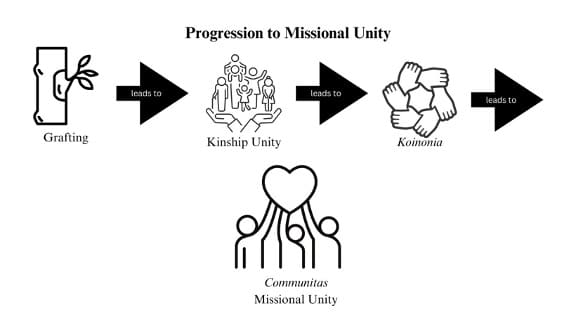
Figure 11.1: Progression to Missional Unity
Unity and Grafting into the Olive Tree
The Apostle Paul deals with the concept of unity in diversity beautifully with the Roman Christians, of both Jewish and Gentile backgrounds, through the analogy of one body in Christ. In Romans 11:16–24, Paul explains a vision of Jewish and Gentile Christians in Rome joining together in a new form of the people of God for the church. He draws on an agricultural technique to stimulate fruit production, grafting the wild olive branch, represented by Gentile Christians, onto the cultivated tree, represented by Jewish Christians, giving it new life.

Figure 11.2: Grafting and Budding Nursery Crop Plants.[ii]
Olive growers have grafted branches, called scions, onto rootstocks for centuries (see figure 11.2). It involves putting two portions of tissue or two organs from two different trees together to grow as one plant.[iii] A successful grafting process requires precision, finding the right scion and the suitable rootstock, and locating the right place on both trees for cutting and placement.
It requires pain. The farmer must cut the scion from its original plant and slice the rootstock deep enough for the scion to fit inside. Grafting requires protection. The two components must be bound together by wrapping or trying so that the wounds created from the cutting can heal and become one tree. It also requires patience as the wounds heal. Finally, once the two have come together, grafting will produce fruit that is better than before. An interesting point to note is that although the branch exists as a part of the olive tree, it maintains its wild nature, strengthening the tree and its roots to produce better fruit.[iv]
No wonder Paul chose grafting as an analogy for bringing Jewish and Gentile Christians together in unity in the Roman church. The members of the Jerusalem Council outlined the precise manner for bringing Gentile Christians into community with Jewish Christians. Both groups had to cut away parts of their cultural practices, which produced pain.
For Jewish Christians, the leaders at the Jerusalem Council cut away the requirement for circumcision and strict adherence to the Law (Acts 15:1–17). Gentiles had to cut away their cultic practices and abide by the rules set by the Jerusalem Council (Acts 15:22–29). For both, pain would have ensued as they distanced themselves from their non-believing family and friends to create this new community in Christ.
One can sense Paul’s protective, fatherly nature toward the New Testament churches as he urges them to live as one body of believers from two backgrounds (Romans 15:5–6; 1 Corinthians 1:10–18; Galatians 3:28; Ephesians 4:1–7; Philippians 2:1–4). Grafting the two groups together into one community took time and patience. Trust, love, and understanding do not happen overnight, and the process cannot be rushed.
As Robert Banks notes, “members of the community need[ed] to recognize their unity and ‘receive’ one another (this is preferable to the RSV’s ‘wait’ for one another 1 Cor 11:33).”[v] Thus, unity happens intentionally and over time. Finally, new, better fruit emerges from one unified tree, resulting in individual and local church growth and expanding the church across the empire.
Communitas
Victor Turner’s seminal study of the Ndembu tribe in Zambia led him to utilize the Latin term communitas rather than the English term community to describe his findings.[vi] Michael Frost summarizes Turner’s saying that:
Communitas denotes an intense feeling of social togetherness and belonging, often in connection with religious rituals, in which people stand together “outside” society, and society is strengthened by this. Communitas is the opposite, in many ways, of normal society, but with each one feeding and enriching the other. Societies need the liminal experience of communitas because it pushes society forward, nurturing it with freshness and vitality that come from the deeper communion that is experienced there.[vii]
Therefore, communitas describes a group undergoing a shared ordeal with a common goal that pushes society forward. Communitas preserves individual distinctiveness while members come together for a purpose.[viii] Community, conversely, focuses itself inwardly on the group itself (see table 11.1). Bringing this idea forward, since koinonia is a partnership, communion, fellowship, or gift that can be described as kinship, and when that is placed under the lordship of Christ, this kinship unity becomes the foundation for communitas.[ix]
| Community | Communitas |
| Inwardly focused Focused on encouraging each other Provides a safe place Something to be built | Social togetherness outside of society Focus on the task at hand Pushes society forward Experienced through liminality |
An essential factor of communitas is liminality. Basing his definition of liminality on the work of Victor Turner, Alan J. Roxburgh states, “Liminality is the conscious awareness that as a group (or individual) one’s status-, role-, and sequence-sets in a society have been radically changed to the point where the group has now become largely invisible to the larger society in terms of these previously held sets.”[xi] Liminality arises from a sense of crisis, urgency, and exile, creating communitas.
Scripture gives evidence of the early church’s experiences of liminality, which moved them to communitas. In Acts 4:31, for example, the disciples were filled with the Spirit and proclaimed with great boldness following the severe chastening of Peter and John by the religious rulers. In Acts 8, the persecution and diaspora following the martyrdom of Stephen led to a great and powerful witness by the community of believers that spread throughout the empire.
Acts 9:31 displays a great sense of communitas where the church multiplies through walking in the fear of the Lord and the comfort of the Holy Spirit. “The persecution of the church created a sense of liminality, but the Holy Spirit empowered the people of God with a sense of comfort, and the result was the further growth of the church. The benefit and forward movement of the wider society here is that many became believers and also there is a sense of widespread peace.”[xii] Finally, in Acts 11:19–25, the liminality of dispersion led some followers of Christ into communitas. They expressed themselves in working together in Antioch to proclaim the gospel, resulting in explosive church growth.
Missional Communitas
Although Allison MacGregor argues that “the Church in its intention and purpose, though not necessarily its form and structure, has always existed in the mind of God, with koinonia as its objective,” [xiii] the passages above seem to point to something broader, exemplifying missional communitas.
Missional communitas results from a genuine kinship relationship, or koinonia, grafted between transformed ethnic Christians in Christ. Jeffrey J. Kloha points out that through koinonia in the body of Christ our relationships to each other are defined not socially, economically, racially, or on any other basis than Christ. As a result, the individuals who live in κοινωνία relate to one another through Christ.[xiv]
Thus, missional communitas that births from koinonia entails a unified church that goes out to bring others into a relationship with Christ to add more to their community in Christ. As Paul writes in Philippians 2:1–4:
“So if there is any encouragement in Christ, any comfort from love, any participation [koinonia] in the Spirit, any affection and sympathy, complete my joy by being of the same mind, having the same love, being in full accord and of one mind. Do nothing from selfish ambition or conceit, but in humility count others more significant than yourselves. Let each of you look not only to his own interests, but also to the interests of others” (NIV).
True missional communitas results in unity of mind and purpose in which the body of Christ elevates others above themselves. Missional communitas creates a new culture of hospitality that welcomes all into the body of Christ. It is a reproducing community created by the Spirit, who calls, gathers, and sends the church into the world to participate in God’s mission. It creates a sense of missional unity as together they work to fulfill the mission of God to redeem creation.
In his excellent interpretation, Reading Romans with Eastern Eyes: Honor and Shame in Paul’s Message and Mission, Jackson Wu argues that in Romans, Paul says that the Christians’ view of the church, their collective identity, shapes their sense of mission. Moreover, “The way the Romans see themselves (as Greek or Jew) and outsiders (like barbarians) determines whether they glorify God by participating in his mission to the nations.”[xv]
Ksenija Magda agrees, emphasizing:
“Paul’s insistence on unity is missiological in character. If this is true, then Paul writes to the Romans to call them to accept each other because the disunity of the church would negatively influence his own universal mission plans …. Paul’s occasion for writing Romans is to be sought in the universal missionary strategy, in the mission of the world in which Jews and Gentiles live together before God – because this is established as such by God and confirmed in the Scriptures (Rom. 3-11), and has to be evident in the life of the church (Rom. 12-16) so that the mission can be effective.”[xvi]
Therefore, the extent of their unity as one body of Christ determines their effectiveness in the mission of God. In other words, their communitas directly affects their mission fruitfulness.
Missional Communitas and the Mission of God
This kinship unity, which celebrated diversity and developed through the careful grafting of the various members into one tree, created a partnership of koinonia. This led to missional communitas in which the Christians, as outsiders of society, come together with one goal: the mission of God.
True missional communitas, as an outgrowth of true koinonia, becomes a magnet to those far off drawing them into community (cf. Acts 2:39). In speaking of Bonhoeffer’s theology of sociality, Christain Marie Teachout expounds on the importance of the community as a witness to the world, stating:
“The community [missional communitas] has been brought into life with Christ, who called the Church to be His visible Word encountered in this world. Believers would exist as a visible representation of His message as Christ’s character lived through them. This made relationships central to their witness in this world.”[xvii]
John de Gruchy agrees, contending that a church on the fringe of the world that does not engage the world with Christ fails in its mission and purpose.[xviii] Walls argues that the church displays its unity not at the local gathering but at what happens outside the gathering.[xix] However, through intentional missional communitas, the church can practice, so to speak, the eternal celebration of unity in diversity in Revelation 7:9–10. In this vision, everyone is waving palm branches and wearing white robes while crying out praise to the Lord in individual languages and forms.
Coming Together in Unity and Diversity
Paul wrote to the Roman Christians imploring them to come together in unity in their diversity so that the mission of God could move forward. In Romans 11:16–24, he encouraged them to graft themselves together as one ekklēsia in Christ. This grafting, however, would require precision to find the right place and time to bring the two groups together. It would also require pain as it necessitated a cutting away of cultural norms so the two could grow together. It required protection and patience while the two groups learned to bind together to form one tree.
In so doing, the two groups become followers of Christ first, with their ethnicities and cultural norms coming second. This grafting together led to the production of more fruit than it could have if the two remained separate entities. Grafting, then, leads to kinship unity as the two groups choose to come together, leading to koinonia, a true partnership.
Out of this koinonia relationship, they could develop into missional communitas – a reproducing community created by the Spirit, who calls, gathers, and sends the church into the world to participate in God’s mission. Missional communitas creates a sense of missional unity as together they work to fulfill the mission of God to redeem creation so that representatives from every tribe and language are around the throne of God (Revelation 7:9).

Christi Trimbur (desertsojourn@gmail.com) is a PhD candidate at Assemblies of God Theological Seminary (AGTS). For the last two decades, she has served in four different countries in the Arab World, working to facilitate church planting efforts first as a single global worker and then partnering with her husband. She and her husband currently reside in Cairo, Egypt where they serve the Egyptian Assemblies of God church by equipping, empowering, and encouraging them to embrace their role in God’s mission to redeem creation and reach the unreached.
[i] World Council of Churches 2010, “Towards Common Witness to Christ Today: Mission and Visible Unity of the Church,” International Review of Mission 99, no. 1 (2010): 95.
[i] Christain Marie Teachout, “A Pentecostal Appropriation of Dietrich Bonhoeffer’s Theology of Sociality,” 146.
[i] Ksenija Magda, “Unity as a Prerequisite for a Christian Mission: A Missional Reading of Romans 15:1–12,” Kairos – Evangelical Journal of Theology 2, no. 1 (2008): 39, 46.
[i] NC State Extension Publications, “Grafting and Budding Nursery Crop Plants,” NC State Extension, 2014, accessed Oct 17, 2023, https://content.ces.ncsu.edu/grafting-and-budding-nursery-crop-plants.
[i] Andrea Fabbri, Giorgio Bartolini, Maurizio Lambardi, and Stan Kallis, The Olive Propagation Manual (Collingwood VIC Australia: Landlinks Press, 2004), 45.
[i] John de Gruchy, The Cambridge Companion to Dietrich Bonhoeffer (New York: Cambridge University Press, 1999), 78.
[ii] Andrew F. Walls, The Missionary Movement in Christian History: Studies in the Transmission of Faith (Maryknoll, NY: Orbis Books, 1996), 53.
[ii] Andrea Fabbri, et al, The Olive Propagation Manual, 55.
[iii] Robert J. Banks, Paul’s Idea of Community: Spirit and Culture in Early House Churches (Grand Rapids, MI: Baker Academic, 2020), 58.
[iv] Victor Turner, The Ritual Process: Structure and Anti-Structure (New York: Routledge, 2017).
[i] Michael Frost, Exiles: Living Missionally in a Post-Christian Culture (Grand Rapids, MI: Baker Books 2006), 110.
[i] Janet Sarbanes, “Musicking and Communitas: The Aesthetic Mode of Sociality in Rebetika Subculture,” Popular Music and Society 29, no. 1 (February 2006): 10.
[ii] Rick Brannan, 2013. “κοινωνία,” The Lexham Analytical Lexicon to the Greek New Testament (Bellingham, WA: Logos Bible Software, 2006).
[i] Robert Lionel Elkington, “A Missional Church Model,” Sage Open (2006), 5, https://doi.org/10.1177/2158244011428086.
[i] Alan J. Roxburgh, The Missionary Congregation, Leadership, and Liminality (Harrisburg, PA: Trinity Press International, 1997), 24.
[ii] Robert Lionel Elkington, “A Missional Church Model,” 5.
[iii] Allison MacGregor, “Koinonia: Pentecostal Ecclesiology, Communion, and the Ecumenical Challenge”(PhD diss., Assemblies of God Theological Seminary, 2023), 5.
[iv] Jeffrey J. Kloha, “Koinonia and Life Together in the New Testament,” Concordia Journal 39, no. 1 (Winter 2012): 31.
[i] Jackson Wu, Reading Romans with Easter Eyes: Honor and Shame in Paul’s Message and Mission (Downers Grove, IL, 2019), 31.
EMQ, Volume 60, Issue 4. Copyright © 2024 by Missio Nexus. All rights reserved. Not to be reproduced or copied in any form without written permission from Missio Nexus. Email: EMQ@MissioNexus.org.