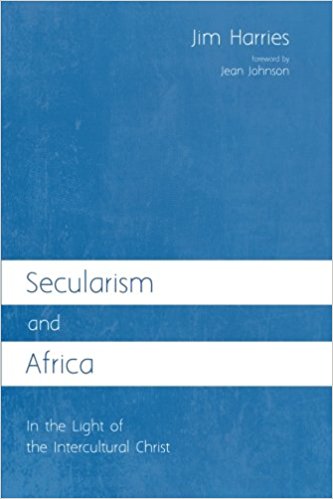
Secularism and Africa: In the Light of the Intercultural Christ
by Jim Harries Wipf & Stock, 2015 —Reviewed by, Bob Bagley, Africa area director for Global Partners, the missions division of the Wesleyan Church

by Jim Harries Wipf & Stock, 2015 —Reviewed by, Bob Bagley, Africa area director for Global Partners, the missions division of the Wesleyan Church

Conflict occurs wherever human beings live or work together. It is no surprise then that conflict is a major issue in multicultural teams. All of the eighty-one people we interviewed explained that their team had experienced some degree of conflict, and in some of these teams, conflict had deeply hurt team members and damaged the effectiveness of their team (Hibbert 2002; Hibbert 2011).

by Andrew T. Kaiser Pickwick Publications, 2016 —Reviewed by Mark A. Strand, Professor, North Dakota State University, Fargo, ND
My wife and I have been working in Central Asia since 2013 on a multicultural team. Since the team’s inception, it has at one time or another been composed of members with formative backgrounds from countries as diverse as America, China, Great Britain, Guinea, Italy, Australia, Indonesia, Canada, Egypt, a Central Asian country, and some with a mix of the aforementioned.

The Evangelical world is no stranger to the term missionary, ever since Jesus commanded his followers to “go and make disciples of all the nations.” Peter, Paul, Timothy, and Barnabas all pioneered global missions efforts. The children of missionaries are commonly referred to as missionary kids, or MKs, for short.
The late 1980s and early 1990s were perhaps the most exciting days of modern missions—the Iron Curtain fell, and immediately over twenty countries and four hundred million people had access to the gospel.

As Richard stood staring out his office window, he knew something was wrong. His enthusiasm for ministry that had accompanied him for nearly thirty years was gone. He was tired, spiritually dry, and growing bitter about his situation.

College friends wore our fundraiser T-shirts around campus. Team parents praised us for flying across the world to spread the gospel. In Japan, we were guests of honor. Local pastors advertised the visiting American athletes to draw people to church. Groups of teen girls wanted to pose with us for selfies. We were celebrities.
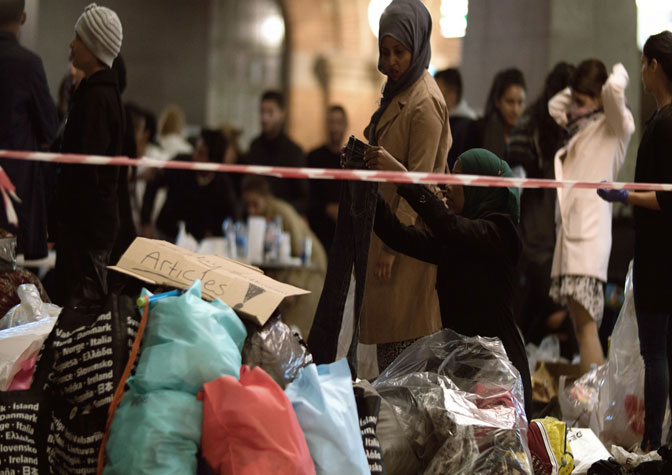
We live in a rapidly changing world in which massive amounts of people move from one place to the next. Many people who have come from other places live on the margins of society as socially excluded international refugees or immigrants.

While I was preparing with a team to go on a missions trip to Israel’s Jewish absorption centers, I met a young lady named Rosebud who was taking a break in the fast food restaurant where she worked.