EMQ » October–December 2020 » Volume 56 Issue 4
By Minh Ha Nguyen
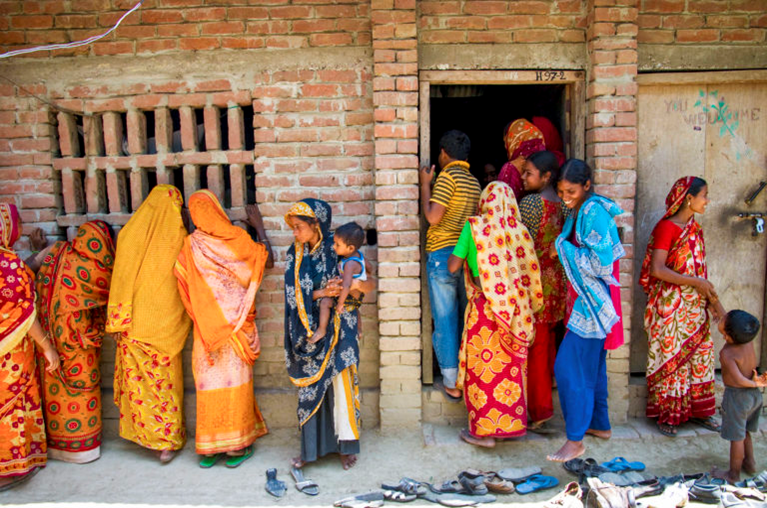
The pile of shoes, mostly sandals, grows at the front door. Rich smells of turmeric, cumin and curry waft from the apartment. Slowly people crowd into the circle on the floor – first six, then ten, then fifteen. An older woman adjusts the flowing scarf that she wears over her long tunic, typical of South Asian dress. Toddlers, bangles dangling from their wrists, weave happily between people willing to entertain them with pens and cell phones. It’s time for church. But this isn’t South Asia – it’s Richmond, Virginia.
Three Megatrends Impacting the Christian Mission
Globalization, the growth of cities, and the global movement of people are interrelated processes that have deeply transformed the contemporary social, economic, cultural, and political landscape as well as the way Christian mission understands peoples and carry out the task among all peoples and places. More than a billion people are on the move with estimates between 85% and 95% ending up in cities.[1] This means one of every seven persons on the planet is a migrant and the phenomenon simultaneously benefits and exacerbates cities and societies around the world. Yet very little research has been done to assess the impact of these megatrends on the people groups concept. This article therefore seeks to show how globalization, urbanization,andmigration (hereafter GUM) stretch the understanding of peoples and unreached people groups, and impact Christian mission and frontier missiology.
Megatrends like GUM are not isolated issues. Weaving these processes into one thread is a daunting task to say the least! This article, therefore, will focus only on a few aspects of GUM that directly relate to our understanding of people groups. In dense and diverse urban contexts, core people groups dynamics have increasingly been challenged by postmodern, multicultural, and complex societies. These include the concepts of homogeneity – where people share common characteristics that separate them from other groups, ethnolinguistic consolidation – where language and ethnicity are the determining characteristics of people groups, and intercultural delimitation – where thick boundaries are emphasized between people groups. The migrations of peoples worldwide into cities demand that Christian mission seek new epistemological frameworks for seeing, understanding, and making disciples among all peoples and places.
Peoples on the Move
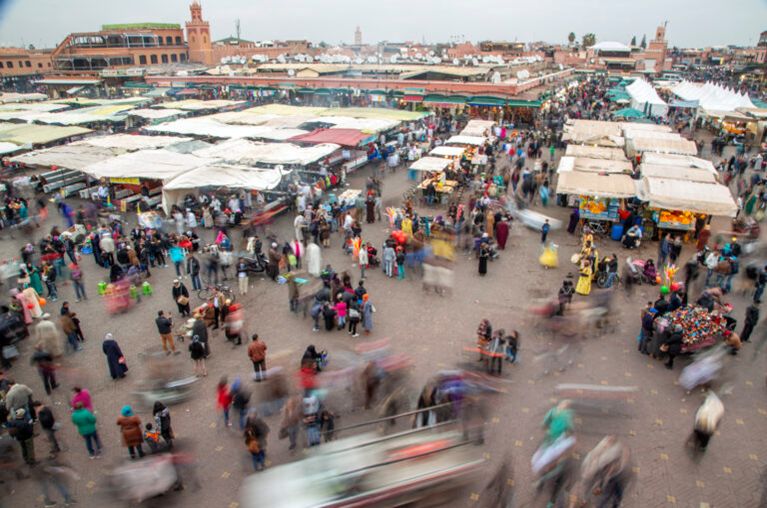
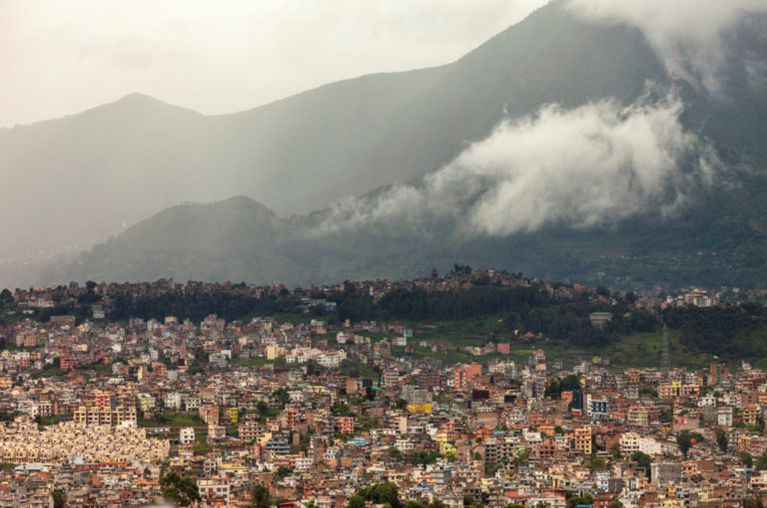
Migration and urbanization have accelerated to such degree that it has become a cliché to mention that more than half – 55% – of the world’s population now live in cities. More than 2.5 billion will join their ranks by 2050, increasing the world’s urban population to over two-thirds (68%).[2] Keep in mind that in 1950, when the people groups concept and homogenous unit principle were being formed, the urban population was less than a third (30%).
There are 272 million living outside of their home country – representing about 3% of the world’s population.[3] Some Gallup polls show these numbers could be higher, as more than 750 million worldwide would migrate internationally if they could.[4] Global migration also includes an estimate of 800 million internal migrants moving from the rural areas to cities. India and China account for the largest shares of internal migration, with 325 million and 221 million respectively. Importantly, the data shows that international and internal migrations are connected: Internal migration leads to international migration, and vice-versa.[5] Taken together, there are over 1 billion migrants in the world today.
Globalizing Cultures
Globalization refers to the “widening, deepening and worldwide interconnectedness of all aspects of contemporary social life.”[6] Globalization is also simultaneously a political and technological process.[7] While there are anti-globalization trends like nationalism and rejection of Western liberal democracy, the technological globalization has enabled widespread communication, travel, and access to education. The growth of “transnational networks” has exposed limitations of state control. Remittances, relationships, innovation, and entertainment flow through the Internet and cable television across permeable borders. This technological process has led to the emergence of new cultural groupings that span traditional ethnic, linguistic, and geographic boundaries.
Four examples of global cultural groups are worth mentioning. First is the “Davos culture,” an elite group of 40 million highly educated people who operate in the rarefied domains of international finance, media, and diplomacy sharing common beliefs about individualism, democracy, and market economics, who follow a lifestyle that is instantly identifiable anywhere in the world, and who feel more comfortable in each other’s presence than they do among their less-sophisticated compatriots.[8] Second is the international “faculty club,” an international network of academics who share similar values, attitudes, and research goals and who wield tremendous influence through their association with educational institutions worldwide with certain success in promoting feminism, environmentalism, and human rights as global issues.[9]
Third is the non-governmental organizations advocating a view of global culture based not on the “replication of uniformity” but on the “organization of diversity” seeking to preserve cultural traditions in the developing world.[10] A final example is the transnational workers, English-speaking professionals such as software engineers and Internet entrepreneurs of Silicon Valley, California who trace their origins to South Asia but who live and work elsewhere and whose social world includes multiple home bases and a unique network of individuals and opportunities.[11]
These examples point out that, while globalization has sought to homogenize the globe into a single world order and culture, it paradoxically led to a plethora of other highly influential subcultures, networks, and tribes segregating along social, economic, and cultural boundaries. Some of them prioritize education or lifestyle above the ethnic and linguistic identities; their members choose to associate with like-minded others with whom they do not even share the same mother tongue or cultural heritage. They come together to form diverse networks often under the umbrella of a dominant language such as the English language and a dominant culture such as the Western culture. Others morph into multi-lingual and hybrid groups striving to maintain multiple identities in an “in-between” way of life; they are more than the culture they left behind but not quite assimilated to the culture of destination.
One thing is clear that GUM processes open the door to new ways of forming communities, networks, and affinity groups. This does not mean that ethnolinguistic people groups are no longer relevant. It does mean that peoples have more choices to come together. It does also mean that there are more bridges and far-reaching ties for the preaching of the gospel of the kingdom.
Cities and Peoples
GUM’s transformative effect on peoples is magnified in the cities. The influential Danish urban designer Jan Gehl states, “First we shape the cities – then they shape us.”[12] While rural areas tend to have a conserving effect on the culture, in the cities, GUM processes radically change who people are and how they see themselves.[13] According to Edward Glaeser, a Harvard professor of economics and urban studies, we cannot understand the demand for cities unless we understand how cities change people’s lives.[14] It is therefore important to understand how GUM processes are taking place and to appreciate the transformative effect of cities on peoples and unreached people groups.
A hundred years ago, Émile Durkheim, the father of modern sociology, developed the concept of “social facts” in order to study scientifically the impact of society on the individuals taken as a group living in a geographical location. Durkheim posited that social facts are elements of collective life that exist independently of and can exert an influence on the individual. They are collective, stable, external to the individuals, and coercive to them. They are external and not individual characteristics. Individuals cannot choose whether they have the effect or not. Social facts are coercive, meaning they impact everyone residing in that context. They are collective, meaning they apply to everybody. They are things, meaning they can be measured with empirical data. One of Durkheim key findings was the positive difference of suicide rate between the Protestants and Catholics as well as between soldiers and civilians.[15] Max Weber’s “disenchantment” effect of modernity on society is another example of social fact.[16]
If Durkheim and Weber are correct, it is in the city that the dynamics of GUM are most noticeable and have far reaching impact on the people group understanding. People prefer contact with others from the same group, but they also prefer contact with others from different groups than no contact at all.[17] Social facts influence peoples in the city by exposing them to diverse cultures and ways of life, showing weakness in their worldview, and pointing them to the strength in others. Population density of the city provides the critical mass necessary for people to come together and the freedom to do so.
Social Facts of Urban Life
There are at least four examples that illustrate how GUM processes are magnified in urban contexts leading to new groups formation and changing the ways we see and disciple peoples in today’s world.
First is the formation of “urban tribes.” Urban tribes are emotional or affectual communities defined by shared interests and lifestyles. Like the tribes of the Amazon, these urban tribes band together in the concrete jungles of contemporary megacities to define meaning and share life.[18] Examples include micro-groups of punks, bikers, hipsters, and other sexual orientation types.[19] They are typically between the ages of twenty-five and forty-five. They prefer the urban lifestyle which offers an alternative to traditional family structures.[20] There is a Christian version of urban tribes too called the “Benedict Option,” where busy, young, urban professionals come together to create community in a monastic fashion.[21]
A second example of group formation in urban contexts are “global tribes.” While urban tribes emphasize the affectual characteristics, global tribes focus on economic, cultural, and ethnic preservation. In his book, Tribes: How Race, Religion and Identity Determine Success in the New Global Economy, the world renown urbanist Joel Kotkin mentions five examples of global tribes: the Chinese, Japanese, British, Indians, and Jews. These groups have in common strong diaspora presence that contributed significantly to the formation and growth of global cities such as London, New York, Singapore, and Hong Kong.[22]
A third example of urban group dynamics is hybridization which is also known as creolization, a phenomenon where languages and cultures collide to give birth to new ones. Cultures are not homogenous islands but often characterized by multiple identities that overlap one another.[23] This is most accentuated in the cities, where cultures become less homogenous and where people would jump over the porous boundaries from one culture to another.[24]
“Ethnoburb” formation is the final example. Ethnoburbs are suburban ethnic clusters of residential areas and business districts in large metropolitan areas. They are multi-ethnic communities, in which one ethnic minority group has a significant concentration but does not comprise a majority. In ethnoburbs, minority groups are able to maintain their ethnic identity. Ethnoburbs are some of the most dynamic and highly diverse places in gateway cities. It is in these ethnoburbs that transnational connections and relationships are most often formed.[25]
GUM are human, transformative, and coercive realities that the global church needs to learn to manage in order to reach people in the twenty-first century. In urban contexts, ethnicity and languages still play critical roles. However, large cities provide peoples the freedom and critical mass to form new groups along occupation, institutional affiliation, or common interest characteristics. Furthermore, cultural hybridity combined with inter-dependency between the groups lead to new multi-ethnic and inter-ethnic communities. All cases point to a complex system of group formation that require new ways of seeing, understanding, and reaching peoples. Christian mission in urban contexts therefore necessitates multiple models including mono-ethnic,[26] multi-ethnic,[27] or inter-ethnic[28] church planting as well as other strategies that do not follow ethnic nor linguistic boundaries.
Rethinking People Groups Concept
In rethinking the people groups concept and the impact of GUM on the peoples and unreached people groups understanding, the global church has to take into account the fact that ethnicities and languages are not the only way through which people come together. Global flows connect peoples with multiple and far-reaching ties in a worldwide network that could provide new bridges and shorter paths for the spread of the gospel. Furthermore, cities attract peoples seeking new opportunities to improve their lives; these include members of many unengaged and unreached people groups from restricted places. Finally, cities are bedrocks of ideas and innovations. As disciples are made in the cities, they have the potential to become influential spreaders of the good news in circles different than their own.[29] These are some of the reasons that make the cities centers of frontier missions.
The central aim of this article has been to discuss some of the problems and impacts of GUM on the peoples and unreached people groups understanding, and to suggest a possible solution for the Christian mission. GUM processes have not only created new groupings of people beyond the ethnolinguistic boundaries but also provided new ways for peoples to come together in hybridizations and ethnoburbs. Furthermore, GUM processes highlight the potential for gospel movements among the global communities with significant linkages in the city and around the world.
The solution does not appear to lie in expanding the current people groups database into an ever-increasing listing of hundreds of thousands or even millions of entries. But nor are the answers to be found in abandoning the current listings themselves on the ground that they have lost their shine and are no longer attractive – some things could be right and valuable regardless of the attraction they project.
The suggested way forward is the development of a missiological research framework which provides the new data and models for seeing and understanding peoples, cities, and migration flows. The Shalom City IndexTM (SCI) and its databases could provide such a framework.[30] On the one hand, SCI provides the theological and missiological framework that centers on shalom as the comprehensive, cohesive, and complex adaptive system for understanding the preaching of the gospel of the kingdom among all peoples and places. On the other hand, SCI provides two new databases on global cities and diasporas that will supplement the current people groups database. The SCI framework is the author’s self-reflection on the seven-year period of inter-ethnic church planting that led to the formation of the International Community Church, a house church network in Richmond, Virginia.
An Example of Inter-Ethnic Church Planting
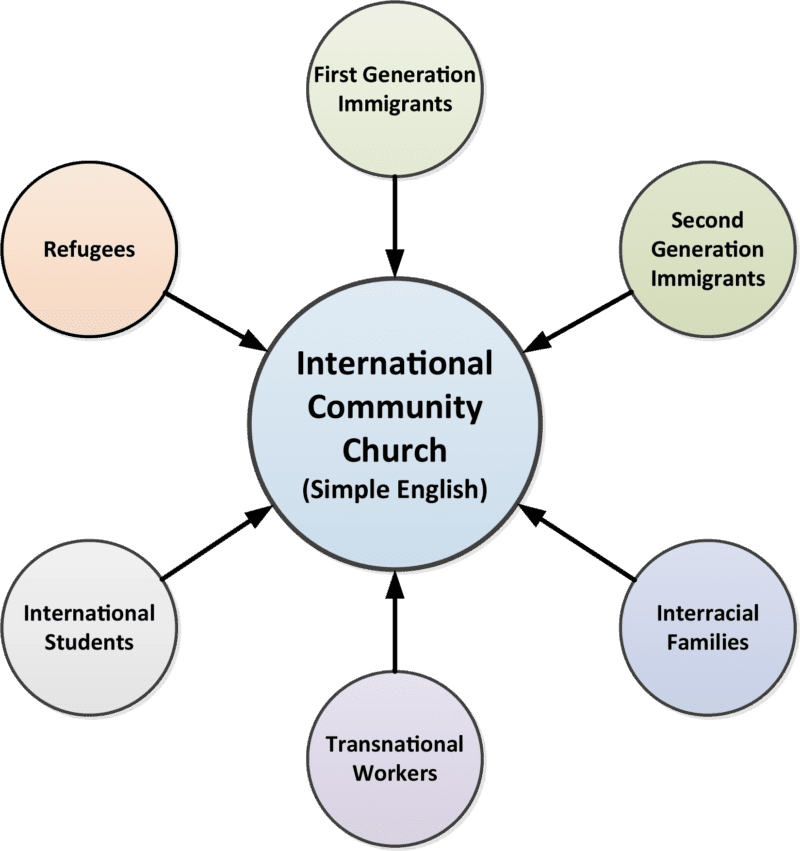
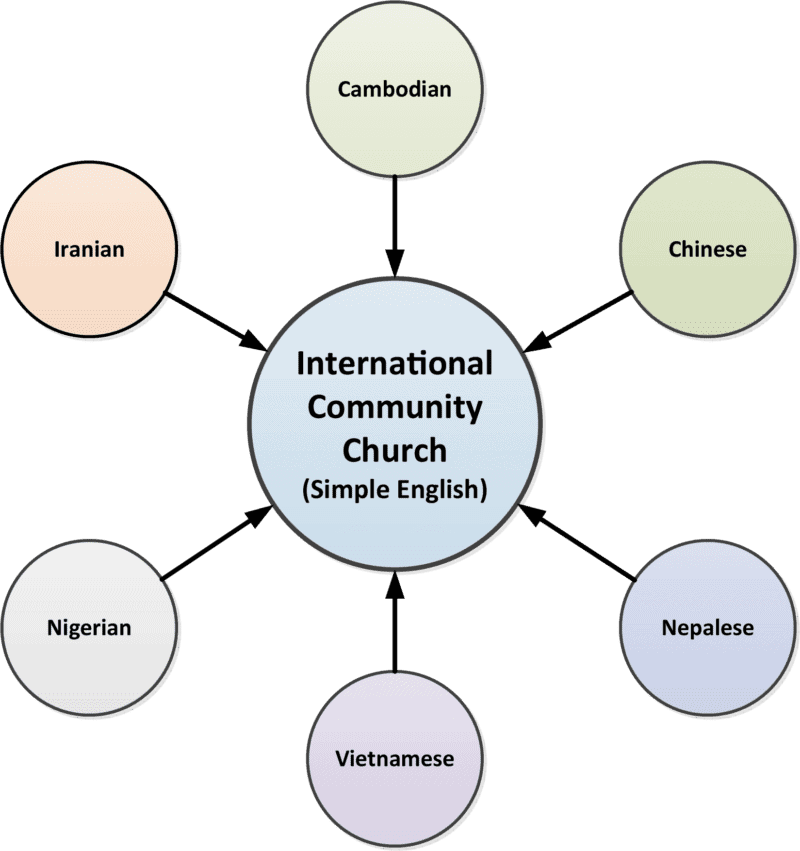
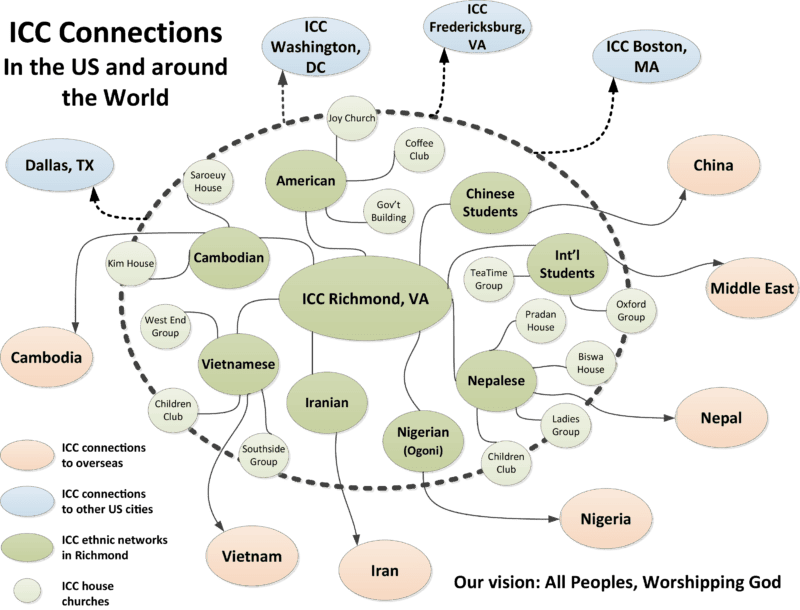
The South Asian church mentioned in the beginning of this article is one of the thirty house groups that formed the International Community Church (ICC) – a house church network that connects affinities, peoples, and languages groups from Nepal, Burma, Cambodia, Vietnam, Central Asia, Africa, South America, and other places. House groups meet weekly in various locations throughout the city. They all come together once a month for worship celebration, fellowship, and leadership formation. In the homes, the groups gather weekly along their specific boundary, be it linguistic, social, or cultural affinity. Each group decides the language of worship, evangelism and mission strategies that are most effective and contextual to their community. In the monthly gatherings for celebration, groups take turn to conduct the worship service, preach the Word, and lead one another in praying for all other ethnic groups in the city that do not have a church yet.
ICC is a response to the challenges of both mono-ethnic and multi-ethnic church planting models. On the one hand, the mono-ethnic model, while reaching people in the heart language and worldview, offers very little interaction with other groups in the city. Furthermore, the mono-ethnic model runs into difficulty with retaining the second or third generation that do not speak the language of their parents. On the other hand, the multi-ethnic model, while effective in bringing multiple groups together, faces challenges of its own. First, the insistence on using the national language would not only rule out the first generation of immigrants but also project the expectation that to become Christian one must learn the language and adopt the culture of the host country. Second, the dominance of the majority group in leadership and worship would treat the minority groups as second class citizens. Finally, the absence of indigenous leadership and worship would lead to some form of “extractionism.” In order to join the multi-ethnic church, each group must give up something in order to prevent the church from breaking apart.
The inter-ethnic model is simple but effective in meeting both the mono-ethnic and multi-ethnic needs. Home groups, as the smallest local church unit found in Scriptures, are easy to start and multiply with the development of lay leaders. ICC is small enough to reach all peoples in Richmond yet large enough to celebrate and multiply reaching the urban tribes, subcultural groups, and global cities networks.
Minh Ha Nguyen (M.Div., Th.M.) is co-founder and director of Radius Global Cities Network, a think tank dedicated to sound research, thought leadership, and decision-making about cities. He works in Global Research at the International Mission Board (SBC) where he leads in the data collection and delivery efforts that include the management of the www.peoplegroups.org database. In 2009 he started International Community Church, a house-church network that reaches people groups from Asia, Africa, and the Middle East living in Richmond, Va. Minh Ha is a Ph.D. candidate at Southeastern Seminary focusing his research on globalization, urbanization, migration and the development of the Shalom City IndexTM.
Notes
[1] UN-IOM, World Migration Report (Geneva: UN Migration, 2020), 19.
[2] UN-DESA, World Urbanization Prospect: The 2018 Revisions (New York: United Nations, 2019).
[3] UN-IOM, World Migration Report (Geneva: UN Migration, 2020).
[4] Gallup, “More Than 750 Million Worldwide Would Migrate If They Could” Gallup Polls (2018). URL: https://news.gallup.com/poll/245255/750-million-worldwide-migrate.aspx, accessed 5/18/2020.
[5] Ronald Skeldon, “International Migration, Internal Migration, Mobility, and Urbanization: Toward More Integrated Approaches” in Migration Research Series 53 (2018): 1–10.
[6] D. Held, A. McGrew, D. Goldblatt, and J. Perraton, Global Transformations: Politics, Economics and Culture (Cambridge: Polity, 1999), 2.
[7] Mathias Czaika and Hein de Haas, “The Globalization of Migration: Has the World Become More Migratory?” in International Migration Review, 48 no. 2 (2015): 283–323, 284.
[8] Peter Berger and Samuel Huntington, eds. Many Globalizations: Cultural Diversity in the Contemporary World (Oxford: Oxford University Press, 2002).
[9] Berger and Huntington, Many Globalizations.
[10] Ulf Hannerz, Transnational Connections: Culture, People, Places (London: Routledge, 1996), 101.
[11] A. Appadurai, Modernity at Large: Cultural Dimensions of Globalization (Minneapolis, London: University of Minnesota Press, 1996).
[12] Jan Gehl, Cities for People (Washington, DC: Island Press, 2010).
[13] Ferdinand Tönnies, Community and Society (Mineola, NY: Dover Publication, 2002).
[14] Edward Glaeser, Cities, Agglomeration, and Spatial Equilibrium (Oxford: Oxford University Press, 2008).
[15] Émile Durkheim, Suicide: A Study in Sociology (New York: Free Press, 1966).
[16] Max Weber, The Sociology of Religions (London: Methuen, 1971).
[17] Peter Blau, Crossing Social Circles (Orlando: Academic Press, 1984).
[18] Michel Maffesoli, Le Temps des Tribus (Paris: Merridiens Klincksieck, 1988). https://www.doctissimo.fr/psychologie/news/les-tribus-urbaines-une-nouvelle-facon-d-etre-ensemble
[19] Because urban tribes are groups of people who have similar visual appearances, personal style, and ideals, and because these groups are also very active on social media platforms uploading over 300 million photos a day to Facebook alone, scientists in the fields of AI and machine learning are developing algorithms to capture the features that distinguish each subculture and classify them into an urban tribes database. https://vision.cornell.edu/se3/wp-content/uploads/2014/09/utribes_bmvc13_final.pdf.
[20] Ethan Watters, Urban Tribes: Are Friends the New Family?, (New York: Bloomsbury, 2003).
[21] Leah Libresco, Building the Benedict Option: A Guide to Gathering Two or Three in His Name (San Francisco: Ignatius Press, 2018). The main proponent of the “Benedict Option” is Rod Dreher.
[22] Joel Kotkin, Tribes: How Race, Religion, and Identity Determine Success in the New Global Economy (New York: Random House, 1993).
[23] Roland Barth, Ethnic Groups and Boundaries: The Social Organization of Culture Difference (Long Grove, IL: Waveland Press, 1969), 11.
[24] Wolfgang Welsch, “Transculturality – The Puzzling Form of Cultures Today” in Spaces of Culture: City, Nation, World, ed. by Mile Featherstone and Scott Lash (London: Sage, 1999).
[25] Li, 2012.
[26] In the mono-ethnic model, the worship service is conducted in the language most familiar to the ethnic group. For the majority group in the country, the language would be the national language; for all other international groups, however, the language would be the one they speak in their homes. Often, there are very little interaction among them even when they worship within the same city. But the strength of mono-ethnic church is in its homogeneity thus making it difficult or nearly impossible for it to transform.
[27] In the multi-ethnic model, the worship service is done in the national language. Those who advocate this model see it as the New Testament pattern that expresses the unity that joins differing ethnic groups together. There is a desire to reach the different ethnic groups in the city and bring them together into one church. Multi-ethnic model’s insistence, however, on using the national language, makes it less effective in reaching the first generation immigrants who often are the most responsive to the Gospel. In some cases, the strong dominance of the majority ethnic group in leadership, worship, and outreach preferences prevent assimilation of other minority groups into the church. Another challenge of multi-ethnic church is the use of the national language. This mono-lingual requirement means that to become a Christian, one must first learn the national language and adopt certain culture and customs of the host country. The most significant challenge of multi-ethnic churches, however, is the absence of indigenous worship and leadership. Because it is multi-ethnic, each joining group must give up something in order to prevent the church from breaking apart. The natural tendency and least resistant mode is that people like to be with those who are like them. They like to form enclaves and live in enclaves.
[28] See an example of inter-ethnic church planting at the end of the article.
[29] Mark Granovetter, “The Strength of Weak Ties” in American Journal of Sociology 78 no. 6 (1973): 1360–1380.
[30] The limitations of this article prevent the precise and detailed description of the Shalom City Index, but it is a major part of the author’s Ph.D. dissertation that is in progress. See the website: www.shalom.city.
EMQ, Volume 56, Issue 4. Copyright © 2020 by Missio Nexus. All rights reserved. Not to be reproduced or copied in any form without written permission from Missio Nexus. Email: EMQ@MissioNexus.org.