EMQ » April – July 2025 » Volume 61 Issue 2
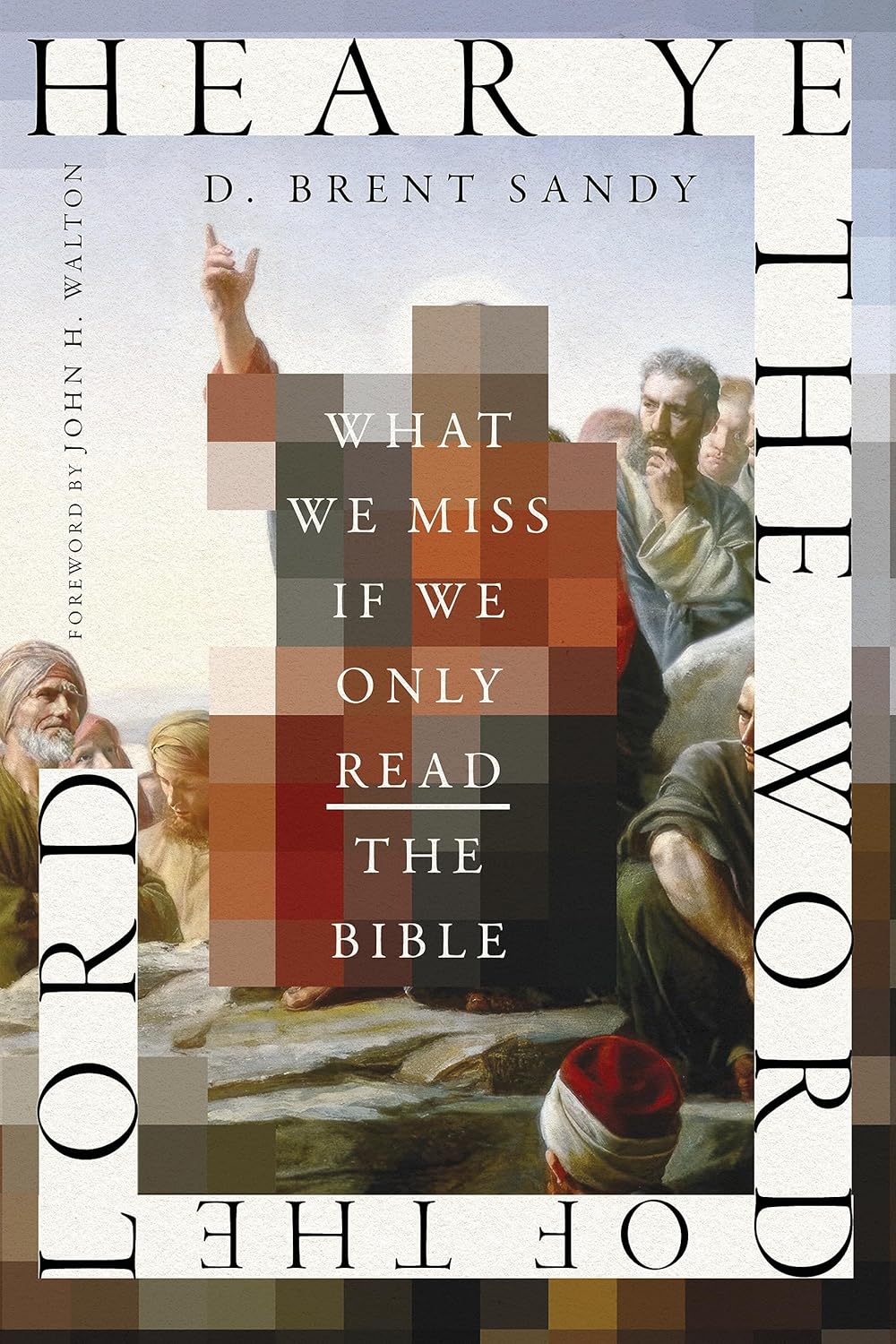
Hear Ye the Word of the Lord: What We Miss If We Only Read the Bible
By D. Brent Sandy
IVP Academic, 2024
216 pages
US$24.99
*As an Amazon Associate Missio Nexus earns from qualifying purchases.
Reviewed by L. Lynn Thigpen, PhD, assistant professor, Liberty University, Lynchburg, Virginia, and emeritus IMB missionary to Southeast Asia.
“Can a Westernized, twenty-first century reading of Scripture – even with the benefit of scholarly exegesis – provide sufficient understanding of what Jesus said and people associated with him heard two thousand years ago?” (181). D. Brent Sandy explores that provocative question in his latest book, Hear Ye the Word of the Lord. Since Scripture was first spoken and then written, our current emphasis on dissecting the text in isolation might limit our perception of God’s Word. The solution? Modern reading needs ancient orality and a renewed emphasis on oral intelligence.
Sandy presents 18 propositions or chapters to address that need, to bridge the gap between hearing God’s original spoken words and reading them on the printed page. He makes the case that the orality of the Scriptural world should greatly influence our present study of God’s Word. Propositions 1 through 5 reacquaint us with that early oral world, one very different from modern culture and textual ways. Then, propositions 6 through 11 portray God as the ultimate communicator, speaking to the writers of Scripture, making himself understood and his words remembered. The implications of this oral world are myriad, as explored in propositions 12 through 14. Early Scripture was performed, narratives gossiped, and letters read in communal venues – all with a focus on emotion, on lodging the words in the memory, and not merely on cognitive argument. Unlike modern church services in which one person speaks and others listen, lively group interaction and participation most likely filled early congregational meetings.
Sandy’s final propositions take the reader back to oral interpretation. Proposition 15 urges us to embrace the big picture or metanarrative of Scripture and not get lost in the details. He challenges the modern practice of exploring the Bible “atomistically rather than holistically,” of “zeroing in on a word or verse in the Bible and failing to take into account the full counsel of God, the entire scope of divine revelation” (134). Putting “oral Scripture back in its rightful place” can remedy this oversight (121).
Even though I specialize in the field of orality, I welcome Sandy’s reminders of ancient practices, which would be welcome to so many non-readers around the world. His work challenges us to move beyond individual, “microscopic reading,” (145) to explore what Scripture sounded like for the first audience. Advice like returning to public reading of Scripture, performing and dramatizing God’s Word, promoting biblical storytelling, and engaging in communal discussions fill the final chapters of Sandy’s resource and would benefit those brave enough to implement these early church activities.
Written in a conversational style with copious footnotes, the resource would be welcome to those in the fields of biblical studies and hermeneutics and proponents of discipleship and spiritual formation, such as missionaries. Returning to the kind of oral interpretation Sandy advises can easily be embraced by many, thus serving to include a critical population that has largely been ignored – modern oral learners.
For Further Reading
Unreadable: Another Book You Probably Won’t Read by Don Barger and Grant Lovejoy (International Mission Board, 2024).
New and Old Horizons in the Orality Movement: Expanding the Firm Foundations by Tom Steffen and Cameron Armstrong, Evangelical Missiological Society Monograph Series 14 (Pickwick, 2022).
The Return of Oral Hermeneutics: As Good Today as It Was for the Hebrew Bible and First-Century Christianity by Tom Steffen and William Bjoraker (Wipf and Stock, 2020).
EMQ, Volume 61, Issue 2. Copyright © 2025 by Missio Nexus. All rights reserved. Not to be reproduced or copied in any form without written permission from Missio Nexus. Email: EMQ@MissioNexus.org.