
EMQ » Oct – Dec 2024 » Volume 60 Issue 4
Contextualization
Summary: My wife and I lived in a remote predominantly Muslim region of West Africa with few believers for more than a decade. Not long after we arrived, I faced a new challenge: contextualizing a rite of passage ceremony for a new community of Christ followers.
By John Devalve
I was perplexed and upset. “What should we do?” I thought. Plans for the first Christian naming ceremony in the region had suddenly been thrown into confusion when local religious leaders took control of the event to follow standard rituals. While I had talked with the believers beforehand, and we had planned how we would do the ceremony, events and people intervened to disrupt our plans.
In the Sahel of West Africa, baby naming ceremonies have often been held on the eighth day after birth. Traditionally, relatives and townspeople gathered on that day to celebrate the birth and learn the baby’s name. The local religious leader chose and announced the name, and a ram or goat was slaughtered to provide nourishment to the friends and family who had traveled from near and far to attend the ceremony.
After slaughtering the ram, the men prayed ritual prayers, concluding with the al-Fatihah, the first sura of the Qur’an. Meanwhile, the women gathered in the house with the mother and baby and cooed over the newborn, chanting the name of the baby in his or her ear once it was announced. Many people stuck around for the entire day to, literally and figuratively, chew the fat and share the meal. Celebrations often continued into the night.
A New Community of Believers Begins
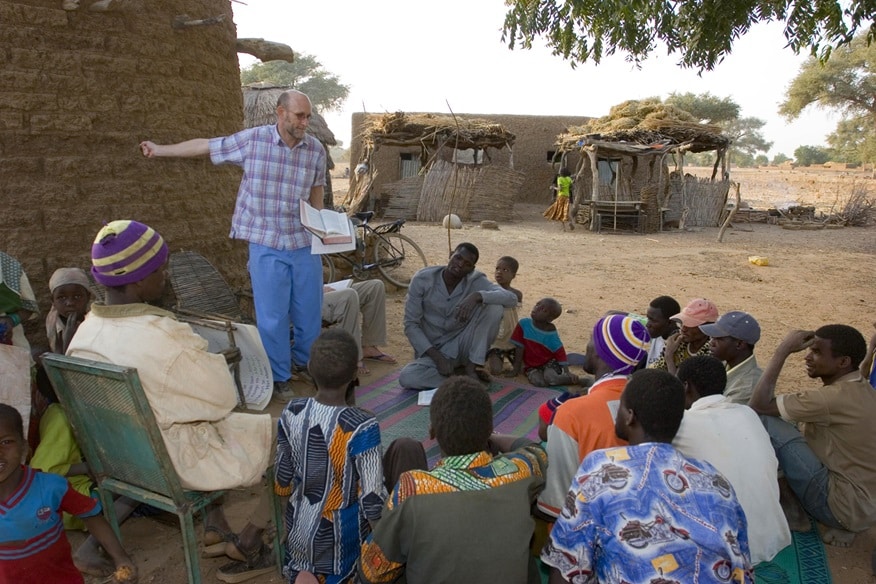
My wife and I lived in a town on the edge of the Sahara from 1992–2008. We were working among the least reached, hoping to see a church planted in the area. There were no groups of believers meeting in the town or within 100 kilometers of it when we arrived. A year after we moved there and completed language study, we got involved with a group of people in the countryside outside of town. They were subsistence farmers who lived in rural hamlets. Some of them became followers of Christ, and we began teaching them about the Christian faith and the Bible in our limited, halting speech.
A year and a half after we began working with them, one of the new believers told me his wife had just given birth. I had not realized she was pregnant. Babies in this part of the world tend to be small and women can hide their pregnancies under their loose garments. To top it off, pregnancy and birth are taboo subjects, at least during the gestation of the unborn child, and the new believers and I had not discussed what would happen after a birth.
At the time I learned about the birth there were only a few days before the naming ceremony. I had to suddenly shift my plans and think and pray hard about what to do next. I felt like I did before taking an exam, with lots of stress and tightness in my stomach. Also, I was ignorant of Hiebert’s critical contextualization method and wouldn’t have had much time to put it into practice if I did.[i]
Creating a New Naming Ceremony
Before the ceremony, I talked briefly with the father and some of the believers about what they did at a naming ceremony. I asked the believers how they thought we should celebrate the birth. They looked at me curiously and asked, “Why don’t we just do it the way you do naming ceremonies for Christian families in your country?” Imagine their surprise when I replied that we don’t have naming ceremonies in my home country, at least not in the same way and definitely not amongst my circle of acquaintances and family. This was shocking to them.
It was at that moment that I realized I had not done my homework. In discipling these new believers, I had not thought about practical matters like rites of passage in relation to the Christian faith. We were able to look cursorily at the Word together to see what was done in biblical times, but it was a quick, haphazard affair and not well thought through. Nevertheless, we made a few plans, following traditional customs where they did not seem to conflict with the Bible and adding a few innovations to make it different from what the local people would do.
Only a day or two before the ceremony, a discussion arose as to who would name the baby. I had not considered the issue at all. I assumed the parents would come up with a name even though it would not be announced until the eighth day. That was how it was done in town where we lived. As I discovered, the procedure was different in rural areas. The believers insisted that in my role as a Christian religious teacher, I was the appropriate one to choose the name. And I was not to announce the name until the naming ceremony, not even to the parents.
Swallowing hard, I thought, “Wow, what an honor and what a responsibility! How should I go about choosing a name for someone? This has to be one of the most powerful and profound duties anyone could have, especially when the children are not my own.” I decided to spend time in prayer and fasting, reading and studying the Bible, and allowing God to direct me to an appropriate name that came from the Word. Not knowing what would happen and fearing the parents might object to one name, I settled on two possibilities, drawing them from prominent biblical passages.
Together with the parents and the new believers, we decided to have a simple ceremony where I would give a gospel message, read a passage from the Bible with the name in it, then announce the name and why I had chosen it. Then I would ask the father to bring the baby from the house so I could hold him, bless him, and pray for him. This was contrary to local custom. The baby would normally stay in the house with the mother and the other women of the village. We had a ram to slaughter, but we decided to kill it after the naming ceremony was over so as not to connect the meaning of the function to any Muslim rite. We wanted it to be simply seen as food for a noon meal.
Unexpected Shift in Plans
The day of the naming ceremony occurred during cool season, but I knew it would be plenty hot by midday. I was filled with butterflies and apprehension about the specifics of the ceremony. I had assumed that the ceremony would start shortly after sunrise and be over by 8:00 a.m. at the latest, just as it happened in town. This was the point at which our plans started to go awry.
In rural areas, people do not have access to motorized or assisted transport and have to walk to get anywhere. Many family members and friends would trudge several miles to get to the village where the ceremony was to be held. Thus, after arriving in the village around 6:30 a.m., I had to sit and wait tensely for several hours before the important people arrived.
While I was waiting, I informed the father of the name I had chosen. He looked at me with a blank, crestfallen face. Hesitantly, he explained that he and his wife had already had a baby of that name who had died in infancy. That was before we had moved to the area. As I would find out later, they believed it would be like cursing the new baby to give him the same name as one they had lost. My decision to choose two names seemed at that point like a divine inspiration, and I quickly changed my Scripture readings and adjusted my planned speech to fit the second name.
Finally, at around 11:00 a.m., the father of the child gave me the go-ahead to start the ceremony. It was at that point that the local religious leader decided to start the Muslim prayers. And another person got ahold of the ram and slaughtered it out of sight of the worshipers. I was in a quandary. What should I do? Thinking quickly, I signaled to the father and the believers that we should retire to the lean-to in front of the house where the baby was ….
As you can see, many of our plans for a contextualized baby naming ceremony went amiss. We had to improvise and change plans on the spot. Since everything was done outdoors and there was no church building, we had to accommodate for many non-Christians present who were accustomed to doing things differently and had no conception of what we were trying to do. I was forced to think and act quickly and had to make snap decisions about how to handle the unexpected without causing undue offense to anyone present.
Eight Lessons
Here are some of the lessons I learned from that experience.
1. Fast and Pray
When a new ceremony is developed around rites of passage or changes are made to an old ceremony, fasting and prayer should precede and surround the whole process. This should be obvious, but its importance cannot be overstated.
2. Ask Questions
Before and after any new ceremony, ask local believers a lot of questions. Hiebert’s critical contextualization process is a helpful tool here, but you may not have a lot of time to look at all the points adequately, and it is likely that not all the biblical or local customs can be thoroughly studied. Use Hiebert’s tool where possible, but don’t make it a rigid law that must be followed to the letter. Even his method can be adapted (contextualized?) to fit the situation.
3. Prepare for the Unexpected
While it is impossible to prepare for every eventuality, it is good to have some alternate plans in place before the day of the ceremony arrives. This is especially true when you are an outsider to a place or ministry and unfamiliar with the social interactions common to the area. Be flexible and don’t get too frustrated when things don’t go as planned.
4. Let the Holy Spirit Lead
When the naming ceremony I described was interrupted by the local religious leaders, I was dismayed and asked the Lord for guidance. The inspiration I received was that the believers present should move under the lean-to adjacent to the courtyard where the prayers where in progress so that we could hold a parallel ceremony. That seemed to be accepted and went well. This is not to separate from others but to emphasize that we have a different allegiance.
5. Consider the Contextualization Issues
Address the contextualization question this way: What makes a ceremony Christian? Or perhaps it’s better to address the opposite question: What makes a ceremony not Christian? Is there something we could do to make the ceremony distinctly stand out, testify to our faith, and honor our God and Jesus? On the other hand, is there something we could do that would compromise or damage our testimony and our faith?
6. Study Rite of Passage Rituals
As I led this new church plant, I was not prepared for dealing with rites of passage. While I was busy trying to stay on top of language, teach the basics of the faith to new believers, and manage our house in a new and difficult situation, I knew that I needed to address this topic. However, I did not know how to go about it and was putting it off.
As soon as possible, it is important to study the ceremonies associated with rites of passage with new believers before they happen so that you know how to deal with the issues that arise before they come up and don’t feel rushed in doing so. Common rites of passage often center around birth, marriage, and death. In many African societies, initiation/puberty is also a time for rites of passage, at least in traditional society.
Ask questions to parse out the local culture and its particular take on rites of passage. For example, what are the main parts of this ceremony locally? Who is in charge of each part? When do the various parts of the ceremony occur? What is the purpose of each part of the practice? Where do the events take place? What local practices could be adopted or adapted to fit the situation? Is there anything that should be rejected because it does not conform to biblical principles?
This assumes, of course, that you have also taken the time to look at biblical principles surrounding such a ceremony. A little forethought goes a long way.
7. Get Familiar with Local Cultural Differences
Watch out for differences between the practices in town and the practices in rural areas and among different ethnolinguistic groups of people. I learned the hard way that practices in different settings are not always the same even though they may be geographically close. For example, the differences in starting times for the naming ceremonies and the identity of the person doing the naming were different in urban and rural areas and among different peoples living less than ten miles apart.
8. Evaluate What Happened
Sit down with the believers after the ceremony and go over every part of it. Ask more questions: What obstacles and problems did we encounter? What did you like or not like about it? What was the perception of non-believers? How could the ceremony be improved? What things should be left out in the future and what could be added to make it more meaningful? What should be kept?
New Ceremony Established
By God’s grace, the first naming ceremony in this region of the Sahel became a model for others. Subsequent naming ceremonies in Christian families followed the pattern of singing, a short message, the announcement of the name, and a personal prayer for the baby at the house. This was followed by feasting and fellowship for the remainder of the day.
The local people who were not believers gradually let the Christians take the lead in these later ceremonies and performed their own rituals on the side. There was no attempt to exclude anyone in the ceremonies but rather we used it to testify to our faith in Christ. It worked well in context, and eventually the Christians took over the ceremony and conducted it themselves.
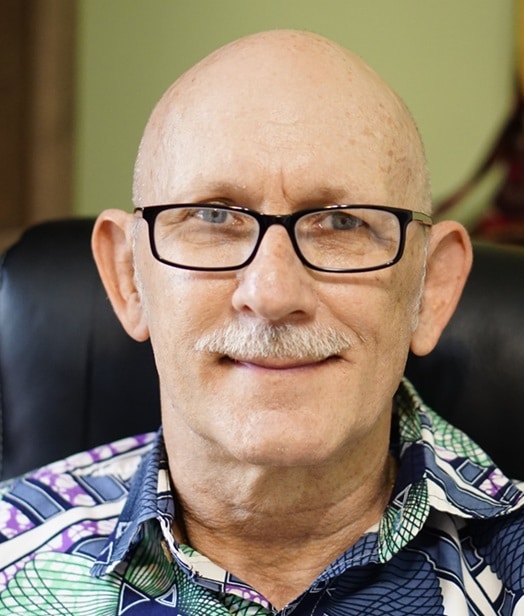
John Devalve (john.devalve@sim.org) has worked with SIM for 40 years, mostly in Niger, where he has been a youth worker, church planter, and professor at the School of Theology in Niamey. Currently residing in Ohio, he is an advisor/consultant for theological education in French-speaking Africa. Although he holds a US passport, John was born in Türkiye and received a PhD from the Oxford Centre for Mission Studies (UK) in 2018.
[i] Paul G Hiebert, “Critical Contextualization,” International Bulletin of Missionary Research 11, no. 3 (1987): 101–12. See also Hiebert, “Critical Contextualization,” Missiology: An International Review 12, no. 3 (1984).
EMQ, Volume 60, Issue 4. Copyright © 2024 by Missio Nexus. All rights reserved. Not to be reproduced or copied in any form without written permission from Missio Nexus. Email: EMQ@MissioNexus.org.




