EMQ » July – Oct 2024 » Volume 60 Issue 3
[mepr-show rules=”100329″ unauth=”message”] This content is shown only to authorized members. It is hidden from everyone else.
Holistic Missiology
Summary: As image bearers, it is time to take our rightful place as an inclusive body of believers that reflects the foot of the cross as well as the worshippers around the throne – all nations, all people groups, and all tongues.
By Linda P. Saunders
A holistic missiological approach begins by forming a fresh perspective of God’s kingdom and a renewed understanding of how inclusion, diversity, and mutuality are reflected in Scripture. The truths found within Scripture reveal the heart of God and his desire for unity, inclusion, and mutuality.
When we examine God’s blueprint for humanity, at its core is God’s longing for humankind to reflect the perfected unity of the triune God (Genesis 1:26). Moreover, the apostle Paul reminds us that we are one in Christ Jesus. Paul admonishes the church at Galatia to beware of the constructs that bring division (Galatians 3:28).
The values of unity, diversity, and inclusion are reflected in Scripture. Examples from the past and present serve as hopeful signposts that can help us learn how to identify cultural blind spots as we move toward a more diversified and kingdom-like missionary movement. Most importantly, a unified missionary force that demonstrates inclusion and mutuality is a key element that can and will drive the missiological approach into the future.
The Historical Backdrop
Too many North American missionary agencies are still predominately White. There is scarce diversity within their leadership or among their members, yet the changing demographics of the United States will impact growth within these agencies.
If our goal is to remain faithful to the Great Commission (and I believe it is), it is imperative to remember that the global missionary movement is from everywhere to everywhere and must include everyone as participants. With that said, how did we arrive to this point in time? Because the predominance of missionary agencies are homogeneous, the missionary force is still mostly segregated in her endeavors to take Christ to the nations. A brief historical backdrop is helpful.
When the first slave ships arrived at the ports of Jamestown in 1619, it would have been difficult to imagine the eventual impact of the slavery enterprise on the entire world and more specifically, the United States of America. By the late eighteenth century, William Carey’s vision of taking the gospel message to the “heathen” was in its initial stages. The Great Awakenings were also instrumental in Blacks converting to Christ, but this story is incomplete.
Many people groups – to whom Carey referred to as “heathen” – were laboring as missionaries for more than half a century before Carey embarked upon his missionary journey. Although Rebecca Protten, John Marrant, John Stewart, Boston King, and George Liele, to name a few, preceded William Carey’s Enquiry message, the missionary movement rarely includes the names of Black missionary pioneers.
Unfortunately, many memoirs, diaries, and other documents that chronicled the narratives of Black missionary legends have been lost, or worse yet, deleted from the chronicles of history. Christian Oldendorp, an eighteenth-century ethnographer and historian contended, “I have no need to apologize that the chronology of their [African] ancient history has been completely omitted. This is to be expected of a people who cannot write.”[i] As evinced by philosophies like the Fortunate Fall and Manifest Destiny, this ideology was widespread.
Early into the nineteenth century, a Eurocentric attitude gripped many missionary societies. For too long, a “Eurocentric attitude decried the African peoples, and the Protestant missionary movement came of age in this era of intense racist dialogue and suppositions.”[ii] By the late nineteenth century, arguably, the missionary movement had become a segregated endeavor. White missionary agencies were not willing to bring on Black missionaries, and Black missionaries began to shy away from the global missions movement.
In the spirit of historical accuracy and transparency, it is important to note that there were eras when the missionary movement moved toward integration and wholeness. Unfortunately, these times were much too brief and therefore did not significantly influence change that would affect our current situation.
Scriptural Reflection of Inclusion, Unity, and Diversity
From the outset, the Scriptures are replete with the call for unity. Our Heavenly Father is a God who embraces unity, inclusion, and diversity. His very creation speaks to the importance of oneness and wholeness. When we read the Genesis account of creation, the power of God’s spoken word is on display. God spoke … and whatever he spoke, came into existence.
When God created humanity though, there was a paradigm shift. First, it is clear God intended for humanity to bear his image – we were made in his likeness (Genesis 1:26). Secondly, God did not use the power of his spoken word. God formed Adam out of the dust of the earth. Then he breathed life into his nostrils, and Adam became alive with purpose (Genesis 2:7). God took his time to form man, to create a wholly distinct being different from all other creation.
So distinctly different was Adam, that God said there was not one thing in his creation worthy as a suitable partner. Again, there is a shift. God did not form another being from the dust, God took Adam’s rib and created a companion that was similar enough for companionship yet diverse enough for creative purpose (Genesis 2:20–23).
Adam and Eve were unified in purpose. While Eve was included as part of Adam – and humanity – she was distinctly different and diverse. Thus, when God brought Eve to Adam, in her inclusion she complemented Adam. In her diversity, she carried the purpose of creation. In God’s infinite wisdom, his creation bears the stamp of his approval for unity, inclusion, and diversity.
We see diversity in the animal kingdom, among the plants and fruits, in the ocean, and in the heavens. God’s creation is uniquely distinct and diverse. He created not just green trees, but there is a diversity in shades of green. He created not just one color of blue, but there are distinct shades of blue in the ocean, lakes, among flowers, and insects.
A wide variety and diversity of colors exists. We do not have one type of animal, but there are many types of animals and many families within each order and a plethora of genus within each family, and a multitude of species within each genus. God loves variety and diversity.
Sadly, sin disrupted God’s perfect plan. For this reason, Paul reminds the churches at Galatia and Colossae that as a body of believers in Christ, there are distinctions, but we are one in Christ. Distinctions and diversity do not serve the purpose of division though (Galatian 3:28, Colossians 3:11).
Different ethnicities are good. Differences in ethnolinguistic patterns are good. God created male and female, and that is good, too. Using these differences as weapons of division, disunity, and segregation was never God’s plan. As image bearers, we are called to labor together, to worship together, to take Christ to the nations, as one unified force – together.
Lessons from Our Past/Choices for Our Future
The Moravian missionaries practiced integration and inclusion. As evidenced by Rebecca Protten’s ordination by the Moravian Brethren, her inclusion as part of the leadership who administered the sacrament and trained and taught others, illustrates this point. Circa 1783, when George Liele left for Jamaica, Whites and Blacks (free and enslaved) worked together in missionary endeavors.
Shamedly, an ideology of race ruined harmonious moments of togetherness. The few periods of harmony did not outpace the protracted eras of disunity, exclusion, and segregation based on race – a manmade ideology. Most major denominations split over the contentious issues of slavery and the issues of race. Not only were White believers not interested in laboring together with Blacks in the missionary endeavor, most sided with the broader American society to derive plans to rid America of the Negro people.[iii]
Two major lessons come from this period: Be careful not to allow manmade ideologies to corrupt Christian fellowship, and secondly, beware of dogma that serves to corrode our divine purpose in Christ. Since Genesis 3:15, God’s mission – the missio Dei – has been singular in focus, “… God was in Christ, reconciling the world unto himself” (2 Corinthians 5:19, KJV).
Jesus was keenly aware of his purpose: “He came to seek and to save the lost” (Luke 19:10, NIV). As members of one body, with distinct roles, we cannot allow Satan to deceive us with the manmade concept of race. It is urgent that we become fully aware of the obstacles of race and division.
Disunity is disruptive. When we take the time to learn about our past failures, we become better equipped to make godly choices for our future. The missionary movement is a godly mandate that pushes us toward fulfilling our purpose here on earth. We are made in his image, created to worship and provoke others to good works (Hebrews 10:24).
We can only accomplish our goal by including all in the spirit of unity. Finally, we must beware of the vices that serve to disrupt, distract, and cause disunity. These diabolical devices move us further from our divine purpose. God has called all of us to work together. God created one people from one blood (Acts 17:26). As a unified people, we can do great exploits.
Embracing God’s Plan for Unity, Inclusion, and Diversity
Becoming a unified people begins with seeking inclusion and mutuality in our missionary endeavors. We embrace God’s plan by being intentional about inclusion and mutuality. We embrace God’s plan for diversity by seeing others as God created all humanity, in his image and in his likeness. When we embrace the fullness of God’s divine plan, the missiological approach will evolve into a picture of godliness and righteousness where all are welcome to participate in the missions endeavor.
Taking a holistic missiological approach enables us to initiate a fresh outlook on God’s kingdom. It also allows us to gain a renewed understanding of how unity, inclusion, and diversity are reflected in Scripture. When we seek God’s heart we find the blueprint for humanity. Inside the truths of Scripture, we clearly see our reflection – the image of God.
As image bearers, it is time to take our rightful place as an inclusive body of believers that reflects the foot of the cross as well as the worshippers around the throne – all nations, all people groups, and all tongues (Rev 7:9). Together we can seek positive ways to look for the blind spots that derail us from our unified purpose and begin to understand the importance of a unified missionary force that will drive the missiological approach into the future.
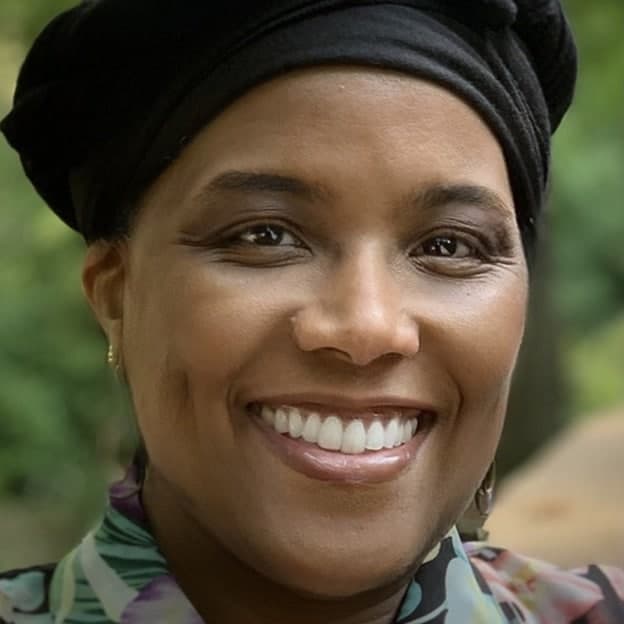
Linda P. Saunders (linpar263@gmail.com) and her husband have served as missionaries to the people of Venezuela for 20 years. Linda earned a master of divinity (MDiv) and a master of arts in global studies (MAGS) from Liberty University. She also has a PhD in intercultural studies from Columbia International University. She is a director on the board of directors for William Carey International University and serves as an adjunct professor at Liberty University.
[i] Christian Georg Andreas Oldendorp, C.G.A. Oldendorp’s History of the Mission of the Evangelical Brethren on the Caribbean Islands of St. Thomas, St. Croix, and St. John, ed. Johann Jakob Bossard (Ann Arbor, MI: Karoma Publishers, Inc., 1987), 15.
[ii] Linda P. Saunders, “Laying an Historical Foundation to Examine the African-American Church’s Relationship to 21st Century Global Missions to Create A Contextualized Missions Training Model For Future Generations of African-American Missionaries,” (PhD dissertation, Columbia International University, 2020), 219.
[iii] Daniel A. Payne, History of the African Methodist Episcopal Church (1891; reprint, North Stratford: Ayer Company Publishers, Inc., 2002), 3–5.
EMQ, Volume 60, Issue 3. Copyright © 2024 by Missio Nexus. All rights reserved. Not to be reproduced or copied in any form without written permission from Missio Nexus. Email: EMQ@MissioNexus.org.