EMQ » April–July 2024 » Volume 60 Issue 2
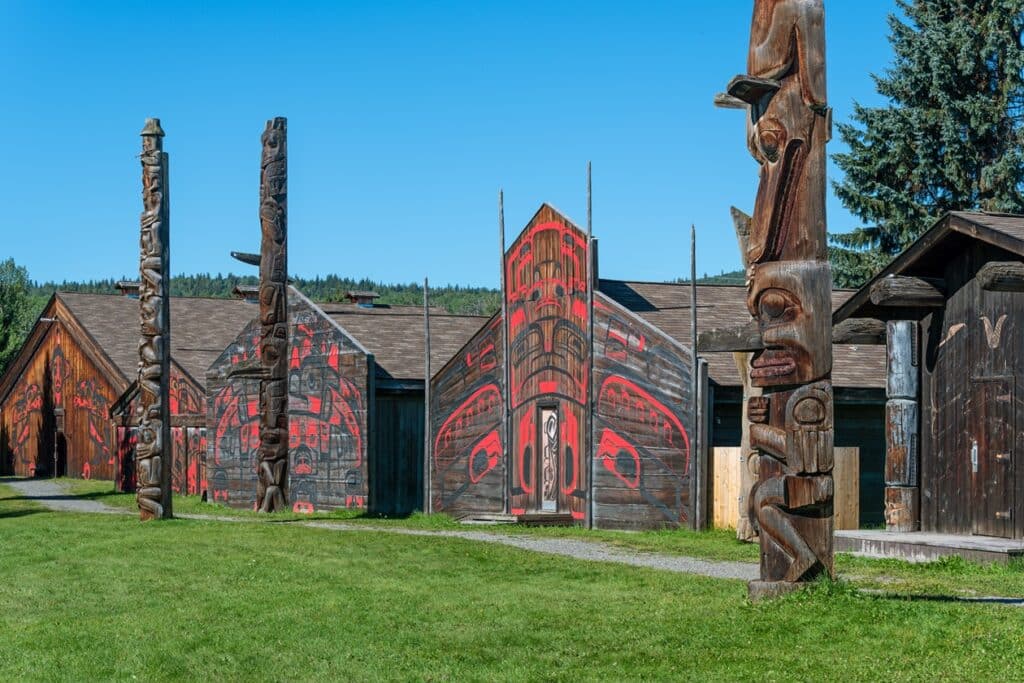
Summary: In mission history with First Nations in Canada, relationships were broken and Christianity often meant oppressive religiosity. This has resulted in open opposition to the church occurring in Indigenous communities. But a missions focus on building genuine relationships and holistic ministry is making a difference.
By Chondeug Joseph Jang
The world is changing at an unprecedented speed. Today we face enormous socio-cultural challenges including global-localization, the rise of people with no religious affiliations, changes to family structures, hyper-connection alongside hyper-individualism, and political polarization. Mission fields are not exempt from these changes. But how can Christian leaders and missions organizations be faithful to God when the world is changing so rapidly?
In this book, Canoeing the Mountains, Tod Bolsinger argues that Christian leaders must find new ways to engage in the changing, unexpected, and complex challenge of the world. To ascend the mountains and move through uncharted territory, we need to abandon the canoes and discover new navigation instruments.[i]
In our post-Christendom world, traditional churches must become missionary churches. Churches that do this successfully need to recognize that the world in front of them is nothing like the one behind them. They need to prioritize building relationships because no one will follow them off the map without trust. As they enter uncharted territory, they must learn to adapt and work together with others. Finally, they must see that reality will be different than their expectations, and it will keep changing.
This is appropriate to consider as we look at missions among Indigenous (or Aboriginal) peoples of Canada. The Canadian government recognizes three distinct Indigenous peoples: First Nations, the Inuit, and the Métiz. The 2021 census counted more than 1.1 million people amongst First Nations in Canada. These included 630 First Nations communities and 50 recognized nations and Indigenous languages.[ii] The census recorded nearly 70 thousand Inuit[iii] and around a half million Métiz.[iv]
There are many complicated dimensions to missions in these communities. Opposition against the church has become more vigorous, enough to demolish church buildings. This is because a significant part of the church’s historical engagement with the Indigenous peoples in Canada has been marred by either an overt endorsement of cultural genocide or a silent ignorance of it. Underneath this is a lack of sound missiology and a proliferation of wrong theology.
What could have happened if the church engaged differently? How might church history have been changed if the gospel message was contextualized for Indigenous contexts in Canada and delivered in a humble and compassionate way?
Loss of Cultural Identity
A key contributor to current suffering was government-funded and church-run residential boarding schools. This program ran in Canada from 1870s until 1997.[v] It separated Indigenous children from their families with the goal of isolating them from their languages and cultures to assimilate them into the majority Canadian culture. These schools were mostly administered by Roman Catholic, Anglican, United Church of Canada, Methodist, and Presbyterian churches.[vi] Children in these school suffered abuse and even death.
Dramatic cultural identity losses occurred in residential schools, which left a vacuum where life, purpose, and meaning might reside. The consequences have been devastating. Various studies show that Indigenous communities in Canada have the highest rates of alcoholism, substance abuse, family loss, domestic violence, physical illness, depression, mental illness, and suicide.
Dr. Roderick McCormick (Kanienkehaka-Mohawk) is a psychologist and was an associate professor of counseling psychology at the University of British Columbia (UBC) for 18 years. He, along with five others, studied suicide risk among Inuit. They concluded that residential school abuse in all its forms is a significant factor in increased risk of suicide.[vii]
A 2019 government report on suicide risks amongst Indigenous peoples in the province of British Columbia revealed significantly higher rates of suicide amongst Indigenous in comparison to non-Indigenous between 2011 and 2016. The First Nations suicide rate was 300% higher. Amongst Métis, it was 200% higher. And with Inuit, the rate was 900% more.[viii]
In another study, McCormick noted, “the devastating effect of the attempts at cultural genocide have revealed to Aboriginal people the strong link between cultural dislocation and sickness.” Therefore, he suggested healing strategies that are sensitively able to respond to the factors that facilitate healing for Indigenous people.[ix]
For this reason, many Indigenous communities are collectively engaging in rehabilitating and preserving their own cultures. Gerald Taiake Alfred (Kanienkehaka-Mohawk) envisions a future where Indigenous and non-Indigenous people connect in a “nation to nation relationship” that facilitates “cooperating and sharing the land.”[x] He suggests a contextual approach to resolving Indigenous issues and insists that the only way for First Nations peoples to survive is to reorient their way of life – their culture and politics – toward their own values.[xi] Yet some parts of the movement toward cultural restoration have turned into an anti-Christianity movement.
Rethinking Mission
According to David Bosch, “Mission is a multifaceted ministry, in respect of witness, service, justice, healing, reconciliation, liberation, peace, evangelism, fellowship, church planting, contextualisation, and much more.”[xii] Mission is to not only to proclaim Jesus, but also to actively express his concern for justice and poverty.
Churches, missionaries, and mission organizations are called to Jesus’s holistic work: restoring people into right relationship with God, themselves, others, and to all of creation. Mission can be defined in terms of restoration of all these relationships.
As theologian Tim Keller said, “The kingdom is the renewal of the entire world through the influx of supernatural power. As everything is brought back under the rule and authority of Christ, it will be restored to health, beauty, and freedom.”[xiii]
Mission communities also must express the gospel properly within the context of a target group’s culture. To do this well, we need to understand the culture and history of our mission field. And we need to be willing to collaborate, working alongside the local communities we want to serve to affirm the expression and the relevancy of the gospel in their context.
All cultures have their own ways of expressing meaning, purpose, constraints, impossibilities, and boundaries within which they can create or reject. The challenge comes in discerning how to express the gospel message within the context in ways that are accurate to both the culture and Scripture.
Indigenous cultures in Canada share a deep respect for nature. In traditional spirituality, nature is viewed in a more animistic way. Human beings are part of the larger web of all creation and have spiritual kinship with the earth and other creatures. My Indigenous friend explains it like this: “Stones are alive. Trees talk. Birds have feelings. Animals have a conscience. The earth rejoices and hurts. All creatures are from mother nature. Nature is sacred and spiritual.”
Indigenous cultures also highly value relationships. They place importance on having humility, listening to neighbors, being generous to strangers, respecting elders, being discreet and thoughtful, preserving harmony in relationships and life, spending time contemplating reality, cooperating with others, caring for family and friends, and sharing their customs.
It takes spiritual discernment to understand where cultures align or collide with a biblical worldview. Without cultural analysis, missions can cause more complicated problems – even spiritual abuse or syncretism. At the same time, cultural understanding must inform the transmission of the gospel. Throwing out cultural identity is a serious theological mistake, and we can see the dire consequences of doing so in missions history. It does not properly integrate with how the image of God is imprinted on a people and a culture.
Love Corps
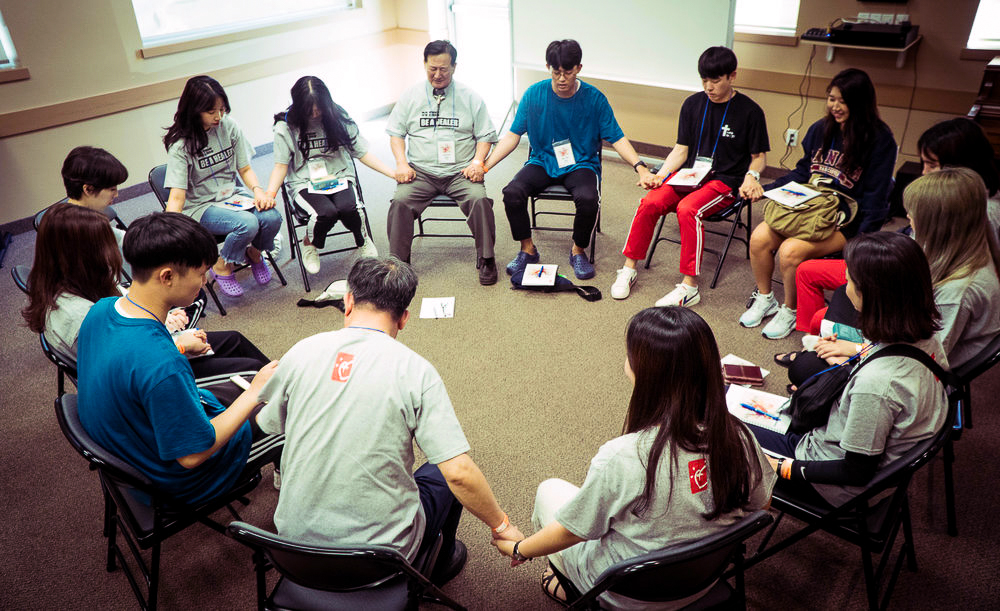
In 1995, Rev. Hong Sung-Deuk launched Love Corps (lovecorps.com) with co-founder and Indigenous leader, Bruce Brown, in response to Korean churches in Metro Vancouver sensing a collective calling to engage in First Nations mission together. They were joined by Korean congregations and missionaries from South Korea and the US. Together, they are a strong alliance of individuals, churches, and denominations ready and willing to participate with one another in a complex mission field. And their collaboration continues to be important in the implementation of the missio Dei strategies among the First Nations peoples they serve.
The mission movement initiated by Love Corps spread into Alberta, Manitoba, and Toronto. Love Corps BC was followed by Love Corps Alberta and Love Corps Manitoba. More than 50 churches have participated together to serve Indigenous communities on 70 reservations. They have successfully implemented outreaches that are both long and short-term with an emphasis on both Christ-centered and context-orientation mission. Since Love Corps began almost 30 years ago, more than 40 missionaries have been sent to Indigenous reservations in challenging rural and remote locations across Canada.
As I trained first-term missionaries, I told them, “Slow and steady wins the race. Silence speaks louder than many words. Humble servanthood! Friendship!”
Priority is placed on building relationships with communities living on reservations and Indigenous leaders. Instead of direct gospel proclamation and church planting, Korean mission communities tenaciously focus on developing friendships and building trust until they earn the right to speak about other topics.
One way this occurs is through cultural exchange programs. Korean communities and First Nations people share their food, drama, dancing, art, and drum-performance which forms non-religious common ground they can stand on, together. This elevates friendship and mutual respect and opens the door of welcome by Indigenous people.
Mission communities emphasize demonstrating Christ-like character. Humility, empathic listening, and a no condemning policy shape the foundation of relationship-oriented strategies. Compassion is paramount, and focus is placed on being a “faithful presence.”
Discovering needs and fulfilling them in various ways is also a critical part of how Korean missionaries serve. They have provided childcare, after-school programs, acupuncture therapy, vegetable production in green houses, business operation (a mushroom producing company), taekwondo lessons (Korean martial art), and a healing ministry by prayer.
They also seek to understand the context of First Nations in terms of socio-cultural level, history, tradition, rituals, and mission movement. In mission history with First Nations, relationships were broken and Christianity often meant oppressive religiosity. Korean missionaries acknowledge the errors and wrongs of previous church engagements and mission endeavours. They work to be part of re-writing mission narratives, and they give attention to diverse aspects of healing and reconciliation ministry that benefit both individuals and whole communities.
By going from where First Nations people are, not from where we are, attitudes have slowly and steadily changed. For example, at Ahousaht Reserve on Vancouver Island, the community shifted from hostility to hospitality and supplying for the needs of our missionaries including housing.
Korean mission communities fully admit that they can fail. Approaching missions from their own assumptions and perspectives would result in imposing their own theological agenda or presuppositions. This would worsen relationships and potentially create some of the same problems found in residential schools. This would be religious violence and an obstacle to the gospel!
Context is key in mission engagement. Self-awareness, cultural analysis, spiritual discernment, and adaptive processes all help prevent mission work from becoming ineffective or misinterpreted.
“Church on the Road”
The pandemic has further changed the worship context and provided opportunities for fresh innovation in our mission approaches. In the wake of the pandemic, the shift to online platforms became a necessity for various sectors, including church worship services. This transition has made people more accustomed to virtual services and online meetings.
Embracing this new normal, a novel approach to mission and worship emerged. Rev. Lip-Boon Lee developed a unique worship model that combines forms of online and offline church. He calls it “Church on the Road.” It is aimed at connecting First Nations individuals and churches with vacant pulpits with worship services.
Services are conducted online which eliminates geographic barriers and enables individuals to worship collectively from diverse locations. Worship is set in ever-changing venues. This adds an intriguing element for participants as they anticipate locations. Glimpses of surrounding scenery are offered and coupled with music and narrations specific to each worship location. This helps make worship welcoming for even nonbelievers or those unfamiliar with church settings.
This experimental approach not only fosters a shared mission journey but also provides participants with the opportunity to explore the beauty of God’s creation, engage in rural and Indigenous ministries, visit holy places mentioned in the Bible, and delve into meaningful locations in Christian history – all while partaking in Holy Communion Services.
Practicing Compassion
Antagonism against churches and missionaries is intense on most First Nations reservations across Canada, so many people wonder how we can do missions with these communities and in these locations. Biblically speaking, when we participate in God’s ongoing work of practicing his compassion, we become Spirit-empowered partners with him in his ministry of reconciliation to the world (2 Corinthians 5:14–21). People in crisis and suffering are inclined to search for an external source of healing and solution. Healing and restoration can occur through relational empowerment in the context of constructive relationships.
Compassion is a crucially redemptive factor; it desires not merely to share, but to overcome the suffering of the other together. As Henri Nouwen properly affirmed, the simple presence of Christian believers with others in their times of suffering and pain can do more than any other action or word of advice to console them.[xiv] Compassion must be the norm on which all other values, theories, and facts are based and exercised. Compassion works both internally and externally to grant power to individuals, in particular to First Nations people to overcome their dependence and despair.
When Karl Barth calls Jesus “a man for others,” he means that Jesus came to sacrifice, show compassion, and ultimately give himself for others.[xv] Jesus did not merely help people in suffering from a safe distance. He entered into their suffering and pain and showed us the greatest example of solidarity with others. We are called to follow his example and similarly join ourselves with others in their sufferings and pains.
We are made in the divine image of God but have fallen from this basic identity. Merely on our own we are lost and confused. True identity is reclaimed by God in Christ so that we return to our genuine, made-in-the-image of God’s image.
The Bible says, “Be compassionate as your father is compassionate” (Luke 6:36–37). Compassion respects the integrity of the one in need and ultimately transcends conditional pity, sympathy, and empathy. It is both the basis and incentive for actions of morality, and it is neither egoistic nor malicious. Ultimately, compassion is the redemptive expression of God’s love, and people respond to it.
First Nations people are in a period of deep spiritual disruption, anguish, and complex emotional conflict. Compassion can shepherd and guide their inner life through their acute pain and despair to full healing. When we come alongside suffering people, we do so as Christ himself. This becomes a redemptive bridge to First Nations people.
Back to Basics
Despite the brokenness and complexity of this mission field, our answer should be ad-fontes (back to basics). Mission movements fail when they are implemented without taking the socio-cultural context into account. In mission history, wrong theology and misguided missiology has de-humanized, de-formed, and de-valued people. Local churches and mission organizations, as mission communities, need to firmly stand on biblical grounds. We need to participate together in God’s ongoing redemptive story in the right way as his kingdom community.
Mission must also be a collective response to the calling of the mission field. It must be congruent with the calling of God to restore the genuine value of humanity – the image of God in every person. In First Nations communities, we need to rethink, restart, and restore their cultural narrative from a theological framework that relevantly engages with them in the mission of God. Mission is participating in diverse ways with the ongoing story of God. First Nations missions should be done in relevancy, within its context. All should be done for the kingdom of God and his glory alone!

Chondeug Joseph Jang (cdjang3@yahoo.com) was born in the Republic of Korea, and he has engaged in First Nations missions in Canada with his wife, Hanna, since 2004. Their focus has been on church plating and leadership development. He is currently working on his doctorate at Trinity Western University. He desires to see Korean churches and prayer teams mobilized for mission, to support and mentor missionaries, and to see the next generation engaged in God’s mission.
[i] Tod Bolsinger, Canoeing the Mountains: Christian Leadership in Uncharted Territory (Downers Grove, IL: InterVarsity Press, 2015).
[ii] “First Nations”, Indigenous and Northern Affairs Canada, accessed January 23, 2024, https://www.rcaanc-cirnac.gc.ca/eng/1100100013791/1535470872302.
[iii] “Inuit,” Indigenous and Northern Affairs Canada, accessed January 23, 2024, https://www.rcaanc-cirnac.gc.ca/eng/1100100014187/1534785248701.
[iv] “Métis,” Indigenous and Northern Affairs Canada, accessed January 23, 2024, https://www.rcaanc-cirnac.gc.ca/eng/1100100014427/1535467913043.
[v] “Residential Schools and the Discoveries in Kamloops, B.C., and Elsewhere in Canada,” CBC News, last updated June 24, 2021, https://www.cbc.ca/news/canada/canada-residential-schools-kamloops-faq-1.6051632.
[vi] “A History of Residential Schools in Canada – Part 1: Origins to 1939,” Truth and Reconciliation Commission of Canada, accessed January 23, 2024, https://web.archive.org/web/20210513171617/http://www.trc.ca/assets/pdf/Volume_1_History_Part_1_English_Web.pdf.
[vii] Eduardo Chachamovich, Laurence Kirmayer, John Haggarty, Margaret Cargo, Rod McCormick, and Gustavo Turecki, “Suicide Among Inuit: Results From a Large, Epidemiologically Representative Follow-Back Study in Nunavut,” Canadian Journal of Psychiatry 60 (2015): 268–275, https://doi.org/10.1177/070674371506000605.
[viii] “Suicide among First Nations people, Métis and Inuit (2011–2016): Findings from the 2011 Canadian Census Health and Environment Cohort (CanCHEC),” Statistics Canada, June 28, 2019, https://www150.statcan.gc.ca/n1/daily-quotidien/190628/dq190628c-eng.htm.
[ix] Rod M. McCormick, “Aboriginal Traditions in the Treatment of Substance Abuse,” Canadian Journal of Counselling 34, no. 1 (2000): 28, https://cjc-rcc.ucalgary.ca/article/view/58763.
[x] “What can universities do to support Indigenous resurgence?,” YouTube video, 5:49, posted by Concordia University, May 1, 2015, https://youtu.be/cVGiYmNTP1w?feature=shared.
[xi] Taiaiake Alfred, Peace, Power, Righteousness: An Indigenous Manifesto, 2nd ed. (Don Mills, ON: Oxford University Press, 2009).
[xii] David Bosch, Transforming Mission (Maryknoll, NY: Orbis, 1991), 512.
[xiii] Timothy J. Keller, Ministries of Mercy: The Call of the Jericho Road, 2nd ed. (Phillipsburg, N.J.: Presbyterian and Reformed, 1997), 52–53.
[xiv] Henri J.M. Nouwen, Out of Solitude: Three Meditations on the Christian Life (Notre Dame, IN: Ave Maria Press, 2004), 38.
[xv] Karl Barth, The Doctrine of Creation, Church Dogmatics, volume 3, part 2 (London: Bloomsbury T&T Clark, 2004), 210.
EMQ, Volume 60, Issue 2. Copyright © 2024 by Missio Nexus. All rights reserved. Not to be reproduced or copied in any form without written permission from Missio Nexus. Email: EMQ@MissioNexus.org.