EMQ » July–September 2023 » Volume 59 Issue 4
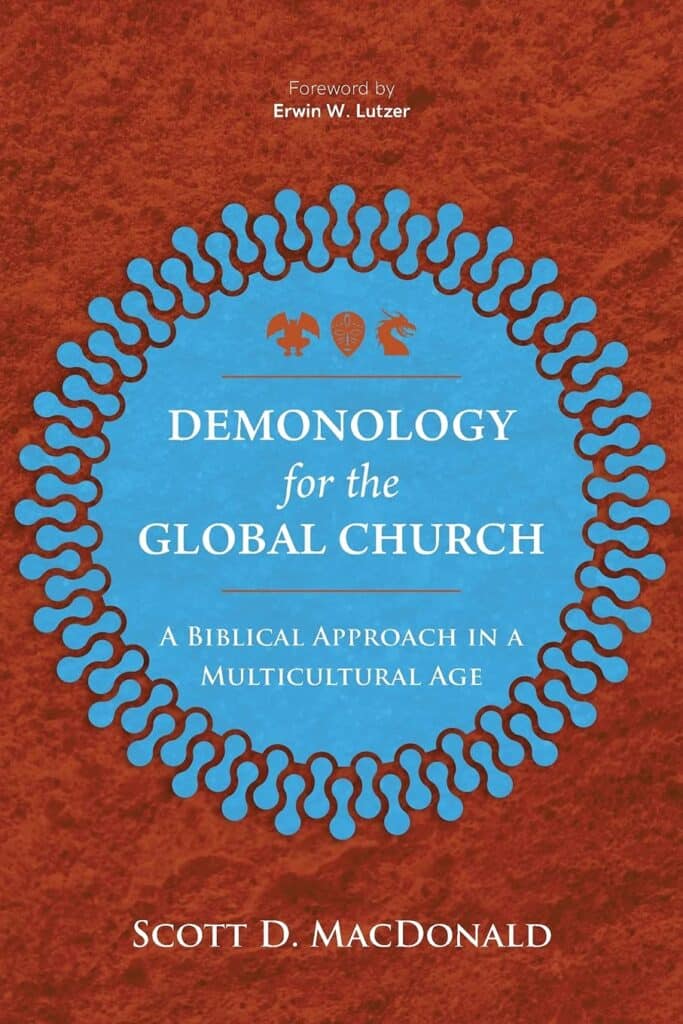
Demonology for the Global Church: A Biblical Approach in a Multicultural World
By Scott D. MacDonald
Langham Global Library, 2021
163 pages
US$17.24
*As an Amazon Associate Missio Nexus earns from qualifying purchases.
Reviewed by Mark D. Wood, director of Kingdom Leadership Training Center in Darhan, Mongolia.
As God’s people engage with God’s mission, they will encounter opposition from the Evil One and his demons. The reality of demons and how God’s people respond to them form the basis for Scott MacDonald’s work, Demonology for the Global Church. MacDonald writes, “May this work call the global church – both in the West and in the Majority World – back from her cultural, philosophical wanderings to embrace the demonology of the Bible” (4). MacDonald is concerned that when it comes to demons “We tend to express a view of the demonic that is more in line with our culture than our Bible” (11).
The book’s first three chapters deal with considerations, objections, and implications for how to do demonology in a globalized, multicultural context. In chapter 3, MacDonald outlines his aims to develop a demonology based on biblical centrality, hermeneutical consistency, historical faithfulness, and theological harmony.
Chapters 4 through 7 address a biblical theology of demonology. Chapter 4, “The Malevolent Activity of Demons,” outlines ten activities of demons from scripture. Chapters 5, 6, and 7 examine the recorded speech of demons, the nature of demons, and the corporate influence of demons. I found these three chapters to be the most robust and insightful. Chapters 8 and 9 address the purpose and challenges of a demonology for the global church.
The book is very accessible. I appreciated MacDonald’s approach drawing on Scripture as the foundation for building a demonology. The work on the malevolent activity of demons in chapter 4 was particularly insightful. I think the book would be a good supplementary text for introducing demonology and for those interested in the topic. The book is very focused on a cognitive understanding of the topic.
While MacDonald has succeeded in setting forth a biblical demonology, I am not sure he succeeds at providing one for the global church. There are three areas of improvement that I would suggest for this book. The first area is that the absence of any reference to Paul Hiebert or the “Excluded Middle” is noticeable. Western and non-Western worldviews and beliefs about beings such as demons need to be better explored, especially for a global audience. Hiebert’s lens, highlighting Western blind spots when it comes to the supernatural, would be a welcome addition.
Second, a globalized demonology must consider both Western and non-Western perspectives in dialogue. Although some non-Western voices, such as Byang Kato, are represented, they are few, especially in comparison to Barth and Schleiermacher. Is the intended audience truly the global church or is it just the Western church? What do non-Western cultures have to say and contribute to demonology and biblical interpretation? I wish some aspects, such as what the early church fathers thought of demons, would be expanded to help cover the gap between East and West.
The third area for improvement is the need for pastoral application. The book represents a strong orthodoxy, its strongest attribute, but begs for orthopraxy. In contexts like the one in which I serve, the primary question is not whether demons exist, but how people can get set free.
For Further Reading
Transforming Worldviews: An Anthropological Understanding of How People Change by Paul G. Hiebert (Baker Academic, 2008).
Soul Care: Seven Transformational Principles for a Healthy Soul by Rob Reimer (Carpenter’s Son Publishing, 2016).
EMQ, Volume 59, Issue 4. Copyright © 2023 by Missio Nexus. All rights reserved. Not to be reproduced or copied in any form without written permission from Missio Nexus. Email: EMQ@MissioNexus.org.