
EMQ » July–September 2023 » Volume 59 Issue 4
[mepr-show rules=”100329″] [/mepr-show]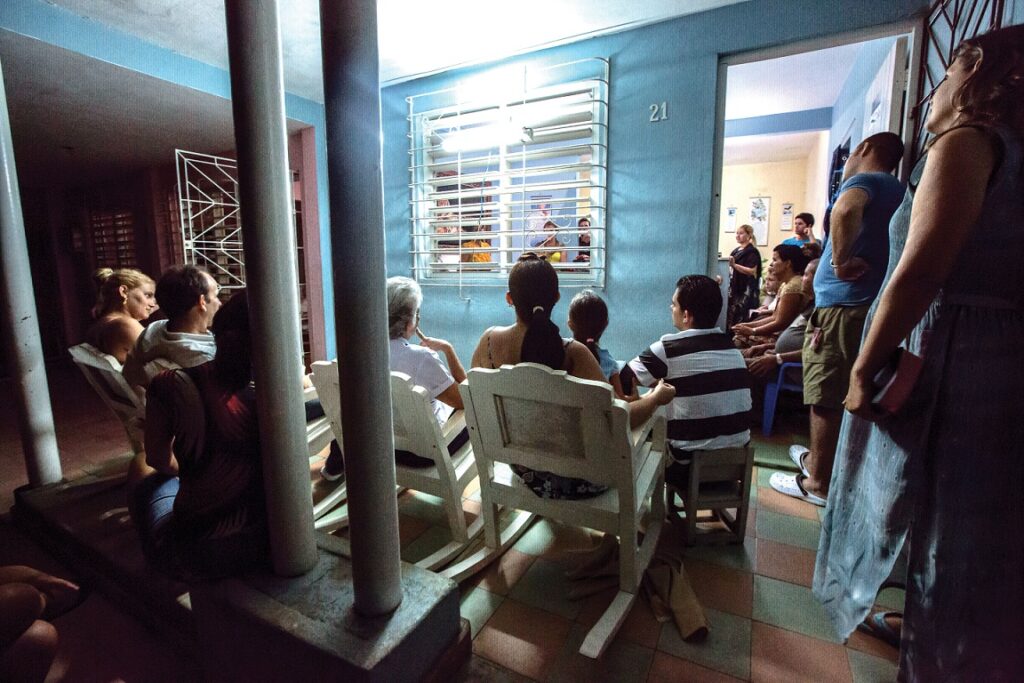
Summary: Globally, 1,965 church planting movements (CPMs) are being reported, with approximately 90% of these among current or former unreached people groups. These reports have been compiled by the 24:14 Coalition. Our primary goal has been to find out where the unreached are being reached so we can identify the gaps where the unreached are not being reached. But in the process, we have shared information about movements, globally and regionally, which has led to some people feeling frustrated when they cannot know more.
By Stan Parks, with Bert Hickman, Dave Coles, David Garrison, Kent Parks, Justin Long, and Wes Watkins
Fifty years ago, the unreached world remained relatively unengaged and unresponsive. After more than 200 years of modern mission efforts, Muslim, Hindu, and Buddhist populations remained still mostly untouched. But God’s work in recent decades has been amazing.
Globally, 1,965 church planting movements (CPMs) are being self-reported,[i] with approximately 90% of these among current or former unreached people groups. These reports have been compiled by the 24:14 Coalition – a family of movement leaders and disciples, movement practitioners, and global Body of Christ partners focused on catalyzing kingdom movements in every unreached people and place. In our eagerness to report God’s amazing works, we may have inadvertently overemphasized the numbers.
Our primary goal has been to find out where the unreached are being reached so we can identify the gaps where the unreached are not being reached. Since most movements are being started by other movements, knowing where movements currently exist is crucial in helping them start new movements – both organically and intentionally. But in the process, we have shared information about movements, globally and regionally, which has led to some people feeling frustrated when they cannot know more.
Our rule has been that the information belongs to the movements – so we do not have the right to share that information. We have only been able to compile this information by creating trust that we will only share the information in ways they prescribe. Unfortunately, issues of security prevent more transparency in the reporting than we all desire.
Considering this, 24:14’s global leadership has decided to de-emphasize sharing global and regional information. We never intended to imply that simple numerical success should drive our missiology. Nor did we intend to come across as sensationalistic. We simply wanted to inform and edify the body of Christ with what we perceive to be wonderful works of God.
Acknowledging that we live in a world of misinformation, we appreciate the desire to “fact check” public reports. Honoring the truth is paramount, as it reflects our reverence for God’s character and a desire for integrity. Moving forward, we encourage those who want to know more to let us connect them with regional 24:14 teams, who use the movement data to mobilize their people to reach the gaps.
Movements are a Result of Global Efforts
To put movement statistics in context, we need to understand that the increased number of disciples among the unreached has resulted from global efforts orchestrated by God over the last five decades. A growing emphasis on information and prayer for the unreached world began in the latter half of the twentieth century. This included Operation World (1974), Perspectives Courses (1981), World Christian Encyclopedia (1982), Global Prayer Digest (1982), Praying through the Window (1991), “30 Days Muslim World Prayer Guide” (1992), Joshua Project (joshuaproject.net), the AD2000 movement, Ethne, Adopt-a-People Clearinghouse, Call2All (call2all.org), Finishing the Task (finishingthetask.com), GACX (gacx.io), GCPN (gcpn.info), 24:14 (2414now.net), and many more.
Focused networks giving key focus to the unreached include COMIBAM (Ibero-America), MANI (Africa), SEALink (SEAsia), IMA (India), SEANet (Buddhist World), Central Asia Consultation, Vision 5:9 (Muslim World) and many more. Unreached people group (UPG) prayer profiles, websites, articles, videos, and many other resources have been produced in many countries and translated into many languages. A new wave of UPG-focused prayer and effort has spread through God’s people all around the world. We should not be surprised when God answers the prayers he has put into the hearts of his people.
Some find it difficult to believe the scale of the reports of movements taking place in the unreached world. We confess the extent of these movements has surprised us as well. Is it really possible that large numbers of people are turning to Jesus in areas that have historically been unresponsive to the message? The numbers being reported may seem so large that more evidence should be publicly available. Sometimes outsiders or institutional church leaders living in or visiting areas where movements have been reported state, “If this were happening, I would know about it,” or “I have talked to believers I know there, and none of them know about this.”
A movement of thousands of believers in a city or region of millions will often leave a public footprint (cf. Acts 19:26), and we have seen this with some movements. I have personally seen newspaper articles with photos of a specific movement leader – calling for him to be stopped because millions of people in the region were becoming Christians. I have also seen national news channel videos interviewing people to know why a large village was now 100% Christians and another one was 90% Christian.
However, this public footprint is not usually the case, since most modern movements are in areas of high persecution. Small churches meeting in homes, using local music (or no music at all for security reasons), with local language and terms, would not be obvious. I have been privileged to visit some house churches in these movements. Due to their small size and use of local patterns, anyone walking past the house would never guess a church was meeting there.
Persecution from the World and Exposure by Fellow Christians
Some Christians assume that believers in these movements would surely make contact with existing institutional churches and/or missionaries. Yet most of these churches exist in contexts where they have to be very aware of persecution, so they intentionally keep a low profile from the dominant religious leaders and government authorities.
Some movement churches have been unintentionally exposed to persecutors by other Christians, through careless sharing of information – either locally or even globally. Shockingly, sometimes fellow Christians intentionally report movement disciples and churches to the government or radical religionists, to redirect threatened persecution from their institutional churches to the movement churches.
One movement leader, who came from a radical background in his former religion, told me, “We know who you are – both local believers and foreign believers – and we have great respect for those who truly live a Jesus lifestyle. When we share with radicals and fundamentalists in our former religion, we even point to you as proof against the accusations of Christianity being an immoral religion. However, if we connected with you, people would think you are controlling us or bribing us to follow Jesus. Our associating with you would also endanger you since we are such a threat to our former religion.”
Some reports of movements in more open areas such as Europe and North America have caused skepticism when these movements also do not want to be publicly connected. Some claim that since these movements’ context is not dangerous for them, their avoidance of contact calls into question their veracity. Most of these movements are spill-overs among immigrants from movements in unreached portions of the world. Outsiders claiming they have nothing to fear ignore the fact that violence and intimidation can still commonly occur among immigrant populations, as can threats and reprisals toward their families back in their homelands.
A second reason for some movements’ reluctance to connect in open contexts is the fear of unhealthy influence. One movement in Europe with over 800 house churches, among primarily indigenous non-immigrant populations, will not allow us to connect them with any outsiders. Their past experience has revealed several unhelpful dynamics.
Disciples have been told they are not a real church because they do not have a building and/or a theologically educated pastor. They have been told they are not qualified to lead, baptize, or teach God’s word. They have had outsiders offer to hire their best leaders to work for outside churches and denominations. They see the danger of influence by the prevailing model that emphasizes knowledge over loving obedience. Many movements in all contexts have faced similar challenges and thus become wisely hesitant to open themselves up to these unhealthy influences.
Forty distinct movement families currently report multiple movements (and more exist that do not report) – with a wide variety of partnerships of people, teams, agencies, and churches from every inhabited continent. Some people remain convinced that these reports of movements are exaggerated or not true. On a few occasions, false reporting has been uncovered and rightly corrected. We are grieved at this, as are all in movements who both desire and practice godly integrity in their reporting. However, in the movements we track, stories abound in authentic (often quirky) details. Principles align remarkably between people who have never met, willingness to admit failures is widespread, and echoes of the book of the Acts offer credible indications that God is indeed working in amazing ways.
One key question to consider is, “What motive might one have for falsely claiming these numbers?”[ii] Most critics point to a motivation of seeking money from the outside. On a very small number of occasions, this has regretfully happened. Yet most of these movements receive very little outside money. If their main motivation were raising money, they are actually not very good at it. A key reason their churches multiply is that they do not use outside money to sustain the churches.
Outside funding could never keep pace with the rapid generational multiplication found in these movements. The vast majority have neither salaried pastors nor buildings; the few who have these fund them from the local churches. The main reason movements accept any outside money is to help them start new work in unreached peoples and places – and even much of this is funded internally.
External Assessments
Just last week, I heard about a missionary living in the main city of a reportedly large movement, who insisted that because neither he nor other believers among his contacts knew any of the movement churches, it must be a lie. Yet he was talking about the Bhojpuri movement,[iii] which has had outside audits in 1996, 2000, 2008, 2016, and 2022, including one comprised of representatives from six different mission agencies, including both Indian and outsider leaders and researchers.
Each audit has concluded that the numbers may well be larger than are being reported. I have been in five or six Bhojpuri house churches and met with several hundred of their leaders in various meetings over multiple years. I have seen the incredible vitality of God in these brothers and sisters. In the 24:14 leadership team of India, leaders of six other movement families, impacting over 800 UPGs and including millions of disciples, have expressed their appreciation for the Bhojpuri movement pioneering the way in India, and their desire to learn and collaborate more effectively together.
At Lausanne III (Cape Town 2010), one of the Bhojpuri movement leaders shared a report of God’s work in that movement. Dr. Jerry Rankin, a retired president of the International Mission Board of the Southern Baptists stood up and said, “I want to tell you that I used to reject that the Bhojpuri movement had happened, and I believed these leaders were not being truthful. I want to say in front of this whole group that I was wrong, and I ask for forgiveness.”
Despite these assessments, many still think the Bhojpuri movement cannot be happening or is grossly exaggerated. Some ask, “How can these movements be proven?” But a true/false dichotomy is not the best way to assess complex social phenomena. Better to speak of accuracy and credibility. To that end, multiple assessments of movements have been done in Asia and Africa. Well-respected research teams have concluded that the vast majority of movement reports are credible and have helped improve the accuracy of others.
The World Christian Database, a globally respected source of quantitative data on Christianity, includes information on movements among the more than 7,500 denominations it lists individually. Among them are three Han house church networks in China with almost 55 million affiliated Christians, as of 2015. Entries for Muslim-background believers in 43 countries, for Hindu-background believers in Christ in three countries, and for Buddhist-background believers in Christ in three countries are included as well.[iv]
Assessments are Primarily for Internal Quality
Internal reporting and external audits for movements are usually done for internal reasons, not for external communication and fundraising. These movements work diligently to report, and evaluate these reports to reinforce strengths and address weaknesses and failures. We can see some parallels in the book of Acts.
We often talk about wanting our churches to become more like New Testament churches. Yet a significant percentage of the Epistles were written to address ignorance, error, heresy, or sin in New Testament churches. Churches within these modern movements readily admit similar challenges with human weaknesses and failures. As we seek to learn from these movements, we can also with humility offer our prayers and assistance to help them as they strive to grow stronger and deeper as disciples, leaders, churches, and families of churches.
One movement servant put it this way:
The heavy burden that apostolic agents carry for the expansion and the deepening of the church, which requires activating the whole apostle, prophet, evangelist, shepherd, teacher leadership within their movements, is a major part of the next 30 years of these movements. We need look no farther than the seven churches in Revelation to recognize the ongoing battle with Satan that was faced by even the strongest and best taught of the movements within a mere 20 years.[v]
A Warning Against Judgment and Slander
One final question is, “To whom does the reality of church planting movements need to be demonstrated?” Whose imprimatur (or official license) do we need before acknowledging these movements as valid works of God? Why should the Western church with rampant decline and aberrant theological beliefs among many members[vi] demand that these movements prove anything to them? Those of us in the West should be eagerly trying to learn from movements and asking them to pray for God to rescue us from our current decline.
Some will accept with faith and rejoicing the multitude of reports from movements around the world. Others will feel some skepticism but reserve judgement and explore how they can play a part. This concern for truth is a gift to help us become stronger and healthier in our evaluation and implementation of movement efforts.
My plea is to avoid a destructive tendency in the body of Christ, which without evidence accuses movement practitioners, large numbers of brothers and sisters in Christ, of deception. Thinking something cannot be happening because “I have not seen it” is not a valid argument, nor is such slander biblically justifiable.
In a recent conversation about this issue, David Garrison pointed out that in the 1970s and ’80s many outsiders found it hard to believe that the church was growing rapidly in China, yet we now have almost universal agreement that the Chinese church grew from 1 million in 1950 to over 100 million today. Why would it be impossible to see a similar number arise among the unreached and other groups spread across many countries over the last 40 years?
I have spent many hours and days with hundreds of leaders from well over 300 different church planting movements. I have prayed with them, heard their testimonies, rejoiced, and grieved alongside them, and fellowshipped together in many ways. They have sacrificed and served far beyond what I have ever done. The world is truly not worthy of them (Hebrews 11:38).
We may be surprised by how God is answering our prayers to reach the unreached, but upon further reflection, we should expect this. God very often works at the margins rather than at the center of ecclesiastical power. He delights to use the unexpected, the uneducated, the weak, and the foolish (I Corinthians 1:26–31). How else can a group be reached except by indigenous disciple makers multiplying disciple makers?
In many cases, God is repeating the pattern of transforming Sauls – who were respected leaders and fervent opponents of the gospel – into Pauls, who desire to see no place left without the gospel. That these movements would be underground (like the early church in the catacombs) and highly persecuted also seems reflective of the historical pattern of the church. Chinese church leaders have said the church should be like termites: the goal is for the homeowner to have no idea the termites are there until they emerge with enough strength to be unstoppable.
Toward a Posture of Trust, Love, and Respect
Considering their size and dynamic growth in sensitive contexts, large-scale movements can be difficult to track and assess. We are doing our best and will continue to learn and improve. Unfortunately, our priority of protecting lives and ministries creates issues of security that preclude the kind of transparency that confirms acceptance of reports. We acknowledge this as we work toward building trust in the global Body of Christ. Let’s continue to work in mutual love and respect as we serve in God’s movement to redeem the nations back to himself.
Current church planting movements are by no means perfect, as they readily admit. Just like traditional churches, some movements are healthier than others. But we believe they are currently the cutting edge of God’s ultimate mission to heal the nations (Revelation 22:2). If not through multiplying churches and disciples, how will every people group be discipled as Jesus commands in Matthew 28? Historically, no people group has been reached without a movement at some point. Let’s pray and serve with urgency to see kingdom movements in every unreached people and place in our lifetime!

Stan Parks,* PhD (stan@2414now.net) is a trainer and coach for CPMs around the world. He currently co-leads the global 24:14 Coalition to start Church Planting Movements in every Unreached People Group and place (2414now.net). He is the vice president of global strategies with Beyond (beyond.org). Portrait photo is representative.

Bert Hickman (bhickman@protonmail.com) is the director of research for RUN Ministries and a research associate for the Center for the Study of Global Christianity. He is an associate editor for the Edinburgh Companions to Global Christianity and was an associate editor for the Atlas of Global Christianity and the World Christian Encyclopedia, third edition.

Dave Coles (drc@beyond.org) is an encourager and resourcer of church planting movements among unreached groups, serving with Beyond (Beyond.org). He is author of Jonathan Edwards on Movements, coauthor of Bhojpuri Breakthrough: A Movement that Keeps Multiplying, andcoeditor of 24:14 – A Testimony to All Peoples.

Justin Long (justinlong@gmail.com) led the development of strategicnetwork.org in 2000 and supported research efforts in Southeast Asia from 2004 to 2008. As the director of global research at Beyond since 2009, he documents movements to Christ and serves the 24:14 Network while editing the “Weekly Roundup” for mission leaders worldwide.

Wes Watkins, PhD, (wes@onecollective.org) serves with One Collective as a missiologist and professor at the Arab Baptist Theological Seminary. He is a facilitator of the Motus Dei Network and a researcher at the Oxford Centre for Mission Studies.

Kent Parks (skp@beyond.org) is CEO of Beyond, an organization dedicated fully to serving God to help launch movements of multiplying disciples and churches among unreached peoples and places. He and his wife, Erika, previously served for 20 years among Muslims in SEAsia.
David Garrison, PhD, (dgarrison@wigtake.org) and his wife, Sonia, have served as missionaries for nearly four decades. Garrison has been the associate vice president for Global Strategy at the International Mission Board (SBC), and executive director of Global Gates. He is the author of Church Planting Movements (2004), and A Wind in the House of Islam (2014). The Garrisons currently lead the WIGTake (What’s it Gonna Take?) Project aimed at fulfilling the Great Commission among the world’s least-reached peoples.
[i] Greg Ashley and Roni Reiter-Palmon, “Self-Awareness and the Evolution of Leaders: The Need for a Better Measure of Self-Awareness,” Journal of Behavioral and Applied Management 14, no. 1 (2012): 2–17.
[ii] P. D. Trapnell and J. D. Campbell, “Private Self-Consciousness and the Five-Factor Model of Personality: Distinguishing Rumination from Reflection,” Journal of Personality and Social Psychology 76, no. 2 (1999): 284–304, https://doi.org/10.1037/0022-3514.76.2.284.
[iii] Emanuel Prinz, David Lewis, and Alison Goldhor, “Catalyst Competence Research: An Empirical Investigation into the Traits and Competencies of Effective Movement Catalysts and Other Factors Contributing to and Impeding Movements” (Bloomington, MS: Bethany Research Institute, 2021), unpublished.
[i] Justin Long, “How Movements Count,” Accel 1, no. 2 (November 2019): 16–20, https://www.justinlong.org/2019/how-movements-count/.
[ii] Many of these movements intentionally under-report their movements to avoid the possibility of exaggeration. One example is that an IMB assessment team found that Dr. Ying Kai was under-reporting by 40% the initial T4T movement in China, https://haroldhendrick.com/2021/07/14/worldwide-movement-imb-missionaries-ying-grace-kai-david-garrison-on-impacting-results-of-using-patterns-in-www-t4tglobal-org/.
[iii] Described in Victor John, Bhojpuri Breakthrough: A Movement that Keeps Multiplying (Monument, CO: WIGTake Resources, 2019).
[iv] Todd M. Johnson and Gina A. Zurlo, eds., World Christian Database (Leiden/Boston: Brill, 2023), https://www.worldchristiandatabase.org.
[v] Private correspondence with D.O. of Asia, June 2, 2023.
[vi] Research from the Cultural Research Center led by George Barna in the US indicates that only 37% of Christian pastors, 6% of all Christians, and 2% of all Christian parents with pre-teens hold a biblical worldview. For details, see the reports at https://www.arizonachristian.edu/wp-content/uploads/2022/05/AWVI2022_Release05_Digital.pdf and https://www.arizonachristian.edu/wp-content/uploads/2023/02/CRC_AWVI2023_Release1.pdf. Additional insights are available at https://thestateoftheology.com, including the findings that 43% of American evangelicals agree that “Jesus was a great teacher, but he was not God.”
EMQ, Volume 59, Issue 4. Copyright © 2023 by Missio Nexus. All rights reserved. Not to be reproduced or copied in any form without written permission from Missio Nexus. Email: EMQ@MissioNexus.org.




