EMQ » Oct – Dec 2024 » Volume 60 Issue 4

Inclusion
Summary: Every person, with or without a disability, matters in the kingdom of God. God has a special focus on those who are weak and disabled. This was demonstrated in Jesus’s ministry as he served people with disabilities and brought them honor when society had rejected them.
By “Amos” Ming Raj Gurung
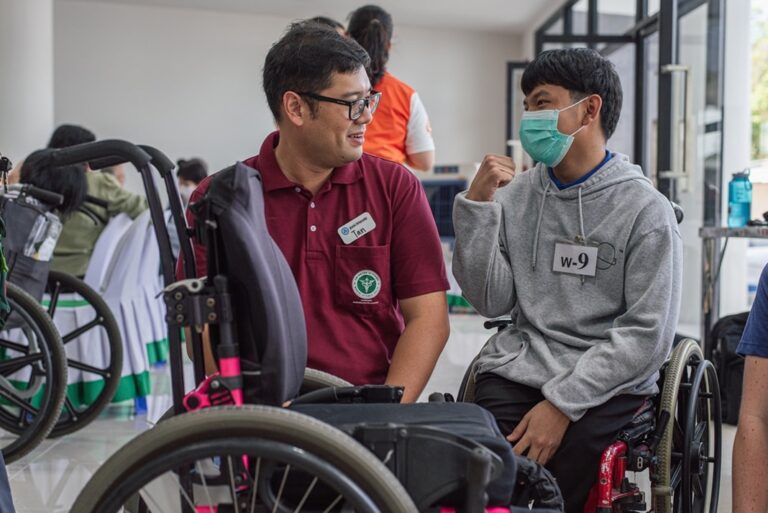
In 2018, I began engaging with churches in Gorkha – a district in north-central Nepal – through International Nepal Fellowship (INF, inf.org). One church I met with was the Alpha Church in Ratmate, Gorkha. Over four years, I collaborated with them on matters of disability theology and inclusion. The church underwent significant positive changes that fostered inclusivity and care including constructing ramps that made facilities accessible. That’s when Harka’s story unfolded.
Excessive alcohol consumption gave Harka high blood pressure, which eventually caused paralysis. This profoundly changed Harka’s life. Despite seeking treatment, his condition persisted, and his wife was his sole source of support. Alpha Church members invited Harka to attend services on Saturdays, and he began to faithfully attend. The congregation decided to extend fellowship to Harka’s home and that soon blossomed it into a small church.
In my work in church and disability inclusion development in Nepal, I’ve heard many stories like Harka’s. They have helped me understand how every person, with or without a disability, matters in the kingdom of God. In fact, God has a special focus on those who are weak and disabled.
The church is uniquely positioned as a religious place where the inclusion of persons with disabilities can be achieved with relatively small efforts. In Nepal, where Hinduism and Buddhism are the predominant religions, the temples and stupas are often located in elevated areas, and their traditional worship practices make it challenging to include individuals with disabilities.
In contrast, churches can be made easily accessible and inclusive if they are educated about disability inclusion through Scripture. The primary obstacles to this inclusion are misconceptions and negative attitudes towards disability.
Embracing God’s Creation
Scripture does not mention any curse or punishment inflicted upon Adam and Eve’s physical bodies after the Fall nor any alteration of the physical form of humanity. Adam and Eve continued to inhabit the same bodies in which they were originally created. Rather, the consequence of sin on the human body is mortality and toil (Genesis 3:16, 19). Sin does not dictate the shape or form of the human body.
This sentiment is echoed by the Psalmist who declares, “For you formed my inward parts; you knitted me together in my mother’s womb. I praise you, for I am fearfully and wonderfully made…. My frame was not hidden from you, when I was being made in secret, intricately woven in the depths of the earth. Your eyes saw my unformed substance” (Psalm 139:13–16, ESV).
In the eyes of God, any form or shape, with or without all body parts, is accepted without the influence of sin. Jesus himself illustrates this point when he explains regarding a man born blind, “It was not that this man sinned, or his parents, but that the works of God might be displayed in him” (John 9:3, ESV). The blindness was not a consequence of personal sin or the sin of Adam and his ancestors.
Throughout history, individuals with disabilities have been marginalized, viewed as less than fully human, burdened by sin, and deemed useless by society. Consequently, they have struggled to find acceptance and inclusion. The interpretation of the Bible, often skewed in favor of the majority, has contributed to the stigmatization and exclusion of persons with disabilities.
Their lives are further burdened by the discriminatory attitudes and actions of others, adding an extra layer of pain and suffering. People with disabilities deserve to be embraced and respected just as they are.
Recognizing Worth
In our community, individuals with disabilities face marginalization for several reasons. Two primary barriers hold them back. One is a social barrier created by those without disabilities, and the other is a lack of awareness among individuals with disabilities themselves.
In his book The Bible, Disability, and the Church: A New Vision of the People of God, Amos Yong said that there is nothing inherently flawed about the lives of people with disabilities. Instead, it is we, the non-disabled, who need to be freed from our prejudiced attitudes and behaviors. He identifies the exclusion of persons with disabilities in communities as a problem caused by the attitudes, thinking, and perspectives of those without disabilities. It is this perspective that keeps persons with disabilities from fully participating in society.[i]
In Mark 10:46–48, a crowd tries to silence the visually impaired Bartimaeus, rebuking him for seeking Jesus. The crowd’s message is clear: “Jesus is for people like us, not for you. Keep silent and go away.” However, Jesus does not let this happen. He stands against the social prejudice of the majority and allows Bartimaeus to come to him, ultimately restoring his sight.
Jesus’s actions challenged and dismantled long-held beliefs that people with disabilities are weak, unholy, burdensome, and undeserving. By stopping the crowd from silencing Bartimaeus and instructing them to call him, Jesus sent a powerful message. The very people who tried to prevent Bartimaeus from reaching Jesus now had to invite him to come forward.
This act signifies a clear and profound message: people without disabilities should not obstruct those with disabilities from accessing Jesus; rather, they should welcome them. The prevailing worldview and perceptions of people with disabilities are fundamentally wrong and must be changed. Just as people without disabilities have the right to access Jesus, so too do people with disabilities have that equal right.
In Nepal, it is a tradition to eat meat during the Dashain festival, which is a Hindu holiday and national celebration. Almost every household kills an edible domestic animal for this occasion with Brahmins and Kshatriyas typically consuming male goat meat. Most families buy a male goat and butcher it for the festival.
There is a parable about a Brahmin man who bought a male goat from a village and was tricked into giving it up by three neighbors who saw him bringing it home. When the first neighbor saw him, he approached and said, “Hello brother, what are you doing with this dog?” and then walked away. The Brahmin man replied, “This is not a dog, it’s a goat.”
Soon after, the second neighbor came up and asked, “Hi brother, where are you taking this dog?” The Brahmin, now a little worried, responded again, “It’s not a dog, it’s a goat.” But doubt began to creep in. He started thinking, “Is it really a dog?”
Finally, the third neighbor approached and remarked, “That’s a nice dog. Where did you get it?” The Brahmin was about to reply, “No, it’s not …” but stopped himself. He thought, “Three people have said it’s a dog. Maybe it really is a dog.” Convinced by the repetition, he left the male goat on the roadside, believing it was a dog.
This parable teaches us a truth that applies to people with disabilities. For generations, people with disabilities have been told by countless individuals that they are useless, weak, incapable, a result of sin, different, unworthy of belonging, and a burden to society. It took only three people to convince the Brahmin man that his goat was a dog. In contrast, people with disabilities face this negative messaging from millions. Imagine the impact that has! They come to genuinely believe they can’t do anything, being conditioned to see themselves as weak and burdensome.
I’ve often asked people with disabilities what they would like to do for a living. Most respond with, “I am a person with a disability; what can I do?” When people are constantly told to believe things about themselves that aren’t true, they can be kept under the weight of humiliation. As a result, they may never see themselves as equals to those without disabilities, never seek inclusion or equality, and remain unaware that everyone is equal in the eyes of God.
However, anyone living under an oppressive mindset society has imposed on them can learn to leave that behind. Outsiders serving alongside people with disabilities can help by encouraging them to voice their needs and responding accordingly. This helps people with disabilities realize that their voices can be heard. Jesus exemplified this approach in Mark 10:50–52. Even though Jesus, as God in human form (John 1), knew exactly what Bartimaeus needed, he didn’t immediately fulfill his needs. Instead, Jesus wanted Bartimaeus to feel respected and heard.
Jesus asked Bartimaeus, “What do you want me to do for you?” (Mark 10:51, ESV). Bartimaeus responded, “Rabbi, let me recover my sight.” By doing this, Jesus helped Bartimaeus realize that he no longer needed to live under humiliation or the identity imposed by others. Bartimaeus to speak for his rights and needs, and showed him that in the kingdom of God welcomes those with disabilities.
Jesus has set an example for the rehabilitation process by asking Bartimaeus what he wants. This is exactly what people with disabilities need in their rehabilitation process. They need to be given the opportunity to express their needs, to understand that they deserve respect and to recognize their equal rights.
Breaking Barriers

Dolmu Tamang is a single Christian woman in her early 60s living with her parents in a rural area in north-central Nepal. Her parents became Christians as adults. Dolmu also became a Christian in her early 30s. However, due to her physical condition – she was born with short, non-functional legs – she has never attended church. Her parents attended a church nearby, but she was not asked if she wanted to join church services.
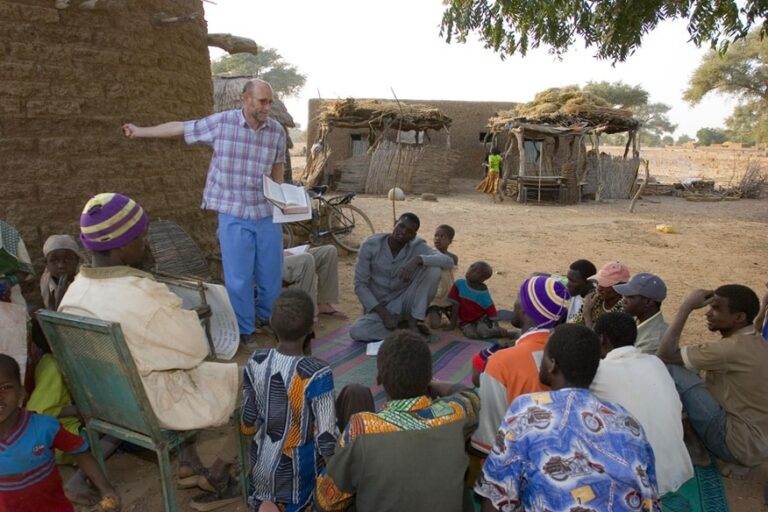
After four years of partnership with this church, providing training, workshops, orientation, and Bible studies on a biblical perspective on disability, the church recognized their shortcomings in disability ministry. This ongoing education led the church community to become more passionate about serving people with disabilities and actively involve them in church activities.
For the first time, they asked Dolmu if she wanted to join the regular church service. She was more eager to attend than anyone had anticipated. To accommodate her, the church arranged for a motorbike rider to transport her to and from Saturday services. Now, Dolmu attends church services regularly. The motorbike rider noted that Dolmu gets ready by 8:30 a.m. and waits for him. If he doesn’t arrive before 9:15 a.m., she becomes sad.
“I am so happy to be socialized in the church service,” Dolmu said. “I saw this community after 60 years of my life. I believe there must be people like me who don’t get this opportunity.”
Just as Jesus valued Bartimaeus by removing the barriers created by the crowd, the church valued Dolmu by changing their attitudes and thoughts. In God’s eyes, everything and everyone is his workmanship – all equally beautiful and valuable.
Significance in the Kingdom of God
People with disabilities are at the center of Jesus’s ministry and his messiahship. When the disciples of John the Baptist asked Jesus, “Are you the one who is to come, or shall we look for another?” Jesus responded by healing many people with various disabilities and instructed the disciples to convey what they had witnessed (Luke 7:18–22). Through these actions, Jesus identified himself as the awaited Messiah, assuming that John would understand this based on the prophecies of Isaiah.
Isaiah prophesied, “Then the eyes of the blind shall be opened, and the ears of the deaf unstopped; then shall the lame man leap like a deer, and the tongue of the mute sing for joy …” (Isaiah 35:5–6, ESV). Jesus’s healing works fulfilled this prophecy, signaling to John that he was indeed the one to come. Jesus claimed that Isaiah’s prophecy was about him and conveyed this message to John through his works of fulfillment, demonstrating that his ministry among persons with disabilities was a messianic sign.[ii]
Additionally, Jesus not only identified himself as the Messiah through his ministry among persons with disabilities, but he also claimed that he was ordained to serve them from the beginning. At the synagogue, Jesus proclaimed the fulfillment of Isaiah 61:1–2, stating that he was anointed to bring good news to the poor, proclaim liberty to the captives, and recover sight for the blind (Luke 4:18–21). This proclamation underscored that his ministry to persons with disabilities was preordained by God. The Spirit of the Lord anointed Jesus, as spoken by Isaiah, before he began his work (Matthew 3:15–17).
Ministering among persons with disabilities was a divine design planned by God before Christ was sent to earth as a human.
Barriers to Disability Ministry in the Church
A survey conducted in 2016 among 20 pastors in Pokhara and Gorkha (small cities in north-central Nepal) revealed several key insights about the perceptions and support systems for persons with disabilities within churches. It found that 65% of the pastors viewed persons with disabilities as weak individuals, 70% of the churches lacked any support systems for persons with disabilities and their families, and 65% of the churches had never made any efforts to reach out to persons with disabilities.
Similarly, I conducted a small study among 31 young men at the Pokhara Bible School to understand their attitudes toward people with disabilities. The findings revealed that 45% believe disabilities are caused by parental sins, personal sins, or as a curse from God. Additionally, 26% think it is acceptable to mock individuals with vision and hearing impairments.
This data indicates that the perception of persons with disabilities as weak individuals has influenced church pastors, leading to a lack of care and outreach. This view echoes the eugenics movement, which viewed impairments as barriers to societal advancement and advocated for the sterilization of individuals with certain impairments to eliminate these obstacles.[iii]
Overall, the data highlights a significant need for increased awareness, support, and proactive engagement to shift worldview within church communities in these regions. This will enable the church to better serve and include persons with disabilities.
Restoring Dignity and Inclusion
The kingdom of God embraces every individual, including those with disabilities, highlighting their inherent worth and significance. The story of Harka and the transformation within the Alpha Church is a testament to the power of inclusivity and proactive engagement. By extending fellowship and creating accessible environments, the church can bring profound changes to the lives of people with disabilities. Harka’s journey from isolation to belonging underscores the importance of recognizing and acting upon the intrinsic value of every person.
The teachings and actions of Jesus, who ministered to persons with disabilities and affirmed their worth, set a powerful example for us to follow. His ministry was not just about healing physical ailments but about restoring dignity and inclusion. Jesus’ response to John the Baptist’s disciples, where he pointed to his works among the disabled, highlights the centrality of this mission to his messiahship.
Our responsibility is clear: to ensure that persons with disabilities are fully included and cared for within the body of Christ. This involves not only physical accessibility but also attitudinal shifts, where we see beyond disabilities to the person created in the image of God. The survey conducted among pastors and young men in Pokhara and Gorkha in north-central Nepal reveals a critical need for increased awareness and support within church communities. The misconception that disabilities result from sin and the lack of outreach and support systems highlight areas that need urgent attention and transformation.
By addressing and dismantling societal and attitudinal barriers, the church can foster a community where everyone is welcomed and valued. This commitment reflects the heart of God, who sees beyond disabilities and cherishes every individual as part of his divine creation. In doing so, we fulfill our calling to love and serve all people, ensuring that the kingdom of God is truly inclusive and reflective of his boundless love and grace.

Amos Gurung (mrg2pr@gmail.com) has an MDiv and bachelors’ degrees in theology and social work. He served as an elder, worship leader, and youth pastor in various churches over eight years. For four years, he worked in community development. During the last eight years, he has served in church and disability inclusion development. He resides in Nepal.
[i] Amos Yong, The Bible, Disability, and the Church: A New Vision of the People of God (Grand Rapids: Eerdmans, 2011), 118.
[ii] Arthur F. Glasser, Charles E. Van Engen, Dean S. Gilliland, and Shawn B. Redford, Announcing the Kingdom: The Story of God’s Mission in the Bible (Grand Rapids: Baker Publishing Group, 2003), Kindle edition, 187.
[iii] Devan Stahl and John F. Kilner, “The Image of God, Bioethics, and Persons with Profound Intellectual Disabilities,” Journal of the Christian Institute on Disability 6, no. 1–2 (2017), 27–31.
EMQ, Volume 60, Issue 4. Copyright © 2024 by Missio Nexus. All rights reserved. Not to be reproduced or copied in any form without written permission from Missio Nexus. Email: EMQ@MissioNexus.org.