EMQ » July – Oct 2024 » Volume 60 Issue 3
[mepr-show rules=”100329″ unauth=”message”] This content is shown only to authorized members. It is hidden from everyone else.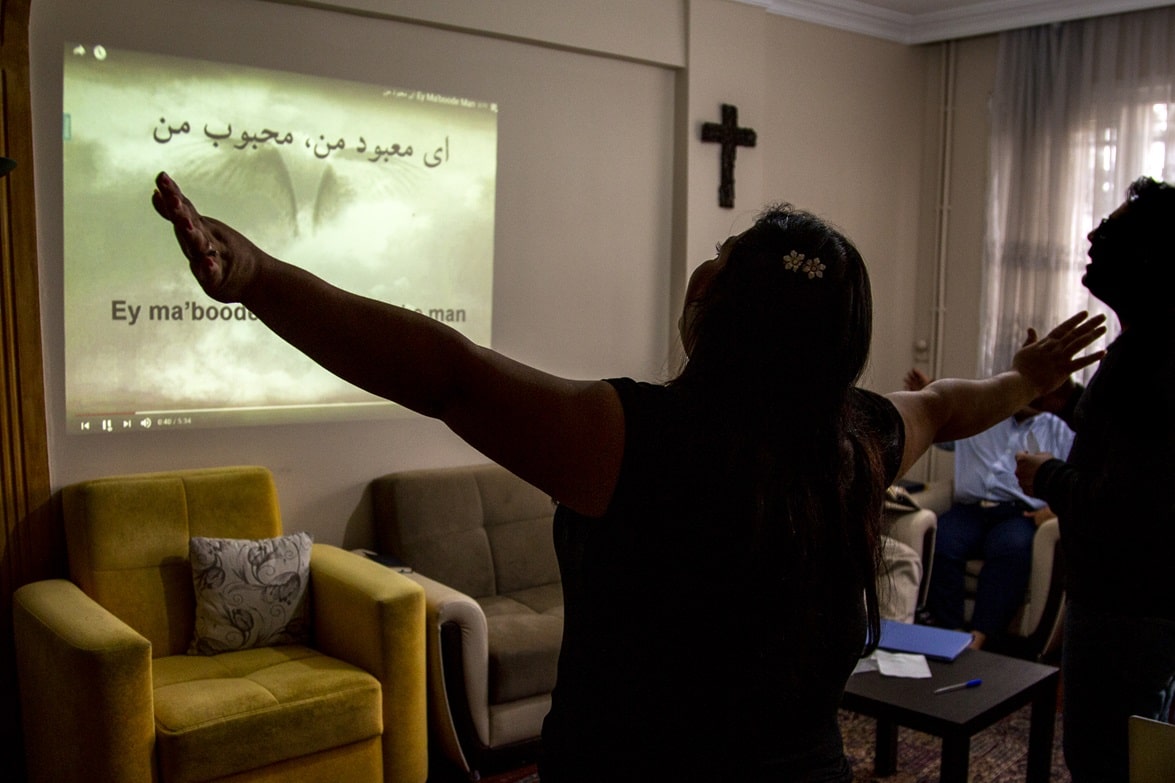
Contextualization
Summary: The C-Spectrum introduced more than 20 years ago provided a tool to categorize different types of Christ-centered communities among Muslims. The Foreignness-Spectrum, or F-Spectrum, focuses on foreignness as the point of reference in appropriate contextualization. It gives needed correction to the C-Spectrum while also building on the C-Spectrum’s foundation.
By Harley Talman
More than two decades ago, EMQ introduced the mission community to the C1–6 Spectrum.[i] John Travis’s descriptive model enabled the mission community to differentiate key features of six kinds of Christ-centered communities (denoted by C) among Muslims. However, due to their need for practical guidance in contextualization, missionaries have frequently used it as a template for believing communities to follow in expressing their faith in daily life and worship in their local contexts.
Unfortunately, it is backward (and ethnocentric) when used for this purpose, for it gauges degrees of difference from the missionary’s culture. To correct this, T. Wayne Dye and Harley Talman published an article entitled the “Foreignness Spectrum: Toward a Local Believer’s View of Contextualization” as a restorative tool that views the issue from the receptor’s perspective.[ii] The base point of the Foreignness Spectrum (F-Spectrum) is the local community’s perception of the level of foreignness of the Christ-followers in their midst.
The F-Spectrum asserts that local believers should not be concerned with how far they can depart from our Christian culture and customs. Instead, they should be asking, “In displaying our new life in Christ in our local context, how much do we need to change in order to be faithful to Christ and Scripture?” The F-Spectrum is a tool that provides an indigenous assessment of this question. It also removes discontinuity in the C6 category (“secret believers”). Most importantly, it provides four missiological principles to guide believers in contextualizing.
Explaining the Foreignness Spectrum
Like the C1-6 Spectrum, the F-Spectrum depicts Christ-centered communities (C) among Muslims. (The same principles apply to other types of cultural and religious communities which Dye and Talman demonstrate with a spectrum for Hindu communities). Like the C-Spectrum, the F-Spectrum separates identity into three categories on a Christian-Muslim continuum: (1) linguistic and cultural identity as observed by Christian workers, (2) the C’s self-identity, and (3) the Muslim community’s perception of their identity.
Each C Spectrum member has its own view of its own corporate and individual self-identity. However, the way their Muslim neighbors view them is based largely on the degree of their adherence to society’s way of life (e.g., cultural traditions and religious practices). The more that a C departs from society’s norm, the more foreign (strange) it appears to the community.
Comparing the Foreignness and C Spectrums
Laying out the F-Spectrum in a Muslim context allows for simple comparison with the C-Spectrum (see figure 13.1). Then we can explore what points on the Spectrum mean to a local community.
Redeeming C6
The C1–6 Spectrum displays a consistent increase in indigenization of language, cultural-religious forms, and identity from C1–C5, but the description of C6 does not, as C6 believers may varyingly regard themselves as Christians, Followers of Isa (Jesus), or as Muslim Followers of Isa. While Travis does not advocate the superiority of one point on the spectrum as inherently superior to others, most perceive C6 as lamentable due to a presumed weakness in witness and fellowship due to a lack of social or religious freedom.
On the F-Spectrum, C6 becomes F0 (the two scales are numerically inverted). Because F0 gatherings are not readily visible to the public, the society does not perceive any degree of foreignness. But unlike C6, F0 does not assume deficient witness and fellowship. While oppressive and intolerant societies may require believers to abstain from public witness and gatherings, this does not necessitate active private witness and gatherings.
An example of this is when the Chinese Communist Revolution forced the church to go underground. Its public invisibility led the world to assume its demise. However, those hidden believers were meeting regularly (in secret) and relied on the Holy Spirit to guide them to discretely share their faith with those who were spiritually open. The growth of the underground church exploded beyond imagination.
Sketching the F-Spectrum
Dye and Talman outline the F-Spectrum for a typical Middle Eastern Muslim community as follows:
- F0 (C6): Believers are meeting secretly and witnessing discretely as led by the Spirit, functioning as underground Christ-centered communities. They may or may not be active members in the religious life of the non-Christian community. While experiencing spiritual transformation, they do not exhibit changes that create a perception of foreignness. Therefore, they are still perceived by the Muslim community as Muslims; however, F0 believers may perceive themselves varyingly as Christians, followers of Isa or Muslim followers of Isa.
- F1 (C5): Christ-centered communities display a minimum (and generally tolerable to society) degree of foreignness. They modify or re-interpret beliefs, values, and practices that conflict with scripture. Relatively few things cannot be adapted or re-interpreted and therefore must be rejected. The surrounding community perceives an individual in this kind of group as a different kind of Muslim.
- F2 (C4): Christ-centered communities might be regarded initially, or from a distance, as Muslim (nominally or culturally) in some contexts due to their abiding by key (biblically acceptable) Islamic cultural practices and taboos (e.g., abstaining from pork). However, once it is discovered that they do not claim any kind of Muslim identification (such as “Muslim Follower of Jesus”) they are perceived as a different kind of Christian.
- F3 (C3): These Christ-centered communities are viewed as Christian (foreign) due to theirrejecting all Islamic religious elements, despite keeping non-Islamic cultural elements (e.g., dress, music, diet, arts).[iii]
- F4 (C2): These Christ-centered communities speak the language used by Muslims in their community, though their religious terminology is distinctively non-Muslim. Their culture is seen as even more foreign by the Muslim community.
- F5 (C1): These Christ-centered communities are foreign to the Muslim community in both culture and language.
| C1 F5 | C2 F4 | C3 F3 | C4 F2 | C5 F1 | C6 F0 | |
| Christ Centered Community (C) Description (ecclesia) | A church foreign to the Muslim community in both culture and language | C1 in form by speaking the language used by Muslims, though their religious terminology is distinctively non-Muslim | C2 using non-Islamic cultural elements (e.g., dress, music, diet, arts) | C3 with some Biblically-acceptable Islamic practices | C4 with a “Muslim Follower of Jesus” self-identity | Underground church/ hidden believers (May or may not be active members in the religious life of the Muslim community) |
| Self-identity | Christian | Christian | Christian | Follower of Isa/Jesus | Muslim Follower of Isa | Christian or Follower of Isa or Muslim Follower of Isa |
| Muslim perception | Christian | Christian | Christian | A kind of Christian | A strange kind of Muslim | Muslim |
Figure 13.1 – The C- and F-Spectrum for a typical Middle Eastern Muslim community.
Four Foundational Principles
Integral to the Foreignness Spectrum are four missiological principles:
- The Principle of Minimal Change: The greater the change, the greater the increase in resistance to the gospel.
A local community has a common way of life and norms for righteousness that should be maintained to the degree that the Scriptures permit. Thus, the number on the F-spectrum should not go higher than is necessary for biblical faithfulness in keeping with the guidance of the Holy Spirit. (Note that a number higher than F0 is appropriate in all contexts that tolerate visible Cs).
However, societies are not monolithic, and subgroups may vary or be in the process of change (e.g., due to globalization or secularization). Hence F3 or F4 may reflect the desired level of indigenization of many congregations of Iranian believers. After four decades of suffering under an oppressive and often corrupt Islamic regime, multitudes are rejecting their Muslim identity and anything associated with Islam. Within these groups, F3 or F4 would reflect minimal change from their own segment of society. While they might not conform to norms of traditional Islamic religious life and practice, in other respects they still live as normal Iranians.
- The Principle of Foreignness-unfruitfulness (a corollary to principle 1): As foreignness increases, receptivity to the gospel decreases.
The reality of this principle should be self-evident. If it is not, read Dye and Talman’s description of an African Inland Church missionary planting F4 or F5 churches in America. An instinctively negative reaction to his approach will confirm the reality of this principle.
Recognition of this principle is also evidenced by the broad acceptance in mission circles of the importance of contextualization. Despite controversies over its application to specific issues, the need to contextualize is widely recognized. Furthermore, data from field workers indicates that higher numbers of movements to Christ correlate directly with higher degrees of contextualization/lower degrees of foreignness.[iv]
- The Principle of Indigeneity: A local community has a common way of life and norms for righteousness that should be maintained to the degree that the Scriptures permit.
The crucial missiological principle is this: there is no central form of biblical faith. Modern Western Christianity is only one valid form of our faith. It is not the central form. God does not have favorite cultures. He only desires that his people be faithful to him. Therefore, we do not ask new believers to change anything unless it is required by Scripture. We tell them, “Prayerfully study the Bible together and think carefully about your traditional ways in its light. Change what together you sense the Spirit of God is asking you to change. Altering more than that is unnecessary and can hinder your witness to the people around you.”
While the Bible speaks prophetically to all peoples and cultures, there is no command to give preference to the foreign ways and practices of those who brought them the gospel. New believers do not become more godly by becoming more foreign. This missiological principle is biblically grounded in the book of Acts, especially chapter 15.
The moral aspect of the principle is laid out in 1 Corinthians 8–10 and in Romans 14. Those who turn to Christ are added to the kingdom of God but not removed from their social networks and cultural contexts. The New Testament does not demand becoming a proselyte to another religious system nor leaving one’s socio-religious birth community, but only its sinful practices. Their lives are re-ordered and transformed by the Holy Spirit according to the Word of God, but they need not become foreigners to their culture.
The command to live as “aliens and strangers in the world” (1 Peter 2:11) refers to abstaining from sinful desires, not to becoming strangers to one’s community by adopting a foreign language, culture, nationality, ethnic, social, or group identity. The only changes called for are those which enable the believers to live out their new faith in Christ on the path of holiness within their community.
Such changes will result from processes similar to Paul Hiebert’s critical contextualization, in which changes are made only to the extent that either the original custom, or its underlying beliefs were contrary to the Bible.[v] As a result, the community is less likely to perceive that it has lost as members those who follow Jesus.
- The Principle of Local Decision-making(a corollary to 3): Decisions about what needs to change, how those decisions should be made, and how and when they are introduced should be left to the local community of believers.
The questions of how much can people remain as they were and how much must change must be assessed from the standpoint of the emerging local community of Jesus’s followers, not the degree of change brought by outsiders. This is a significant issue because foreign Christians are often upset by the acute differences between emergent communities of faith on the more indigenous side of the Spectrum and their home churches.
What really matters is biblical obedience within each local culture, however true obedience is best perceived by scripturally informed local believers. The standard should not be the convictions, traditions, or cultures of other churches in that country or foreign nations nor those of the non-native Christian workers.
These decisions are the prerogative of the local community of believers, not outsiders. Spirit-filled local believers intuitively recognize the degrees and kinds of change that are needed, whereas even experienced outside workers have an inferior understanding of local cultural dynamics. The meanings of local customs and how the biblical principles can be appropriately applied are better understood by cultural insiders. Thus, they should be the ones making the decisions – not outside teachers who too often control the process and result. Western missionaries, especially, have a long history of paternalism that they must guard against and overcome.
We are not asserting that outsiders have no role to play. They can serve as resources, but they must not control the process or result. John and Anna Travis outlined many important roles for alongsiders to play in indigenous movements.[vi] Additionally, they might mentor local leaders through Hiebert’s critical contextualization process. Although it is possible to do too little, historically, outsiders have erred in the opposite direction.
Therefore, we need a seismic shift in the mentality of mission, manner of leadership, and method of ministry of outside workers. Their primary aim and contribution should be to empower local believers and encourage those leaders who are closest to the situation. These locals must be encouraged to trust their spiritual intuitions and the insights that emerge from biblically informed, prayerful, Spirit-guided consensus. Depending on the context and the particular case, local leaders may seek the input, assistance or participation of an outsider who can serve as a resource. However, the locals should ultimately be in control of the decision and its process.
God Desires Our Faithfulness
The F-spectrum properly focuses on foreignness as the point of reference in appropriate contextualization. Like the C-spectrum, it depicts a continuum of Christ-centered communities with a description of the key cultural and language characteristics, self-identity and surrounding Muslim society’s perception of each. The F0 category rehabilitates the discontinuity of the C6 (secret believer) category by reconstituting and potentially legitimizing it as an appropriate expression of ekklesia (underground church) in extremely restrictive environments. Undergirding the F-spectrum are four missiological tenets: the principles of minimal change, foreignness-unfruitfulness, indigeneity, and local decision-making.
The F-spectrum model may be beneficial for new believers, helping them to think clearly about the changes – the variations, adaptations, and translations – they wish to make in expressing faith, community and worship.[vii] It can help outside teachers and workers to identify conscious or unconscious expectations for what the ekklesiae should look like, prepare them to accept and encourage alternative expressions and help them empower local leaders to make these decisions.
The F-spectrum can also benefit missiologists. It provides a set of parallel categories for comparing the contextualization choices made by various Christ-centered communities in a particular cultural region. Missiologists can compare the various descriptive categories of Muslim, Hindu or other ekklesiae to better analyze the missional dynamics, challenges, and fruitfulness associated with each.
The F-spectrum also speaks strongly against the tacit assumption that modern Western Christianity is normative and that other forms are to be measured as departures from that. Modern Western Christianity is only one of many valid forms of our faith. It is not the central form because there is no central form. God does not have favorite cultures. He only desires that his people be faithful to him.
Accordingly, those concerned with the matter of contextualization would do well to examine the F-spectrum in detail, consider its implications, and discuss ways that it can be used in specific contexts.

Harley Talman* (HarleyTalman@gmail.com) has a Master of theology and a PhD in Islamic studies. He has served among Muslims for four decades. He is a professor of Muslim-Christian studies, teaches internationally, is active in interfaith activities and addresses complex missiological issues in his publications.
* pseudonym (photo is representative)
[i] John J. Travis, “The C1 to C6 Spectrum: A Practical Tool for Defining Six Types of ‘Christ-Centered Communities’ () Found in the Muslim Context,” Evangelical Missions Quarterly 34, no. 4 (1998): 407–8.
[ii] T. Wayne Dye and Harley Talman, “The Foreignness Spectrum: Toward a Local Believer’s View of Contextualization,” International Journal of Frontier Missiology 37, no. 3-4 (2020): 151–59. Travis has lauded this alteration (Ibid.Travis, “The C1 to C6 Spectrum,”, endnote 4, 158)., http://www.ijfm.org/PDFs_IJFM/37_3_4_PDFs/IJFM_37_3_4-Dye_and_Talman.pdf.
[iii] In traditional societies, the concepts of what is religious and what is cultural are often inseparable. This distinction is easier to make where non-Muslim communities already exist. The Islamic religious elements are those which are not shared with non-Muslims.
[iv] Rick Brown et al., “Movements and Contextualization: Is There Really a Correlation?,” International Journal of Frontier Missiology 26, no. 1 (2009): 21–23. Field data is somewhat limited, but that collected from 280 workers at the 2007 Fruitful Practices Consultation indicates that “All three levels of contextualization, C3–C5, correlate with the formation of churches, but higher degrees of contextualization appear more conducive to the development of movements.”
[v] Paul G. Hiebert, “Critical Contextualization,” International Bulletin of Missionary Research 11, no. 3 (1987).
[vi] John and Anna Travis, “Roles of ‘Alongsiders’ in Insider Movements: Contemporary Examples and Biblical Reflections,” in Understanding Insider Movements: Disciples of Jesus Within Diverse Religious Communities, ed. Harley Talman and John Jay Travis (Pasadena, CA: William Carey Library Publishers, 2015), 455–66.
[vii] There are many hindrances to faith in a resistant situation in addition to the life and worship style of believers. Therefore, it is not to be expected that a more appropriate form of faith expression will necessarily cause resistance to melt away. However, the lives of believers are usually the first important information potential believers have about being followers of Christ, and appropriate forms help weak believers to stay with and grow in their new faith. Therefore, it is an aspect too important to ignore.
EMQ, Volume 60, Issue 3. Copyright © 2024 by Missio Nexus. All rights reserved. Not to be reproduced or copied in any form without written permission from Missio Nexus. Email: EMQ@MissioNexus.org.