EMQ » July–September 2023 » Volume 59 Issue 4
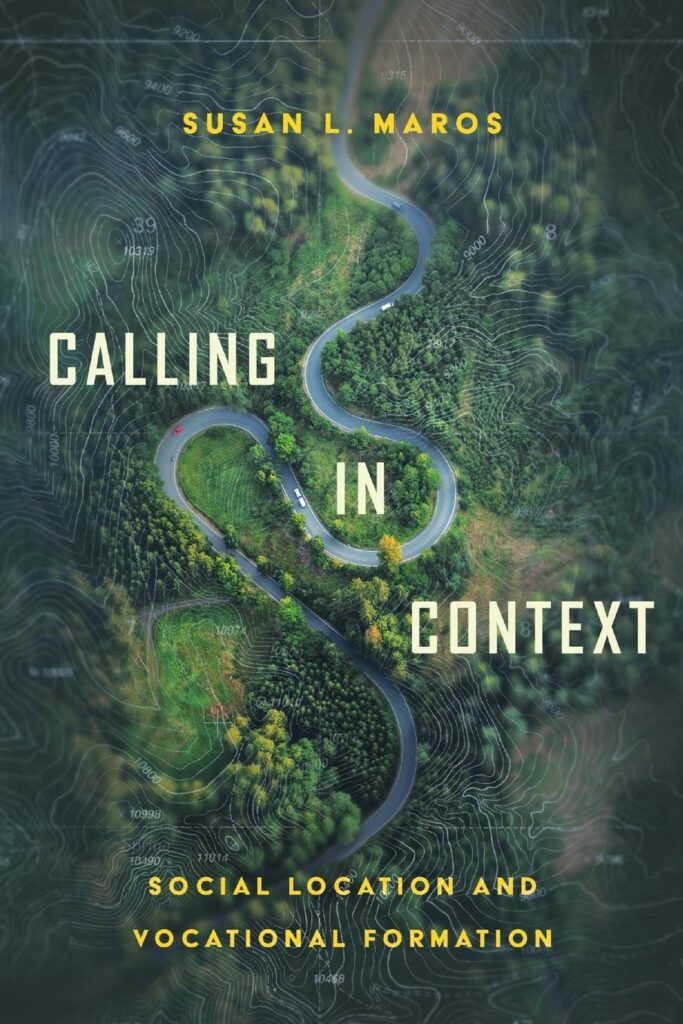
Calling in Context: Social Location and Vocational Formation
By Susan L. Maros
InterVarsity Press, 2022
230 pages
US$24.00
*As an Amazon Associate Missio Nexus earns from qualifying purchases.
Reviewed by Boaz Johnson, professor of Hebrew Bible and Theological Studies, North Park University, Chicago, Illinois.
I teach at a Christian university in Chicago called North Park University. I have been teaching here for the last twenty years. During this time the student faces I see in front of me, in my classrooms, and in my office, have changed drastically. In my first years, my students came from white evangelical churches, from all over North America. Several of these were third- or fourth-generation “legacy Swedish American” students. Today, my students look like Chicago. They are Latinx, refugees from Africa, Bosnia, Iraq, and such. They are first-generation college students.
How may I lead them to find their vocation? How may I teach them vocational formation? These are questions I constantly ask myself.
I am an immigrant from India. My calling was shaped in India. It continues to be shaped in a different location – in Chicago, in the US. It is difficult for mid-sized Christian universities in the US to facilitate the vocational shaping and thriving of immigrant and minority professors.
Susan Maros has done a great service to Christian universities and their professors in writing this important book. She emphasizes paying close attention to the student’s social location: ethnicity, race, social class, gender, age, ability, religion, and such.
Maros grounds her thesis by underlining the social locations that the Bible maps in enabling biblical characters to find their calling. This is a crucial observation that so many commentaries on the Bible miss. Based on this observation, Maros suggests that calling is a dynamic concept. Callings change over a person and institution’s lifetime. This is because the social locations of people and institutions change over their lifetimes.
Built on this, Maros goes on to stress the need to discover other aspects of social mapping. These include race and ethnic particularities: socioeconomic and class status, sex and gender issues, and such. Close analysis of these, and subsequent actions, will produce thriving individuals and institutions.
The author stresses that the intersectionality of these issues needs to be analyzed. This will enable marginalized individuals to confront power, as they discover their vocation.
Maros has given several stories in the book to illustrate the points she is making. She concludes the book with suggestions of good practices.
This book is a must-read for teachers and professors in Christian institutions.
I am truly thankful for this gift that Maros has given to me, and to teachers like me, in order to equip us to nurture our students of color, and all intersectional minorities, to find their callings to a purposeful life.
EMQ, Volume 59, Issue 4. Copyright © 2023 by Missio Nexus. All rights reserved. Not to be reproduced or copied in any form without written permission from Missio Nexus. Email: EMQ@MissioNexus.org.