EMQ » July–September 2023 » Volume 59 Issue 4
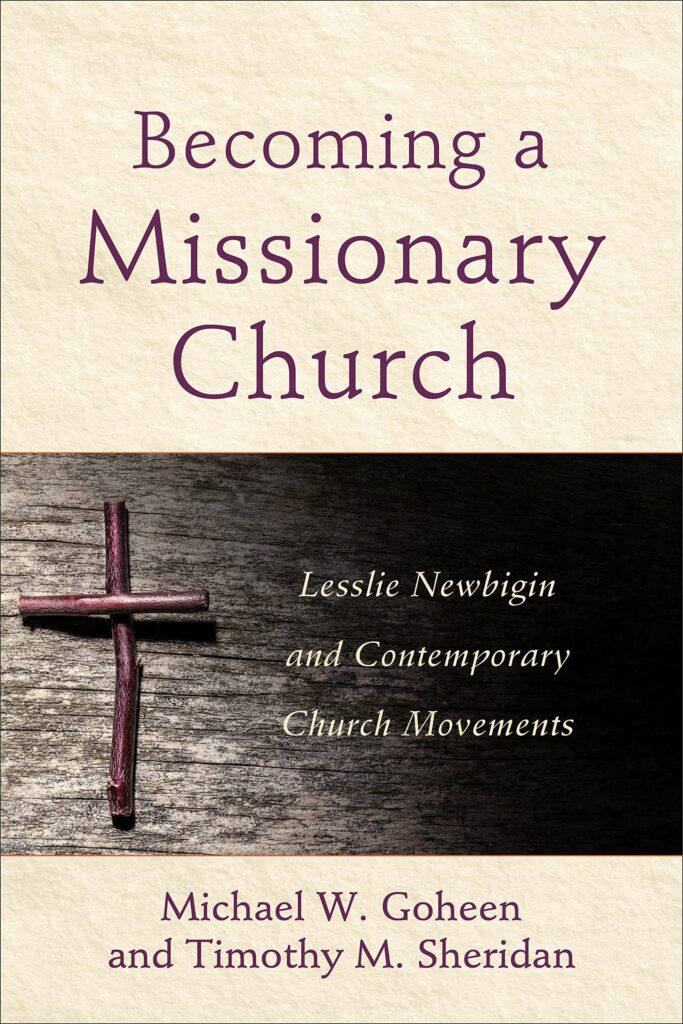
Becoming a Missionary Church: Lesslie Newbigin and Contemporary Church Movements
By Michael W. Goheen and Timothy M. Sheridan
Baker Academic, 2022
277 pages
US$29.00
*As an Amazon Associate Missio Nexus earns from qualifying purchases.
Review by Randy L. Jackson, PhD (missions), associate pastor of discipleship and missions at First Baptist Church of Milton, Florida, who served 18 years as a missionary with the International Mission Board.
A handful of people have shaped the church’s understanding of its mission over the past 150 years. Their ideas and terminology shape how evangelicals discuss missions. Lesslie Newbigin is one such person. Yet, many conversations about the church’s missionary engagement fail to consider the whole of Newbigin’s missionary understanding of the church.
Michael W. Goheen and Timothy M. Sheridan attempt to give him his rightful place in those conversations, particularly the missional church conversation, emergent church conversation, and center church conversation. According to the authors, Newbigin grounded the church’s missional nature in the Scriptural story, yet in many present-day discussions, that grounding is lost.
The book begins with the history of recovering the missionary nature of the church in the early twentieth century. Flowing from his belief that the church is a sign and foretaste of the kingdom, Newbigin proposed five elements of the church’s missionary vocation:
- New being and communal life
- The vocation of believers in public life
- Deeds of justice, peace, and mercy
- Evangelism
- Missions
A key to understanding Newbigin is his emphasis that the gospel is the gospel of the kingdom. The term, missionary church, comes out of those historical conversations and may not have the meaning many readers have in mind.
The book’s second, third, and fourth parts bring Newbigin’s ideas into comparison with the missional church, emergent church, and center church conversations. The final chapter summarizes the teaching and legacy of Lesslie Newbigin regarding the missionary church.
The book should appeal to people who are proponents of each conversation and model of the missionary church. Newbigin’s views will challenge missional churches to put more emphasis on the church gathered and international missions. Emergent churches will find their embrace of post-modernism challenged. Those who embrace Timothy Keller’s center church model will find affirmation of their missionary engagement with the West, but Newbigin’s emphasis on the authority of the biblical narrative will challenge their dependence on systematic theology.
For missions pastors and lead pastors willing to dig into these conversations and debates, the book provides ample material to conceptualize the missionary church and how their local church compares. Readers who are less familiar with Newbigin should read the last chapter first to have background for understanding the rest of the book.
Also, readers should not skip over the historical section. Many may consider past debates about the recovery of the church’s missionary nature as unimportant to today. Yet, current debates about “is everything the church does missions” and “who is a missionary” have connections to these historical debates. Those past discussions and Newbigin’s writings that resulted from them offer insight into these present-day issues. Goheen and Sheridan’s advice to the church is warranted. We should give more attention to Newbigin.
For Further Reading
The Church and Its Vocation: Lesslie Newbigin’s Missionary Ecclesiology by Michael W. Goheen (Baker Academic, 2018).
Theology of Mission: A Concise Biblical Theology by J. D. Payne (Lexham Press, 2021).
EMQ, Volume 59, Issue 4. Copyright © 2023 by Missio Nexus. All rights reserved. Not to be reproduced or copied in any form without written permission from Missio Nexus. Email: EMQ@MissioNexus.org.