EMQ » July–September 2023 » Volume 59 Issue 4
[mepr-show rules=”100329″] [/mepr-show]
Summary: Global health engagement is a key part of church planting efforts and an indispensable partner in meeting global goals for sustainable development. Health and healing can be experienced and, for the church, can remain as an essential pursuit – a sign of the presence of God, and a foretaste and anticipation of God’s intention for the reconciliation of all things in heaven and on earth
By Daniel W. O’Neill
Global health engagement is central to the gospel of the kingdom. It has been and continues to be a key adjunct and groundwork strategy for church planting efforts. It was part of Ralph Winter’s vision for the mission of God, as he perceived a blind spot in Western Christianity.[i] It has increasingly become a distinguishing mark of a globalized Christian witness, and an indispensable partner in meeting global goals for sustainable development. What are the theological underpinnings of making health for all nations and creation a central part of the mission of God?
In our Christian Global Health in Perspective course, we lay out the biblical, historical, cultural, and strategic frameworks for the whole church to engage in health-promoting action as an essential part of the church’s reason for existence.[ii] To overcome either-or dualisms, we propose the missional framework of Four Great C’s:
- Great Creation Mandate: stewarding the created order wisely (Genesis 1:28; 2:19).
- Great Commandment: loving God and neighbor fully (Matthew 22:37–40; Mark 12:30–31; Luke 10:26–28).
- Great Commission: making disciples of all peoples, going, baptizing, and teaching (Matthew 28:18–20; Mark 16:15–16).
- Great Convergence: attending body, mind, soul, and spirit in both word and deed in ecological contexts (1 Thessalonians 5:23; Hebrews 4:12; 3 John 1:2).
Global heath is realized in every one of these: the pursuit of stewardship, divine love, discipleship, and integration. Healing requires sacrifice, compassion, the word of God, repentance, purification, holiness and acquired virtue, which the church brings uniquely to communities.[iii]
Individual health cannot be seen in isolation from public health, and the common good. Human health cannot be seen in isolation from planetary health. And none of these can be fully acquired in the absence of cosmic health – a life-giving relationship with God.
The manifestation of love for God with heart, soul, mind, and strength speaks of God’s desire for human wholeness. Love for neighbor is defined by Jesus as cross-cultural service which addresses need in the context of corporeal suffering (Luke 10:25–37). This is part of what the inheritance of eternal life looks like, according to Jesus. Making disciples reproduces the blessing of life-giving teaching, touching, and treating among all the nations and builds capacity for global health, a new paradigm for medical missions.[iv]
Singularities to Synthesis
Many people, especially in the West, are more comfortable with singularities of thought, linear prioritizations, and reductionist rationalizations. Thus, a great convergence within the competing dichotomies of evangelism and social concern, body and spirit, and human and non-human creation is necessary. The Lausanne Conference in 1974 was a significant move in that direction, but it lacked a bodily and environmental dimension – the corporeality of salvation, one of the unique features of the Christian faith among all the world religions.[v]
The Consultation on the Relationship between Evangelism and Social Responsibility (CRESR) in 1982 sought to identify a synthesis between word and deed, social action as a consequence of, a bridge to, and a partner with evangelism.[vi] But there was no focus on bodily health because it was “haunted by dualism” – mostly North-American-nurtured – of body vs. soul and social vs. spiritual.[vii]
The “Consultation on the Church in Response to Human Need” in 1983 put forth the concept of transformation to include actualizing relationships toward divine, social, economic, and spiritual redemption in all communities, especially among the poor.[viii] But the element of actualizing bodily integrity, health, and the relationships humans have with the planet was not well-developed. Nevertheless, these laid the groundwork in an increasingly globalized evangelical mission community seeking further development of a more inclusive and holistic mission.[ix]
A Hole in the Wholes
In 2010, Lausanne’s Theology Working Group articulated three wholes: the whole church, taking the whole gospel to the whole world.[x] Though this is a very integrated vision for mission, I would suggest that there were still two missing pieces: (1) creation care – a subject explicitly integrated into the Cape Town Commitment in 2010 and made an Issue Network (collaborating with WEA) in 2012[xi]; and (2) health for all nations – the name of our organization and an addition to Lausanne Issue Networks as of 2014.[xii]
The 2010 Cape Town Commitment included a call to peace for people with disabilities and living with HIV, and for non-human creation care. However, not a call to address other global health challenges, nor a recognition of whole-person healing the gospel brings to communities through the church.
The whole church must include health professionals and non-professionals engaged in carrying on the on-going healing work of Jesus in a world wracked with poverty, injustice, disease, and suffering. The whole gospel must include a vision of salvation as creation healed.[xiii] It must address all the forces and powers that touch human life. “Those that oppress the poor and destroy life are to be exposed and denounced. Good news means that men and women can be set free from life-destroying powers.”[xiv] The whole world is unified in our commonality of human corporeal suffering, as the recent pandemic has reminded us, leading to a universal felt need for health and flourishing (eudaimonia) for which the whole gospel is the uniquely sustainable, world-changing answer.[xv]
Lausanne’s three wholes mentions holiness but not human wholeness. God’s redeeming work to restore whole-person flourishing, and humanity’s responsibility to align with this goal include biblical ends such as liberation, peace, happiness, blessedness, and wholeness in addition to holiness.[xvi] Jesus the Messiah embodied and enabled these preferable states through his divine presence and redeeming work of healing (rā·p̄ê/ iathēnai/sózó). He continues to do so vicariously through his people.
Three wholes highlights persecution, suffering and forced migration. However, they do not address the massive global health issues which all of humanity contend with, and which is often a driver for seeking God for care and release. Care for God’s creation is highlighted, but it’s all about non-human creation stewardship, not an integrated inclusion of human bodily health within the context of community and environment. The only global health issue mentioned briefly is the scourge of HIV/AIDS. The globalization of the church is leading to a more health-centric, integrated, spiritual, holistic, and liberating mission in the world.[xvii]
Lausanne’s purposes for the global “… being present with those who suffer, and caring for God’s creation, so that our lives, churches and communities reflect the implications of our confession that God was in Christ reconciling the world to himself.” can be embraced but must be enhanced. The context of Paul’s use of the reconciliation of all things in 2 Corinthians 5 includes abundant life in the body in anticipation of sustainable life in the resurrected body. Paul writes, “Meanwhile we groan, longing to be clothed instead with our heavenly dwelling” (2 Corinthians 5:2). This is not to disregard embodied life. It is to work to restore it to the greatest extent possible.
This is in anticipation and actualization of the eschatological vision of the leaves of the tree of life being available for the healing of the nations (ethnōn) in a renewed creation (Revelation 22:2). We must move beyond passive pastoral comfort for the suffering. Active engagement with the many forces which oppose God’s vision for the world is necessary because the kingdom has come both now and not yet.
Redemption of our Bodies
In Romans 8, Paul expresses the brokenness in the world as all creation groaning. Without the animating and life-giving presence of the Holy Spirit in the world – in our bodies and in cultures and systems – decay remains because of an ecology of sin, from which we must be liberated.[xviii] All creation groans, requiring our attention and care, but we must remember that human beings are part of it, and indeed the crowning glory of creation (Psalm 8:5).
We are also endowed with imago Dei creativity to engage with the causes of disease and death at their roots. What Paul wrote next matters: “Not only so, but we ourselves, who have the firstfruits of the Spirit, groan inwardly as we wait eagerly for our adoption to sonship, the redemption of our bodies. For in this hope we were saved” (Romans 8:23–24).
Health and healing can be experienced and, for the church, can remain as an essential pursuit – a sign of the presence of God, and a foretaste and anticipation of God’s intention for the reconciliation of all things in heaven and on earth. The central and often neglected purpose of healing in mission needs to be recaptured to fulfill God’s intention for ministers of reconciliation.[xix] That is what it means to love our global neighbor fully.
Rightly attributed to God’s work in the world, healing can be understood in all cultural contexts as the result of God dwelling in communities who turn to him in faith. The history of missions attests to the transforming outcomes of a faithful healing presence which transforms nations. Health and healing are necessarily incomplete in this epoch of redemptive history, and our scientific and charismatic treatments are limited. Yet they are designed by God to be a visible display of the presence and grace of God – creating an anticipation of the fullness of things to come.
“But hope that is seen is no hope at all. Who hopes for what they already have?” (Romans 8:24–25). Faith is the confidence of things hoped for, and assurance of what we do not yet see (Hebrews 11:1). In the crucible of illness and ecological crises, hope springs life eternal and is a means of healing – what is described as “a reconciliation that heals earth’s multiple alienations.”[xx] In the context of both suffering and healing, the need for God’s redemptive works is both felt and displayed.
Jesus Continues to Heal
Jesus was sent by the Father to heal the nations and to set the captives free (Luke 4:14–27; Matthew 11:2–6). He sent his disciples out as he was sent (John 20:21). First, he sent the twelve (Matthew 10:5–8). Then he sends the seventy-two (Luke 10:1–9) to both preach and heal and to proclaim the coming of the kingdom of God.
His healing grace extended to Romans, Samaritans, and Canaanites who expressed faith, reflected his heart for the healing of all nations (Matthew 15:24–28). After the resurrection, he sent all his disciples (Matthew 28:18–20) to make more disciples of all nations to participate in his healing work to transform even the remotest people groups – including their cultures, environments, and health systems.
After Jesus’ ascension, Peter addressed the crowds on the day of Pentecost at the inauguration of the church, and quoted King David from Psalm 16:8–11 “Therefore my heart is glad and my tongue rejoices; my body also will rest in hope, because you will not abandon me to the realm of the dead, you will not let your holy one see decay. You have made known to me the paths of life; you will fill me with joy in your presence” (Acts 2:26–28). The Holy Spirit was in full force that day to begin their empowered healing witness from Jerusalem to the ends of the earth – and it has not stopped.
Churches as Multiplying Healing Agents
Like healing, the Holy Spirit is an anticipation of a new world coming. Adolfo Ham writes that unlike Hellenistic (dualistic) thought, Christian liberation is not from the body but with regard to our bodies. We are saved in hope. Quoting WCC’s Together toward Life, Ham writes, “The affirmation of God’s mission (missio Dei) points to the belief in God as One who acts in history and in creation, in concrete realities of time and contexts, who seeks the fullness of life for the whole earth through justice, peace, and reconciliation . . . Mission is not a project of expanding churches but of the church embodying God’s salvation in the world.”[xxi]
However, I suggest the last sentence is yet another false dichotomy. The work of expanding churches is the divinely-directed means by which the church can embody the fulness of God’s salvation, among the fulness of the nations, in the context of creation, in the fulness of time.
At their inception, churches planted among the least reached can capture a vision for the redemption of our bodies in the context of communities and the environment. As they begin to serve as healing agents in the world, as instruments of Christ’s healing work, Jesus continues to draw people to himself to make them whole. This includes their relationship with the environment. Even if representing just the hems of his garment, churches are intended to be healing agents. “… and all who touched it were healed.” (Mark 6:56)
So, we support synergistic efforts toward healing the nations in order to plant churches, and planting churches in order to heal the nations. Sustainable development requires more than a set of global goals. It requires the faithful presence and the expanding, healing influence of those in whom Jesus Christ dwells.
The glory of God and the healing of the nations and all of creation can be pursued in parallel as compliments and mutual enhancers. There is no ordering of priorities, and no dichotomy of purposes. Rather, there is a living out of a functional reality in the global purposes of God for his people among the nations in an ecology longing for renewal.
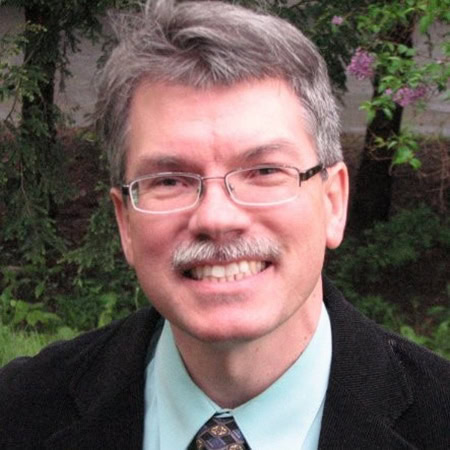
Daniel W O’Neill, MD, MTh (drdanieloeill@gmail.com) is a physician-theologian, managing editor of Christian Journal for Global Health, and assistant professor at the University of Connecticut School of Medicine. He has worked and researched heath and mission in Latin America, Burkina Faso, North India, and the Middle East, co-authored All Creation Groans: Toward a Theology of Disease and Global Health (Pickwick, 2021), and co-designed the Christian Global Health in Perspective course with Health for All Nations.
[i] Ralph D. Winter, “A Blindspot in Western Christianity?” In Foundations of the World Christian
Movement: A Larger Perspective, ed. Beth Snodderly and Ralph D. Winter (Institute of International Studies, 2008), 319–22, https://static1.squarespace.com/static/5b3157f3b40b9d21a8096625/t/5ed13d18cfba127f3c41f09d/1590770998243/Foundations+Reader.pdf.
[ii] Christian Global Health in Perspective, Health for All Nations, https://www.cghiperspective.com/course-introduction-and-outline.html.
[iii] Daniel W. O’Neill, “Toward a Theology of Disease and Global Health,” ICMDA, webinar, April 7, 2022, https://youtu.be/pHsBoFdLpkI?t=1380.
[iv] Giles N. Cattermole, “Global Health: A New Paradigm for Medical Missions?” Missiology 49, no. 2 (2021): 189–206, https://doi.org/10.1177/0091829620972381.
[v] Christoffer H. Grundmann, “Sent to Heal! – About the Biblical Roots, the History, and the Legacy of Medical Missions,” Christian Journal for Global Health 1, no. 1 (2014), https://doi.org/10.15566/cjgh.v1i1.16.
[vi] John R.W.Stott, ed., “The Grand Rapids Report,” in Making Christ Known: Historic Mission Documents from the Lausanne Movement, 1974–1989 (Wm. B. Eerdmans – Lightning Source, 1997), 181–2.
[vii] Mark Lau Branson, “Striving for Obedience, Haunted by Dualism,” TSF Bulletin 6, no. 1 (September 1982): 11.
[viii] Vinay Samuel and Chris Sugden, quoted in Chris Sugden, “Transformational Development: Current State of Understanding and Practice,” Transformation 20, no. 2 (April 2003): 71, https://www.jstor.org/stable/43052561.
[ix] Al Tizon, “Precursors and Tensions in Holistic Mission: An Historical Overview” in Holistic Mission: God’s Plan for God’s People, ed. Brian Woolnough and Wonsuk Ma (Eugene, OR: Wipf & Stock, 2011), 61–75.
[x] Lausanne Movement, “The Whole Church taking the Whole Gospel to the Whole World,” Theology Working Group (2010), https://lausanne.org/content/twg-three-wholes.
[xi] Lausanne/WEA Creation Care Network, http://lwccn.com.
[xii] Lausanne Movement, Issue Networks – Health for all Nations, https://lausanne.org/networks/health-for-all-nations.
[xiii] Howard A. Snyder and Joel Scandrett, Salvation Means Creation Healed: The Ecology of Sin and Grace (Eugene, OR: Cascade, 2011).
[xiv] Wilbert R. Shenk, “Recasting Theology of Mission: Impulses from the Non-Western World,” International Bulletin of Missionary Research 25, no. 3 (2001): 98–107, https://doi.org/10.1177/239693930102500301.
[xv] Daniel W. O’Neill, “Moving from Aristotle to Jesus: Growing into a Flourishing Global Community,” Kushamiri-Flourish, Micah Global 8th triennial conference paper (September 2021); see also, Daniel W. O’Neill, “Aristotle to Jesus: Human Flourishing,” ICMDA, webinar, September 6, 2022, https://youtu.be/7AdDko1PTAs.
[xvi] Jonathan T. Pennington, “A Biblical Theology of Human Flourishing,” Institute for Faith, Works, and Economics (March 2015), https://tifwe.org/wp-content/uploads/2015/03/A-Biblical-Theology-of-Human-Flourishing-Pennington.pdf.
[xvii] Daniel W. O’Neill, “Toward a Fuller View: The Effect of Globalized Theology on an Understanding of Health and Healing” Missiology: An International Review 45, no. 2 (May 2017), http://journals.sagepub.com/toc/misb/45/2.
[xviii] Daniel W. O’Neill, “Sin and the Etiology of Disease,” in All Creation Groans: Toward a Theology of Disease and Global Health, ed. Daniel W. O’Neill and Beth Snodderly (Eugene, OR: Pickwick, 2021), https://wipfandstock.com/9781725290112/all-creation-groans/.
[xix] Daniel W. O’Neill, “Healing as God’s Intention for Ministers of Reconciliation,” International Bulletin of Mission Research 47, no. 3 (June 2023): 405–415, https://doi.org/10.1177/23969393231165735.
[xx] Snyder and Scandrett, Creation Healed, 99.
[xxi] Adolfo Ham, “Toward a Cosmic and Holistic Mission: A Biblical Reflection on Romans 8:14–24a” International Review of Mission 106, no. 1 (June 2017): 116–120, https://doi.org/10.1111/irom.12170.
EMQ, Volume 59, Issue 4. Copyright © 2023 by Missio Nexus. All rights reserved. Not to be reproduced or copied in any form without written permission from Missio Nexus. Email: EMQ@MissioNexus.org.