EMQ » July–September 2023 » Volume 59 Issue 3
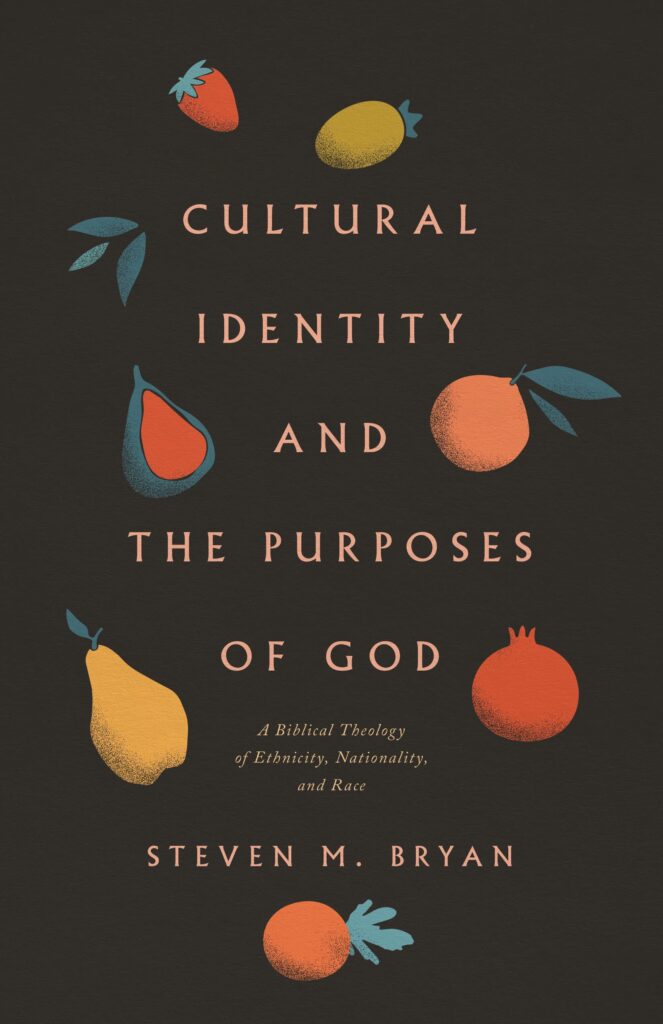
Cultural Identity and the Purposes of God: A Biblical Theology of Ethnicity, Nationality, and Race
By Steven M. Bryan
Crossway, 2022
288 pages
US$19.99
*As an Amazon Associate Missio Nexus earns from qualifying purchases.
Reviewed by Ryan Klejment-Lavin, PhD in intercultural studies and director of Footstool Missions Center, South Korea.
There are times when an author is able to address the zeitgeist of current trends in a remarkable way with a fresh look at Scripture. Steven M. Bryan’s book Cultural Identity and the Purposes of God: A Biblical Theology of Ethnicity, Nationality is one such example.
Ethnicity and nationality have been part of the story of the spread of the gospel since the days of the early church. However, identity politics and the trend towards strongly avowed identities make the relationship among ethnicity, nationality, and race both urgent and important for missiologists and theologians to address. The author makes a compelling argument that, while cultural identity has been used by individuals and institutions to divide, Scripture casts a vision that diverse cultural identities are intended by God to be a blessing.
The author takes the reader on a journey through Scripture to make his case. Beginning in Genesis, the author demonstrates that cultural diversity reflects the image of God in humans and is not a consequence of the Fall. Along the journey, the reader stops at the flood narrative, the tower of Babel, the story of Abraham, and the conquest narrative. The author’s solid biblical knowledge and understanding of ancient Near East culture help the reader to dive deeper into Scripture and may challenge some previously held beliefs about troubling passages.
Finally, the author explains the approach of Jesus towards cultural identity and diversity as found in the gospels, along with the approach of the early church and apostles in the rest of the New Testament. More than tolerance of difference, the author argues, the trinitarian God unifies peoples of different cultural identities without causing them to lose their cultural distinctives.
The author concludes by urging Christians to reject nationalism in all forms, and to be wary of political movements that use group identification to divide rather than unite. Peppered throughout the book are anecdotes of the author’s own experience in cross-cultural ministry in Africa. These anecdotes strengthen the book’s main argument, and they help to drive home the author’s points.
This book would be appropriate as a textbook in a course designed to examine cultural identity. Additionally, people in ministry would benefit from the wisdom found in this book. There will likely be detractors from both theological and political extremes due to the subject matter, but the author is successful in maintaining a moderate, thoughtful, and, most importantly, biblically based argument throughout the book.
For Further Reading
From Every People and Nation: A Biblical Theology of Race by J. D. Hays (InterVarsity Press, 2003).
To Change the World: The Irony, Tragedy, and Possibility of Christianity in the Late Modern World by J. D. Hunter (Oxford University Press, 2010).
God’s Image and Global Cultures: Integrating Faith and Culture in the Twenty-First Century by Kenneth Nehrbass (Cascade Books, 2016).
EMQ, Volume 59, Issue 3. Copyright © 2023 by Missio Nexus. All rights reserved. Not to be reproduced or copied in any form without written permission from Missio Nexus. Email: EMQ@MissioNexus.org.