EMQ » April–June 2023 » Volume 59 Issue 2
Summary: Missions includes church planting, evangelism, reconciliation, and much more. Bible translation programs aim to do all of these things, yet they can be seen as periphery to real mission work. Does Bible translation have a missional impulse that is essential to long-term transformation of individuals and communities?
By Paul K. Kimbi
Many Bible translation organizations have the word transformation directly mentioned or implied in their vision statements. By this, they express their desire to see the transformation of individuals and communities in the work they do. Bible translation, therefore, has the goal to initiate spiritual (and social) returns on communities where it is done.
A broad definition of missions which includes “witness, justice, healing, reconciliation, liberation, peace, evangelism, fellowship, church planting, contextualization and much more.”[1] Bible translation aims at all of these things in the long run, and is therefore clearly missional.
Nevertheless, Bible translation has been perceived by many simply as the retelling of the biblical text from one language to another. Quality in Bible translation frequently gets limited to a focus on the clarity, accuracy, and naturalness of the translated text. However, a quality Bible translation program that is also missional, must go beyond the quality of the text to include the quality of the translation process.
Translation and Transformation
Merriam Webster defines transformation this way: “to transform is to change in composition or structure, to change the outward form or appearance of something and to change in character or condition.”[2] A change like this in people is noticeable. Usually in response to an inner change of beliefs or value system, their behavior beings to change.
Bible translation seeks to create a change in the value system of individuals and communities in line with Romans 12:2: “Do not conform to the pattern of this world, but be transformed by the renewing of your mind. Then you will be able to test and approve what God’s will is – his good, pleasing and perfect will.”
Some of the key words in the verse are conform, transformed, and renewing. To conform means to identify with the way things are in a given context. To transform means to go through or to change or adjust the outlook of things in a given context. In Bible translation, we want to move a conforming community into transformation through a renewal agent which is Scriptures in the language and format people understand best.
Bible translation seeks the renewal of the mind by providing a way for an appropriate understanding of Scriptures using the language and metaphors, imagery, and idioms in which a given community embeds its values. The early missionaries understood this and engaged with translation in most places they went. The history of missions in Africa also attests to this.
The early missionaries in Africa faced several challenges, not the least of which was communication. Due to the inability to understand or communicate appropriately in the local language, communication sometimes was perceived as insensitive on the part of the missionary.
Taber quotes the story of a man called Asantehene in Ghana who said to a Methodist missionary (Rev. Picot) in the Gold Coast that: “The Bible is not a book for us. God at the beginning gave the book to the white people and another book to the Cramos …. It is your religion which has ruined the Fanti country, weakened their power and brought down the high man on a level with the low man.”[3] This demonstrates that the Bible was perceived to be a foreign book because it used a foreign language.
The first Christian Mission in Cameroon was led by the London Missionary Society from Jamaica. The first team arrived in 1841 and started the church a year after in 1842. Baptist missionaries, Joseph Merrick and Alfred Saker, were among the group that came. Alfred Saker led the translation work in the Douala Language. In 1848, the book of Matthew was printed in the Douala language. The New Testament followed in 1862. And then the Old Testament was completed in 1872.[4]
Four years after Saker arrived, the Gospels were translated and printed in Douala, and twenty years after there was a New Testament. This shows the missionary paradigm and importance attached to the Bible in the language of the people. However, in this paradigm, it was the missionary who did almost everything about the translation with the aid of native speakers of a language.
In 1890, the Basel Mission arrived in Cameroon, and then the Presbyterian Mission came. Adolphus Clemens Good, who came with the Presbyterians, studied a local language called Bulu. He produced a dictionary and then translated the gospels into the language in 1894.[5]
“The Bible, the Catechism and the Hymn Books were translated into the vernacular languages of the people… The result of this was that they not only had direct and more effective communication with the people, but they were also able to win the people more easily.”[6]
The activities of missionaries in Cameroon and elsewhere in Africa led to the establishment of schools, health centers, training centers, etc. Missionaries wanted to see transformation in all facets of African life. Where there was a translation of the Bible, the church grew and became strong but where there was no existing Scripture in the local language, such communities were vulnerable and easily falling prey to other religions.
Watkins confirms this: “From its beginning in 1842, the Anglican Church has been ahead of all other denominations in communicant membership in Nigeria. There are several reasons for this, not the least of which is the fact that large portions of Scripture were translated from the very beginning of mission work into the Yoruba, Ibo, and other languages.[7]
Approaches to Translation
Asserting that a translated text brings transformation could be an overly simplistic way of stating a complex process. This assertion can likely be linked an eighteenth century psychological theory by John B. Watson, called the stimulus and response theory, that claimed that human behavior is always a response in correlation to a stimulus that exerted on the individual.[8]
Pavlov demonstrated this by conducting an experiment wherein he showed that by pairing a conditioned stimulus (a bell) with an unconditioned stimulus (food), a dog would salivate (response) when the bell is rung. So, dogs were summoned for feeding by a bell and this conditioned the dogs so that each time they heard the sound of the bell, they began to salivate (in anticipation of food).
That theory can be put in the form of the following equation:

Can we use a simple explanation like this to explain how people change when they see with Scriptures?
What if we substitute the S (for stimulus)for Scriptures and the R (for response)for Repentance (or transformation). Is the mere availability of Scripture S in a given community a condition sine quo non for transformation R? If this were true, then communities with available Scriptures would all be transformed. If the answer is no, then what needs to be done to ensure that the translated Scripture engender transformation?
Having the Word of God in a given language is a significant step towards transformation but transformation requires more than just the availability of Scriptures. There are series of events and participants in the process that interplay together one building on the other leading to transformation. Reading (and/or hearing) and understanding Scriptures, for example, is needed for the renewal of the mind.
So, what needs to be done to ensure transformation?
Transformational Bible Translation
An understanding of the context in which the translation is being done, plays an important role in determining transformation goals in the process of Bible translation. What are the variables in a given community that should be considered as helpful for people to adjust the way they interpret the world?
The stimulus and response theory was later modified to include context and variables. S → C (V) → R. The stimuli applied in a certain context would interact with certain variables to determine how people would respond.
For example, the response to Scriptures by people in a given community would be influenced by community factors such as the vitality or lack of vitality of the church, the presence of other religions, the influence of outsiders or other cultures, the educational level of members of the community, etc. Seen in this way, translation once more shows itself to be missional. Translating for transformation adopts an approach that addresses the obstacles to transformation in each given community.
The Wycliffe Global Alliance has created a philosophy for doing Bible translation which is built on the concept of the mission of God. It outlines the insights derived from a series of missiological reflections and outlines key principles that can promote the transformational impact desired for every translation project. In this way, translation is implanted from the beginning with a missional intent.
Another key model for translation developed by Wycliffe USA is called the Common Framework. It aims to see an accelerated impact of the translation with Bible translation agencies demonstrating a posture of service and allowing leadership to the local community. It focuses on local church ownership of translation projects with synergistic technical, resource, and impact partners. Good relationships between translation team, the community, and other partners are prioritized.
Comprehensive Quality in Translation
When we want to see translations that lead to community transformation, we have to look at comprehensive quality that not only considers the quality of the text (accuracy, naturalness and clarity), but also how translation should be done. This not only answers the question what or who makes a translation better, but how a translation can achieve desired results.
Comprehensive quality is the responsibility of everyone involved: the translation consultant, translation team, translation coordinator, church, community, translation agency, and other translation project partners. Each person has an important role to play in ascertaining the quality of the translation.
The community or the church are the primary decision-makers. A translation consultant, usually an outside expert, helps determine the readability of translated Scriptural text for a given people. But they still must work closely with the community, taking a posture of a facilitator and allowing leadership and decisions to fall to the local church.
We want translated Scriptures that are immediately usable and generate impact in the community from the start. So, questions like, “Should a translation be idiomatic, or highly meaning-based or literal?” or “What portions of Scriptures should be translated and published first?” need to be answered by the local church or community. A translation consultant then works alongside a local church or community help them implement their desired preferences.
The role of the translation agency in a comprehensive quality approach is also facilitation. They help the church and community envision the future they want to see come about as a result translation work. They work alongside community and church leaders to consider who their stakeholders are and the needs of different segments of the community.
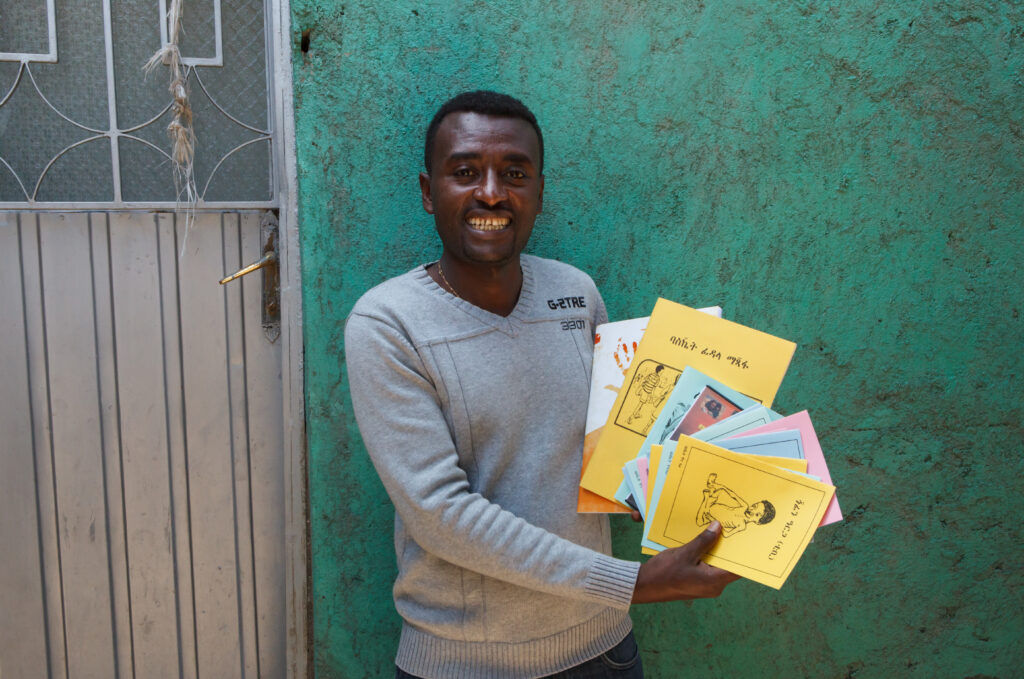
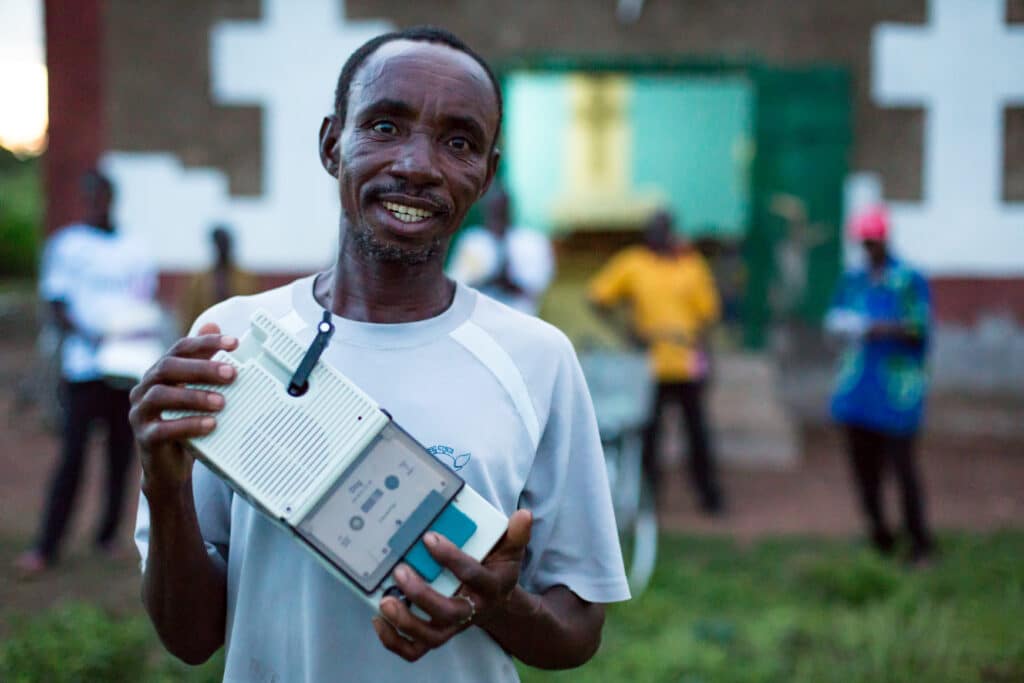
Then, together, they may consider what kinds of programs and products would be most helpful. Programs could include things like local language literacy, education, or trauma healing programs. Products could include things such as audio Scriptures, video resources, or dictionaries.
Translation is a Missional Essential
Recognizing the comprehensive nature of translation programs allows us to see their full potential and wide-ranging effects upon implementation. As we see in historical examples, translation was a key part in the establishment and long-term growth and stability of the local church, and this continues to this day.
The stimulus response theory provides a framework for us to see the missional impact of Bible translation. It makes clear that Bible translation is much more than translating text or the production of a book. It is a trigger for the work of missions to continue as part of a wider program that can include spiritual and educational components. Each of these are designed to help individuals and a community as a whole improve their lives and worship God more fully. Bible translation is not periphery to real mission work. It is a missional essential.

Paul Kimbi (paul_kimbi@wycliffe.net), PhD, was born in the Northwest region of Cameroon. After obtaining his bachelor’s degree, Paul served as a translator for the Kom New Testament and later as a translation consultant for Cameroon Association of Bible Translation and Literacy (CABTAL). He currently serves as consultant for Bible translation programs for the Wycliffe Global Alliance and translation coordinator for Wycliffe Global Alliance Africa Area.
[1] David Bosch, Transforming mission: Paradigm Shifts in the Theology of Mission (Maryknoll: Orbis Books, 1991): 512.
[2] “Transform,” Merriam Webster, last updated February 8, 2023, https://www.merriam-webster.com/dictionary/transform.
[3] John S. Pobee, “The Church in West Africa”in The Church in Africa 1977, ed. Charles R. Taber (California: William Carey Library, 1978): 154.
[4] J. Van Slageren, Histoire de l’Eglise en Afrique, Cameroun (Yaounde: Editions Cle, 1969): 59.
[5] E. O. Babalola, Christianity in West Africa: An Historical Analysis, (Ibadan: BRPC, 1988): 158.
[6] Babalola, Christianity, 159.
[7] Morris Watkins, Literacy, Bible Reading and Church Growth through the Ages (California: William Carey Library, 1978), 108.
[8] John B Watson, “Psychology as the Behaviorist Views It,” Psychological Review 20, no. 2 (1913):158–177, https://doi.org/10.1037/h0074428.
EMQ, Volume 59, Issue 2. Copyright © 2023 by Missio Nexus. All rights reserved. Not to be reproduced or copied in any form without written permission from Missio Nexus. Email: EMQ@MissioNexus.org.