EMQ » April–June 2023 » Volume 59 Issue 2
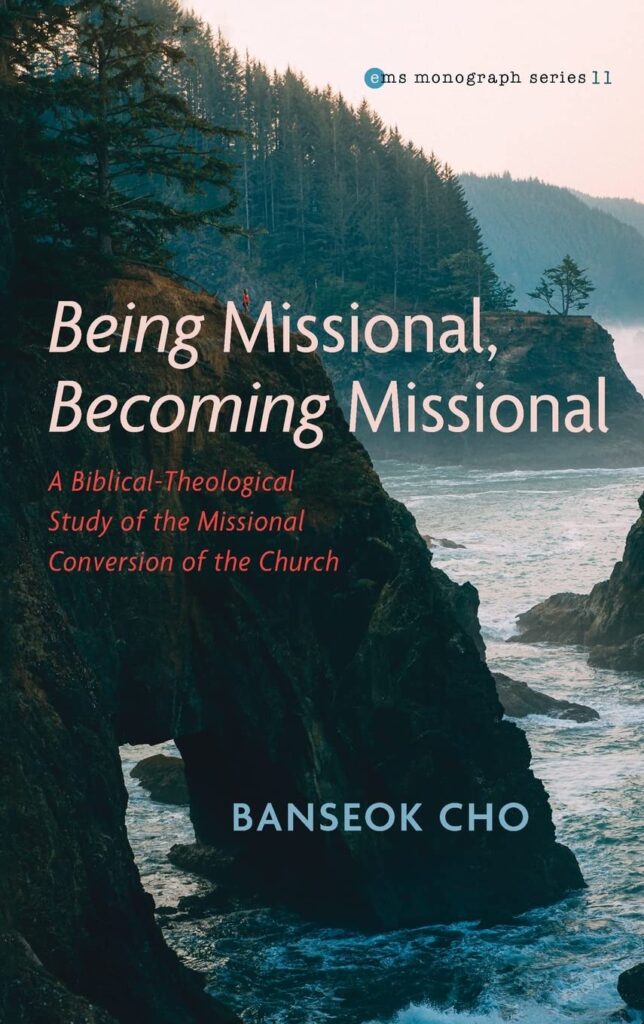
Being Missional, Becoming Missional: A Biblical-Theological Study of the Missional Conversion of the Church*
By Banseok Cho
EMS Monograph Series 11
Pickwick Publications, 2021
237 pages
US$31.00
*As an Amazon Associate Missio Nexus earns from qualifying purchases.
Reviewed by A. Sue Russell, professor of mission and contextual studies, Asbury Theological Seminary, Wilmore, Kentucky.
In recent years, many books have discussed the concept of missional recognizing that the post-Christian West is a mission field. Some focus theologically on the concept of missio Dei, God’s redemptive mission and the Church’s participation in it. Others focus on the practical aspects of being a missional church such as what a missional community looks like or how a missional church may approach ministry in its community.
However, one practical question that is often left unanswered is how a church becomes a missional church (3). Being Missional, Becoming Missional answers this question with an in-depth biblical and theological study of the missional conversion of God’s people to participate in God’s redemptive mission.
The central question that Cho seeks to answer is how the triune God shapes his people for the missionary vocation of participating in God’s mission (19). He approaches this question by examining three historical epochs highlighting how the triune God shapes a specific people for his mission.
The first section examines how Yahweh shapes Israel as his people participate in his mission. The second focuses on Jesus and how his encounters with the disciples bring about their missional conversion. And finally, the third section focuses on how the Holy Spirit empowers and transforms the early church in its missionary formation (19).
Cho concludes his study by drawing four foundational principles relevant to the missional conversion of a church. The first is that the church’s missional potential is grounded in God’s missional intention for his people. His people are to be a light to the nations (203). The second is missional vulnerability. This study demonstrates that, in the biblical narrative, God’s people have frequently drifted from their calling and purpose.
The third principle is that the missional conversion of the Church is possible because of God’s commitment to fulfilling his purposes through his people. And finally, mission conversion of God’s people is only possible through an encounter with the triune God (204).
There is much to appreciate in Cho’s discussion of the missional conversion of the church. One of the important findings discussed in each chapter is that the missional Church is holistic. It is not only the outward witness of the Church that impacts the world around it, but the inner life of God’s people is also part of being a witness in the world.
God shapes his people to be a contrast society whose lives are profoundly shaped by God’s love and holiness. This is a prophetic word for today as often the world looks at the Church with skepticism when the lives of its people do not match the words that they say.
For Further Reading
Mission of God’s People: A Biblical Theology of the Church’s Mission, by Christopher Wright (Zondervan, 2010)
Light to the Nations: The Missional Church and the Biblical Narrative, by Michael Goheen (Baker Academic, 2021)
EMQ, Volume 59, Issue 2. Copyright © 2023 by Missio Nexus. All rights reserved. Not to be reproduced or copied in any form without written permission from Missio Nexus. Email: EMQ@MissioNexus.org.