EMQ » July–September 2022 » Volume 58 Issue 3
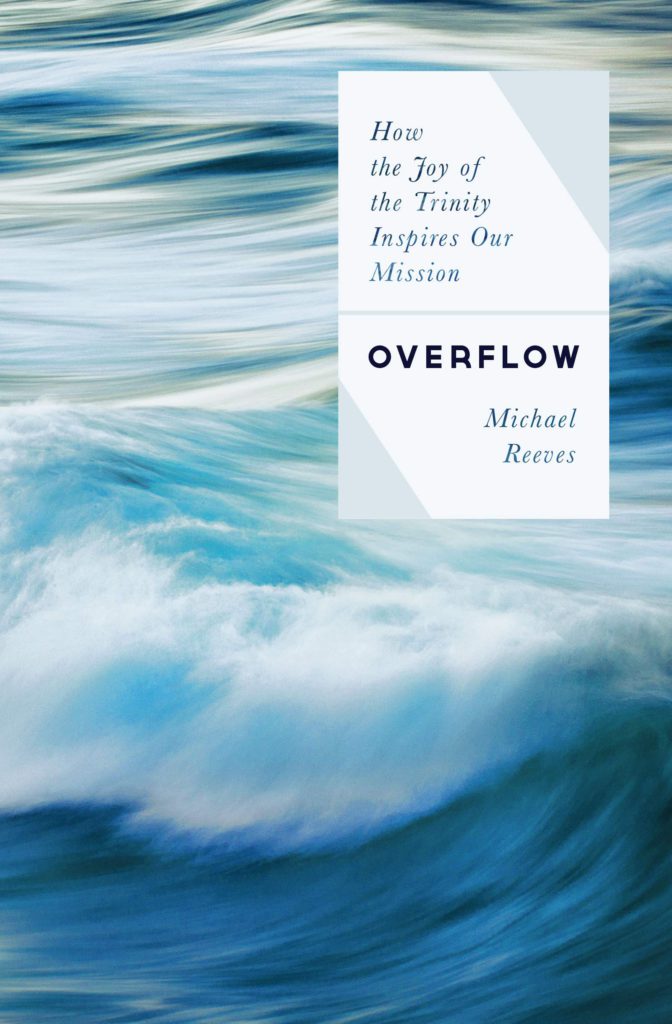
Overflow: How the Joy of the Trinity Inspires our Mission
By Michael Reeves
Moody Publishers, 2021
98 pages
US$12.99
Reviewed by Karry Kelley, PhD, director of global mission practice for World Team, focusing on training new church planting teams at their ministry locations.
Mission is the unavoidable consequence of the triune reality of God. That is Michael Reeves’ core argument in his delightful little book, Overflow. As he demonstrates, the Trinity is not simply a theological brain-twister. The trinitarian nature of God is the unique wellspring of vibrant Christian living and mission. “My aim,” Reeves declares, “is to take you to the fountain of life so that you can be refreshed and so satisfied in Him that you cannot keep it in: you overflow to the world” (10).
Reeves develops his argument in four short chapters. In Chapter One, he explains that God is loving precisely because he is triune. He is loving in his very own being. The members of the Godhead eternally love each other and their love is the ground of all other love. If God were not triune himself, there would be no logic to love. Love would have no ground in his own being and would not be reflected in his creation. Love wouldn’t exist. Because God loves, love also exists in creation. Mission is the natural overflow of that love.
Chapter Two further describes the other-focused love of the Trinity. God, as radiant light, casts light everywhere. The glorious radiance of His light emanates from him onto his creation. He does not absorb or take, he gives. “The work of the Spirit is to open our eyes to see Jesus in all His glory, to see God as he truly is. Touched by divine glory and the sunshine of God’s love, out of the overflow of our hearts, we will sing before all the world of a glorious Redeemer” (56).
Chapter Three reveals the inadequacy of two alternate possibilities to the Trinity. What would life be like without the Trinity? Whether it be the solitary God of Islam or the absence of God altogether in modern atheism, neither adequately explains the presence of love in the world or the existence of creation itself. Chapter Four argues that, like the example of Caleb the Kenizzite (a pagan by birth), we also are adopted into the family of God and into the same kind of relationship with the Father that he has with his Son. We are brought into the very life of the Son of God.
Overflow is about the Trinity and Christian missions, but the reader shouldn’t look for a complete theological development of the doctrine of the Trinity. Reeves’ aim is to inspire us with a vision of the eternal love between the Father, Son, and Holy Spirit and to move us to mission as members adopted into their glorious relationship with each other.
One thing I find myself wishing for at the conclusion of the book is a fuller development of adoption. This is a powerful point, but it stops short. In what respects do we share in the same kind of relationship the Son has with the Father? What more can be said of the implications for mission? The thought is tantalizing.
For Further Reading
A Trinitarian Theology of Religions: An Evangelical Proposal by Gerald R. McDermott and Harold A. Netland (Oxford University Press, 2014)
Delighting in the Trinity: An Introduction to the Christian Faith by Michael Reeves (IVP Academic, 2012)
EMQ, Volume 58, Issue 3. Copyright © 2022 by Missio Nexus. All rights reserved. Not to be reproduced or copied in any form without written permission from Missio Nexus. Email: EMQ@MissioNexus.org.