EMQ » July–September 2021 » Volume 57 Issue 3
By Cathy Hine
After a number of years in mission leadership, it was clear that there was a fundamental issue that underlay the tensions we were constantly navigating between the different parts of our organization. Sitting in a leadership development cohort that I was co-facilitating, I watched leaders from two different parts of the organization discuss a tension that had arisen between them, and then it struck me. The fundamental issue was trust.
As we explored this idea of trust being at the heart of the tensions we experience in different ways, I heard things like: the workers we have sent from our office don’t trust us; the national offices don’t trust us internationally; our teams in countries don’t trust the way we are screening and sending people; our offices don’t trust us to care for the people they send to us. These are just a sample of the kinds of things said that give focus to the centrality of trust for us to be able to function healthily as mission organizations.
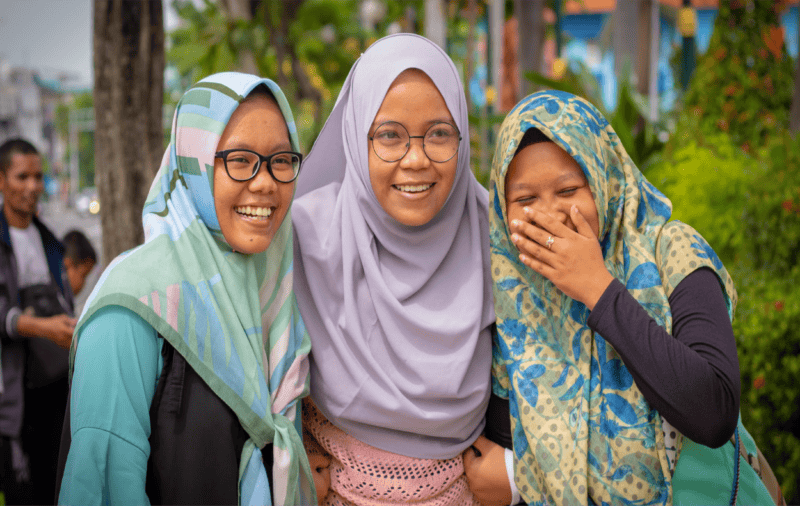
As I engaged with a group of women followers of Jesus from within Islam (BMBs) in another area of my work, I realized trust was much bigger than an organizational issue. We had created the space for a small group of women to come together and explore faith and discipleship. We set no agenda. We had no predetermined outcomes to drive our conversations. We desired to create a safe space to listen to each other, co-creating the agenda and the outcomes. At the end of the first of those gatherings one of the women said that this was the first time she had been invited to something where the agenda was not set for them, the outcomes not predetermined, and the follow up actions not preset, simply because they had been invited and enabled to be there.
The issue underlying her comments was trust. She felt that trust had been extended to her and the other women as space was given to their voices, their desires. Listening and inclusion had created a safe space and the reciprocity of trust opened new opportunities for belonging.
So often we exercise our mission by controlling the strategies, agendas, practices, theologies, or missiologies. We act like this because we have the power to do so. However, this communicates that we do not trust the contributions that the other participants in the process could make. Only as we let go of our power and become vulnerable can trust be established. Through trust, transformation can occur in and between participants as well as through the work they do together.
What is the role of trust in mission? How might we build trust in our intercultural organizations, and in cross-cultural engagement? At the center of these is a more fundamental question: Could trust in mission be reimagined? Might it be better understood as vulnerability, as the place of inclusivity, belonging, and identity?
What Trust Means in Mission
Having identified in our organization’s leadership development that trust (and the ability to build trust) is a basic leadership skill in mission, we set out to explore it. The most telling part of our first forays unearthed the challenges of defining trust within an intercultural organization.
We encountered statements from diverse leaders in the organization such as: our (as a national trait) starting point with trust is to offer just a little bit, and then you must earn it, prove you are worthy of it; don’t get too big or we can’t trust you; we know we can trust you if you are honest, meaning you don’t lie; we will trust you if you don’t shame us.
Working with the Church in mission also brings to light challenges with trust in ministry. On the one hand, we acknowledge and rejoice in the work God has done in building his church among the nations, while at the same time we push back against the voice of that church-shaping ministry strategies and practices among its own people, pointing to leadership issues and divisions among churches, and often questioning the trustworthiness of members of the community and its leaders.
The alliance of evangelical churches in Turkey invited mission workers and leaders to a meeting a couple of years back. They acknowledged that they still needed cross-cultural workers as the task that remained was large, but made the plea that missions listen to them as they had a plan, a purpose, and a strategy for reaching their nation. The inclusion, or not, of local voices, what shape the church should take, and what discipleship looks like are among the issues on which missions can hold opposing views. The core issues seem to be that of trust in relationships in the local contexts.
When we discuss the meaning of trust, we tend to focus on the character and behavior of the other person or community. We generally assume that the responsibility for whether or not we trust other people is not in our hands. It’s their responsibility because we define trust in the other around the behaviors and characteristics in the other people or their community. For instance, things like their honesty, integrity, whether they do what they say, transparency, and dependability.
This is a fundamental challenge for intercultural teams and for ministry cross-culturally because our understanding of these things – honesty, integrity, dependability, transparency, trustworthiness – is culturally contextual. How else can trust be defined?
Quoting Charles Feltman, Brene Brown says: “Trust is choosing to make something important to you vulnerable to the actions of someone else.”[1] The responsibility for trust in this understanding becomes mine. It is a choice I make, independent of the behaviors, attitudes, or character of another.
This makes vulnerability a key to understanding trust. Brown says vulnerability is “uncertainty, risk, and emotional exposure … not weakness; it’s our most accurate measure of courage …” and she goes on to challenge by saying: “When the barrier [to courageous trust] is our belief about vulnerability, the question becomes: “Are we willing to show up and be seen when we can’t control the outcome?” When the barrier to vulnerability is about safety, the question becomes: “Are we willing to create courageous spaces so we can be fully seen?”[2]
Trust as vulnerability is expressed through the incarnation. Philippians 2:1–11 reminds us of the vulnerability for both the Father and the Son. The Son emptied himself and came and dwelt among us, as one of us. The Father gave to us that which was most precious to him, his Beloved Son with whom he was well pleased. Love, trust, and vulnerability are made visible in the incarnation. In the same way, the model of the incarnation calls us to embrace love revealed through the vulnerability of trust.
Vulnerability in Mission
We were wrestling with the question of discipleship for women who follow Jesus out of Islam when we (two BMB women and two women who work with them) decided to bring together this group of BMB women (mentioned at the beginning). We entered uncharted territory. We had never done it before so didn’t know what to expect or even if we, those of us who were mission workers, could let go of our trained behaviors on managing meetings. While we knew some of the women, we didn’t know them all, and they didn’t know each other. And, as we discovered, they had never been in this sort of space either. We all had to embrace trust in the vulnerability of choosing to make ourselves known to others.
In the past year the COVID-19 pandemic has exposed problems in many of our theologies of risk in mission, highlighting our adversity to loss of control. Many in ministry teams in my organization struggled with their reason for being there and their identity when they couldn’t do what they had always done in ministry. When their power was limited by lockdowns, the question became what is our purpose, and who are we here? Could the local church and believers be trusted to take the work forward when mission workers were not in control?
What I also heard again and again was that local churches and communities of believers in Central Asia, North Africa, the Middle East, and South Asia have grown in their engagement with the broader community, in responding to the real needs of people, in taking leadership for ministry, in being light and salt during this time. And they’ve done a good job. Where we have not trusted them to create, innovate, and lead, God entrusted his work in their communities to them.
When the power that places boundaries on trust is removed, we see how God works, how the vulnerability of trust energizes God’s work. The safe, sacred space created by trusting each other when the BMB women met is testimony to this. When mission workers feel the vulnerability of their powerlessness and marginalization, they are offered fresh visions of what people can do when they are trusted. Where COVID-19 did much to remove the power and control of mission workers, God entrusted his work to his local community.
These stories call us to a trust that makes vulnerable our identity and embracing our marginalization from the center of ministry. They call us to extend trust with all of its risks to those God is calling out to follow him.
We need new theologies of risk that focus on trust, choosing to make vulnerable our mission practices, our identity, and belonging as part of the ever-growing global church, accepting of our place at the margins. Such theologies will courageously embrace the vulnerability of the margins, accepting them as the places of openness, radical possibility, and transformation.[3] This is trust.
Trust Reshaping Missiology, Strategies, and Practices
The centrality of trust, with its focus on the vulnerability of relationship, redefines mission as the creation of safe, sacred spaces of inclusion and collaboration. It disabuses mission of its power, too often a controlling feature of strategy and practice, but also relationships.
Stephen Covey, author of the book The 7 Habits of Highly Effective People, has said: “Without trust we don’t truly collaborate, we merely coordinate or, at best, cooperate. It is trust that transforms a group of people into a team.”[4] While there is extensive use of terms like partnership, walking together, and collaboration, the vulnerability of trusting relationships creating safe, sacred spaces of inclusion and equality can appear an unattainable dream.
This emphasis on trust expressed in the vulnerability of relationships is also addressed by Charles Kraft, who says:
Vulnerability is coming to people on their terms instead of your own. It is being aware of the things you bring (in who you are) that might get in the way of an equal and thriving relationship (1 John 1:3). It is brokenness, being made of no reputation, being transformed by the renewing of our minds, resolving to put no stumbling block in the way of the Gospel.[5]
So often our strategies and practices are forged in isolation from the context and relationships that they will engage, imagined through the lens of what we bring. When we rethink our missiology, strategies, and practices through practices of trust and vulnerability we will become creators of safe, sacred spaces where identity and mutual belonging can be renewed through the mutuality of equal and thriving relational connectivity.
Trust in Building Communities of Belonging and Identity
One of our hypotheses when talking about discipleship for BMB women has been that present models of training and learning are failing to address the real issues of women. BMB women tell us that while they appreciate the efforts to develop good discipleship materials, the missing link is communities of belonging, safe spaces of inclusion that prioritized relationships and connections. One North African BMB friend said that she has never felt that she was good enough to be trusted. She pointed out that these BMB women had felt they were never trusted in a way where they truly belonged. They felt that they were always a project, not a participant. In the space that we co-created, they showed us that extending trust was about creating communities of belonging and identity.
Caring, supportive relationships nurture safe, non-judgmental spaces where people can share their stories and create a sense of empathy and belonging. When we created the first of these spaces, we were aware that trust would be fundamental to the individual’s sense of belonging. It took an effort of vulnerability expressed in trust for each of us to enter this space and to share our stories. People were welcomed on their own terms, for who they were, with all that they brought with them into that space, and brokenness was an acknowledged part of all of our journeys. Each of us expressed how vulnerable we felt, and yet how transforming trust was to that sense of belonging and to our identity. We were no longer defined by who we were in relation to the other; we were daughters of Christ in community together.
Listening was a key aspect in giving expression to this trust; allowing each woman to share her story. Many told us how this was the first time they felt safe to share deep parts of their stories never before spoken about. Trust had not been earned through behaviors or knowledge of character, it was extended as an act of making vulnerable that which was personal and precious to the individual to the actions of others.
The risks involved for these women were overcome by the sense of belonging created when we extended trust to each other. There was a feeling of security and support experienced through the acceptance, inclusion, and shared identity. Personal value was enhanced through belonging, and the offering and experiencing of trust.
In his invitation to them to follow him, Jesus offered a space where a diverse group of men and women found acceptance, inclusion, and identity. Trust was offered, both by Jesus and by his disciples as they embarked on this journey of relationship and connection together. The teaching, the discipline, the opportunities for ministry were enhanced by the experience of vulnerable trust in their community. And, when it became most difficult, the sense of belonging and identity that had created this community reimagined the life of a follower of Jesus. It turned the risk of the margins into a place of world-transforming opportunity.
As the church is being built in some of the hardest of places, rethinking discipleship and community building through the relational connectivity of trust may help recalibrate mission strategies and practices.
Trust as a Fundamental of Mission
By shifting the focus of trust from trying to judge the trustworthiness of the other person or community, to an act of our vulnerability in relationship with them, we fundamentally change the focus of mission. Trust becomes our gift offered at the margins, creating safe spaces of inclusivity, belonging, and identity. There are risks, which call for us to rethink theologies of risk through the lens of trust and vulnerability, done in strategies and practices that focus on relational connectivity. This can reimagine mission organizations for the future as communities of belonging and identity, and ministry as the building of communities of acceptance, inclusion, belonging, and identity.
Cathy Hine is a co-founder of the When Women Speak… network, a member of the Angelina Noble Centre, and a cross-cultural mission partner. She works, researches, and writes at the intersection of women, mission, and Islam, is involved in leadership development within her organization, and part of its international leadership team.
EMQ, Volume 57, Issue 3. Copyright © 2021 by Missio Nexus. All rights reserved. Not to be reproduced or copied in any form without written permission from Missio Nexus. Email: EMQ@MissioNexus.org.
[1] Brené Brown, Dare to Lead: Brave Work. Tough Conversations. Whole Hearts. (Random House, 2018), loc. 222, Kindle.
[2] Brené Brown, Braving the Wilderness: The Quest for True Belonging and the Courage to Stand Alone (Random House, 2017), loc. 1792, Kindle.
[3] Bell Hooks speaks of the margins as places of openness, radical possibility, change, and transformation, refuting the idea that they are places of deprivation. See, for example her 1990 book, Yearning: Race, Gender and Cultural Politics (Cambridge, MA: Southend Press).
[4] Quoted by Sharon Taylor, “The Connection Between Vulnerability and Trust in Teams,” Emergenetics blog, accessed February 9, 2021, https://www.emergenetics.com/blog/the-connection-between-vulnerability-and-trust-in-teams/.
[5] Charles Kraft, “Meaning equivalence contextualization,” Appropriate Christianity (Pasadena, CA: William Carey Library, 2005): 155–168 (see page 163).