EMQ » July–September 2021 » Volume 57 Issue 3
By Miriam Sinclair

We live in a world where there is a great need to cross cultural bridges in order to truly know the other, listen to them, honour their story and learn from them. Let me share with you some of the lessons I have learnt from four decades of learning in cross cultural situations and helping others cross cultural bridges.
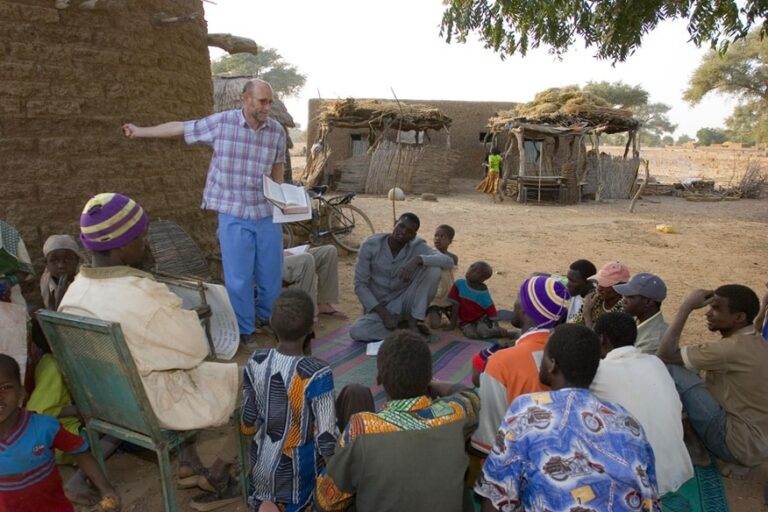
I can still hear the words of a village leader’s wife after about twelve months with hours and hours of observing, sitting with, and learning from people in that village. Her words “You’re one of us now,” were unexpected but I felt delighted that all the effort had led to this acceptance. This was our first time living in a village and confirmed to us the importance of giving time to truly make connections with people. Learning about the other and helping others to do the same has been a highlight of my journey and can be yours too.
Knowing the Other with Wholesight
When I use the words knowing another I am not just talking about knowing facts about them. It is knowing deeply in order to love – to connect soul-to-soul. Parker Palmer talks about knowing with wholesight; that is with both the head and the heart. Palmer is a visionary who writes with honesty, wisdom, and compassion as he suggests how education, the world, and ourselves can be changed by bringing both mind and heart to the learning process. He says,
We rely largely on the eye of the mind to form our image of reality. But today more and more of us are opening the other eye, the eye of the heart, looking for realities to which the mind’s eye is blind. Either eye alone is not enough. We need “wholesight,” a vision of the world in which mind and heart unite as my two eyes make one in sight. Our seeing shapes our being. Only as we see whole can we and our world be whole.[1]
When we know with the head, we know information only and we often learn this information for our own agenda, to gain data to fit our system, for curiosity, for control or to manipulate or organise. Knowing with the heart means entering another’s world, loving and caring, and then we begin to know. You might ask, “What does loving and caring look like?” Paul’s teaching on love in 1 Corinthians 13 gives us excellent standards; benchmarks for a loving relationship.
Learning from the Other
Our early cross-cultural helpers taught us the importance of learning people’s beliefs and practices before sharing any of our own beliefs and practices. Intentional time was spent researching by both observation and questioning. This then gave us a foundation of understanding and vocabulary we could use to begin to share our own beliefs and practices. One example of this would be sharing about heaven. While we see heaven as a place where we are with God, our friends believed heaven was a place where God gave many delights which often to them meant fair maidens to serve men. If we had not understood the meaning of the word for our people, by using it we could have been communicating meaning that was very different than what we believed. Each person believes and practices their faith in a personal way.
Before we share our precious truths, we need to first humble ourselves to listen and learn from others. To learn what they are thinking and why. What they are feeling and why. Valuing the person in this way – showing that we are valuing their inner being, their soul – allows something beautiful to happen in the relationship. Dialogue, mutual sharing at a deeper and deeper level, may then be possible. With this comes mutual caring and learning.
Underlying this is the recognition that the other may have things to share with me that are more important than what I want to share with them. I treasure the friendships I have built over the years where this has been possible.
It has been my practice in a new context to find a language and culture helper. They usually become a paid or unpaid friend. My most recent helper friend was a women my age who was a respected religious teacher. She would never accept payment, but I would take her food gifts. People would come to her for advice. I learnt from listening to her and watching her how to welcome people in that culture, how to gently make people feel loved, accepted, and respected. My times with her were so precious. I have encouraged those who I’ve mentored to find a language and cultural helper too. I’ve noticed over the years that these people often become cross-cultural workers’ best friends.
A Grounding in Devotion
We should have a sense of awe and worship as we learn about others and their culture. In learning about the other we have the amazing privilege of observing how our creator God is expressed in these people’s culture. God knows these people and their culture well. It is us in our learning who need to collaborate with God as learners following his nudges. As we listen to him, we will be guided as to how to enter another’s world and love them. As we experience being known and loved by God we no longer need to cling to a notion of our own superiority and are freed to know and love others as fellow divine image bearers.
Above all we strive to follow the greatest commandment in scripture, “love the Lord your God with all your heart, with all your soul and with all your mind.” (Matthew 22: 37, New American Standard Version) If we have this kind of devotion and understand even a little of our Father’s heart for those he has created, the second greatest commandment “love your neighbour as yourself,” (Matthew 22:39) will become more and more natural. If we have this kind of devotion, it will change the way we interact with others in this world’s diverse cultural background. Loving our neighbour as ourselves will mean we take time to enter their world to connect soul to soul.
Care in Questioning
We need to think before asking our questions and make sure our questions are respectful. Why are we asking questions? To truly connect or to gain information that is helpful to us? We may need to simply be with people and wait for them to share with us. I had to learn that it was meaningful to sit quietly with others for long periods not asking any questions at all. When we do ask questions, our questions need to be framed in love and asked at the appropriate time.
Trust needs to be built before asking deep more sensitive questions. It is useful to observe first and be slow to ask the why question. While we want to know the reasons people do things, they themselves may not know the reasons. We will need to appreciate and accept mystery and not have every question answered. I had a friend, who I met with weekly as a cultural helper. In my curiosity to learn about her religion I was constantly asking questions. After a number of months, she finally said, “Please don’t ask me any more questions.” I was disappointed as I felt I had lost my resource for getting the information I wanted. I learnt though to learn from her without using so many direct questions. I also came to realise that one of the reasons for her reluctance to answer was that she was scared that she would give me a wrong answer; something forbidden in her religion.
How Do We Begin to Connect Soul-to-Soul?
We delight in taking an interest in the lives of others and open our lives to them as they open their lives to us. This will involve a sharing of feelings. It will take time. It will take sacrifice. It will take lots of listening. It will take asking questions at the right time with the right motive, not just out of curiosity or to analyse.
Parker Palmer suggests that “the untrained mind of premodern times did not rely on factual observations and logical analysis but on the subjective faculties of emotion, intuition, faith. These modes of knowing do not manufacture a world to be held at arm’s length, manipulated and owned.”[2] We bring our whole selves to love, care, and know. I believe by using the term untrained mind Parker Palmer is not suggesting people were any less intelligent but is referring to an approach that relies heavily on facts and analysis rather than other aspects such as wonder, feelings, dreams, and imagination. These are also important regions to explore as we get to know others. Asking for instance what dreams people have had has led to some very significant conversations.
A Humble Posture
Crossing physical, personal, or imagined bridges and walls to love my neighbour as myself will take the right attitude. We need to treat the other as created in the image of God. We need to move towards them and accept them as people we want to include in our circle. Our prejudices need to go. We need to avoid being pumped up with messages or words we think we need to share and develop the art of listening. YES, it takes humility, patience, and courage and lots of time to truly have a “loving others as yourself” posture.
To get to know those of another culture we must clothe ourselves in a special kind of humility; cultural humility. Medical educators Melanie Tervalon and Jann Murray-Gracia describe it as “a process that requires humility as individuals continually engage in self-refection and self-critique as lifelong learners and reflective practitioners”[3] as they relate to patients from cultures different from their own.
Cultural humility involves developing a specific set of strategies and skills. You can reflect on your use of these in the self-test at the end of this article. This will help you identify your strengths and help you become aware of areas that you can further develop for personal growth.
Taking Off Our Ethnocentric Glasses
One new co-worker was upset that the women in the culture where we were living had to wear head coverings. It was going to be her mission to tell them to remove them and be free until I explained that rather than being symbols of oppression head coverings resulted in women receiving more respect and honour and that they truly enjoyed expressing their sense of style through wearing them. If we have ethnocentric thinking and believe our culture and our ways of doing things is better than that of others, it will blind us to the beauty in another culture. It blinds us to seeing the beautiful way their culture has developed in order for them to live. Any thought that people from a different culture, religion, or background are evil because they don’t look, believe, or act as we do, needs to be repented of. Unless we take our condemning and judgmental glasses off, our negative spirit will be a barrier to truly loving, learning, and honouring. Yes, there may be acts-events within the culture of another that might not reflect the values of the kingdom of God but if we are truly open and reflect on our own culture, we will realize that our culture also has acts-events that need transforming.
What Do We Do with What We Have Learned?
What we learn as we cross cultural bridges is a great treasure and it may be helpful to share it with others so that they gain new insights. Of course, we need to make sure we do not share confidential information without permission. As a bridge-crosser it will be helpful to work with someone from the other side of the bridge to write up what we have learned whether it be a story, poem, interview, blog, web page, podcast, case study, or research data. In this way they are honoured in telling their own story. It will be good to consider doing this with someone from the host culture so that they are part of telling their story too. I respect SIL who do many of their projects in partnerships like this. I particularly love the idea of preparing a community dictionary where members from the community are invited to add words to their own dictionary. You can check out software to do this at the website in the notes below.[4]
A friend who was working cross-culturally shared this story with me. She worked together with a national colleague on a research project documenting the success of children who began their education in village schools. It was a wonderful experience of collaboration as the foreigner was very aware that without her national colleague opening doors of relationship into the community and giving input into what was important to know, the project would not be possible. The local insider saw the value of the research being done and was happy to see how the success of the literacy program and young people in her community was being acknowledged. It was a time of growing together in friendship and mutual respect. At the end of the project, credit was given to everyone in the language group that helped obtain information and also to all those who shared their experiences and feelings. This is a wonderful example of honouring all those who have contributed.
Community Participation
I have seen that getting to know people from another culture is best done as a member of a team or group with the same aim, so that we can make connections in order to learn together. If I only know one person, I still do not know the people. I can get to know even just one person from a different perspective as teammates get to know that person too. I belonged to a team once who intentionally worked at getting to know family groups together as a team. We would visit a family with other team members and after visits share what we had learned. It is amazing how different ears, eyes, and language competencies can comprehend at different depths and breadths, bringing a greater richness of knowing. Palmer makes the comment, “in truthful knowing the knower becomes co-participant in a community of faithful relationships with other persons and creatures and things, with whatever our knowledge makes known. We find truth by pledging our troth, and knowing becomes a reunion of separated beings whose primary bond is not of logic but of love.”[5] This is a picture of a people together, building bridges.
Overcoming Distractions
There are so many activities that prevent us from spending time with those from other cultures, getting to know them with wholesight. Even the time we spend learning from books, exploring concepts, or writing and reading articles about theories of how to cross bridges can distract us from actually spending time doing it. If it is truly important to us that we learn to love others, if we are serious about building cultural bridges, then we will prioritise time to do just that. When distractions threaten to crowd out this time, we need to remind ourselves that “loving our neighbour as ourself” should take precedence over many other worthy tasks. In order to do this, over the years I found it helpful to put a visiting time in my schedule. Before visiting I would pray and ask God who he’d like me to spend time with that day then I would head off to visit them. To my surprise, from time to time the people would say, “I knew you were coming today,” and we’d have a very precious time together.
Challenge
Consider the following:
- Who is my cross-cultural neighbour?
- What do I need to do more of to build cultural bridges?
- Take the cultural humility self-test. In what areas would you like to move from sometimes or never to frequent? Write action points for yourself. Review your action points and take the cultural humility self-test again in six months to monitor your progress. Find a coach/mentor who you can talk with about your test results.
- Ask the Lord to help you develop your cultural bridge building skills and grow in areas of culture humility where you are weak.
- Ask him to help you “love the Lord your God with all your heart, soul, and strength and your neighbour as yourself.”
In this diverse world most of us have opportunities at our doorsteps to build cultural bridges. May we be strengthened to use them and see beautiful connections built as a result.
Cultural Humility Assessment[6]
This assessment is not to give yourself a grade, but to help identify areas for which you can/should improve (see the following interpretation).
Download the Assessment as a PDF
Instructions Read each statement and answer it with (F) frequently, (O) occasionally, (N) never, or (NA) not applicable.
| No. | Statement | Answer |
|---|---|---|
| 1 | I am curious to interact with people from cultures other than my own so that I can learn from them. | |
| 2 | I am careful not to make judgments before I really understand. | |
| 3 | I am aware that when I interact with someone, I am bringing my own story to that situation, which affects the way I will respond. | |
| 4 | I intentionally put myself in situations where I can learn about those from other cultures. | |
| 5 | I believe that God created diversity for a purpose, and I enjoy learning about God’s diversity through relating to people of different cultures, personalities, and backgrounds other than mine. | |
| 6 | I relate to others remembering that they are created in the image of God. | |
| 7 | I intentionally try to find out about others’ opinions and perspectives. | |
| 8 | I enjoy different cultural experiences, e.g., food, art, music. | |
| 9 | I find it easy to love and understand people different than me. | |
| 10 | In an intercultural setting my behaviour expresses Jesus in a loving and respectful way. | |
| 11 | I am aware of my own personal biases and assumptions about people with different values than mine. | |
| 12 | In an intercultural setting I ask those who know more than I do to give me feedback regarding how I am doing. | |
| 13 | I try to be aware of others’ cultural values. | |
| 14 | I enter an intercultural relationship as a humble learner. | |
| 15 | I ask questions to learn about the similarities and differences between people of different cultures. | |
| 16 | In a multicultural context I am careful to notice how what I do and say comes across to others. | |
| 17 | I change my behaviour to make it appropriate to the cultural context. | |
| 18 | If I notice someone in an intercultural situation struggling to understand what is happening, I will try to do my best to find a culturally appropriate way to help them realize what is going on. | |
| 19 | When I notice people from another culture doing something in a different way than me, I observe what they are doing and think carefully about whether it would be helpful for me to change my behaviour to match theirs. | |
| 20 | If I saw someone from another culture doing something that I thought was inappropriate I would ask someone who I knew from a similar culture about the behaviour before making any judgment. | |
| 22 | In a multicultural group I feel totally comfortable relating to people from diverse backgrounds and enjoy their company. | |
| 22 | I think carefully about what I say and how I say it in order for it not to be misinterpreted in an intercultural context. | |
| 23 | In a multicultural context I am aware of what I need to say and not to say about myself. | |
| 24 | In a multicultural context I appreciate that people from different cultures do things differently and I will change my behaviour to make it appropriate to those for the culture I am relating to. | |
| 25 | In a multicultural context I intentionally try to learn how different cultures interact and work with the group to find the best way to interact. | |
| 26 | When working with people who have limited English proficiency, I find strategies to make it easier for them to understand what I am saying, e.g., I don’t use metaphors; I repeat things in different ways. | |
| 27 | For those who speak languages and dialects other than my own language, I attempt to learn and use key words in their language so that I am better able to communicate with them. | |
| 28 | If I see someone showing cultural insensitivity, racial bias, or prejudice I will do something about it. | |
| 29 | I am aware that some cultural groups tend to dominate and will try to prevent this. | |
| 30 | I realize that not all people think the way I do about different issues and will try to ask questions and understand other points of view. | |
| 31 | I am constantly trying to understand myself better so that I am more aware of how I am coming across to others. |
| Number of times I wrote: (F) Frequently _______ (O) Occasionally _______ (N) Never _______ |
Interpretation
If you have responded honestly and found that you were responding with occasionally or never, you will want to reflect on your answers and find ways to change in order to be able to respond with frequently.
Miriam Sinclair (pseudonym) has been a long-term cross-cultural worker in Southeast Asia. She has also supported international cross-cultural workers in their journey of learning language and culture for incarnational ministry. She trained workers and leaders so that they would thrive in every aspect of their life and ministry. Miriam is motivated by curiosity, love, and a passion to help people have a personal relationship with a loving God.
EMQ, Volume 57, Issue 3. Copyright © 2021 by Missio Nexus. All rights reserved. Not to be reproduced or copied in any form without written permission from Missio Nexus. Email: EMQ@MissioNexus.org.
[1] Parker Palmer, To Know as We Are Known: Education as a Spiritual Journey (Harper and Row, San Francisco, 1983), 23.
[2] Palmer, To Know, 25.
[3] Melanie Tervalon and Jann Murray-Gracía, “Cultural Humility versus Cultural Competence: A Critical Distinction in Defining Physician Training Outcomes in Multicultural Education,” Journal of Health Care for the Poor and Undeserved 9, no. 2 (May 1998), 117, https://melanietervalon.com/wp-content/uploads/2013/08/CulturalHumility_Tervalon-and-Murray-Garcia-Article.pdf.
[4] SIL’s Language Software Community: https://community.software.sil.org/c/wesay/l/top.
[5] Palmer, To Know, 32.
[6] Cultural Humility Assessment created by Miriam Sinclair for training and development April 26, 2018.