EMQ » July–September 2021 » Volume 57 Issue 3
By Louise Simon
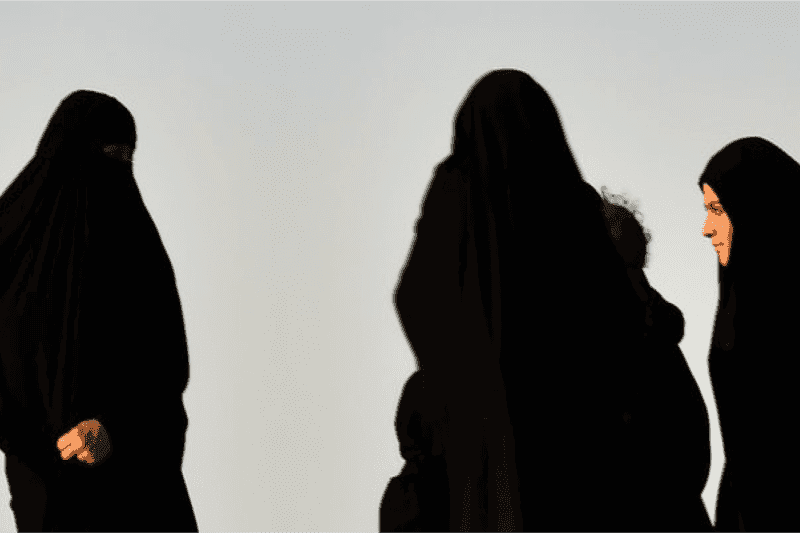
Muslim women’s voices are, for the most part, less often heard in Christian literature about Islam and in discussions about how to reach Muslims for Christ. Yet just as Islam itself is diverse in theology and practice, so too are women’s experiences of Islam both diverse and distinctive from those of men throughout the Muslim world. The When Women Speak… (WWS)[1] network was established to support Christian women engaging with Muslim women around the world and facilitates learning about the ways in which Muslim women view and practice their faith. Through the WWS Women’s IView course[2] discussions, we have gleaned a wealth of information highlighting the distinctives of women’s experiences and perceptions of their faith across several key themes. This article summarizes some of these findings and offers some suggestions for engagement.
The Nature of God
Many Christian women have expressed surprise at the conviction with which their Muslim friends say they feel close or near to God. Muslim women from a wide variety of backgrounds speak with passion about drawing near to God through informal, personal, du’a prayers, which they pray while going about their daily lives, crying out to him in their struggles, and pouring out their hearts to him.[3]
While this desire for, and cherishing of, God’s closeness in their lives is not universal, the frequency by which it has been mentioned by Muslim women shows that we cannot make generalizations about Muslims believing God is distant and unknowable. At the same time, we must not make the mistake of assuming that nearness/closeness to God means or looks the same as what Christians mean when we speak about being close to God. Muslim women who express closeness to God do so on the basis that they have done things to achieve that (a one-way relationship), rather than a Christian understanding of closeness where God draws near to us.
In talking with Muslim women, we can affirm their desire to know God in a deeper way, we can pray with them (most gladly receive such prayers, and sometimes solicit them), we can share our own personal stories and experiences of God, we can share Psalms and Bible stories that show God drawing near to his people in their distress (e.g., Hagar) as well as people drawing near to God (e.g., Hannah), and we can ask questions that seek to understand more of what they believe: What does that nearness/closeness look like for you? What would you do if God drew near to you? What kinds of things do you pray in du’a prayers?
Life Stages and Rites of Passage[4]
Women across the Muslim world have great influence in the spheres which are seen as their responsibility. Many women, from a variety of backgrounds, tell us that as mothers this includes making decisions regarding their children’s health, education, religious upbringing,[5] relationships, and even careers. Women are proactive in finding potential suitors for their children, teaching their children how to pray, telling them stories of their faith, educating them in correct attitudes, behavior and dress, and maintaining faith rituals and practices. In particular, diaspora women, feel a burden upon them to conserve family traditions and faith practices in the face of unwanted western influences, and the blame (and shame) for children’s deviant behavior is often laid at the feet of mothers. As women age and become grandmothers their freedom and influence increases, since they are no longer as bound by religious requirements of purity,[6] nor by expectations from a mother-in-law and male relatives. Several grandmothers have commented that they feel a great sense of responsibility for the wise, religious, upbringing of the next generation.
As protectors of their children’s health and well-being, women perform rites of passage to facilitate the safe transition from one life stage to another. Moving between life stages such as birth, marriage, and death, is often considered dangerous because of harmful spiritual forces. While men perform the visible official functions, such as praying or reading the Qur’an, women do not merely cook the food for the celebration. Instead, they play a significant and active role in initiating celebrations, ensuring all the right people are invited, planning and preparing everything, showing the right hospitality to guests, and making certain that the event runs smoothly. Nor is the food they cook insignificant – on the contrary, it is a vital part of creating and sustaining community, not least because the cooking of it is often a group event in itself.
These influences on children, whether from mothers or grandmothers, mean that the long-held assumption that by reaching male heads of households, whole families will be led to Christ, does not always hold true. It is perhaps borne out of a western assumption that the bond between husband and wife is the strongest in a family unit. Yet what we have heard from around the world suggests that the strongest bond, and thus line of influence, is between mothers and sons. Christian women need to be empowered, supported, and encouraged to actively engage in ministry among Muslim women, not simply as a side effort to that of men, but as an important means by which families may be reached for Christ.
Honor/Shame[7]
As demonstrated by the increase in literature about the topic, considerations of honor and shame play a significant role in how many communities around the world operate. Less heard, however, are the voices of women, and their views on, and experiences of, honor and shame. We have learned that honor and shame vary in different areas and communities. What brings honor, to whom, and how honor is worked out in relationships, varies. What brings shame, to whom, and what impact shame has on relationships, also varies.
For women, considerations of shame, and avoiding shame, dominate their thinking and behavior. They speak about being taught from a young age to avoid shame by being polite, modest, discreet, and shy. To be accused of being shameless or of having no shame is a grievous insult. They are concerned about community and group perceptions and try to avoid doing anything that might cause others to gossip about them. The fear of what others might say about them is paramount, whether or not what is said is true. Women bear the consequences of shame brought about not just because of their own behavior but because of the behavior of others, and even through circumstances which are outside their control: rape, divorce, adultery, barrenness, bearing daughters (in many places only sons bring honor), serious illness (e.g., cancer, COVID-19), disability (their own or a child’s), physical imperfections (e.g., dark skin).
Once deemed shameful, for whatever reason, a woman can be ostracized (from her immediate family as well as the entire community), publicly disgraced, lose her job or job prospects, or be physically harmed. Shame also sticks – a woman who is shamed brings that shame into the family; her sisters may lose their marriage prospects, her children may suffer ostracism or discrimination, her mother may lose friends, and her brothers and father may lose their honor in the community. In response to this burden of potential shame, women hide their vulnerabilities and go to great lengths to cover up shameful acts – the more something becomes public, the more shameful it is.
The implications of shame on Muslim women’s engagement with Christian women, with the church, and in discipleship, can be profound. We have heard stories of diaspora Muslim women who do not feel they can share openly about their struggles among other Muslim women who gather for social activities, for fear of being judged, gossiped about, and shamed. A BMB couple secretly struggled with major relationship issues, but their reluctance to be vulnerable meant they did not seek help. A woman who embraced the acceptance and love shown to her by Christians, was shamed into retreating from that by other Muslim women in the community who acted as gatekeepers for what activities and which people were acceptable to be involved with. There are no easy answers, other than to continue to pray for, and as we are able to, with, our friends, to journey with them, to demonstrate our trustworthiness, and to be available when they call upon us.
Purity[8]
Muslim women are no more impure than Muslim men, but unlike men, women live in a state of impurity as a normal, natural part of much of their lives. Women are unable to engage in practices which give them merit, such as praying sholat, fasting, or handling and reading the Qur’an, while they are menstruating, after childbirth, and after intercourse. After these three things have made them unclean, they must perform a complete, whole body washing (ghusl). They are also unable to circle the Kaaba, another merit-making activity, while menstruating or bleeding post-partum. While other things can also make women unclean, such as touching dogs or pigs, cleaning vomit, feces or urine, breastfeeding, or interacting with non-Muslims, these activities require normal ritual cleansing (wudu) only. Some Muslim women feel the ritual purity restrictions placed upon them are burdensome. They doubt whether they are “clean enough” to come before God, struggle to maintain cleanliness (particularly when child-rearing), and try to make up the time they have lost in fasting and prayer. Others are less bothered and use the restrictions to get out of prayer or fasting. Since impurity is seen as so normal, open discussions about women’s discharges, sometimes in great detail, often catch Christian women by surprise.
Considerations of purity are bound up with those of shame. In many parts of the world bed sheets are examined after a girl’s wedding night to ensure that there is blood. The blood shows that her hymen has been broken, confirming that she did not have sex before marriage. If, through this ritual, a girl is found to have had sexual relations outside of marriage, or if a single girl is discovered engaging in pre-marital sex, she will be considered not just shameful, but also impure – a status which no ritual cleansing can change. Impurity is more than a state of being. It involves exclusion, marginalization, and a loss of identity and belonging.
Christian women are often asked if we can read the Bible while we are menstruating, or if we need to purify ourselves before we pray. While we are often perplexed as to how to answer, we also often make the mistake of blithely saying that Jesus makes us clean, so we are free to pray or read God’s word at any time and in any condition. This not only misrepresents the need to be pure to come before a pure and holy God as detailed in the Old Testament,[9] but also fails to take Muslim women’s ritual purity concerns seriously. Even the use of Mark 7, Jesus’ teaching that what is inside a person’s heart defiles them, gains little traction among Muslim women who agree that God wants a pure heart but still emphasize ritual purity.[10]
Instead, we should agree that we must be pure to read God’s word and come before him, and then tell stories which show how Jesus completely and wholly purifies us from everything that defiles us. In the three stories in Luke 8:26–56 Jesus should have been defiled,[11] yet instead the man, the woman, and the daughter, become clean: spirits are cast out, the bleeding stops, and the dead come alive. The news that Jesus’ purity is contagious and has cleansed us so completely that no ritual purification can match it is such good news that one BMB said “I never felt clean or pure until I met Jesus – you’re clean [and] you’re free … from top to toe!”
Popular Islam[12]
Muslim women throughout the world are aware of the reality of spiritual forces which, whether visible or not, can be felt and are present. Since they are responsible for overseeing times of transition between life stages, and for their family’s health and well-being in all areas of life, women are keen to gain and maintain control over their and their loved ones’ lives through accessing spiritual power. They are often less concerned with orthodoxy, and more concerned with orthopraxy: they want control over everyday things, and to find practical solutions to everyday problems and difficulties they face. Women may also be drawn to informal practices, which lack strict purity requirements, as a way of accessing God more readily.
Women engage spiritual forces in order to gain blessing or good fortune, or to ward off evil and misfortune. Even women who believe that engaging in superstitious practices is unorthodox or not pure Islam may participate in practices which, to a westerner, still look superstitious. For example, if they or someone in their family is ill, they may go to a Muslim leader (imam) or other religious practitioner who will write a verse of the Qur’an on paper, burn it, then mix the ashes into a glass of water which the sick person drinks. This may not be seen as sinful idolatry (shirk) because the source of power to heal the person comes from God rather than another spiritual entity. A common practice for women around the world is to seek blessing (baraka, a concept which is referred to frequently in the Qur’an), for health, family, wealth, and success, through visiting the shrines of saints or holy people.
Throughout much of the Muslim world women believe in the evil eye, a negative spiritual force based on jealousy and envy, which has the power to cause harm or misfortune.[13] Compliments, praises, and admiration can cause the evil eye to be released, either deliberately or accidentally. Babies and children are particularly susceptible, requiring many protective measures to prevent them being affected. The phrase mashallah (God has willed it), which invokes God’s blessing, is frequently used after a compliment is given. Charms and amulets are commonly carried, worn, or displayed in the house.
Many western Christians fail to understand, or know how to address, Muslim women’s (including women in the diaspora) strength of belief in, and need for control over, spiritual forces. While we may attempt to tell Bible stories which demonstrate God’s power over natural and supernatural forces, these do not necessarily have the impact we desire. This may be because while Islam affirms God’s omnipotence, it does not entertain the idea of God in covenantal relationship with his people. As a result, Muslim women are unsure of how God will respond in any given situation, while Christians are certain of God’s reliability, consistency, and unlimited goodness.
Christians also do not need to manipulate God to ensure we have access to his blessings and have protection from evil. Telling stories which demonstrate God’s unlimited abundant goodness and blessing;[14] practically mirroring God’s generosity to our Muslim friends; praying with our friends in Jesus’ name to show we’re looking to God as the source of protection, blessing, and power; speaking words of blessing over new babies; and developing deep relationships with our friends so they see that we are not trying to manipulate God but are rather trusting in him whatever the outcome of our prayers, are all ways we can fruitfully engage with Muslim women.
Conclusion
A wealth of information is being shared among the women who are connecting with the WWS network, far more than can be adequately covered in this article. Topics such as women’s movements, patronage, trust, and suffering are all being explored, along with those outlined here. Our initial insights into the worldviews of Muslim women will continue to be deepened and enriched through the relationships we form with them, through the asking of good questions, and through the discussions we have together. Whatever the worldview, the voices of women, when joined with those of men, paint a richer, fuller, and more complete picture.
Louise Simon has lived and worked in both East and Southeast Asia. She is on staff at CMS-Australia’s training college, equipping cross-cultural workers and undertaking research and writing for the When Women Speak… network. She is also an adjunct lecturer at Ridley College, Melbourne, an associate researcher with the Angelina Noble Centre, and holds a PhD in East Asian Studies from the Australian National University.
EMQ, Volume 57, Issue 3. Copyright © 2021 by Missio Nexus. All rights reserved. Not to be reproduced or copied in any form without written permission from Missio Nexus. Email: EMQ@MissioNexus.org.
[1] Learn more about the network at https://whenwomenspeak.net/.
[2] Participants are working among Muslim women around the world. They read about each topic, explore questions with their Muslim friends, then meet virtually to discuss what they have learned and experienced.
[3] Louise Simon, “Du’a in the 21st Century: exploring women’s perspectives,” When We Pray, When Women Speak… webzine 7, no. 1 (November 2020): 57–82, https://whenwomenspeak.net/webzine-past-issues/.
[4] See also Rites, Rituals and Ceremonies: Women’s Practice and Experience of Religion and Faith in the Everyday and at Transition Places in Life, When Women Speak… webzine 5, no. 1 (December 2019), https://whenwomenspeak.net/webzine-past-issues/; Louise Simon, Life Stages and Rites of Passage for Muslim Women, When Women Speak… (Interserve Australia, 2019).
[5] While legally under Islam children must follow the religion of their father, the reality in many places is very different. See also Dwi Handayani, “Veiled: Muslim Women in Modern Mission Strategies: Response 1,” in When Women Speak…, ed. Moyra Dale, Cathy Hine, and Carol Walker (Regnum Studies in Mission: Oxford, 2018), 20–23.
[6] Postmenopausal older women no longer have to be concerned about menstrual impurity.
[7] See also Honour and Shame, When Women Speak… webzine 6, no. 1 (July 2020), https://whenwomenspeak.net/webzine-past-issues/.
[8] See also Purity, When Women Speak… webzine 2, no. 1 (April 2018), https://whenwomenspeak.net/webzine-past-issues/.
[9] For example, Isaiah 6 and Exodus 19:10–25.
[10] See Moyra Dale, “Ritual Purity and Defilement,” Purity, When Women Speak… webzine 2, no. 1 (April 2018): 35–61 for a discussion of Mark 7 as primarily about laws relating to food and circumcision that separated the Israelites from the surrounding nations, rather than about ritual purity and defilement.
[11] In the Old Testament impurity is contagious (e.g., Haggai 2:10–14), yet in these stories Jesus enters an unclean place (a graveyard, in Gentile territory, with pigs), deals with unclean spirits, is touched by a bleeding woman, and touches a dead body.
[12] See also Folk Islam, When Women Speak… webzine 3, no. 1 (September 2018), https://whenwomenspeak.net/webzine-past-issues/.
[13] Pew Research Center’s Forum on Religion and Public Life, “Other Beliefs and Practices,” The World’s Muslims: Unity and Diversity, (Washington D.C.: Pew Research Center, 2012), 67–73, https://www.pewforum.org/2012/08/09/the-worlds-muslims-unity-and-diversity-4-other-beliefs-and-practices/.
[14] For example, Matthew 20:1–16; Matthew 15:21–28/Mark 7:24–29; John 4:1–42; Luke 17:11–19; Matthew 14:13–21/Mark 6:31–44/Luke 9:12–17/John 6:1–14; and Matthew 15:29–39/Mark 8:1–9.