EMQ » January–March 2021 » Volume 57 Issue 1
By Donald K. Smith
At least two things are essential for anyone aspiring to be a missionary – anywhere. First, a total commitment to love and obey Jesus wherever He leads. Second, a personal and intimate knowledge of God’s Word, with a daily continuation of growth in knowledge and application of that Word to the missionary’s own life. Our life task is communicating God’s Truth clearly and lovingly to all. That is neither simple nor easy! However, if we remember that our part is clarity of communication and that God’s Spirit brings conviction and gives saving faith, mission becomes a task of joy and fulfilment.
Mission is communication! Not simply the visible part of communication – preaching and using the media, but the totality of communication – the framework of life. It is the framework within which we communicate the fantastic news of Jesus. Three fundamental principles,[1] when followed, will lead to obeying the Great Commission of Jesus.[2] The preparation of missionaries should include understanding and application of all three.
Principle 1: Communication is Involvement
That means total involvement, not in-and-out, spectator missions, or a Great Commission holiday package. That means discipleship, not settling for hit-and-run decisions. It means trying to be embedded within a culture as the foundation of credibility for the outsider missionary.
Isn’t that what missionaries do? Sometimes, but not usually. It is important to maintain relationships with sending individuals and churches because they hold control over what the missionary can do. So home assignments come ever more frequently. Formerly it was never, then 9 or 10 years between, then 7, 5, and now 3 years. For some, the only permanent dwelling is at home, spiced with regular trips to “the field.” The typical missionary is seldom out of touch with his home culture or support base. Preaching, baptisms, rallies, heart-breaking poverty, visitation blitzes, everything becomes an event to report “home.” Air travel, email, digital photos, and social media have indeed given us a flat world, but they may prevent the deep involvement demanded for disciple-making.
Consider how some churches approach missions. Churches may allocate 50% of their missions’ budget for vacation expeditions, hopefully to educate their young people to world need. That is certainly not a bad way to spend holiday time, but is it missions? Listen carefully to the reports after mission trips. How much genuine discipleship was attempted? And remember, discipleship is the essence of the Great Commission, not basic evangelism. That is the starting point, far from the finish line!
One Halloween stunt at an evangelical training school for teachers was a “success,” at the expense of students who were being discipled for leadership in village schools. Two or three missionary men rigged a wire from the top of a two-story classroom building to the roof of two small buildings after dark on Halloween. When students emerged from study hall, heading for their dorms for the night, the missionaries sent dummies covered with white sheets sliding slowly down the wires over the students’ heads. Students were terrified; they had been taught from childhood about many kinds of ghosts, ogres, and spirits – and to be very frightened of their power! The missionaries roared with laughter at the success of their “innocent” trick.
The men involved thought they were clever. They were, but the result was a terrible loss of trust in their missionary teachers. How could they be so foolishly ignorant of the deep fears and beliefs of their students? These were “career missionaries!” And the reaction the next day was long, secretive discussions, “We don’t think those missionaries are even saved! How could they do such a thing?” This is a tiny glimpse of the mountainous gap between missionary and people. The long-term result of thousands of insensitive incidents, few as gross as the incident described, is dismissal of the very heart of the Gospel. “That is for the White People. Their words are just fooling us, so they can get whatever it is they want.”
These missionaries seemingly had not learned the very foundational principle of godly ministry is to understand, and to understand deeply, the people, beliefs, and experience with them in their way of life, their culture. That would include their fears, their felt needs, their dreams and goals. A questionnaire will not tell of those things, nor even regular visits. The people’s identity is precious, perhaps their only lasting possession. Very seldom is their innermost life shared with someone until they are fully trusted. How long does that take? Examination of fruitful missionary careers shows that a minimum of five years of total involvement is necessary, though 10 may be more realistic.
“If I be lifted up, I will draw all men to me” – Jesus.
Are we lifting up a “Christianized” culture instead of the very divine Man of God? In our homes and offices, we have displayed incredible goods to deprived peoples, become frequent flyers in view of people who are fortunate to have a bicycle, and enjoyed vacations in magnificent resorts (at low cost, of course). In many ways, we have whetted appetites for a better way of life that has little to do with the way of the cross. Is this inevitable when we continue maintaining our culture even as sojourners? Is this displaying the reality of “I am crucified with Christ, nevertheless I live, yet not I, but Christ in me.”
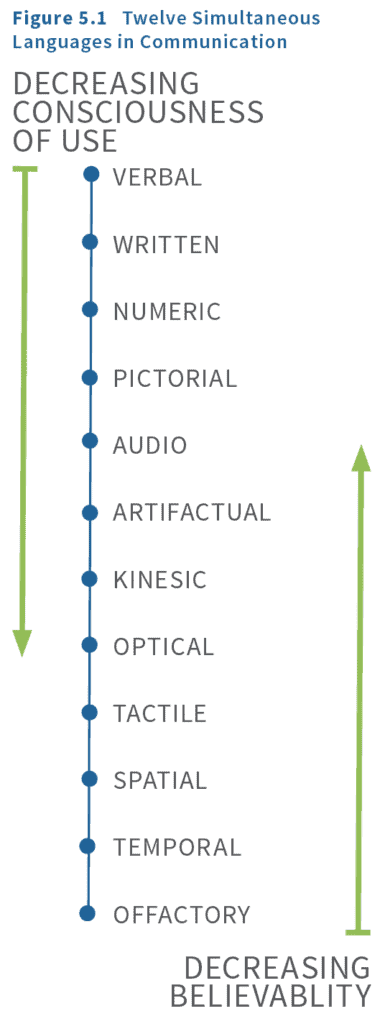
It is certainly not a problem only of North American missionaries. A Korean professor of missions reviewed the strategy and activities of Korean missionaries in several nations. He was dismayed to discover that most had not learned the major local language, concentrating instead on Korean businesspeople, and were living in secure Korean compounds. Proclaiming the “pure” Message was limited to words on specific formal occasions. This is widespread in the international missionary movement. Our words are carefully correct, but seldom understanding that we communicate in twelve different languages simultaneously!
The invisible spiritual communication is often ignored, simply because the material benefits we exhibit are so attractive. We have not been willing to leave our culture behind and embed ourselves in the cultures where our Lord has led us. That is difficult and emotionally costly; it is the way of the cross. It is the only way that others will see and understand who Jesus truly is.
Principle 2: Communication is a Process
We have a passion to reach out to those who are broken, who are poverty-stricken, who are lost and on the way to eternal death. That passion is commendable. Of course we must “do something.” But what can we do when it is a group of people a long way from where we live? Can we send someone else to tell them of God’s love in Jesus? Yes. So we send a missionary then wait for the results we want to hear. One year, two, three – still waiting. Why so long and with nothing to report? The language has been learned, the Good News has been shared. But no response, and still waiting, and yes, praying.
How long does it take to respond, give a positive answer and become a child of God? It takes a long time, because so much is involved. Those we wish to convert must consider so much! What about my family, my friends, my place in the community? Who will help me when I have trouble, after I’ve ignored the bonds that hold the community together? It is difficult to change everything; think of all it means. What that stranger said sounds wonderful, but who is he? Can he be trusted? Will he be here when I have questions or trouble? It all takes time!
We evangelicals have stressed the importance of a moment of decision. A moment is all it takes, and then you have God with you – forever! All is forgiven. How could anything be better? But little is said about discipleship and teaching. The moment of decision is, according to Jesus, only the beginning of deep life change, of learning all that He commanded and learning obedience to Jesus the Lord of all. That is not a matter of moments, but of a lifetime of growing into being like Him.
In our passion to save everyone, we have overlooked the total commission of Jesus (after decision and baptism), to “make disciples . . . teaching them to obey everything I have commanded you” (Matthew 28:18-20). That is the Great Commission; the “go” is only preparation. Biblical communication is a process, a lifelong process. Paul did indeed preach, teach, and move on. But he maintained concern and contact then returned when possible to establish the new converts’ accountability. All that he did was on foot, sometimes with personal couriers for his pastoral letters, and at times by ships with a poor safety record. No matter the difficulties, Paul demonstrated that discipling was a long Spirit-guided process. Does our mission strategy train missionaries for this?
Principle 3: People Respond to Communications as Members of a Social Group
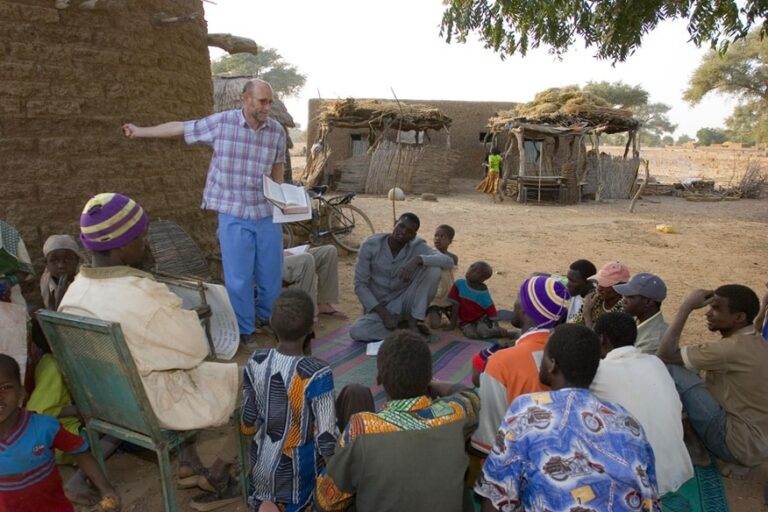
In a section of Africa where the church is heavily persecuted, local leaders practice a powerful way of disciple-making. There are no large church congregations, no impressive organizational structures. Nevertheless, the church is growing steadily. How can that happen?
Christian gatherings are in homes, and not advertised. Each group is limited to 12, including one leader, and a second leader in training. When the group becomes larger than 12, it is divided and led by the leader who had been in training. There is strong accountability for each member to the entire group, with weekly sharing of challenges, personal progress or setbacks. Continuing growth in understanding and obeying the Word of God, prayer and fellowship binds the group together, giving strength in hostile environments. Despite severe persecution and strong governmental efforts to eliminate Christianity, the numbers coming to Christ are steadily growing. It is the pattern demonstrated by Jesus in choosing 12 disciples to learn from Him, guided by His example, his private teaching and accountability to Him in discussions and explanations.
Principle 3 effectively guides us for godly transformation in carefully structured and well-taught small groups. The often more dramatic approaches of mass meetings, visiting evangelistic efforts, and widespread media usage overlook the simple fact that God put us in groups – families, clans, tribes, nations, all of which are held together by interlocking small groups.
What Guides Priorities in Missions?
We need a new category to understand people groups in deep, eternal spiritual need. We label groups Reached or Unreached, (or equivalent terms) and choose the Unreached as our most worthy objective. There is no question that they should be reached. Who is best-positioned for that task? In many cases, truly heroic efforts are undertaken by distant Christians risking (and sometimes losing) their lives in the effort. Challenging stories of their eventual triumphs have moved others to more complete obedience.[3]
For many peoples, the most effective missionaries come from neighboring groups with similar cultures – even where they may be enemies. But culture patterns, languages, lifestyles, and religious beliefs do not form a huge gulf that often isolates the Unreached. Initial contact with isolated and defensive people in South America, Irian Jaya (Papua today), and elsewhere was (and is) painfully difficult and dangerous. However, after achieving understanding of Jesus and accepting His Lordship, the former Unreached became missionaries to their neighbors. In much of Africa, the control of missionaries from other continents delayed the widespread initiative evident today. Africa now reportedly has sent more missionaries than any other area of the world.[4]
That does not mean there is no need for missionaries in Afro-Asia, the Americas and elsewhere. However, the important need is for bridges of fellowship, two-way discipleship ministries that strengthen Indigenous Bodies as well as the weakening churches of the West – interdependence rather than dependence. This is not more important, but at least as important as the Unreached. The emphasis must be on maturity in Christ rather than primarily on an initial decision.
Are the “Alienated” Important?
What about a new term and a fresh approach for an extensive by-product of the modern organizational mission effort? “ALIENATED” would be appropriate; meaning those who are Reached but Alienated and actively resistant.
For three years I studied under a brilliant professor – a tough-speaking, chain-smoking former Captain in the US Navy WAVE Corps of World War 2. I was a long-term missionary, but surprisingly we interacted at a deep level during weekly sessions. Repeatedly, we approached educational problems from very different perspectives, I from a biblical foundation, she as an agnostic. We listened carefully to the other’s point of view.
Toward the end of those years, she told me a bit about herself. She grew up in America’s Bible Belt; three of her uncles were preachers, but, she explained, that was why she became an agnostic. They never answered her questions but only quoted Scripture to her and condemned her for being wrong. I was very moved at her conclusion, “If I had heard of Jesus Christ in the way you have been sharing and thinking, my life would have been very different!”
That sense of rejection and alienation applies to India, much of the Western world, contemporary Africa and elsewhere. Sadhu Sundar Singh gave an accurate picture of Alienation in the presumably Christian West:
While sitting on the bank of a river one day, I picked up a solid round stone from the water and broke it open. It was perfectly dry in spite of the fact that it had been immersed in water for centuries. The same is true of many people in the Western world. For centuries they have been surrounded by Christianity; they live immersed in the waters of its benefits. And yet it has not penetrated their hearts; they do not love it. The fault is not in Christianity, but in men’s hearts, which have been hardened by materialism and intellectualism.[5]
Do not the Alienated deserve a thoughtful hearing and a clear presentation of God’s love and salvation, shorn of our structures, added biases and spurious commandments that have led to massive alienation worldwide? Note the closing words of Scripture in Revelation 22:18-19.[6]
I have lived outside my homeland for more than 40 years; travelled, researched, taught and preached in over 100 nations of Africa, Asia, Europe, North and South America, discovering that what I am saying is not new – simply ignored. Yet this is possibly the greatest single blockage to “completing the task.” Our greatest opposition is not physical isolation, other religions and ideologies, earthly and satanic powers, or shortage of money and personnel, but our organizational selves. We live in other cultures but retain our own, conforming to the demands of missionary culture – special schools for our children, suitable housing (by homeland standards), periodic home assignments, remembering homeland holidays and overlooking the local, and special benefits for the “hardships” of being away from home. In the eyes of the people to whom we are sent, all of these express rejection.[7]
Conclusion
Our clever shortcuts in mission, new ways of reaching the masses with technological advances, short-term visitors, and other consequences of a “flat” world, may only continue to result in alienation of the lost billions. There is no God-honoring alternative to Jesus’ way,[8] in which discipling always takes priority over religious structures. The strength of His Body, the Church, lies in individual trust and obedience to the Savior, not the power of hierarchies and procedures. Jesus built no hierarchies, established no mission central, but intensely discipled 12 ordinary men – and swept the world.
This is the way we need to train missionaries – not to conform to our organizational cultures, but to embed themselves in the culture where they are sent to live the crucified life, a lifelong process. Sending churches and organizations must learn this is the unreckoned cost of fruitful mission.
The dynamic surge of missionaries from South America, Africa and Asia shows the breadth of God’s love for the whole world. It greatly encourages the entire Church. Conferences, rallies, and academic training all have value, but can easily overlook the basic biblical principles of what it takes to be God’s messenger. It must be a special concern of the new wave of missions from everywhere to everywhere that those being sent are adequately prepared and understand how to accomplish that task.
Donald K. Smith has made Africa home for 40 years, beginning in 1952. The Smiths founded Daystar University, Nairobi, Kenya; trained and supervised Bible translation teams; and published a major evangelistic magazine based in South Africa. Smith chaired the Division of Intercultural Studies at Western Seminary in Portland, Oregon for 21 years. His most influential book is Creating Understanding (Zondervan).
[1] Nineteen principles presented in Creating Understanding outline a basic pattern for effective communication/teaching, especially as applied in proclamation of the Gospel. All are important, three are introduced here. The 2nd edition will be available in mid-2020.
[2] Matthew 28:18-20.
[3] Among many stirring stories, outstanding are Bruchko (Bruce Olson), Gladys Aylward: The Little Woman (Christine Hunter) and The Small Woman (Allen Burgess), Peace Child (Don Richardson), Through Gates of Splendor: The Martyrdom of Five Missionaries in the Ecuador Jungle (Elisabeth Elliot).
[4] Motivation to missions is strong throughout Afro-Asia and Latin America, sending not only to still-unreached groups, but to immigrant groups seeking survival outside of the continent. Some of the largest churches in European cities are immigrant churches, led by Latin and African missionaries.
[5] https://www.tentmaker.org/biographies/singh.htm
[6] “I warn everyone who hears the words of the prophecy of this book: If anyone adds anything to them, God will add to him the plagues described in this book. And if anyone takes words away from this book of prophecy, God will take away from him his share in the tree of life . . .” Revelation 22:18-19 (NIV)
[7] There is a “catch” here in terms of standard of living. Simplicity is good, but not the point. Some cultures have a more comfortable standard than in the homeland, many others are far less comfortable. The problem is not our standard of living, but its appropriateness within the host culture. Does all we do, wear, where we live, how we travel etc., express that we are different or that we have “made ourselves at home?” At deeper levels, when we live as in our homeland, we are expressing our rejection of them.
[8] By “Jesus’ Way,” I refer to the pattern for mission that He demonstrated in His earthly ministry – twelve intimate disciples, other close friends, then acquaintances and the multitudes.
EMQ, Volume 57, Issue 1. Copyright © 2021 by Missio Nexus. All rights reserved. Not to be reproduced or copied in any form without written permission from Missio Nexus. Email: EMQ@MissioNexus.org.