EMQ » July–September 2022 » Volume 58 Issue 3
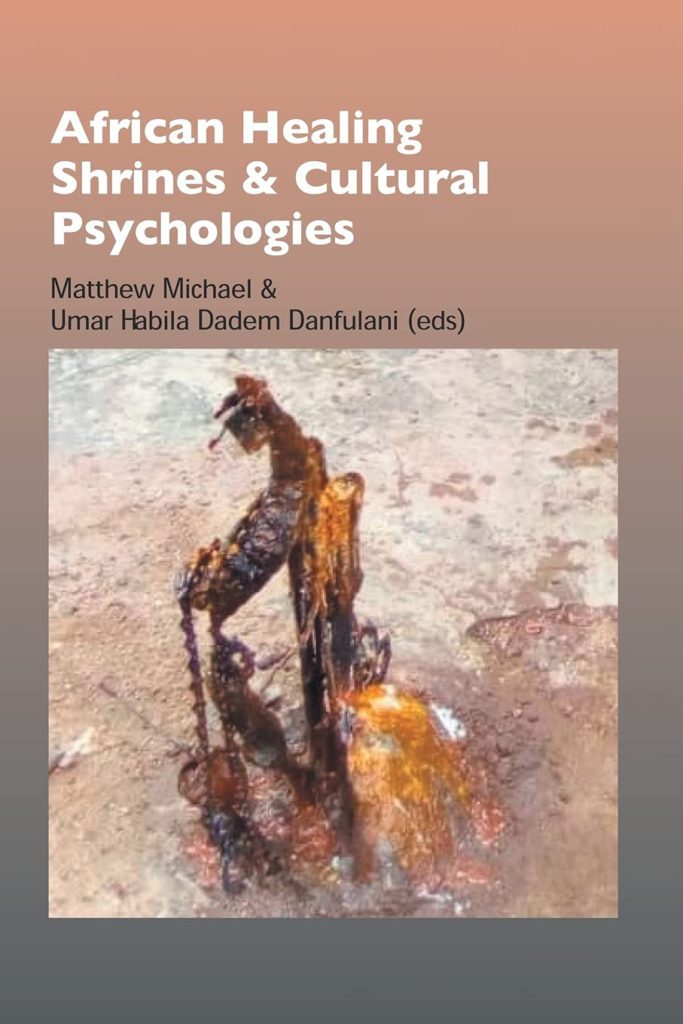
African Healing Shrines and Cultural Psychologies (find it on Amazon)*
By Matthew Michael and Umar Habila Dadem Danfulani
Regnum Book International, 2020
262 pages
US$26.99
*As an Amazon Associate Missio Nexus earns from qualifying purchases.
Reviewed by Irene Amon, PhD student, School of Intercultural Studies, Fuller Theological Seminary, Pasadena, California.
African Healing Shrines and Cultural Psychologies is a 15-chapter text with essays from 14 contributors and two editors. Throughout the book, the writers view African healing shrines as “cultural sites of great creative energy, animated conversations, social encounters and the physical embodiments of the soul of African spiritualities” (13). They discuss the role these shrines play in the African worldview. They exert a formidable influence on the African’s quest for health and wellness and play an important role in ethnopsychology. The various contributions address the importance of understanding African healing shrines (and the associated pursuit of healing and well-being) in Christian mission. The authors interact with the cultural, historical, and spiritual views on healing shrines held by their contemporaries in modern Africa.
Africans, including Christians and Muslims, generally believe in Western medicine; however, they often add traditional healing practices to it due to their familiarity. Most African Independent Churches use scriptures like Ezekiel 47:12 which mentions healing leaves to support their practices.
Many African nations have been vulnerable to various diseases and pandemics like HIV/AIDS and Ebola due to the challenges of their healthcare systems and often unsustainable healthcare delivery. Moreover, the effects of disease are a potential threat to the work of mission and a hindrance to further expansion of the Christian faith, especially when Africa is, in some ways, the new face of global Christianity. Thus, research primarily by Africans into the causes of diseases and how Africans find healing and well-being despite their vulnerability is a major strength of this book.
The authors in this book have begun a conversation as pioneers on the ethnopsychology of African healing spaces. It is a relatively new area of research using cultural psychology to understand African healing shrines. As a member and a leader of an African Independent Church, the conversation on shrines and healing is not new to me. However, there is an urgent need to discuss how Africans understand healing and how they seek access to it. Therefore, just as the growth of Christianity in Africa needs to be better understood, healing shrines and the missiological implications for the continent need to be explored.
It is important to note that these healing shrines, or prayer camps, as they are known among churches and in the literature on cultural psychology, contribute immensely to the religiosity and the expansion of the Christian faith on the continent. Hence my appreciation of this book and the invitation of the authors to engage in further conversations.
I recommend this book to students, pastors, missionaries, researchers, and all who are interested in an interdisciplinary study of Africa and mission studies in general. It explains how the spaces of healing and well-being shape the faith and spirituality of many Africans and black communities in the diaspora. The only possible weakness that I noticed is that, since traditional medicine and healing shrines are not only found in Africa, more contributions from authors from other countries (like the one from Brazil) and from female authors would have added to the depth of the discussion.
For Further Reading
Indigeneity in African Religions: Oza Worldviews, Cosmologies, and Religious Cultures by Afe Adogame (Bloomsbury Publishing, 2021)
“Power and Healing in African Politics: An Introduction,” in Spirit in Politics: Uncertainties of Power and Healing in African Societies edited by Barbara Maier and Arne S. Steinforth (Campus Verlag, 2013)
EMQ, Volume 58, Issue 3. Copyright © 2022 by Missio Nexus. All rights reserved. Not to be reproduced or copied in any form without written permission from Missio Nexus. Email: EMQ@MissioNexus.org.