EMQ » July–September 2022 » Volume 58 Issue 3
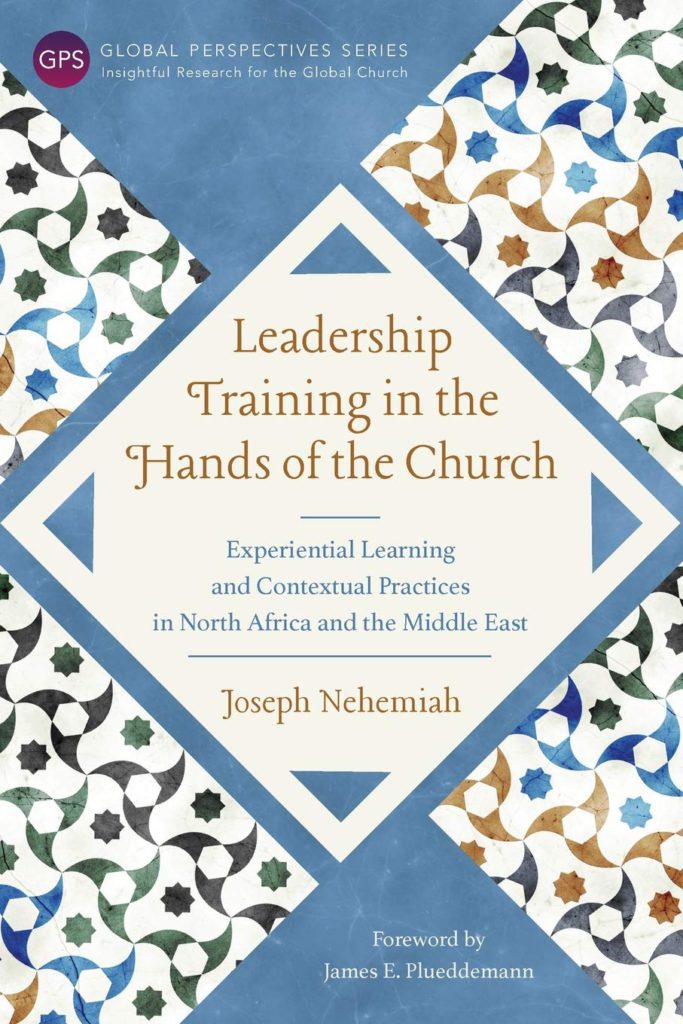
Leadership Training in the Hands of the Church: Experiential Learning and Contextual Practices in North Africa and the Middle East (find it on Amazon)*
By Joseph Nehemiah
Langham Global Library, 2021
235 pages
US$23.99
*As an Amazon Associate Missio Nexus earns from qualifying purchases.
Reviewed by Kevin Kung’u, a youth pastor in Nairobi, Kenya, and host of the ministry podcast IThinkDifferent. He is currently undertaking a Masters in Evangelism and Leadership at Wheaton College, Illinois.
This book is a passionate, heartfelt, and resourceful treatise on leadership training, experiential learning, and contextual practices in the Middle East and North Africa. Inspired by the growth of churches and seminaries since the Arab Spring, and the lack of literature on experiential learning with Arab adults, Joseph Nehemiah focuses on leadership development in the Arab world. In a time when cross-cultural ministry is at an all-time high, and the gospel is taking root in numerous parts of the world through diverse means, this book does an excellent job of documenting leadership and discipleship theory, and practice, in the Arab world.
The book is divided into four sections on biblical foundations, adult learning principles, cultural considerations, and the practical implementation of Nehemiah’s approach to leadership development. This approach seems to be built around Malcolm Webber’s build-the-designer model of leadership development. The book includes a summary of Nehemiah’s doctoral research, the results of which are sprinkled throughout each chapter to corroborate his convictions and conclusions.
This book serves as an excellent introduction to ministry in the Middle East and North Arica and to the educational principles of Benjamin Bloom, Malcolm Knowles, and David Kolb. Anyone unfamiliar with ministry in these regions or with these authors will glean much knowledge and wisdom from Nehemiah. But the book is much more than an introduction to ministry in these regions or Western theories of education. Nehemiah’s suggestion to implement shura-based education is particularly remarkable. This type of education combines the “… authority of the tribal sheikh with a more democratic view of leadership” (122). It is a culturally appropriate means of balancing the student’s need for assurance that the trainer is knowledgeable with a participative process of learning (ii). This concept makes the book worth the read.
There are, however, aspects of the book that require a certain preparation from the reader. First, some may desire a more complete treatment of the biblical foundations of Christian education than presented here, sufficient as it may be. Second, reading the summary of Nehemiah’s doctoral research in the appendices before reading the rest of the book may provide more context for his summary findings at the end of each chapter. Finally, those coming from cultures outside the Middle East and North Africa may need to be gently reminded of how contextualized this book is. Nehemiah’s primary focus is the Middle East and North Africa. Comparing his approach with prevailing educational principles from one’s own region is the wisest way to make appropriate cross-cultural applications.
This book would be valuable for church and seminary workers in the Middle East, North Africa, or any region with a strong Muslim presence. It is also relevant for those interested in adult experiential learning, discipleship in cross-cultural contexts, leadership development, and the importance of contextualized education.
For Further Reading
The Adult Learner by Malcolm Knowles (Taylor and Francis, 2014)
“Leader Development: What Is Our Role?” by Malcolm Webber (ChinaSource, March 18, 2008), https://www.chinasource.org/resource-library/articles/leaderdevelopment-what-is-our-role
EMQ, Volume 58, Issue 3. Copyright © 2022 by Missio Nexus. All rights reserved. Not to be reproduced or copied in any form without written permission from Missio Nexus. Email: EMQ@MissioNexus.org.