EMQ » July–September 2022 » Volume 58 Issue 3

Lessons from 80 Years
Much has changed since Wycliffe Bible Translators was founded in 1942. But our calling has remained the same – to help people encounter God through his Word in a language and form they can clearly understand.
By Jennifer Holloran
As Wycliffe USA celebrates 80 years of Bible translation, evidence of God’s faithfulness abounds. Today, around half of the world’s more than 7,000 languages have at least some portions of Scripture and thousands more in over 100 countries have translation work in progress. In the last 40 years alone, the number of language communities that have the entire Bible more than doubled.[1]
Although much has changed since William Cameron Townsend founded Wycliffe Bible Translators in 1942, including many Bible translation methods, our calling has remained the same – to help people encounter God through his Word in a language and form they can clearly understand.
Here are eight lessons we’ve learned along the way.
1. Bible Translation is the Lord’s Work
In 1999, Bible translation leaders realized that without changes, it would take at least 150 years to start a Bible translation for every language that needed one. Many people would perish before receiving the good news. They felt God’s call to adopt a new goal for accomplishing this mission. Our leaders committed to do everything we could to see a Bible translation program in progress in every language still needing one by 2025.
Little did we know how much our world, technology, and the Bible translation movement would grow and change in that time! The Lord has graciously expanded our focus and reach beyond anything we could have imagined in 1999. Wycliffe and other Bible translation organizations in the illumiNations alliance[2] are working together toward the jointly held 2033 All Access Goals. These include 100% of the world’s population having access to at least some portion of Scripture and 95% having access to a full Bible. These are God-sized goals, and we are submitted to God’s provision and his timing.
As we serve with the global body of Christ to advance Bible translation, more people from every language understand the Bible, encounter God through his Word, and are transformed. We participate in helping John’s picture from Revelation 7:9–10 come to be: “After this I saw a vast crowd, too great to count, from every nation and tribe and people and language, standing in front of the throne and before the Lamb. They were clothed in white robes and held palm branches in their hands. And they were shouting with a great roar, ‘Salvation comes from our God who sits on the throne and from the Lamb!’” (NLT)
2. The Past Shapes the Present
In the summer of 1934, Townsend opened Camp Wycliffe, a linguistic recruiting and training program for Bible translators. Only two students enrolled. The following summer, five students participated and then went to Mexico to work with Townsend. The work continued to grow, and Townsend founded Wycliffe Bible Translators in 1942. Today, Wycliffe USA has 3,200 personnel serving in 53 countries worldwide. We strive to analyze which positions are most strategic in serving Bible translation and how to match people and their skill sets to the positions which will have the highest impact.
Although early translators followed a very different model – often planning, directing, and completing the work alone or with a single translation partner for decades. We recognize that without the groundwork laid by these pioneers, Bible translation couldn’t happen as it does today. There’s a tension in recognizing the strengths of our historic models of recruiting and sending, using new models that focus on coming alongside work that is underway, and looking to the future to embrace what God is calling us to next.
And God continues to call his people to Bible translation. Events like the IF:Gathering for women sponsored by the illumiNations’ 12 Verse Challenge, InterVarsity’s Urbana youth conference and Perspectives on the World Christian Movement courses around the United States continue to spread awareness of the need for Bible translation.
3. “If you want to go fast, go alone. If you want to go far, go together.”
This quote is widely attributed as an African proverb, and while we may not know its exact origin, it’s a saying that we at Wycliffe USA have referenced for decades. More than 1,800 language groups representing 145 million people remain without a single word of the Bible in a language and format they clearly understand. We still have far to go – so we’re doing it together.
Bible translation organizations across the world, large and small, have committed working collaboratively. Today about 2,800 Bible translation projects are in progress – the highest number we’ve ever seen taking place simultaneously – and Wycliffe USA sends staff to serve with about 35 different organizations worldwide.
Working together and sharing resources, including translation consultants, provides God’s Word more quickly to more people. While cooperation at the local level allows related language groups to translate Scripture simultaneously, each in their own language.
Though our world is particularly rife with division now, God is faithfully demonstrating, through the Bible translation movement, how he reconciles people to himself through the unity of the body of Christ.
4. We are All a Part of One Body Created by God.
Something wonderful happens when God’s church – the global, diverse, dynamic body of Christ – moves with one purpose. God unites us by bringing together our rich differences in appearance, opinion, experience, and culture. This allows us to become agents of transformation. Lives are changed forever when people see the Holy Spirit’s unifying action in those who have no obvious reason to love and belong to one another.
“My belief is that the diversity of languages and cultures is part of God’s plan,” said Mr. Wai, a translator working on the Old Testament in Kayah Li, a language of Myanmar. “God wants his children, including Kayah people, to worship or communicate with him in their particular mother tongue …. He wants every language group to be in communication with him.” Mr. Wai’s desire for his people to have God’s Word in their own language propels him forward in the work of Bible translation.
The more we recognize and celebrate the Imago Dei in those around us, in their races, cultures, strengths and giftings, the more effectively we love and serve as a global Bible translation team and a truly unified body of believers. Jesus shared the importance of this unity with his disciples in John 13:34b–35, “Love each other. Just as I have loved you, you should love each other. Your love for one another will prove to the world that you are my disciples” (NLT).
5. The Church is God’s Plan A …
We cannot underestimate the influence of churches teaching the importance of the Bible, equipping the body of Christ to serve, and commissioning them to go out into the world. Without this foundational teaching by churches, missions would cease to exist.
Now, more than ever, the US church is reaching across borders, both literal geographic borders and figurative denominational ones, to partner broadly in Bible translation. As missions-centered churches spread the gospel across the world, Wycliffe seeks to find new ways to serve them well and engage them more directly in Bible translation. We’re asking questions like, “How can we leverage our knowledge and resources to help US churches? How might our shared vision for reaching the world encourage us to partner with a translation project?”
In Ft. Wayne, Indiana, missions pastor Sarah Hawkins hosted a conference last August and invited pastors from across her town to come learn about Bible translation from Wycliffe President and CEO Dr. John Chesnut. Eight of these pastors and their churches representing several denominations committed to partnering together to help fund a translation project in a sensitive area in 2022. Sarah says partnering in Bible translation has endless ripple effects. She explains, “It’s all of us at the same table for the name of Jesus and for his Word.”
In December, a group of African American pastors from around the US met at Wycliffe’s Discovery Center in Orlando to learn more about Bible translation. The group was led by Wycliffe USA board vice chair Dr. Julian Dangerfield and former board member Bishop Claude Alexander. As African American churches dig into their historic involvement in missions and mobilize their congregations to fulfill the Great Commission in unique ways, we are committed to building deeper relationships and coming alongside them with opportunities to engage in Bible translation.
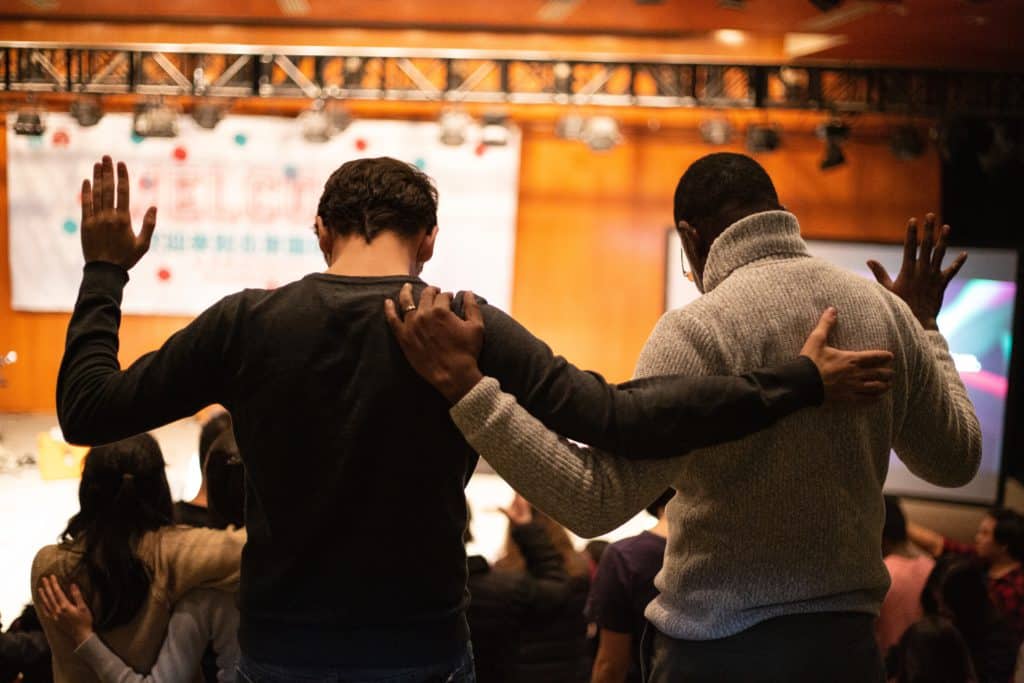
PHOTO BY SAM BALYE / UNSPLASH
6. … There is No Plan B.
Early translation pioneers often lived in villages without a local church body. They took God’s Word to the people so that God could establish his church there through his Word. Local expressions of his church often grew as the translated Word became available. Translation helpers, local people who helped Wycliffe missionaries learn the language, were essential. But it took many years before local churches became partners in producing Scripture instead of simply being recipients of Scripture.
As local church involvement in and ownership of Bible translation increased, community interest in Scripture soared. People saw the relevance of the Bible to their lives much more quickly and started getting involved.
Now, the local church leads translation. Whether it’s deciding which Scripture to translate next, recruiting church members to serve as translation consultants, implementing ways to fund translation or planning ways to train the community to engage with Scripture, the church is essential to Bible translation and spreading the gospel of Christ. Wycliffe staff are no longer the drivers; instead, we fill the gaps by providing translation expertise, training, and strategic input where needed.
Engagement at the local church level fuels Bible translation. For example, one project in the Philippines focuses on around 20 oral Scripture translations. Wycliffe provides only $5,000 per year; the translation team has funded the rest of the project from local sources. In the Pacific, national- and regional-level churches led by local people plan and work together to meet Vision 2025’s goals for every language needing a translation in the Pacific area.
7. Think Outside the Box (or Change What’s in It!)
When you think of Bible translation, you may not immediately think of cutting-edge technological advancements. But for decades, God has used tech in powerful ways to reach people with his Word. Wycliffe and our partners have been privileged to participate in several of those advancements.
In the mid-’70s, our partners at SIL International developed and used the first portable computer for linguistic fieldwork five years before the first laptop computers were available. Then, in 1989, SIL introduced a dictionary software called Shoebox. The program’s name was an homage to an important tool of Wycliffe’s early Bible translators, an actual shoebox that served as a make-shift dictionary containing cards filled with lexical data.
One of Wycliffe’s newest technologies, Nomad, is a different kind of box: its durable, small case houses an entire network including server, storage, firewall and a commercial access point that allows up to 150 people to use the wireless network at the same time. It’s small enough to be carried on the back of a bicycle and designed to withstand the high temperatures, humidity, and dusty environments.
Environments like these are often found in the remote parts of the world where Bible translation projects have previously been difficult or impossible. Combined with Starlink satellites by SpaceX, which are rapidly providing high-speed internet access across the world, Nomad is bringing the technology needed for Bible translation to those in rural, remote contexts.
The effects of advancements like this are undeniable. Wycliffe USA recently celebrated the 1,000th New Testament translation we’ve been involved with. It took 67 years to complete the first 500, and only 17 years to complete the second 500! Through God’s provision and grace, innovation in tech continues to advance the Bible translation movement.
8. God is Faithful
Even before Townsend officially founded Wycliffe Bible Translators, he experienced God’s faithfulness in spreading his Word to the nations. Townsend and Leonard Livingston (L. L.) Legters drove to Mexico intending to begin a translation project. Mexican leaders, however, felt the indigenous people suffered from too much religion and warned border officials not to let these men cross.
After they were rebuffed, Townsend and Legers sat for hours in Laredo, Texas praying for officials to change their minds. Only then did Townsend remember a letter of invitation he had received from Moises Saenz, a respected Mexican educator who had seen the results of translation and literacy work among the Cakchiquels in Guatemala. With this letter in hand, Townsend and Legters received permission to enter Mexico, opening the doors for missionaries to help over a hundred of Mexico’s language groups translate the Bible.
God’s faithfulness continues! Despite the challenges of the COVID-19 pandemic, giving to support Bible translation has increased and translation work has moved forward through innovative collaboration and technology, including the Digital Bible Library, Bible apps, and audio Bibles. Through sickness and uncertainty, God is on the move – and he calls us to remain faithful as well.
As we look ahead to the next 80 years and whatever joys, challenges, and changes they may bring, we will continue to be faithful to God’s call for Bible translation until we reach our vision for people from every language to understand the Bible and be transformed.
Pastor Chuck Swindoll once said, “Do you realize there are only two eternal things on earth today? Only two: people and God’s Word.” What a privilege God has given us to work with both of these eternal things! As the work continues, we invite you to join us in prayer and in thanksgiving to God for his mighty work of drawing people to himself.

Jennifer Holloran (jennifer_holloran@wycliffe.org)serves as Wycliffe USA’s chief operating officer where she combines her passion for Bible translation, love of strategic leadership and heart for caring well for people. She has a doctorate in strategic leadership from Regent University and an MA in business administration with a specialization in human resources from the University of Central Florida.
NOTES
[1] “2021 Scripture Access Statistics,” Wycliffe Global Alliance, accessed February 27, 2022, https://www.wycliffe.net/resources/statistics.
[2] Learn more online: https://illuminations.bible/
EMQ, Volume 58, Issue 3. Copyright © 2022 by Missio Nexus. All rights reserved. Not to be reproduced or copied in any form without written permission from Missio Nexus. Email: EMQ@MissioNexus.org.