EMQ » July–September 2022 » Volume 58 Issue 3
Bible Translation Landscape
The rich and diverse landscape of Bible translation, today, brings together past wisdom and present innovative opportunities to meet ongoing challenges and explore new territories.
By Phil King and Dick Kroneman
Bible translation in the twenty-first century involves an unprecedented number of people. It is a broad movement, including passionate individuals, local community organizations, church networks, mission agencies, specialist organizations, and funding networks. This variety brings rich diversity and complexity to the landscape, whether in the people involved, the processes used, or even in the perception of the task.
Looking one direction, we see local pastors and theologians translating Scriptures for evangelism and church planting; looking in another, professional translators are being commissioned to complete projects; and around the corner, projects experiment with Artificial Intelligence (AI) to draft translations and check their quality. In some directions, the view has well-worn paths, with clear signposts along the way. In others, first steps are being taken into unexplored terrain.
Fertile Soil
First, let us examine the terrain itself. The soil on which the Bible translation landscape grows is composed of two key nutrients: language diversity, and a passion for God’s Word.
Language Diversity
There are over 7,000 known living languages[1] – a staggering diversity that reflects the incredible power of the human mind and the rich linguistic heritage and cultural identity of each individual language group. This diversity has always posed a challenge when communicating across language barriers. Throughout history, merchants, refugees, scholars, and diplomats dealt with significant barriers as they interacted beyond their own language and culture. They needed to be either multilingual, or use translators, interpreters, and other mediators to make their needs known.
Likewise, language diversity is a challenge for Bible translation – communicating messages originally embedded in ancient contexts to today’s languages and cultures. This involves deciding the best words to express the meaning of the source text, but also finding the most appropriate style and language register for each translation. Without careful consideration, there can be significant implications for theology and practice.
Passion for God’s Word
The Bible translation landscape has also grown out of a passion for God’s Word, and a desire to see vernacular Scripture used for evangelism, church planting, spiritual growth, and transformation. This passion is rooted in the belief that God can speak in and through every language, and when communities can access God’s words in the languages they value most, it enables deep transformation at both cognitive and emotional levels. When God speaks these languages, it makes the message more relevant, but also affirms the community’s linguistic and cultural identity. This is particularly significant for minority language speakers who are often socially marginalized due to the languages they speak.
When communities can access God’s words in the languages they value most, it enables deep transformation at both cognitive and emotional levels.
This passion inspired the earliest New Testament translations, taking it beyond the oikoumene (commonwealth) of Greek-Roman culture into several ancient languages of wider communication including Coptic, Syriac, Ethiopian, Arabic, Latin, and Gothic.[2] It motivated translations into many more (mostly European) languages during the Reformation. And it motivated the acceleration of translation into non-Western languages in the twentieth century, as national Bible societies and global agencies like SIL International, Pioneer Bible Translators, and Lutheran Bible Translators, as well as the organizations in the Wycliffe Global Alliance focused on Bible translation and developing minority languages.
Throughout this history, those involved in translation have been enriched as the Bible is incarnated afresh into their lives and cultures[3] with significant impacts on the wider society as people engage with its message and the implications for education, healthcare, environmental concerns and healing the wounds of trauma. Understanding of God’s Word is also enriched as it is translated into each successive language. Every Bible translation provides its users with a linguistically and culturally unique window into the meaning of God’s Word.
Every Bible translation provides its users with a linguistically and culturally unique window into the meaning of God’s Word.
The Diverse Landscape
There is a diverse landscape of approaches growing in this fertile soil today, involving multiple stakeholders, with a variety of products, processes, and motivations.
Partnerships and People
Today’s Bible translation movement is supported by a growing workforce, including scholars, pastors, and theologians alongside entrepreneurs, technical specialists, and lay workers. It is also championed by a growing number of organizations with a strong emphasis on collaboration.
In 1990, the Forum of Bible Agencies International was founded to strengthen relationships between specialist organizations committed to “working together to maximize worldwide access and impact of God’s Word.”[4] It now comprises 40 organizations. Around the same time, Wycliffe International restructured into an Alliance of independent organizations, now with around 100 member organizations across 60 countries.[5] They and SIL committed to Vision 2025, that by the year 2025 a Bible translation project would be in progress for every people group that needs it.
In 2010, the Third Lausanne Congress on World Evangelization saw four thousand global leaders produce the Cape Town Commitment. This included the aim to “eradicate Bible poverty,” and a pledge to “hasten the translation of the Bible into the languages of peoples who do not yet have any portion of God’s Word.”[6]
This new impetus has been owned by a broader segment of the global church.[7] For example, Youth With a Mission committed itself to end Bible poverty,[8] and resource partners and Bible translation organizations together committed to “ensure that by 2033 at least a portion of the Bible is translated into every language needed,” forming the Every Tribe Every Nation (ETEN) Alliance.[9]
These new partnerships are bringing fresh resources, energy, and specialties into the Bible translation landscape. At the same time, this expanding base of global and local partners have different linguistic, cultural, and theological backgrounds. New challenges emerge as these fellow travelers seek to be radically generous, humble, and interdependent, but also faithful to their own deeply held values and priorities.
Products
The vision of eradicating Bible poverty provides a framework for thinking more broadly about Bible translation. For example, a person who cannot access any Scripture in a language they understand well is clearly experiencing Bible poverty. But would they also consider themselves poor if they only have access to a New Testament, or if the Bible they have is in outdated language, or if they are primarily oral communicators with only written Scripture available to them?
This poverty perspective has led, firstly, to some increased emphasis on whole Bibles and up-to-date translations. For example, whereas Vision 2025 emphasized translation projects in progress,[10] the 2033 All Access Goals include access to a whole Bible.[11] Furthermore, many communities are revising previously completed New Testaments and beginning Old Testament translations reflecting the growth and maturity of the church even in places first evangelized in the twentieth century.
Secondly, oral Scripture has become more prominent. The Cape Town Commitment pledged to “make the message of the Bible widely available by oral means.”[12] As a result, some emphasize the audio recording of existing written translations, while others translate orally from start to finish using new technologies like Render,[13] or equip people to internalize and retell Bible stories. Still others focus on hybrid products that combine the best of oral and literary elements. This prompts new questions: when have we crossed the border from Bible story to Bible translation, and what are the implications? Do users have higher expectations of something explicitly labeled as a Bible translation?
Thirdly, eradicating Bible poverty has increased the focus on Deaf communities and the need for sign language translations. Out of some 350 sign languages in the world, only American Sign Language has a whole Bible, completed in 2020.[14] Specialist organizations (such as Deaf Bible Society, DOOR International, APSDA,[15] and others) are making the most of widespread video and internet access to support Deaf communities in translating and engaging with God’s Word.
Processes
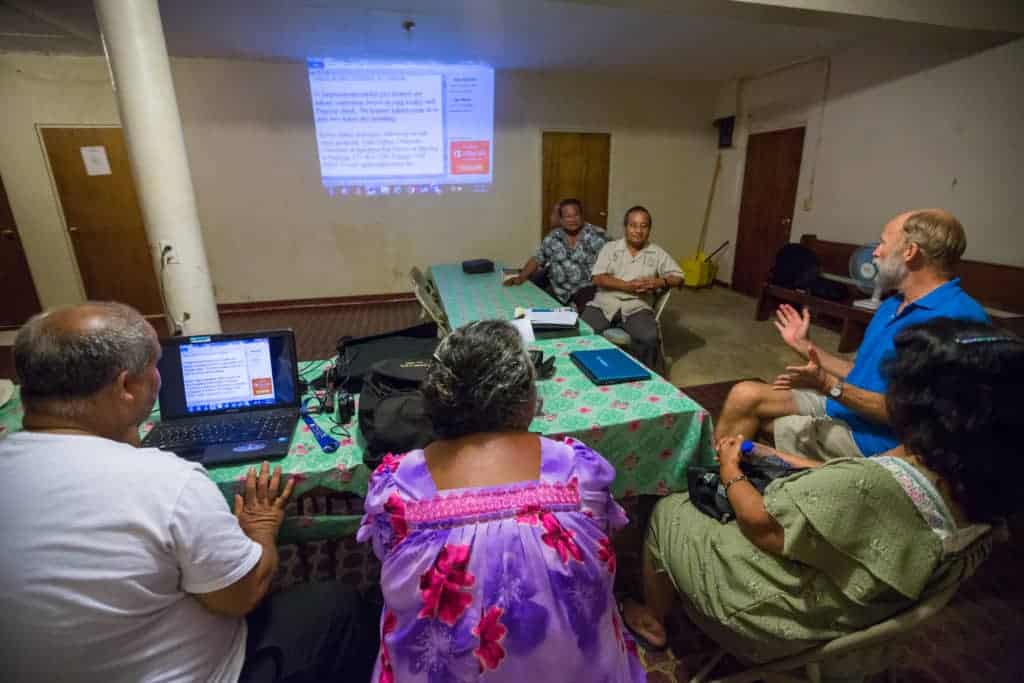
The Bible translation landscape also reveals an increasing variety of translation processes. At the center are the local churches and communities who are most invested in the outcome and have the most significant role in producing, planning, and evaluating the quality of translations. To support this, organizations in the ETEN Alliance commit to a Common Framework which prioritizes responsiveness to the needs of the most local expression of the church over more “prescriptive approaches.”[16] Diaspora communities are also playing an increasing role in translation projects due to greater global migration.
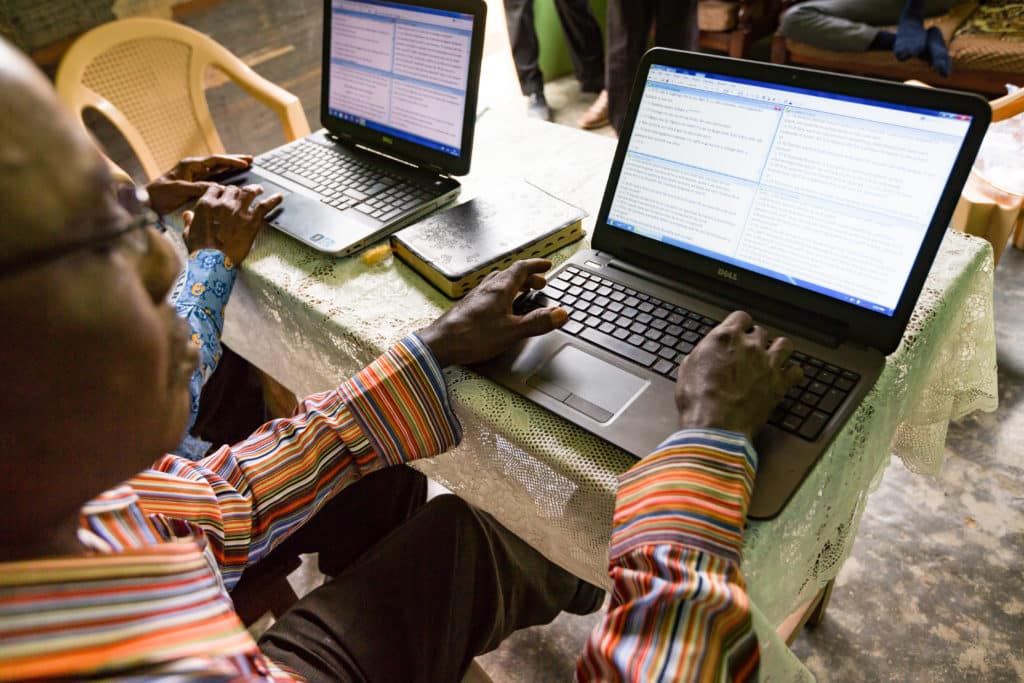
The most well-traveled paths are typically structured around small teams of well-trained community translators (often pastors or elders in local churches) supported by specialist translation consultants, who bring significant expertise in both source and receptor languages, as well as the theological and linguistic complexities of translation. This consultant-supported Bible translation approach has been practiced for many decades and has well-established best practices. Developing competent consultants is key to success, so it is important to establish consensus on consultant qualifications,[17] and to invest in training pathways for translators from diverse global backgrounds to develop the necessary competencies.
Other processes focus more on equipping the Church to build the capacity of community translators, without having to rely on certified specialists. They seek to democratize the Bible translation process opening potential for wider community involvement. Although there is a long history of church leaders drafting and checking Scripture, these newer approaches are often referred to as church-centric Bible translation[18] because of their focus on the translation process itself as a means of equipping churches, and on ongoing ownership and revision within church communities. This approach requires available resources in a language that the community understands, so organizations like unfoldingWord are investing in free-to-access, open-license translation resources, and the translation of these into around 50 gateway languages of wider communication.[19]
Alongside these processes are adventurous paths into the world of machine learning and AI. In some contexts, machine translation is used to adapt a Bible into a closely related language, creating a first draft that can then be refined by community translators. Others explore whether natural language processing algorithms can learn about biblical texts and their translation, and automatically create first drafts for languages even without a closely related language translation.
Forces Shaping the Landscape
Just as the physical landscape is shaped by the wind and rain, today’s landscape of Bible translation practice is also shaped by specific forces such as urgency, quality, sustainability, and cost, and their impact on the Bible translation landscape.
Urgency
A sense of urgency underlies Vision 2025 and the 2033 All Access Goals, and the use of hasten in the Cape Town Commitment. This urgency is grounded in God’s shepherd-heart for the least and lost, separated from Christ and without hope.[20] The challenge is sizable: 1,907 languages still have no Scripture and no current translation work, and a further 1,875 are considered to have inadequate Scripture according to Progress Bible. [21]
Urgency sweeps like a wind through the Bible translation landscape. It challenges stakeholders to accelerate translation efforts, shakes the current structures and signposts, and invites them to experiment with innovations that might prove scalable.
In one field, translation consultants are working with data scientists to produce AI-empowered tools to speed up consultants by automatically checking translations for comprehensibility, readability, and similarity to other texts. In another, translation trainers are working with online educators to develop training that equips the church for translation[22] whilst others create free-to-access videos to train translators in biblical languages.[23] Elsewhere, spaces are being created for conversations among practitioners in different contexts,[24] building capacity and speeding up professional growth. Increased urgency has catalyzed this wave of innovation which is pushing the boundaries of Bible translation into new territory.
Quality
At the same time, the landscape is shaped by concerns for quality and faithfulness aiming for translations that are trustworthy. The theological significance of God’s Word means that Bible translation is frequently held to a higher standard than other translation work. Bible translations need to be trusted by the church if they are to be used.[25] Quality and urgency are, however, forces that are potentially in tension, as the ETEN Alliance acknowledges with its goal to complete projects “in less time without compromising quality.”[26]
The theological significance of God’s Word means that Bible translation is frequently held to a higher standard than other translation work.
Each domain of the Bible translation landscape responds differently to this concern for faithfulness balancing this value alongside other principles like clarity, naturalness, appropriateness, and concordance. Some projects follow a primarily meaning-based translation approach, attempting to communicate the message of the Scriptures as clearly and naturally as possible while avoiding wording that could easily distort the intended meaning.
Others prefer a more form-based approach attempting to represent both the form and meaning of the original Scriptures as faithfully as possible. This concern for faithfulness also prompts questions about whether there can be any universal standards for translation quality, and if so, how they should be formulated and applied with adequate recognition of different perspectives and theologies in different contexts.
A concern for faithfulness in translation also raises the question of quality assurance, and what responsibility different stakeholders involved in Bible translation have for this. Some commit to ensuring a translation is as faithful as possible before widespread distribution investing in a series of quality checks before publication. However, these checks take time, which works against urgency, and raises the question of how quality assurance checks can be done in a more efficient way.
Other approaches emphasize wider participation at an early stage and rely on successive revisions within church networks and language communities as the means by which Scripture can move from just being translated to also being trusted by the community. A key challenge here is helping church networks to assess their own abilities in these areas, and to determine how to supplement what they lack.[27]
Cost
The growth of the Bible translation movement has brought increasing costs: salaries, training, software and hardware, and other resources to serve the whole movement. At the same time, the drive to eradicate Bible poverty is inspiring incredible generosity from local churches providing food and meeting spaces for translation workshops, from local enterprises and faithful individuals funding projects in their own communities or across the world, or from the philanthropic investment of high-net-worth donors. A recent development is illumiNations, designed to connect this growing community of givers with the global diversity of translation projects.[28]
These financial forces shape the landscape as communities and organizations explore what translation-related projects can be funded and how to appropriately balance local and external resources for long-term sustainability and ownership by the community. They also raise deep questions for funders about which projects to prioritize, and how to mitigate the inevitable power-dynamics in play when large amounts of money are donated. It is critical that the voice and agency of minority language communities and their churches are not further marginalized by the good intentions of benefactors who are not familiar with local contexts.
Sustainability
A final shaping force in the landscape relates to sustainability. As languages and cultures continually change, the need for fresh Bible translation is ever-present as is the need for churches able to maintain the high-quality of translations over time. Building capacity for long-term, sustainable Bible translation is thus an important feature of the landscape.
Sustainability leads to the prioritization of tools and training to equip local community members as translators, advisors, exegetes, trainers, and consultants, and to the investment in gateway language resources. Yet it equally prompts explorations into how the global body of Christ can continue to walk together in Bible translation, where diverse participants (whether local or cross-cultural) contribute their perspectives and expertise.
The desire for sustainability also draws our eyes to the wider ecosystem around Bible translation. For communities to flourish, the Word of God does not just need to be translated, but to be engaged with in a way that transforms individuals and societies, enriching their physical, social, and environmental well-being.
Facilitating the broader holistic concerns of minority language communities is a key factor shaping priorities and projects in some parts of the Bible translation movement. Here, engaging with the church and local communities means listening to their needs and desires for their own growth without unnaturally divorcing spirituality from the rest of life. For example, SIL supports community Bible translation alongside other language solutions that expand possibilities for a better life connecting to primary education, maternal health, disease response, and environmental sustainability.[29]
Again, sustainability and urgency do not sit easily together. Faster production could compromise capacity building and the emphasis on growing a healthy ecosystem. For example, AI-enabled translation processes may produce quick drafts that reduce the time spent by community translators wrestling with exegetical and linguistic complexities, but this may leave them with a limited sense of ownership and less well-equipped for future revisions.
Conclusion
The Bible translation landscape in the twenty-first century is rich and diverse. Different participants are seeking to navigate the forces at play. It is a landscape in which travelers walk increasingly closer with the Church. It brings together past wisdom and present innovative opportunities to meet the ongoing challenges of Old Testament translations and New Testament revisions, and to explore new territories of oral and signed translation.
The landscape metaphor reminds us of the value of finding places where practitioners can lift their eyes beyond the boundaries of their own fields to look across the whole scenery and see where God is working and translation is bearing fruit. These broader vistas inspire a re-examination of existing assumptions and best practices, and point towards potential new partnerships.
As part of the organic body of Christ, the Bible translation movement brings together communities, church networks, and mission organizations in the common endeavor of eradicating Bible poverty. Key to the ongoing growth and health of the movement is to create space within this landscape for dialogue and mutual learning in which unity can be found amidst the wide diversity and complementary nature of different approaches.
Within these spaces, different approaches to handling the forces of urgency, quality, cost, and sustainability can enrich one another and foster a flourishing, sustainable Bible translation ecosystem – a movement which bears its fruit in transformed lives and communities.

Phil King (phil_king@sil.org) is the SIL International coordinator for translation training and development and a module tutor at Moorlands College, UK. He has a PhD in Biblical Hebrew and served with SIL in Papua New Guinea and on the global sign language team. He lives in Gloucester, UK.

Dick Kroneman (dick_kroneman@sil.org) is the SIL International coordinator for translation research and practice and a senior translation consultant. He has a PhD in translation studies (2004) and a ThD with a focus on Old Testament exegesis and contextualization (2013). He has served in Papua, Indonesia since 1988, and was closely involved in the completion of the Una New Testament (2007) and the Una Bible (2022). He lives in Sentani, Papua, Indonesia.
NOTES
[1] David M. Eberhard, Gary F. Simons, and Charles D. Fennig, eds., Ethnologue: Languages of the World, 25th ed. (Dallas, Texas: SIL International, 2022), https://www.ethnologue.com/.
[2] For the history of Bible translation, see Philip A. Noss, ed., A History of Bible Translation, 2nd ed. (American Bible Society, 2007).
[3] Andrew Walls, The Missionary Movement in Christian History (Orbis Books, 1996).
[4] Forum of Bible Agencies International, “History,” accessed March 3, 2022, https://forum-intl.org/about/history/.
[5] Wycliffe Global Alliance, “Who We Are,” accessed March 3, 2022, https://www.wycliffe.net/about-us/.
[6] Lausanne Movement, “The Cape Town Commitment,” accessed March 3, 2022, Section IID.1.C, https://lausanne.org/content/ctc/ctcommitment.
[7] By church we mean the local expression(s) of the body of Christ. It includes both formal (institutionalized) and more informal expressions of this body.
[8] Youth With a Mission, “A Covenant to End Bible Poverty,” accessed March 3, 2022, https://ywam.org/a-covenant-to-end-bible-poverty/.
[9] Every Tribe Every Nation, “What We Do,” accessed March 3, 2022, https://eten.bible/what-we-do/.
[10] Wycliffe Global Alliance, “Vision 2025,” accessed March 3, 2022, https://www.wycliffe.net/more-about-what-we-do/philosophy-and-principle-papers/vision-2025/.
[11] Every Tribe Every Nation, “Eradicating Bible Poverty,” accessed March 3, 2022, https://eten.bible/.
[12] Lausanne Movement, “The Cape Town Commitment,” accessed March 3, 2022, Section IID.1.C, https://lausanne.org/content/ctc/ctcommitment.
[13] Faith Comes By Hearing, “Oral Bible Translation Using Render,” accessed March 3, 2022, https://www.faithcomesbyhearing.com/what-we-do/oral-bible-translation/render.
[14] Daniel Silliman, “Sign Language Bible Complete After 39 Years” Christianity Today, September 21, 2020, https://www.christianitytoday.com/ct/2020/october/deaf-bible-american-sign-language-version-translation.html.
[15] Asia Pacific Sign Language Development Association.
[16] Every Tribe Every Nation, “What We Do,” accessed March 3, 2022, https://eten.bible/what-we-do/.
[17] Forum of Bible Agencies International, “Statement on Qualification for Translation Consultants” last modified October, 2006, https://forum-intl.org/wp-content/uploads/2019/03/FOBAITranslationConsultantsQualifications2018.pdf.
[18] “Church-Centric Bible Translation,” accessed March 3, 2022, https://ccbt.bible/.
[19] Tim Jore, “The Gateway Languages Strategy,” version 2, last modified 26 July 2017, https://www.unfoldingword.org/publications/the-gateway-languages-strategy.
[20] Youth With a Mission, “A Covenant to End Bible Poverty,” accessed March 3, 2022, https://ywam.org/a-covenant-to-end-bible-poverty/.
[21] ProgressBible, “Bible Poverty,” last modified December 2021, https://progress.bible.
[22] The Digital Training Library, “Welcome,” accessed March 3, 2022, https://www.digitaltraininglibrary.org/.
[23] Bethany Case and Andrew Case, “Aleph with Beth,” accessed March 3, 2022, https://www.youtube.com/c/AlephwithBeth; Angela Taylor, “Alpha with Angela,” accessed March 3, 2022, https://www.youtube.com/c/AlphawithAngela.
[24] “Modular Aggregation of Principles for Bible Translation (MAP) for Bible Translation,” accessed March 3, 2022, https://map.bloomfire.com/; “EMDC Online,” accessed March 3, 2022, https://emdc.online.
[25] Tim Jore, “Trustworthy and Trusted,” last modified August 16, 2017, https://www.unfoldingword.org/publications/trustworthy-and-trusted.
[26] Every Tribe Every Nation, “Who We Are,” accessed March 3, 2022, https://eten.bible/who-we-are/.
[27] Connie Champeon, “Dichotomies in Bible Translation: Can Case Studies in Church-Centric Bible Translation Provide New Insight?,” presented at the BT Conference, Dallas, October 2021.
[28] illumiNations, “Translating the Bible for All,” accessed March 3, 2022, https://illuminations.bible/.
[29] SIL International, “Why Languages Matter,” accessed March 3, 2022, https://www.sil.org/about/why-languages-matter.
EMQ, Volume 58, Issue 3. Copyright © 2022 by Missio Nexus. All rights reserved. Not to be reproduced or copied in any form without written permission from Missio Nexus. Email: EMQ@MissioNexus.org.