EMQ » July–September 2022 » Volume 58 Issue 3
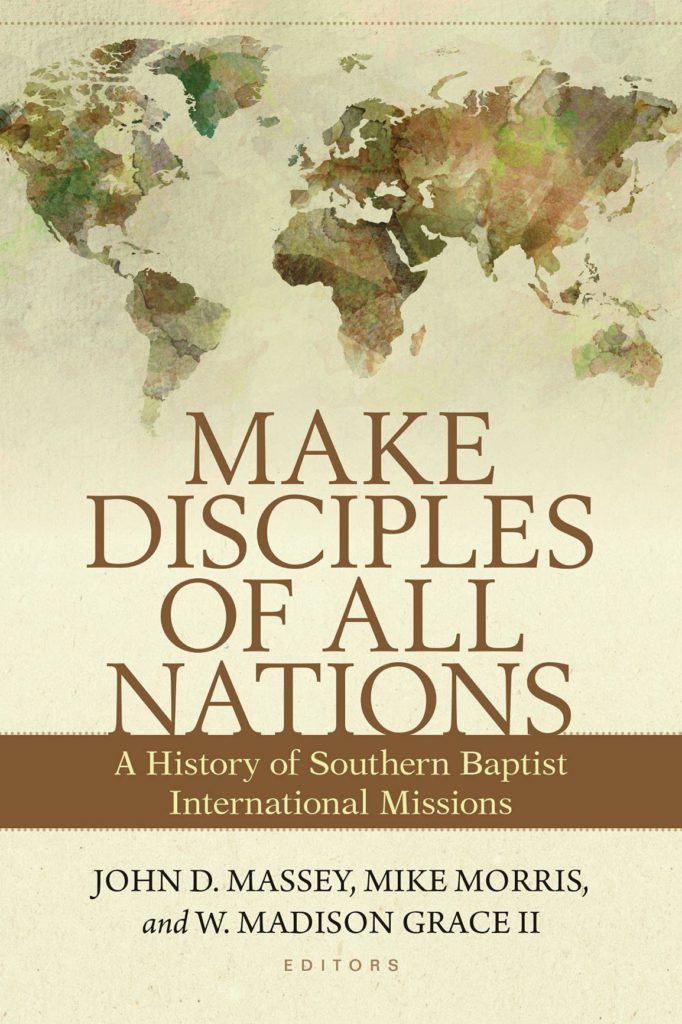
Make Disciples of All Nations: A History of Southern Baptist International Missions
Edited by John D. Massey, Mike Morris, and W. Madison Grace II
Kregel Academic, 2021
398 pages
US$23.99
Reviewed by Lynn Thigpen, emeritus IMB missionary and an adjunct professor at Liberty University, Lynchburg, Virginia.
As an emeritus missionary with the International Mission Board (IMB) of the Southern Baptist Convention (SBC), I eagerly anticipated reading Make Disciples of All Nations. I hoped for a chronicle of how God had advanced His Kingdom throughout the world and stories of missionary endeavors. This book, however, focuses on the leaders of the IMB (formerly the FMB or Foreign Mission Board, the name being changed in 1997), their theology, and the unique challenges each one faced in the 175 years the Board has been in existence.
Written mainly by Southern Baptist seminary professors, the twelve major chapters follow the chronological tenure of IMB leadership. An introduction by the editors, a foreword by the current president, and an afterword by the president of Southwestern Seminary complete the work. Nearly half the writers were also former IMB missionaries, as were two of the three editors. The book is honest and apologetic about Southern Baptist beginnings and equally critical of Board leadership at certain points. One writer confessed, “It is by the grace of God that the SBC has done what it has done, in spite of ourselves” (66).
Having served during the presidencies of Rankin, Elliff, Platt, and Chitwood, I read the latter three chapters first. I was blissfully unaware of most controversies mentioned and only knew these leaders as men who loved God and were committed to the Great Commission. Proceeding to the beginning chapters, I became acquainted with unfamiliar names and leaders, many worthy of further exploration. I appreciated an introduction to George Liele, a former slave and Baptist minister sent to Jamaica “a full ten years before Carey left England” (32) and the reminder of early Baptist beginnings as being focused on “one sacred effort” in overseas missions (51).
Subsequent chapters portrayed sacrificial leaders working to further that one sacred effort despite wars, financial challenges, and the like. The writers focused a great deal on doctrinal issues, but I found myself highlighting lessons, names of past workers, inspiring quotes, and interesting facts, such as discovering the Board existed a whole century before appointing a missionary as president, then five served in a row.
Those teaching on mission leadership in denominational settings, especially in Southern Baptist seminaries, might find this text useful. An introduction to each contributor and a listing of the major leaders in the Board’s history would have been helpful, but a pictorial timeline can be found on the IMB website. Many of the historical challenges mentioned in each chapter still vex modern missions – issues such as self-sufficiency in the national church, the efficient and godly use of funds, avoiding dependency, adapting to culture, and the place of institutions. Making a purposeful study of these types of lessons would be a worthwhile endeavor, a foundation for training of field workers, whatever the denomination.
For Further Reading
Chute, Anthony L., Nathan A. Finn, and Michael A. G. Haykin. The Baptist Story: From English Sect to Global Movement. Broadman and Holman Academic, 2015.
Hildreth, D. Scott. Together on God’s Mission: How Southern Baptists Cooperate to Fulfill the Great Commission. Broadman and Holman Academic, 2018.
EMQ, Volume 58, Issue 3. Copyright © 2022 by Missio Nexus. All rights reserved. Not to be reproduced or copied in any form without written permission from Missio Nexus. Email: EMQ@MissioNexus.org.