EMQ » April–June 2022 » Volume 58 Issue 2
By Belinda Ng
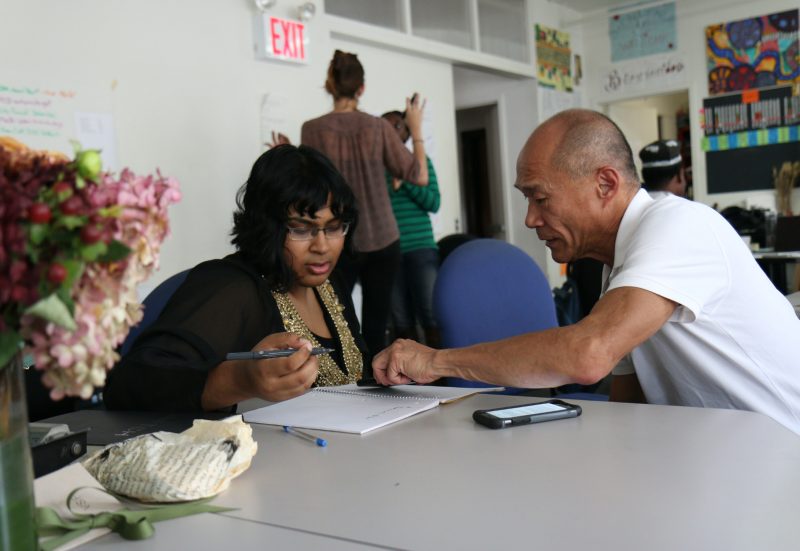
I am privileged to be part of a pastoral care team to missionaries in East Asia constituent countries serving globally. We represent a spectrum of seasons of ministry and cross-cultural experiences. As one colleague shared: “The best care has been that the team have been listening with attentive ears, helping us to process our emotions (which have been hidden most of the time) triggering thinking from various perspectives. Practical assistance, thoughts, praying together as well as sharing tears and laughter then become a shared journey and experience.”
[memberonly folder=”Members, EMQ2YearFolder, EMQ1YearFolder, EMQLibraryInstitution”]I would like to highlight several member care areas unique to Asian workers, though workers in other areas may also identify with them. Thanks to many champions from the West who have laid the member care foundation for us to build on and contextualise. The specific needs in the Asian context continue to be challenging in the changing landscape of missions. We are constantly evaluating how these are addressed or need to be addressed by sending entities from Asia.
Pre-field
Cross-cultural missions is still young in new sending countries. However, it is still important to have a member care structure in place, with intentional mentoring programmes by experienced missionaries. Developing policies involving sending and receiving entities both at home and on the field need to be prioritized.
People exploring missions need mentors who will to patiently listen to their stories and help discern the call of God. “Asking the appropriate questions of these potential missionaries is key for starting well…Senders must realistically communicate that there will be many unknowns and much of the journey is one of faith, not sight.”[1]
Confirmation of calling anchors future workers during hard times. It helps them remember why they came to serve on the missions field and perseveres their commitment. Sending agencies and churches need early conversations on the applicant. Creating a partnership agreement between church and agency significantly defines the roles each will be responsible for in caring for a missionary.
Families with Children
Raising children outside of their passport culture has significant impact on the child. Awareness of this phenomenon will help parents to be sensitive to their needs especially in transitions. Coaching on parenting and family life is needed because many Asians are first generation Christians and may not have Christian role models to emulate. This is a unique need for most Asians without Christian heritage.
Parents need to be assigned a seasoned missionary as mentor to journey with them early in the application process. Parenting is challenging enough, so raising a family cross-culturally needs even more preparation. Investing time and resources ensures that this aspect of pre-field training is provided adequately and not side-stepped.
Parents need preparation to know how to journey with their children through life stages while on the field. They need resources to assist them in living outside their passport cultures and to re-enter when the time is due. Issues like maintaining their mother tongue are particularly significant, so that missionary kids (MKs) can continue to communicate and relate to non-English speaking relatives, like grandparents, and friends in their passport country.
MK Education
MKs from Asian countries and their parents experience a number of challenges with education. Many parents express significant concern about the academic aspect of educating their children. However, parents and sending entities need to pay more attention to children’s psychological and emotional well-being. Children are resilient, and thrive in nurturing environments. But the pressure from society at home can make it difficult.
Parents on the field often need to choose between home schooling their children or enrolling them in an international school. Home schooling can be formidable for parents without role models from their home countries who have done it, or few or no curriculum resources from their home countries. Challenges remain for those choosing to send their children to international schools because these schools typically use American or British-based curriculum.
Education curriculum is without uniformity across Asian countries, so when MKs from Asian countries return to their passport countries, they often struggle to integrate back into the education system. Their parent’s may try to find resources to assist their children with additional study to help them to better participate in a local school or they may choose to continue their children’s education with a Western-based curriculum. However, without adequate help with this transition, children risk falling behind.
Theology of Work and Rest
Engaging in self-care is essential for missionaries to thrive. Each missionary must own this, discover what works well for them, and establish care rhythms that keep them emotionally, spiritually and physically healthy. Establishing these routines increases resilience in times of stress and crisis. Exploring how Jesus did this by going away to a place of rest to be with His Father in the midst of a busy ministry gives an important model to follow.
Hard work is deeply ingrained in Asian cultural virtues. Global workers from this cultural context may dive into the ministry to the neglect of personal care, well-being, and family needs. For example, Singaporeans often put in long hours. When newcomers from Singapore do this on the field while also trying to deal with so many unfamiliar field stresses, it can take a substantial toll. Hence a wise team leader should monitor the situation and encourage missionaries to take allotted vacation days and establish self-care routines. Missionaries testify to how refreshing a break can be and how it energises them to serve with renewed vigour.
Cultural Sensitivity
Cultural sensitivity is much needed in multicultural teams, especially for leaders. This is particularly important in understanding the dynamics between those who come from collectivist and high-power distance cultures and those who do not. Most Asians come from these kinds of cultures and because of this shy away from expressing opinions unless they are asked. At important events where the community sharing takes place, Asian team members can feel lonely and left out. A wise leader will ask Asian team members to share so that they have a way that feels natural to participate.
Singles
Asian singles may never have lived alone in their entire lives because it is still a cultural norm for singles to live with their parents even as adults. When they go to the field, Asian singles may discover that most provided housing is set up for single occupancy. So, arrangements need to be made with them sensitively and with consultation. Each person faces different challenges and needs must be identified to ensure none feel isolated and undervalued. For example, a Filipino sister preferred living by herself because she was afraid that her housemate may not understand that she eats rice three times a day. Living alone reduced her stress.
When Asian singles adapt to living alone, returning on home assignment can be a huge adjustment depending on expectations from their family. Their room may have been rented out or used for other purposes in their absence. But they may still be expected to return to live together with their parents as they did before. Some traditional parents may want to have a continued say in their affairs. Finding privacy, therefore, will not be easy in such a household. Moving out can be a sensitive issue and can cause misunderstanding.
Elderly Parents
In Asian contexts, care for elderly parents is deemed filial piety. Providing some form of parental support is a strong cultural obligation. Children who are working are expected to contribute a monthly allowance to their parents. The amount varies according to their financial status. Many parents lose this assistance when their children become missionaries. Hence parents, believers and non-believers, can struggle letting their children become missionaries. However, the sense of duty can create an unease.
Missionaries in our agency have factored in a token monthly allowance for parents. Some churches have arranged for regular visits to parents on special occasions on behalf of missionaries. Church members may also help with practical care such as accompanying a missionary’s parents to medical appointments or treating them to a meal. One Singapore agency organises an annual Chinese New Year party for parents of their missionaries during which each receives mandarin oranges and a ‘Ang Pao’ (red packet with cash). The event helps a build a network among parents. It is also a shared experience of mutual encouragement for them.
Conclusion
As more people from everywhere go out to serve everywhere, we need to increase our understanding of the different cultures within our teams. This reduces unnecessary stresses on the field. Agencies and churches must work to build trust relationships with their missionaries, so that they will find it safe to open up about their struggles including cultural ones. As agencies and churches stay aware of what is going on, they can more quickly respond to problems.
Missionaries are human with needs like everyone else. Culturally sensitive member care extended to His shepherds goes a long way to encourage them when they are weary and may even lengthen their missions service. Exercising flexibility with policies allows room for genuine cultural differences to be accommodated. Focusing on continual development and cultivating engaging partnerships with stakeholders provides a path for organizations, churches and missionaries to grow together as they participate with one another in God’s mission.

Belinda Ng (belinda.ng@sim.org) is the member care and MK education consultant for SIM East Asia. She and her late husband, Andrew Ng, served 12 years at Galmi Hospital in Niger. Belinda is currently pursuing her MA in member care with Redcliffe College. She is an executive board member of Global Member Care Network and a board member of Services in Asia for Family Education (SAFE). She lives in Singapore.
[1] Dave Pollock, “Developing A Flow of Care and Caregivers,” in Doing Member Care Well, ed. Kelly O’Donnell (Pasadena: William Carey Library, 2002), 26.
Bibliography
Ng, Belinda. “Some Reflections on Pastoral Care, Perspective of New Sending Countries,” in Too Valuable to Lose: Exploring the Causes and Cures for Missionary Attrition, ed. William Taylor (Pasadena: William Carey Library, 1997), 277–286.
Pollock, Dave. “Developing A Flow of Care and Caregivers,” in Doing Member Care Well, ed. Kelly O’Donnell (Pasadena: William Carey Library, 2002), 26.
Wiarda, Gracia. “Challenges and Care for Asian Missionaries,” in Doing Member Care Well, ed. Kelly O’Donnell (Pasadena: William Carey Library, 2002), 47–60.
EMQ, Volume 58, Issue 2. Copyright © 2022 by Missio Nexus. All rights reserved. Not to be reproduced or copied in any form without written permission from Missio Nexus. Email: EMQ@MissioNexus.org.