by Roger E. Hedlund
Throughout much of Asia, where the world’s least evangelized peoples dwell, the foreign missionary era has for all practical purposes ended. This is cause for our concern, reflection, and response.
Throughout much of Asia, where the world’s least evangelized peoples dwell, the foreign missionary era has for all practical purposes ended. This is cause for our concern, reflection, and response.
Consider these Asian realities:
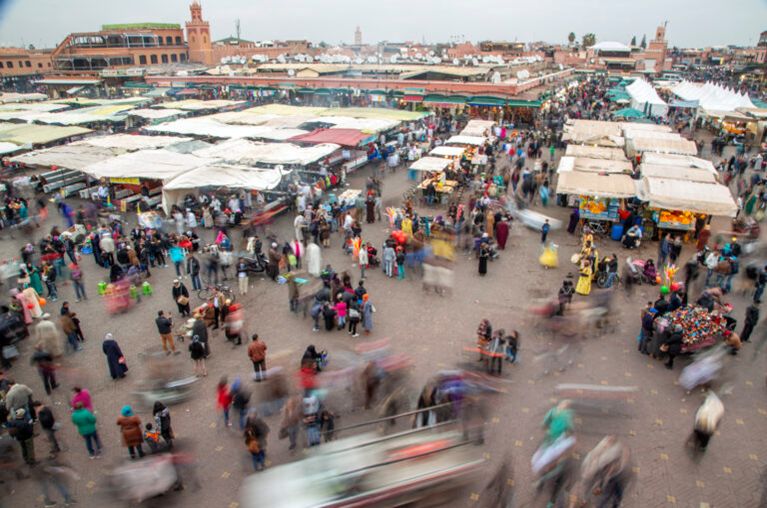
- More than half the world lives in Asia. Out of a 1992 world population of 5.5 billion, 3 billion are Asians.1 Slightly more than a billion people live in mainland China, and nearly a billion more in India. With 886 million people, India alone has nearly as many people as Africa (650 million) and South America (290 million) combined.
- The sheer size of Asia affects the influence of Christianity there. While both Asia and Africa have some 250 million Christians, Asia is only 8 percent Christian, while Africa is 39 percent Christian.
- Most Asians follow the major non-Christian religions. Most of the world’s 988 million Muslims are in Asia. The world’s 736 million Hindus live mainly in India and Nepal. The Buddhist world of 330 million is almost entirely in Asia. Probably half of the world’s 100 million tribal religionists live in India.
- Most of Asia’s billions live in countries where foreign missionaries are not allowed, and where even indigenous Christian missions are severely restricted.
This is most evident in the Muslim world. Even a democratic Muslim state such as Malaysia, which permits religious freedom, prohibits the evangelization of Muslims. Whether the “liberal” Islam of Indonesia and Southeast Asia, or the militant fanaticism of Saudi Arabia, Islam’s intransigence toward Christianity is well-known. Not so well-documented are the restrictions found in the Buddhist and Hindu worlds.
The majority of Asians are accessible neither to Western missions nor to the newer indigenous Asian mission agencies. Missionary work as traditionally understood is simply not possible in Asia. Access will require radical adjustment on several fronts. Let’s look at India, for example.
The challenge of urbanization
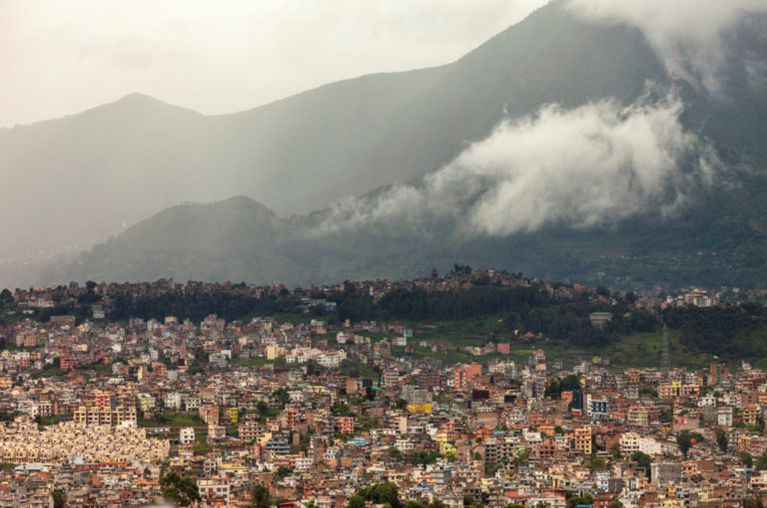
To have any success, a mission strategy for Asia must first of all consider the implications of urbanization. Present indigenous mission efforts, in India at least, are primarily rural—even though India, like much of Asia, is rapidly urbanizing.
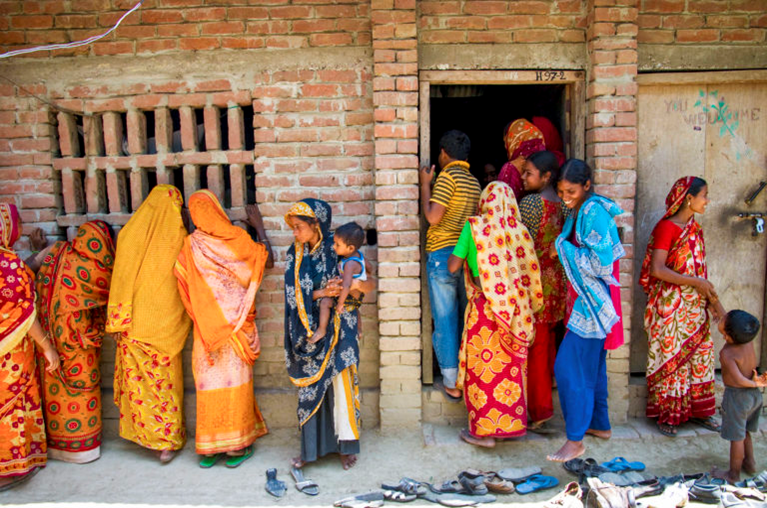
There are more than 200 major cities in India with populations of 100,000 or more. These are cities of the poor. An estimated 65 percent of urban Indians are slum dwellers. And they are cities of the oppressed. Observers generally classify one-fourth of all Indians as being in some way oppressed.
There are Christian enclaves in all of India’s urban centers. Christians have migrated from the rural villages to the cities, where they offer a strategic starting place for any evangelistic thrust. Bombay, India’s leading city, has a Christian population of nearly 7 percent. Yet most of Bombay’s churches lack any comprehensive plan for evangelizing their city. Delhi, the nation’s capital, has more than 200 churches, but most of them seem paralyzed by inertia. In Madras, on the other hand, Christians comprise nearly 10 percent of the population, and churches are strong.
Calcutta, called a “dying city” by Rajiv Gandhi, is home to more than 11 million, many of whom are slum and street dwellers. There is little evangelism taking place in Calcutta’s slums, even though the poor have often been receptive to the gospel.
One major challenge in all of India’s cities is caste. Caste is an integral part of Hinduism, and a formidable barrier to the spread of the gospel. Caste segmentation is modified in the urban setting, yet caste is resilient, persisting in new forms rather than disappearing. The social class distinctions of the city are superimposed on caste. The life of Christ must somehow become incarnate in this social setting.
Another key challenge in India’s cities is how to maximize the potential of hundreds of seminary students. India has more than 150 Protestant pastor training institutions, most of them in the large cities, but with notable exceptions they are not a significant force in urbanevangelization.
The challenge of complexity
Along with the challenge of urbanization comes the challenge of identifying India’s least evangelized people groups. A vast subcontinent, India is arguably the most complex society on earth, speaking a medley of 312 languages and living in 4,635 cultural communities, according to the Anthropological Survey of India.2 Though it is legally one nation, in its diversity India could be compared to Europe. Given this sociological and cultural diversity, “whole country” thinking is cumbersome and unproductive for missions in India. People are separated not only by geography but by language, culture, and social structure. The context is further complicated by economics, politics, and religion.
A brief look at just 14 of India’s 32 states and territories—most of them more populous than many world nations—will give a glimpse of India’s complexity. Least evangelized Hindu and Muslim groups abound in northwestern India, yet states such as Gujarat and Rajasthan, both geographically north, are distinct cultural regions, each with its own colorful minority populations. Rajasthan is the home not only of proud Rajputs but also of Bhil and Meena tribals. The Rajasthanis are mainly Hindus, with a minority of syncretistic Muslims but very few Christians.
Gujarat, which has seen considerable conversion among its tribal populations, remains predominantly Hindu. Strategy here must take into consideration the varying receptivity of the tribes, the ongoing Hindu-Muslim tensions, and the vitality of a vibrant minority church—in a state where less than 1 percent are Christians.
On the opposite side of India, the state of Orissa has an ongoing Christian conversion movement among the tribes, accompanied by a militant Hindu re-conversion effort as well as legislation against conversion to Christianity.
West Bengal (home of Calcutta), with few Christians, a Hindu majority and a large Muslim minority, has large numbers of potentially responsive, needy tribals and impoverished “scheduled castes” (untouchables).
Bihar, classed along with Orissa as a “most backward” state, has a very substantial Christian “island” at Ranchi. Lutheran, Roman Catholic, and Anglican (Church of North India), the Ranchi Christian community is almost exclusively tribal. Bihar’s Hindu population remains largely unevangelized.
India’s Himalayan region, stretching across several states, has its own distinctive people groups and characteristics. The same must be said regarding Jammu-Kashmir, which has Buddhist and Hindu as well as Muslim districts and sub-regions.
Central India cannot be understood apart from the immense tribal population of Madhya Pradesh, where the tribal religions are overlaid by various forms of Hinduism. The huge area comprising Maharashtra (which includes Bombay) can best be analyzed district by district, each with its own tribes, majority segments, and minority Christian denominations.
Northeastern India—the area to the north and east of Bangladesh—has a complexity all its own. Primarily tribal, the region today has Hindi and Bengali non-tribal minorities as well as its native Assamese. The northeast and the south are the two most strongly Christian areas of India. Indeed, northeastern India has been called the most evangelical place on earth. Mizoram and Nagaland are almost entirely Christian. Manipur and Meghalaya have major Christian populations. Arunachal is rapidly converting. Assam and Tripura have growing tribal Christian communities. Northeast India is a missionary outreach base for the evangelization of other areas of South Asia.
The potential of India’s Christian community
People often think of India as a Hindu nation. But we must never forget India’s Christian communities. They are essential starting points for Christian evangelistic strategies in India. Any strategy must certainly take into account the significant mission force God has raised up in South and Northeast India. (The South Indian missionary movement tends to be interdenominational, whereasthe missionary movement from the Northeast is largely denominationally based.)
India has 2,000 years of Christian history. Christianity is one of the ancient religions of India, with some 90,000 churches and congregations nationwide. It is firmly established in the south, where great Roman Catholic and Protestant missionary evangelists and scholars of the past were well-received, laying a foundation upon which the church continues to build. In Madras, the number of congregations increased from 525 to 700 just in the five years from 1981 to 1986.
The history of Christianity in North India, on the other hand, began with the coming of William Carey only 200 years ago. The contrast is sharp. Well-known in the South, Christianity is scarcely known at all in the North. For the most part, the church has not yet learned how to evangelize in North India. Nevertheless, Christian influence is far-reaching, especially in education and social issues.
Despite Christianity’s success in India, however, its track record in evangelizing the Hindu majority could best be described as massive neglect. Wesley Ariarajah, in his book, Hindus and Christians, complains of the neglect of discussions of Hinduism in Indian ecumenical conferences since 1910. While not entirely neglected, Hindu evangelization has not been a strong point at recent evangelical conferences. India’s 200 indigenous mission agencies focus more on the animistic tribes (which are off-limits to foreign missions). Media agencies likewise tend to miss the mark. For example, a Far East Broadcasting Association study found that while 80 percent of the Tamil Christian radio programs were said to be intended for non-Christians, 75 percent of them were actually directed to Christians—judging by the music, format, and issues addressed.
While there are encouraging exceptions, most Christians find it difficult to know how to evangelize Hindus. In this situation, what should mission agencies do?
Creating new possibilities
Now is the time to make use of many mission resources, including creative innovations such as the nonresidential approach to missions, to reach India. No longer an exotic idea, but tried and tested by Southern Baptists and others, nonresidential missionaries can be deployed for least evangelized populations in restricted regions of Asia where “card-carrying” residential missionaries cannot go. This strategy can be adapted for missionary sending from Asian as well as Western churches.
For instance, why not send missionaries to London—not as a new European field but as a “passport” to Asians. There is an immense Asian population in East London. The area is ideal for culture and language learning, and for developing evangelistic contacts.
Thinking specifically of India, London is a good place to recruit Indians who are already Christians to return to the Hindi-speaking Hindu heartland of North India. A capable and creative London group is already active in Hindu evangelization, employing every possible resource, including tentmakers and nonresidential personnel.
By suggesting we work from London I am, of course, suggesting international collaboration. Some would say that Western missions should completely pull out of Asia. Not at all. But we must face the realities of government restrictions. We also have to reckon with the rhetoric of the $30-a-month-missionary promoters and their supporters. Their challenges to traditional missions keep coming up. My opinion is that if we give in to the blandishments of “cheap” missions, we will soon end up with no missions. Americans, especially, are vulnerable to an appeal that says “give us your dollars, but not your sons and daughters.” If we do that, the missionary vision will die within a generation, and the dollars will also stop.
Andrew Walls of the University of Edinburgh’s Center for the Study of Christianity in the non-Western World reminds us that Christianity is today centered in the South and the East more than in the West. This significant and exciting reality must influence ourstrategies and dreams. Yet Asia’s evangelization requires the concerted effort of all world Christians. Americans are needed as well as Asians. We need to collaborate in meaningful ways in the common task.
Models can be found of such collaboration. The Asian Cross-Cultural Training Institute in Singapore is one example of how it can be done. ACTI involves overseas mission agencies working with Singaporean churches to train missionary recruits from all over Asia. The stress on community living in a cross-cultural environment makes ACTI a unique and valuable experiment which can be adapted for other Asian settings.
Another possibility is for Western missions to find enlarged roles for short-termers and mission teams. Qualified short-termers can get positions teaching modular courses in Indian Bible institutes and colleges. They can offer computer and other specialized training, help indigenous organizations in acquiring skills and equipment, do classification work for libraries, and in general serve with local Christians to enrich their ministries.
Mission teams doing music, drama, and mime can have an important role, especially in the cities when they work with respected local churches and agencies engaged in organized outreach.
An expanded role is possible for short-termers and team members who continue their involvement for a longer time, using long-term, multiple-entry visas for a series of visits as part of a strategy from a nearby country, if necessary.
The tentmaker option is viable, but requires research into India’s needs. Some tentmakers are engaged in the export-import business. Others serve their governments. Some are in education. The skills of the applicants have to match government needs. Water resource and other ecological needs should be explored. The exploding computer industry suggests another possibility.
We should take a new look at the old Moravian model. The Moravians understood the church as a missionary community, with the whole church engaged in mission. They provide a splendid model of being the mission (an important Old Testament paradigm) as well as doing mission. In the Moravians we see an entire community engaged in “tentmaking” mission. Carey’s Serampore communitarian experiment, inspired by the Moravians, has possibilities for today—as is being discovered by YWAM, among others.3
There is also the possibility of going to India as a student. Qualified candidates can enroll as Ph.D. students in a number of India’s universities. South Asian history, Indian philosophy, linguistics, sociology, and related fields are among the possible areas of study.
I have focused on the need for creating entry possibilities for evangelizing the least evangelized. Much more important than the entry issue, however, is the issue of effective communication. That is where we have not yet found our way, at least in India. We have only evangelized around the fringes. The Hindu majority elite may be nonliterate, but they are cultured traditionalists who feel threatened. Very little effort is being made to develop an apologetic, find an approach, or develop appropriate methodologies to communicate Christ to them.
Missions researcher David Barrett has said that most mission agencies are targeting other Christians, rather than the untouched non-Christian world. Ouch! We may have to accept Barrett’s rebuke. What we have been doing is not necessarily wrong, just slightly off-target. While we are being rebuked, we should also be inspired by Barrett’s challenge: “If mission in the 1990s can massively redeploy its resources into direct contact with the 1.2 billion untouched by Christian missionaries . . . it could recover its traditional vitality.”
Endnotes
1. Population figures are based on the data of the Population Reference Bureau. Religious statistics for the most part are from David Barrett’s annual statistical tables.
2. The Anthropological Survey of India, said to be the longest and most extensive social science project ever carried out in India, was completed in 1992but has not yet been published. The survey’s data fills 120 volumes, and has produced a definitive list of Indian communities including castes, tribes, minorities, and scheduled castes.
3. Carey provides a number of lessons. Initially he and his missionary associates were in India as “missionary outlaws,” to use Timothy George’s colorful expression—fugitives for Christ in the jungles of Bengal. Perhaps more significant was Carey’s contribution to scholarship. Carey revised his Bengali New Testament seven times, his Old Testament five times. He spent his lifetime in the service of Christ and humanity in India.
References
Barrett, David. World Christian Encyclopedia. New York: Oxford University Press, 1981.
Garrison, David. The Nonresidential Missionary. Monrovia, California: MARC.
International Bulletin of Missionary Research. David Barrett’s statistical tables every January.
Johnstone, Patrick. Operation World. Grand Rapids: Zondervan, 1993.
Population Reference Bureau. “World Population Data Sheet.” Washington, D.C., 1988.
—–
Copyright © 1995 Evangelism and Missions Information Service (EMIS). All rights reserved. Not to be reproduced or copied in any form without written permission from EMIS.