EMQ » April–June 2019 » Volume 55 Issue 3
By Steve Coffey
One of the great joys of my life was to be part of seeing a church established among North African immigrants living in France. On a number of occasions we had friends and family visit us from the US. What they experienced in our small church in Lyon was not what they were used to here in the US. There were elements that were different because of culture, language, and customs.
A couple joined the group who were from a Middle Eastern country where there had been significant missionary activity over the past one hundred years. By God’s grace these ministries bore fruit and today there are communities of believers who worship our Savior in that country.
Ironically, this couple proved to have a perspective of the church that became problematic. Though they were from an Arab culture, their understanding of the church was based upon its form. We came to understand that they did not view the group of believers worshiping Christ there in Lyon as a church because there was no pulpit in the room where we met and the seats where not in rows. Though it caused some confusion at first, it provoked us to go deeper into the Word with local believers in order to understand what the church is, what it does, and how it manifests itself.
One day, by God’s grace I too may have the privilege of visiting a grandchild who is also engaged in the establishment of a church. What will this church be like? Will it have a pulpit? Will the seats be in rows? Is it possible to have an understanding of what the church will become some 40 to 50 years from now? Yes it is.
By applying foresight techniques such as scanning, trend-impact analysis, roadmapping, and developing scenarios, one can gain an understanding of potential, probable, and preferred futures. Of special importance is the understanding of how social, technological, economic, ecological, and political (STEEP) factors impact it.
To do so, let’s take a look at a journal entry that I might write to describe what I experienced when visiting this church in the future.
March 10, 2050 – Lahore, Pakistan: With Jason & his family
Jason and his family have been here for eight years, sent by the Church in Manila, Philippines, to assist with leadership development. His educational degree provides him with an excellent opportunity to serve the community as well as the Church.
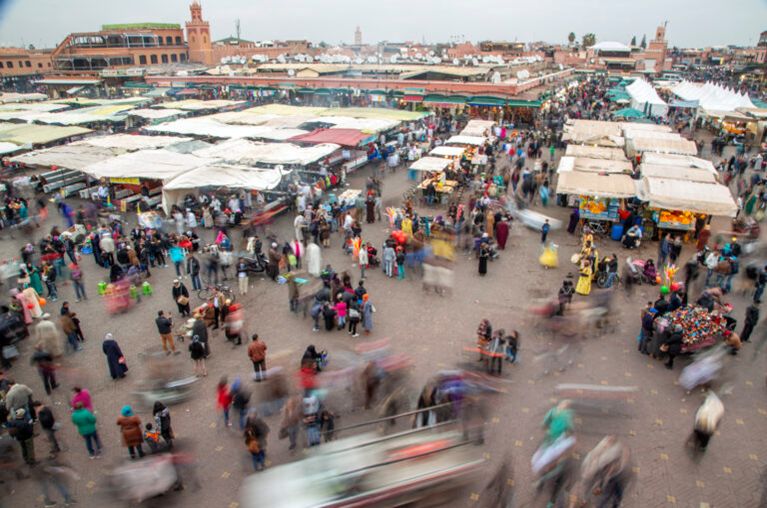
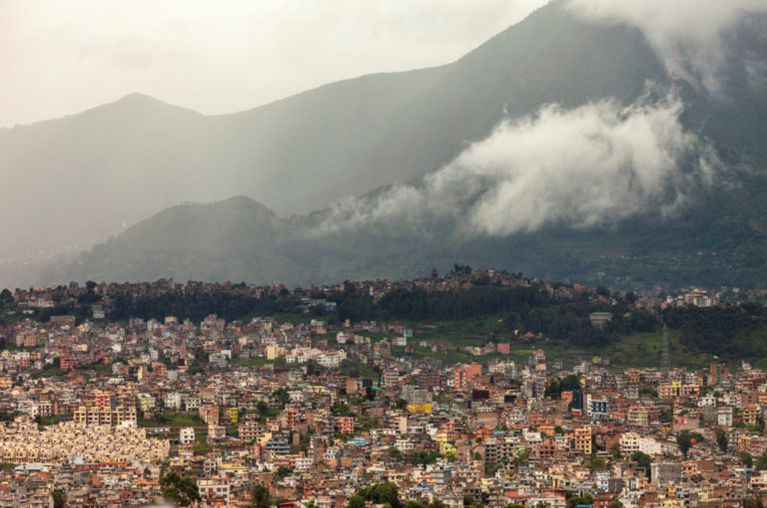
The church is located in Lahore, Pakistan, now one of the 58 world-class cities that have over 10,000,000 people. The trend toward urbanization began its major shift in 2007 when for the first time in history more people lived in cities than in rural areas. It appears to have reached its apex in 2042 when, after the urban population had doubled,[i] the Global Unity Council passed limits on the number of cities in the world allowed to have more than 15 million inhabitants.
This church has a delightful amount of youth in it, probably because there are more people in the world over 60 than under the age of 15.[ii] The youthful feel of the church is because the largest amount of graying of the population is taking place in the developed world. Here in Pakistan, the lifespan is shorter and the youth of the nation are numerous.
The church is modest in terms of facilities, which is not unusual as 8 out of 9 people in the world live in less developed countries.[iii] Modesty in this sense is not what it used to mean. Simply stated, it means that all of the “normal” technological advances that you would find in other places, such as doors opening before you as your eyes are scanned, are not operational in this one. Though there were churches in more affluent areas that wanted to assist with upgrades of this nature, the local leadership did not want to deter anyone, whether Christian, Buddhist, Hindu, or Muslim, from being able to access the facilities.
Such a mentality did not always exist. The believers of Lahore have grown in their courage due to a number of events. After the nuclear conflict with India in the 30’s, the level of persecution of minorities in each country (Muslims and Christians in India, Christians and Hindus in Pakistan) expanded beyond what was already a significant level. The Church of Malaysia and the Philippines were most generous in assisting the Church in Pakistan and India through resources and encouragement. The believers of Pakistan understood the beauty of God’s people around the world standing with them.
The biggest influence of the boldness of the Church in Pakistan came from Chinese believers. As the “Back to Jerusalem” movement grew just after the turn of the century, more and more Chinese moved into communities in Central Asia and began proclaiming their faith in Christ. Their perseverance in the midst of persecution, as they had endured in China, was an example to fellow believers in the places where they settled.[iv] The impact of the Movement was not only an increase in the number of people who placed their faith in Christ, but also in the encouragement of those who were already believers.
Though official restrictions on religion have been eliminated in Pakistan, local Muslims and Hindus continue to live with contempt for Christians, especially those who have converted from other faiths. It is in response to this reality of large numbers of conversions, that the government is considering the approval of a law that forbids the departure from one faith for another. This would follow the model of laws developed in Europe that only allow for a change from a faith to “no-faith.”
This facility may be modest but the reality of the believer’s faith is vibrant. The transformation from a beaten down population of “Christians” at the turn of the century to a strong and bold community of believers is hardly imaginable. The facility exists as a central location for multiple forms of activities, ranging from church activities to educational development, vocational training, and medical assistance. In truth, though there is a structure known as a “church,” the church is not centralized. Groups of believers meet all over the city of Lahore at varying times and places for worship, encouragement, and service.
Due to the influence of Chinese “missionaries,” the predominant language of worship material is Chinese, though English is understood all around the world through the Global Communication System [GCS], known as the “internet” in its primitive stages.[v] Worship has a global perspective though. From the 2030’s the ability to meet for worship with teaching being led by someone in another location became common. Now here in Lahore, it is not unusual to have worship led by Chinese but teaching provided in the Punjab language or English, and presented by people in other parts of the world.
Though there continues to be geo-linguistic distinctives, many aspects of the worship in Lahore can also be found in San Salvador, Brisbane, Tokyo, or London as the effects of globalization produce a global culture, especially related to media. The global generation, those born around the turn of the century, was the first to have such a strong intermingling of culture around the world. As they grew and became leaders in the church, these commonalities eventually superseded the existing differences. Because of the simplicity of global communication and interaction, theological issues that were once so divisive have lost their impact.
Instead of divisiveness, there is an incredible unity that exists in the church. The variety of insights into the Word of God has expanded beyond imagination as Wycliffe Bible Translators and the United Bible Societies achieved their goal of providing a Bible in every language of the world by 2030 (five years after Wycliffe’s target date). The ensuing result has been a deep authenticity related to the theology of the church.
The issues of life confronted by so many cultures and discussed on a global scale, have produced a teaching that is theologically solid while remaining real to life. In fact, due to the global technological advances, the predominant discussions relate much more to ethics than to theology. Most of the Theological Societies that were present 40 years ago ceased to function in the 30’s.
A challenge to the Church has been the global adoption of what is called “the myth of the absolute.” With the increased interaction among cultures through vacations, migrations, and global communications, the belief in absolutes continues to be challenged by a global culture of mutual acceptance.
The Church in Lahore has not had to deal with some of the predominant issues that other churches face. Because of the ongoing economic challenge, the first issue is related to ethics. In the more prosperous Church in India the question of how to ethically treat sentient robots is extremely important. Are they allowed to be programmed to accept religious perspectives and viewpoints? Are they able to develop an understanding of right and wrong?
Another issue, related to motivations and lifestyle, which has been prominent in other more affluent areas of the world, is apathy. When the Chinese and Indian economies passed those of the West, a new level of affluence became a trap to their churches. In Lahore, this has yet to take place. The economic level of the city is far beyond most other world-class cities.
As opposed to the ethical issues that some other countries face, the church in Lahore continues to deal with how to equitably provide assistance, especially among the hundreds of thousands who have migrated to the city from the desert plains. There is assistance available from other areas, but on a matching basis. Thus the economic realities of Lahore continue to affect the development of the Church.
Is such a journal entry plausible? It definitely is. Many of the seeds for such a church are being planted today.
Dr. Steve Coffey, Director of Christar U.S., began work with Christar in 1989 when He and his wife, Beth, initially served among North African immigrants in France. Prior to that, the Coffeys worked for a year in a humanitarian project in the Red Sea hills of Sudan among the Beja people. In 2005 Steve became Director of Christar. His education includes an undergraduate degree from Liberty University, a Master of Divinity from Liberty Baptist Theological Seminary, and a Doctor of Strategic Leadership from Regent University.
[i] http://www.unesco.org/culture/worldreport/html_eng/wcrb23.shtml
[ii] Michael Noer. “Graying Global Cities.” Forbes Magazine. 06.08.05. http://www.forbes.com/home/retirement/2005/06/07/05graycitiesland.html
[iii] http://www.prb.org/presentations/06WorldDataSheet_presentation.ppt#283,4,Slide 4
[iv] Paul Hattaway. Back to Jerusalem: Three Chinese House Church Leaders Share Their Vision to Complete the Great Commission. Waynesboro: Authentic Media. 2003.
[v] Pew Internet and American Life Project. http://www.pewinternet.org/PPF/r/188/report_display.asp. 2006.