
EMQ » April–June 2019 » Volume 55 Issue 2
By Alexander Best
Is International Student Ministry (ISM) just a useful way to connect with young people from around the world while they study in the West? I want to suggest ten reasons it should not just be at the fringes of your missiology but at the centre.
Global Growth
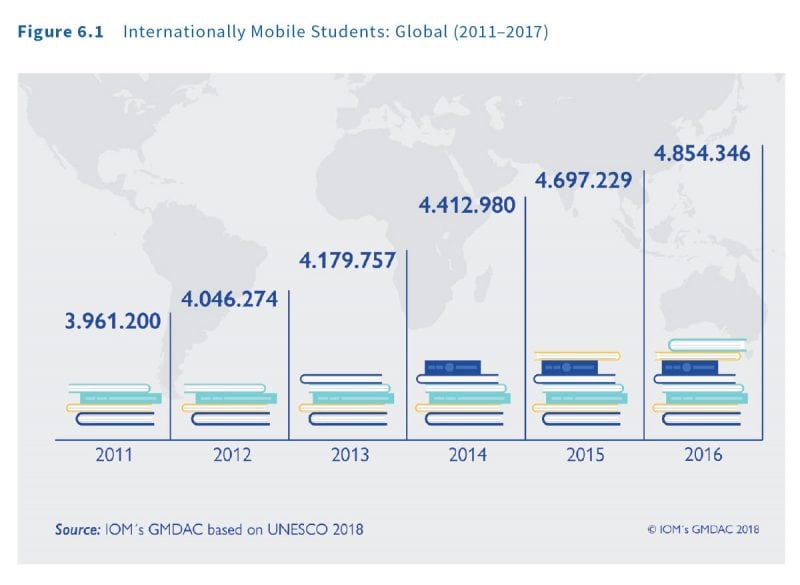
The growth of International Students is explosive: tripling since 1990[i] to five million in 2018.[ii] What does that mean? As Ed Stetzer recently observed in Christianity Today, with a million international students in America, it means, “one out of 300 people living in the United States is an international student. That’s a pretty stunning number.”[iii] In Canada, half a million international students live amongst a population of 36.7 million: more than one in a one hundred.
Global Reach
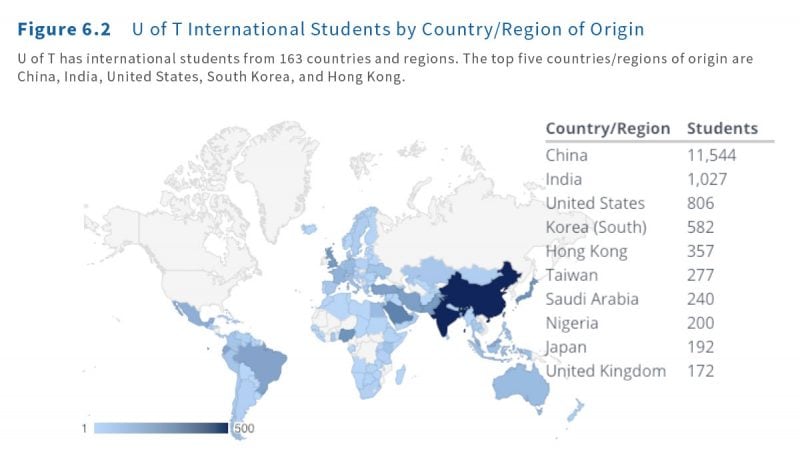
In June 2019, Global Campus a conference about ISM[iv] will be held at the University of Toronto, Canada’s premier school, one of the largest in North America[v] and Canada’s top destination for internationals. Here, one in five students are internationals on study visas, and many more, through immigration, do not need one. The campus is like its city: 51% of Toronto residents were born outside the country. Located in the heart of the world’s “most diverse” city, the University is the perfect host, an archetypal global campus.[vi]
In 1982, Dr. Charles Malik said, “Change the university, and you can change the world.”[vii] In 2019, on a global campus like Toronto, this is literally true. And, as T.V. Thomas, Chairman of the Global Diaspora Network, has observed, “… and they pay for their own ticket.”[viii] This is mission in reverse.
Global Unreached
Beau Miller, Executive Director of ACMI estimates that “two-thirds of the international students in the United States come from the 10/40 Window.”[ix] Dr. Yaw Perbi, President of ISM Canada, calculates a similar pattern: seven of Canada’s top ten student sending countries are in the 10/40 Window.[x]
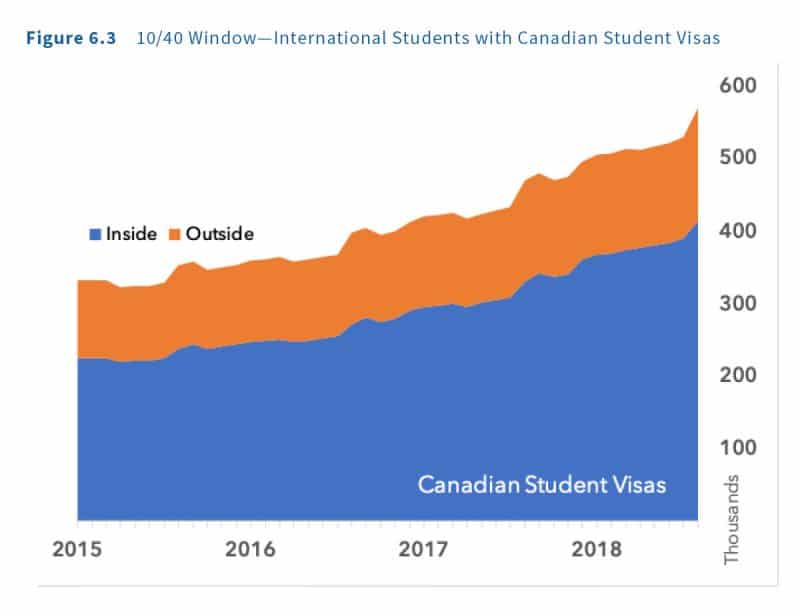
As the latest data, above, indicates: 73% of Canadian international students are from the 10/40 Window, totalling 571,210 or 1.5% of all those living in Canada. The Joshua Project estimates, 60% of these people are “least reached” by the gospel.[xi]
Global Culture
Yet this is not the only reason ISM is the epicentre of missiology. For, it is not just that these young people travel across the world to study in our midst; it is what they encounter when they get here which is so strategic and so critical to the future of the world, to the future of the gospel, to the future of the church. They do not just enter an alien country and culture; they encounter each other. The extraordinary complexity of the modern global campus is not just in its faces and voices, it is in the ideas and practices, of their hosts and of their fellow guests. How often do young Japanese rub shoulders with young Koreans or Chinese? How often does a Saudi sit in class with a Jew? The global campus is neither a melting pot nor a mosaic, it is a kaleidoscope in dizzying technicolour.
ISM in partnership with diaspora churches can penetrate the ethnic enclaves many retreat into. ISM in partnership with other campus ministries can draw them out, to interact with their global neighbours, with the peace and power of the gospel. The challenge and opportunity for Christian ministry, is not just bridging language and religious experience, or reaching the unreachable. Drawing such diverse young people into an encounter with God, who transcends each, and who invites all people “from every nation, from all tribes and peoples and languages” to stand together “before the throne and before the Lamb, clothed in white robes, with palm branches in their hands, and crying out with a loud voice, “Salvation belongs to our God who sits on the throne, and to the Lamb!” (Revelation 7:9–10, ESV).
The global campus holds the promise of a modern Pentecost, but within also lurks the danger of a modern Babel.[xii] International students, like their domestic peers, encounter on the global campus, a tale of two cities. Not so much Dickensian Paris and London on the brink of violent revolution, but Augustine’s: the City of God and the City of Man.[xiii] As with medieval Rome, there is a war, between God and idols.
On the global campus, students are marinated in a globalized youth culture: of selfie identity, app abbreviated relationships, fifteen-minute YouTube heroes and tweet length thoughts. That is just the Western tech. Koreans, Chinese, and Indians bring their own iterations. On the global campus trends are transferred and new ones started. The future is being shaped here and disseminated around the world by pixel, and by hand. The Tower is built in our midst. Each continent is sending its future engineers[xiv] to learn how to build their nation’s totems, each rushing to reach highest into heaven.[xv]
The global campus fosters an intellectual atmosphere short on critical thinking, historical perspective and reflection, and no less overbearing than the regimes of its global hinterland. What wrestling that occurs is rarely more than emoji deep debate about self-defined identity, sexuality, justice. But the fish’s invisible water is the unexamined presumptions of technocracy: never mind the purpose, show me the product; never mind the why, tell me how. The worldview that permeates the global campus is a kumbaya of undocumented human goodness and a trust in human ingenuity, with little grounding in our histories.
Yet people like the University of Toronto’s bête noire, Jordan Peterson, are taking on the assumptions and presumptions of the global campus. Peterson in fact deploys the biblical motif of the Tower of Babel to rebuke the delusions that deceive his students.[xvi] As the National Catholic Register reports: “Peterson sees the story as a warning about the dangers of idolizing the intellect in utopian attempts to make heaven on earth.”[xvii] In the two years since he refused to obey a university directive compelling the use of gender neutral language,[xviii] his small YouTube lecture channel has garnered 1.8 million subscribers. His most popular video is called ‘Introduction to the Idea of God.’ In it he defends the Bible as “a book more durable than a stone, than any empire,” saying, “we don’t understand how it had such an unbelievable impact on civilization.” It has been watched 3.4 million times.[xix] There is a battle for young hearts and minds of the global campus. More Christians need to join the fray.[xx]
Global Ministry
ISM has traditionally been conceived and conducted as first world work, a hybrid of domestic campus ministry and Western sending mission—without the airfare or the visa.[xxi] The customer is the international student, the service provider is the ISM organization, paid for by local personal support raising, the dominant model of both missionaries and campus staff. This manifests in the style, structure and focus of ISM: the care and discipling of students by local Western staff and volunteers, often former missionaries or general campus workers. The increase in the direct participation of mission agencies is a new and welcome development. In cities like Toronto, with large global immigration, the diaspora church is becoming an ever greater and much needed participant, bringing as they do, language, culture, and living communities of faith in their mother tongues.
An initiative like Toronto’s Welcome Project,[xxii] brings together churches and campus ministries and mission agencies and campus and airport chaplains, to greet some of the one hundred thousand new international students arriving at Canada’s busiest airport each year, and to connect them to local campuses groups and churches across the city, who run conversation classes, Bible studies, retreats, away days, and holiday dinners in family homes.[xxiii] In cities across North America similar work is happening, and more is needed.[xxiv]
Global Impact
However, ISM ministries across North America are wrestling with a problem: the fruit of their labour, the state of the students who return home with a profession of faith. American ISM ministries have become acutely conscious of the challenges facing those who become Christians as international students, after they return home, most noticeably among the largest nationality, the Chinese. In Canada this is less apparent because so many graduating students remain and become citizens, incentivized by government policy.[xxv]
Last year, ISM organizations in North America formed a group to address the challenge of ensuring ‘returnees’ flourish, and this fall attended a conference convened by Chinese Diaspora, Hong Kong, and Mainland leaders. The overriding assessment of the Chinese hosts was that Western ISM sent back shallow Christians unprepared for the harsh challenges of a Christian in China and unable to relate to the distinct and different character of Chinese churches, returning with little practice reading Scripture in Chinese, or worshipping without western music and liturgy. Many returned with a sense of entitlement: to lead or be served. This was blamed for the high attrition of faith amongst Chinese students, with estimates of “recidivism” as high as 90%. It was a shocking indictment. The analysis may correlate with observations about domestic Christians graduating from Western campuses, and with critiques of the shallowness of Western Christianity as a whole. It presumed the Chinese churches had discipleship perfected.
The issue seemed at least in part about control: who should and could direct the ministry to international students, the church of home or abroad? This is a variation on the missiological struggle to navigate the shift in the locus of the church—from West to East, North to South—each pole uncertain of their role, responsibilities and rights.
Global Missionaries
ISM is a unique arena to explore and resolve these conflicts, because it is transnational and temporary. Students are temporary ambassadors, with a kind of dual citizenship: they belong and inhabit two worlds, if only for few years. They are what the Chinese call “1.5 Generation.”[xxvi] The only parallel is indeed the tiny contingent of global diplomats. Not only is the global campus world-shaping, it can be church-shaping. It requires, however, re-orientating our concept of ISM. In Hong Kong, this occurred with a simple question: “Given that nearly one and a half million Chinese are studying overseas, are not some of them Christians?” [xxvii] This was an opening for an offer:
These students, your congregants, can be “imbedded” missionaries, able to reach their Chinese peers during their foreign studies, more easily and with more understanding than Western ISM workers could ever have. What if Western ISM organizations, helped these Christian students land well in the West? What if you sent them early, so we could help them adjust to our language and culture, connect them with the ministries on the campuses they will attend, and nearby diaspora Chinese Churches? What if we helped train and integrate them into the leadership of campus groups to collaborate in reaching, caring and evangelizing their fellow international students?
This is bi-lateral mission: a partnership between Chinese churches and Western ministries. It is re-engineering of ISM to focus on recruiting, equipping and supporting global students to be the emissaries of the gospel. It is to focus ISM on the empowerment of the young, development of their leadership, and the support of peer-to-peer evangelism, discipleship and service. This is necessary to be more effective in discipleship and evangelism and returning well. It is also the antidote to one of the critical challenges of Western-led ministry. Lisa Espineli Chinn, formerly InterVarsity USA’s National Director of International Student Ministry, warns about the risks in our current model, “unknowingly putting international students at a place of indebtedness by our kindness and hospitality to the end that they cannot say no to us or to the Gospel we present.” Indeed, this dynamic may account in part for the problems of Chinese returnees:
Internationals who come from cultures that exhibit a strong sense of gratitude and respect to benefactors, may be constrained by their culture to not disagree or displease their North American friends and hosts. What is the impact of that in our friendship and evangelism? Or from the other side, what ethnocentric attitude does the North American display that hinder mutual respect and undermine trust? Do North Americans project that they have the answers, and the international student will always have the questions? How can there be more equity and equilibrium in the interactions between hosts and guests?[xxviii]
Changing the approach, may also help the West directly. International students by their foreignness, are now like early missionaries to their own countries. They have a platform, not just to reach each other but to reach our students. The gospel on the lips of white Caucasians is a dismissible offence. With accent and pigment, it is a story freshly told, and re-heard. The variety of international students creates the possibility of a collective chorus, a witness that defies postmodern segregated truth; a diverse harmony that sounds a divine note (Revelation 5 and 7). We need the global church not just to help us reach their unreached, but to help us reach ours. As Johnson Hsu observes, “Within secular progressive politics, the voices of ‘People of Colour’ and other ‘oppressed’ peoples crying out for freedom to be people of faith, is heard more than similar cries by ‘privileged’ voices.”[xxix]
Global Campuses
However, the global campus is no longer a matter of them and us. Oxford University reports that, “student mobility is shifting from a largely unidirectional east-west flow to a multidirectional movement and encompassing non-traditional sending and host countries.”[xxx] International education is becoming polycentric. Global campuses are becoming a worldwide phenomenon. China has one and a half million students overseas; but it has half a million foreigners studying in China (as many as in Canada).[xxxi] Many are from Africa, on scholarship, part of an intentional effort to increase the cultural, social, and economic influence of China, especially in regions where they are investing heavily: the “One Belt and One Road” strategy.[xxxii] The top two nationalities of foreign students in China are South Korea and America.[xxxiii] Imagine their churches and ISM organizations, equipping their students to be imbedded missionaries in mainland China, reaching other internationals and Chinese. Some small initiatives are already underway. But they barely scratch the surface in China, let alone other global campuses beyond the West.[xxxiv]
As International Student Ministry is itself being internationalized there is a need for multilateral collaboration. Networks like ACMI and the Lausanne Movement’s ISM Global and North American groups are critical, but more connections are needed, and across wider aspects of mission. There is a need for a multi-layered approach that includes engagement with the global campuses at its primary focus: work. It is the preparation for work, in every field of human endeavor, that attracts students to leave home. Apart from some welcome exceptions campus ministries, domestic and ISM, have been weak here. They focus on personal evangelism, personal piety, community and broad intellectual themes, of worldview, philosophic apologetics and hot-button issues around sex (LGBT and abortion). They have not focused on the very reason students are there, on what they will spend the rest of their lives doing: their future work.
Global Workplace
Apart from the ethical challenges facing future doctors around death (abortion and assisted suicide), there is little emphasis on what the Bible and Christian history teaches about the policies, priorities, and objectives of all these fields of human endeavour. Arguably, Universities have lost their intellectual rigour and critical thinking, and succumbed to “group think” and unexamined assumption precisely because Christianity has retreated from the fray. The rich history of Christian influence on everything—from architecture to law, science to industry, medicine to social care, justice to politics—but even Christians have been persuaded it was all bad. In his seminal work, The Book That Made Your World,[xxxv] Dr. Vishal Mangalwadi explores how the application of the Biblical narratives Peterson draws on, shaped Western civilization and through the missionary movement, shaped India, for the good. He started out to prove how bad it had been. But he came to appreciate its value and then believe himself. He illustrates how non-Westerners can understand, apply and convey the gospel, afresh.[xxxvi]
The main reason campus ministries struggle is that most workers have little experience in the workplaces their students are graduating into. There is an urgent need for Christians in every walk of life to mentor, encourage, and support students who will follow them. Medieval trade guilds are an instructive model, the origins of the modern academy. Master craftsmen trained apprentices in carpentry, masonry, smithery, horticulture, and every trade society needed. They transmitted essential skills and knowledge and more. They transformed feudal societies, of the kind still operating in parts of the world, modelling new economic and civic structures: municipal government (which across Europe still meet in “Guildhalls”), trade unions and corporations.[xxxvii]
They were deeply influenced by the Bible, transmitting its stories to the common people. The church became ever removed from local culture, worshipping in an unknown language (Latin) withdrawn behind a veil (the partitioned of naves and raised alters). It was the guilds who took the gospel to the streets, quite literally. The Medieval Mystery Cycles were the first moving-pictures, literally. Each guild would tell a Biblical story, apt for their trade (the carpenters did the ark, etc.) constructing a stage mounted on a cart. They acted out the tale as they wheeled around each side of the market square, for their stationary audience, watching and listening in their vernacular.[xxxviii]
We need gospel guilds to play out the good news in the marketplace and the public square, growing as they go, global apprentices who will become masters of their trades, witnesses of the gospel and builders of the kingdom of God, in every corner of the world. The global campus is where they are most needed, and from whence they can have most impact. This year the Lausanne Movement will hold the Global Workplace Forum in Manila in the hope that global church will share and discover new ways to bring the gospel to work.[xxxix]
Global Future
The church has not been immune to building towers with its common tongue, not bearing witness to the Spirit’s revelation of Jesus Christ. We may try to build the response, brick by brick, but the City of God comes down from Him (Revelation 21:10), not built up by men. On the road from Babel to a New Jerusalem, Pentecost was the inflection point. The Spirit of God came down and reversed the curse of Babel and gave us a King to unite us. The disciples obeyed the call to gather, pray and prepare to be empowered and go. We need to go too.
God is re-gathering the nations, drawing their brightest hopes for the future, to a global campus near you. He wants to reveal to the next generation of leaders of every nation who He is. As Johnson Hsu puts it: “We have spent decades praying for the unreached. God has answered our prayers in part by bringing them to us. How will we and our churches respond?”[xl]
The future is coming, and it has bought its own ticket. Who will be there to meet it?
Alexander Best is a graduate of University of Toronto School of Theology, Director of ServeToronto,[xli] and Publisher of ThisCity.[xlii] He was formerly: Canadian Director of the Lausanne Movement, Toronto Director of International Student Ministries Canada, and Chairman of the Global Campus Conference Steering Committee. He is a graduate of Law and before emigrating to Canada worked in the UK as a writer, presenter, event director, television producer and corporate communications consultant for the British Government, and as a journalist in the United States.
[i] “The State of International Student Mobility 2015,” ICEF Monitor, ICEF, accessed March 12, 2019, http://monitor.icef.com/2015/11/the-state-of-international-student-mobility-in-2015/.
[ii] “International Students,” Migration Data Portal, updated 22 October 2018, https://migrationdataportal.org/themes/international-students#key-trends.
“Indicator B6,” Education at a Glance 2018, OECD (Paris: OECD Publishing, 2018), https://doi.org/10.1787/eag-2018-en.
“Global Mobility Streams,” Nuffic, accessed March 14, 2019, https://www.nuffic.nl/en/subjects/global-mobility-streams/
[iii] Ed Stetzer, “Reaching International Students in Our Own Backyards,” The Exchange (blog), Christianity Today, January 30, 2019, https://christianitytoday.com/edstetzer/2019/january/reaching-international-students-in-our-own-backyards-interv.html.
[iv] The Association of Christians Ministering to Internationals is hosting the Global Campus Conference at the University of Toronto, June 13–15, 2019, http://globalcampus.live.
[v] University of Toronto’s total enrollment is 90,077. “Quick Facts,” University of Toronto, accessed March 14, 2019, https://www.utoronto.ca/about-u-of-t/quick-facts.
[vi] Tim Harford, “WS More or Less: The world’s most diverse city,” More or Less: Behind the Stats, BBC Radio 4, https://www.bbc.co.uk/programmes/p03v1r1p
[vii] Charles Habib Malik, A Christian Critique of the University (InterVarsity Press, 1982).
[viii] Dr. T.V. Thomas. See: http://globalcampus.live/speaker/tv-thomas
[ix] Stetzer, “International Students.” For more on Beau Miller, https://www.acmi-ism.org/staff.
[x] Dr. Yaw Perbi, Thinking Outside The Window (Xulon Press, 2015), 148–9. For more on Dr. Perbi, http://globalcampus.live/speaker/dr-yaw-perbi.
[xi] Data Graph by Ron Nehring, with Alexander Best. Data sources: “Temporary Residents: Study Permit Holders,” Immigration, Refugees and Citizenship Canada, https://open.canada.ca/data/en/dataset/90115b00-f9b8-49e8-afa3-b4cff8facaee; “Datasets,” Joshua Project, https://joshuaproject.net/resources/datasets; “Global Flow of Tertiary-Level Students,” UNESCO Institute of Statistics, http://uis.unesco.org/en/uis-student-flow.
[xii] The subtitle of the Global Campus conference is a question: “Babel or Pentecost?”
[xiii] Augustine of Hippo (AD 354–430) used the term “earthly city” in Latin, but “city of man” entered vernacular.
[xiv] “Indicator B6,” OECD.
[xv] Nick Routley, “There is a Global Race to Build Even Taller Skyscrapers,” World Economic Forum, January 3, 2019, https://www.weforum.org/agenda/2018/01/theres-a-global-rush-to-build-ever-higher-skyscrapers
[xvi] Christopher Kaczor, “Jordan Peterson Takes on the Tower of Babel,” Guest Writers (blog), National Catholic Register, September 12, 2018, http://www.ncregister.com/blog/guest-blogger/jordan-peterson-takes-on-the-tower-of-babel.
[xvii] Kaczor, “Tower of Babel.”
[xviii] Sean Craig, “U of T Professor Attacks Political Correctness, Says He Refuses to Use Genderless Pronouns,” National Post, September 28, 2016, https://nationalpost.com/news/canada/u-of-t-professor-attacks-political-correctness-in-video-refuses-to-use-genderless-pronouns.
[xix] “Biblical Series I: Introduction to the Idea of God,“ lecture by Jordan Peterson, May 20, 2017, video, https://youtu.be/f-wWBGo6a2w.
[xx] Ravi Zacharias Ministries, http://rzim.org, and the Veritas Forum, http://veritas.org, are examples of Christians already in the fray.
[xxi] Including Australasia, by historic origin and civil and educational derivation.
[xxii] Ministries involved in Welcome Airport: International Student Ministries Canada, Inter Varsity, Power to Change (Cru Canada), Chinese Canadian Campus Evangelical Fellowship; OMF; and SIM. Learn more at http;//uWelcome.ca.
[xxiii] Friends for Dinner, http://FriendsforDinner.ca.
[xxiv] A consortium of International Ministries in North America, many involved in Global Campus, has online resources to help start new work, https://everyinternational.com.
[xxv] “Canada’s International Education Strategy,” Global Affairs Canada, Government of Canada, https://international.gc.ca/global-markets-marches-mondiaux/education/index.aspx.
[xxvi] Johnson Hsu (Toronto Director, ISMC, University of Toronto Chaplain, Chinese Church Pastor), in discussion with the author.
[xxvii] “2017 Sees Increase in Number of Chinese Students Studying Abroad and Returning After Overseas Studies,” Ministry of Education of the Peoples Republic of China, April 4, 2018, http://en.moe.gov.cn/News/Top_News/201804/t20180404_332354.html.
[xxviii] Lisa Espineli Chinn, in discussion with the author, 30 January 2019.
[xxix] Hsu, discussion.
[xxx] “International Trends in Higher Education 2015,” University of Oxford International Strategy Office, 2015, https://www.ox.ac.uk/sites/files/oxford/International%20Trends%20in%20Higher%20Education%202015.pdf.
[xxxi] “Growing Number of Foreign Students Choosing to Study in China for a Degree Across Multiple Disciplines,” Ministry of Education of the Peoples Republic of China, April 3, 2018, http://en.moe.gov.cn/News/Top_News/201804/t20180403_332258.html. “Facts and Figures,” Canadian Bureau for International Education, accessed March 14, 2019, https://cbie.ca/media/facts-and-figures. Kerrie Kennedy, “China Outbound Student Numbers at Record High,” The Pie News, Professionals in International Education, April 17, 2018, https://thepienews.com/news/outbound-student-numbers-increased-2017/.
[xxxii] Center for China and Globalization (CCG), a Chinese “non-government think tank.” “CCG Annual Report: Number of Chinese Studying Abroad Reaches Record High in 2016; More International Students in China Come from Countries along B&R,” CCG, January 2, 2018, http://en.ccg.org.cn/archives/6190.
[xxxiii] “Is China Both a Source and Hub for International Students?” China Power Project, Center for Strategic and International Studies (CSIS), accessed March 14, 2019, https://chinapower.csis.org/china-international-students.
[xxxiv] See Asian Mission Association’s ISM Edition of Asian Missions Advance, co-coordinated by Leiton Chinn, former Lausanne Global Catalyst for ISM. Leiton Chinn, Asian Missions Advance 62 (January 2019),http://www.asiamissions.net/asian-missions-advances/amadvance-52-60/asian-missions-advance-62.
[xxxv] Vishal Mangalwadi, The Book That Made Your World: How the Bible Created the Soul of Western Civilization (Nashville, TN: Thomas Nelson, 2011).
[xxxvi] Robert D. Woodberry, “The Missionary Roots of Liberal Democracy,” The American Political Science Review 106, no. 2 ( May 2012): 244–74, http://www.jstor.org/stable/41495078.
[xxxvii] Christine Richardson and Jackie Johnston, “Mystery Plays,” Medieval Drama (London: Palgrave, 1991), 13–28, https://doi.org/10.1007/978-1-349-21180-7_2.
[xxxviii] John McKinnell, “The Medieval Pageant Wagons at York: Their Orientation and Height,” Early Theatre 3 (2000), 79–104, http://www.jstor.org/stable/43500425.
[xxxix] Lausanne Global Workplace Forum 2019, Manila, Philippines, Juen 25–29, 2019, http://lausanne.org/gwf.
[xl] Hsu, discussion.
[xli] Serve Toronto, http://ServeToronto.ca.
[xlii] THisCity, THisToronto, http://THisCity.org.




