by Gene Daniels
The primary reason for this article is that it seems to me that something very important about the contextualization of prayer has been lost in the larger debate about appropriateness of certain kinds of contextualization in the Muslim world.
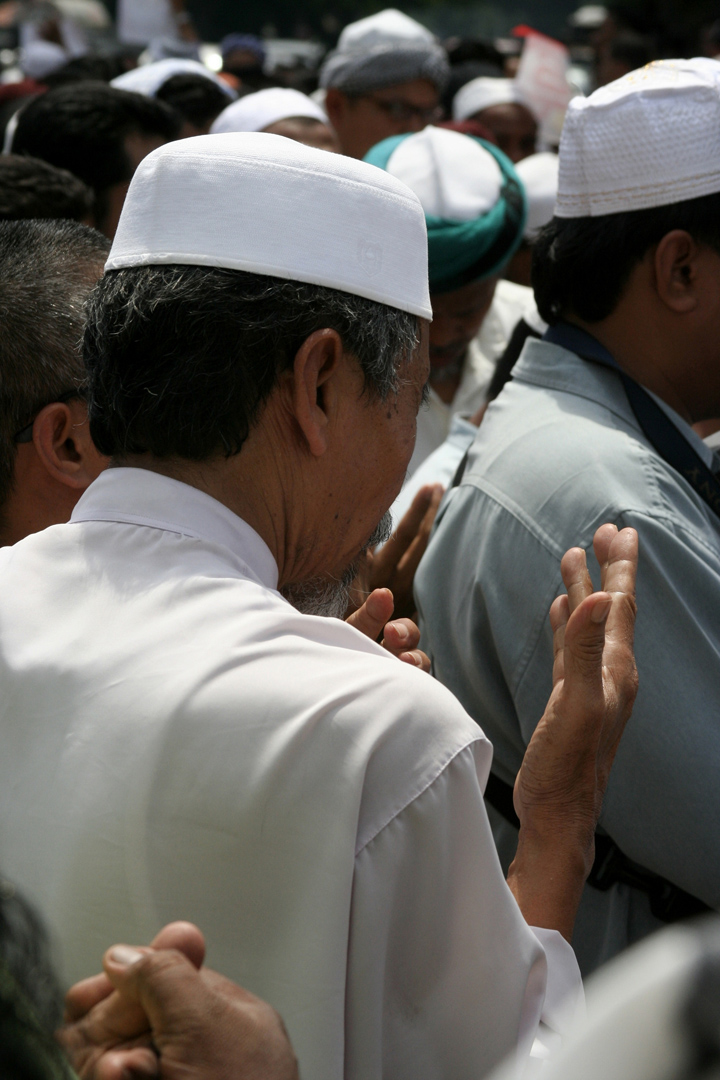
Most missionaries are aware that Islam contains two concepts which roughly translate as prayer—Dua and Salat—but that is as far as it goes for most of us. We seldom give any thought to the implications of having two words for prayer and the differences between them. More specifically, we don’t give any thought to the implications of this for many believers from Muslim backgrounds. I have come to believe there is much to be gained by simply stopping to think carefully about these words.
Both words refer to communication with God (and thus can be understood as prayer), but they are also distinctly different from each other, something we seem to lose in translation. Dua is the form of prayer that is asking for needs and expressing private concerns, what we used to call ‘supplication.’ Some Muslims approach this as freeform prayer with their own words; others will use specific recitations for different needs. The key, however, is that Dua is not regulated by set time or communal participation.
Conversely, there is the corporate practice known as Salat. Although we often think and speak of it as prayer, it might be more properly rendered “ritual worship” (Denny 1993, 641). As the subject of countless magazine photos, Salat is the quintessential Islamic practice. It is what most non-Muslims think of when they think of Muslims praying, which I find a bit ironic since the much lesser known practice of Dua is what most Evangelicals would recognize as prayer.
Now, let us prostrate a missiological question before the above description. We agree that believers from Muslim backgrounds should pray, but what exactly does that mean? Should they be doing Dua or Salat? This is a question that I fear very few missionaries are asking, and as a result we end up modeling an answer which we have not carefully thought out.
However, just so the mind does not immediately circle back around to Insider Movements, I should clarify that I am not asking if Muslim background believers should continue to perform Islamic Salat in the mosque—or anywhere else for that matter. Rather, I am questioning the way we have generally ignored meaning and importance of ritual prayer in the lives of new believers from Islamic backgrounds.
Until now, it seems that the only discussion that brings Salat and contextualization together is when it concerns a very high level of continuity with Islamic practice.
Perhaps the best example of this comes from a paper published by Dudley Woodberry in 1996 in which he explored contextualization through the means of the ‘reuse’ of Islamic pillars (Woodberry 1996). Among other things, he discussed the Jewish and Syriatic roots of ritual prayers, and went into some depth about ways Salat might be redeemed. This was an important contribution to the larger discussion of contextualization, but it unnecessarily narrows the questions we should be asking.
If we restrict ourselves to think only in terms of the above framework, then it would seem the only way to contextualize Salat is somehow in connection with an ‘Insider’ missiology. I believe this is a mistake and I would like to move our thinking along a different line of reasoning. Rather than arguing about how much Islamic practice can or cannot be continued, I would like to focus on how to help Muslim background believers fully enter into all that biblical prayer is.
What’s in a Word—or Two?
When the disciples asked Jesus, “Lord, teach us how to pray” in Luke 11, what exactly were they asking? As is often the case, our English translations obscure a bit of ambiguity that is hiding behind the scene. However, Strong’s trusty concordance comes to the rescue for those of us who are not Greek scholars. A quick reference tells us that the word in Luke 11 is proseúchomai (προσεύχομαι), a common word for prayer that is used in the New Testament about ninety times. But where it gets fascinating is when we look at Strongs’ entry with missiological eyes:
4336 προσεύχομαι (proseúchomai) from 4314 and 2172; to pray to God, i.e. supplicate, worship
So there is the problem in all its Greek glory. Our Christian vocabulary typically uses one word to describe two practices—supplication and worship—precisely the two practices which Muslims describe more accurately with two. Dua equates to the first half of the definition—supplication; and Salat speaks to the second part—worship. It is true that there are a few times in which the Greek New Testament uses specific and different words for ‘prayer’ and ‘supplication,’ such as my personal favorite, Philippians 4:6: “Be anxious for nothing, but in everything by prayer and supplication with thanksgiving let your requests be made known to God.”
But this only strengthens my point—appropriate New Testament faith contains prayers that are both supplication and worship (i.e., practices that are very similar to the Islamic concepts of Dua and Salat).
One does not have to be an advocate for Insider Movements to recognize that both kinds of prayer are represented in the Book of Acts. For example, in Acts 3:1, we are told that Peter and John “were going up to the temple at the ninth hour, the hour of prayer.” Alfred Edersheim tells us that by the first century this had become a time of public, ritual prayer (Edersheim 1995, 125).
In other words, the disciples went up to the temple to perform a ritualized form of prayer worship. Again, I am not trying to use Peter and John as proof-texts for Insider Movements or their methodology, but it is important for us to realize that the apostles were doing something that Muslims would be much more familiar with than Evangelicals.
My point is not that that Islamic Salat is the exact equivalent to Jewish prayer ritual; rather, I contend that the function of Salat (that is, ritual worship in the form of prayer) was clearly part of early Christian practice. If we accept this as true, then it opens the question of Why does it seem so alien to us and our church-planting practices?
Our Protestant Heritage
All missionaries are deeply shaped by their spiritual heritage, and often in ways in which we are unmindful. Most Western missionaries in the Muslim World (probably even the majority of Majority World missionaries) are from Evangelical backgrounds. Only a small minority of missionaries in the Muslim World are from what we used to call ‘high church’ traditions—that is, churches which place ‘high’ emphasis on sacred rituals and liturgy.
In other words, the majority of missionaries who are teaching and modeling faith for Muslim background believers are from the so-called ‘low churches,’ where we emphasize freer worship styles.
While this has many implications, I want to focus on how it influences the way we think of prayer. For people from low church traditions like myself, prayer is almost exclusively supplication or intercession—in other words, it is Dua. It is asking God for things, either for myself or for others.
Even when it is part of the corporate worship experience, prayer is typically a request offered by one person at a time, with the congregation in silent agreement. And even in Evangelical traditions like some Koreans who pray en masse, prayers are still individual requests, or we might say Dua, not Salat.
Although some contemporary church choruses are very similar to sung prayers, ritual prayer as worship and adoration of God is not part of Evangelical liturgy and experience. It has basically no role in what we do corporately on Sunday mornings. On the other hand, ritual prayer is the defining characteristic of public worship for Muslims. The gulf between Christian and Muslim practice is nowhere wider, and I can’t help but wonder what impact this has on those who newly believe in Jesus.
So am I arguing that Muslim background believers should do Salat? Unfortunately, that is where the discussion usually goes—to Insider Movements and whether or not they are valid in mission. But that is again missing the point. What I am saying is that for a new believer who is coming out of the mosque, ritual prayer is a very important part of worship as he or she has known it, and it is a form of worship he or she will miss out on simply because it is unfamiliar to us.
Over the years, Evangelicals have moved further and further away from our high church heritage. In particular, we have so emphasized prayer as supplication (Dua) that prayers of adoration and worship (Salat) have faded out of our practice for all practical purposes. That leaves us with a serous missiological problem. Since this form of public prayer has become alien to us, where can a modern Evangelical missionary turn to find the liturgical resources to address this issue?
A Wider Search for Models
As part of both a Historic and Global Church, we have a wealth of theological resources from which to draw. Some of these are undoubtedly better than others, but they are there for us to sift through if we are willing. This is why at least one book about historical theology should be on every missionary’s reading list. Such wider exposure would enable us to reach beyond our immediate traditions into the rich and varied practice of the whole Body of Christ.
I realize the kind of shift in style of prayer that I am proposing can be disconcerting to us. But it need not be if we differentiate between ‘liturgical’ and ‘experiential’ Evangelicalism. We have so long been accustomed to our particular form of worship that we often mistake it as intrinsic to the born-again, (i.e., Evangelical) experience.
But surely we recognize that in the long history of Christianity there have been many born-again believers whose practice was quite different from ours. Or more specifically, among born-again believers there have been (and still are) those for whom ritual prayer was (and is) a normal practice. This would range from the distinctly Jewish rituals which appear in the early chapters of Acts to contemporary practices of some church traditions.
The first contemporary example that comes to mind is the Book of Common Prayer, which is a permanent feature of the worship in the Anglican Church. Although it offers model prayers for many occasions such as baptism, marriage, or a funeral, this prayer book is best known for the words of its worship liturgy.
Whether for a special holiday, or just the typical church gathering, the Book of Common Prayer offers the worshiper a familiar set of prayers to be used in public worship. Here is just one example from the morning prayers called, “The Acclamation of Christ at the Dawning of the Day”:
May Christ, the true, the only light banish all darkness from our hearts and minds.
Visit us with your salvation and sustain us with your gracious Spirit.
O come, let us sing to the Lord; let us heartily rejoice in the rock of our salvation.
Let us come into his presence with thanksgiving and be glad in him with psalms.
For the Lord is a great God and a great king above all gods.
Come, let us worship and bow down and kneel before the Lord our Maker.
For he is our God; we are the people of his pasture and the sheep of his hand.
When an Anglican recites this prayer, he or she is not only saying it in unison with those around him or her, but he or she also knows that millions of others use these same words to adore their God. I imagine this would give a powerful sense of unity that is probably not all that different from what a Muslim experiences during Salat.
Another place we might look for liturgical inspiration is in a slightly more exotic place—the Egyptian Coptic Church. Their practice of corporate, ritual prayer is ancient, stretching back to at least the fourth century (according to them).
To an outsider like myself, it has certain similarities to Anglican practice, both having corporate prayers of worship and adoration. However, Coptic practice does differ in significant ways such as chanted Psalms and the use of incense during prayers. We in the Evangelical world likely feel very uncomfortable with the mental image of chanting and swinging censers full of smoke, but who knows how former Muslims would feel about it? More to the point, when have we stopped to think about how they feel participating in our ritual-less worship?
What Might Be
It is worth repeating that we must be careful that we do not narrow our thinking to simply how to reuse Islamic rituals. That is a completely different discussion. I am convinced there is much more to explore about finding appropriate ways to contextualize the function and meaning of Salat.
We must remember that the goal of contextualization is to find biblically appropriate ways for believers coming from Muslim backgrounds to express their faith in Christ so that it is both meaningful to them and intelligible to their natal community. Generally speaking, this happens when practices have some degree of familiarity. This familiarity of practice and faith expression provides a more friendly transition from the old to the new, from a worldview rooted in Islamic theology to one rooted in the Bible.
David Greenlee calls this familiarity “congruence,” and defines it as “the overall fit and the ease of transition between the old and the new, between the former faith and set of values and Christianity” (Greenlee 2006, 56).
Just to be clear, complete congruence is not possible for any genuine conversion, whether in the case of a nominal ‘Christian’ in the Bible-belt or with an Islamic cleric in South Asia. Some things (perhaps many) must change between the old way of life and the new. However, I believe a significant degree of congruence is possible, and there is no reason ritual prayer as worship cannot be part of that.
Furthermore, this area of contextualization is not dependent upon Insider Movements or their philosophies of ministry.
A good way to start might be with an honest assessment of the difference between a typical Evangelical worship service and what former Muslims experienced at the mosque. Or to be more specific, we must consider the vastly different ways we engage in corporate prayer. Perhaps a practical first step might be to simply visit a mosque service and careful document our thoughts and feelings afterward.
Then, with such vivid imagery in the heart and mind, it might be easier to imagine ways that ritual prayer could help these new Christians transition from what they now know into a beautiful expression of distinctly Christian worship. I know from personal experience that the dislocation I’ve felt at the mosque made me much more sympathetic to what former Muslims might feel as they try to enter my world.
I don’t wish to sound missiologically naïve. I am well aware that Salat has specific meaning in the Islamic religion, but we must set that aside for a moment lest we miss the point. For Muslims, Salat gives structure to worship. This means that most new believers from Muslim backgrounds are familiar with a structure of worship that is very different from the worship structure we missionaries hold dear. Therefore, when we model for them our worship patterns, we are also thoughtlessly disconnecting them from patterns that are meaningful to them.
I wonder what role this deep-level disconnect might play in the lives of those who eventually drift back to Islam. And by discarding any recognizable form of ritual prayer, we may be greatly hindering the witness of a young church to the Muslim society around them. While I recognize these are only speculations, they are serious enough to cause any thoughtful missionary to shudder.
Conclusion
Prayer is one of the most deeply personal aspects of our relationship with God, and yet one that we have not given sufficient thought to with regards to contextualization in the Muslim world.
Unlike Evangelical Christians, Orthodox Muslims have two distinctly different dimensions to prayer, represented by the words Salat and Dua. Because of our own traditions, the vast majority of Evangelical missionaries have unthinkingly ignored the first, and focused on teaching converts Christian forms of prayer that are roughly equivalent to what they previously knew as Dua.
And what has come to trouble me is that we have done this despite knowing the huge role that Salat plays in the life of observant Muslims. I find it unfortunate that we have made so little effort to appropriately contextualize Salat for those who are coming to Christ out of Muslim backgrounds.
Until now, it seems to me that the missions community has been quite binary: either former Muslims must conform to our patterns of prayer, or we leave it to those who try to redeem Islamic forms along the thinking of Insider Movements.
Yet I have come to believe that there is a great need to contextualize the function and meaning of Salat since our Evangelical traditions have such a glaring hole in this area of our practical theology. This may require us to do some uncomfortable things, like looking at other church traditions for inspiration. But we must always remember that good missions praxis is seldom about what is comfortable and familiar to us.
References
Denny, Fredrick M. 1993. “Islam and the Muslim Community.” In Religious Traditions of the World. Ed. H. Byron Earhart, 603-718. San Francisco: HarperCollins.
Edersheim, Alfred. 1995. The Temple: Its Ministry and Services. Updated edition. Peabody, Mass.: Hendrickson Publishers.
Greenlee, David. 2006. One Cross, On Way, Many Journeys: Thinking Again About Conversion. Atlanta: Authentic Press.
Woodberry, Dudley. 1996. “Contextualization Among Muslims Reusing Common Pillars.” International Journal of Frontier Missiology 13(4): 171-186.
. . . .
Gene Daniels (pseudonym) is a missionary, researcher, and writer. He and his family served in Central Asia for twelve years. He is now the director of Fruitful Practice Research, studying how God is working in the Muslim world.
EMQ, Vol. 53, No. 2. Copyright © 2017 Billy Graham Center for Evangelism. All rights reserved. Not to be reproduced or copied in any form without written permission from EMQ editors.
|
Questions for Reflection 1. How hard would it be for you personally to shift from typical Evangelical ‘singing as worship’ to only using liturgical prayer as your worship?
2. Have you ever practiced ritual prayer as part of your worship? 3. Is it possible that this issue contributes to Muslim rejection of his or her feelings regarding prayer and worship forms? |