EMQ » Oct – Dec 2024 » Volume 60 Issue 4
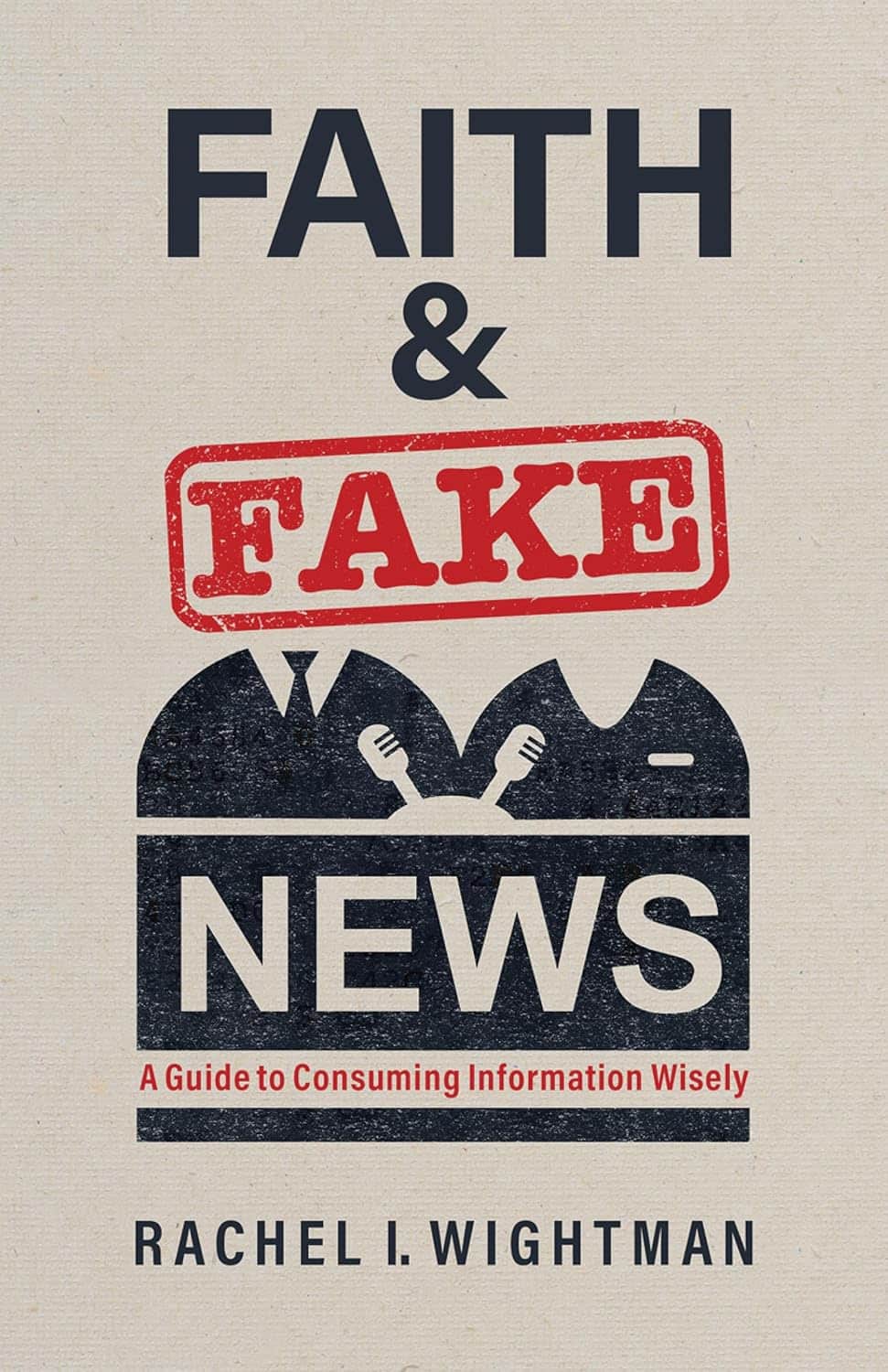
Faith and Fake News: A Guide to Consuming Information Wisely
By Rachel I. Wightman
Eerdmans, 2023
192 pages
US$19.99
*As an Amazon Associate Missio Nexus earns from qualifying purchases.
Review by Michael Hakmin Lee, PhD, associate professor of ministry and leadership and program director of the MA in ministry and leadership, the MA in evangelism and leadership, and the MA in missional church movements at Wheaton College, Illinois.
Rachel Wightman serves as the associate director for instruction and outreach at Concordia University, St. Paul, with experience and training in library and information sciences. This book – which is based on a similarly titled course that she has developed, taught, and honed over the years – seeks to help the reader become a “wise consumer of information.” The structure of the book follows her three-step approach. First, understand the information landscape (chapters 1–3). Second, evaluate the information (chapters 4–5). And third, choose and discern how to engage with the information in a more wise, discerning, and Christian way (chapters 6–7).
Chapter 1 introduces the concept of the filter bubble and how algorithms have increasingly controlled the digital content that we consume. Chapter 2 surveys the exploding information landscape and the different types of platforms (e.g., websites, apps, social media, browsers, search engines) and the kinds of information that make up this landscape. In chapter 3, Wightman reminds readers of the Christian obligation to truth in an age of the proliferation of misinformation and “fake news.”
Warning that content creators often exploit human nature and the correlation between outrage and engagement, chapter 4 explores the importance of being attentive to our emotions before responding and acting on information. In the longest chapter of the book, chapter 5 offers various tools for evaluating information like fact-checking, following and evaluating the quality of the sources, reading in context, and taking account of biases and motivations.
Chapter 6 reminds the reader of the foundational Christian virtue of humility and how the reality of our limitations and biases ought to lead us to seek out different perspectives, including varying our news sources. The final chapter also reminds us that the divine mandate to love our neighbor includes our online neighbors and that as such, our interactions should be marked by both grace and truth.
The writing is highly accessible and practical. Each chapter helpfully includes reflection questions and exercises to guide readers toward cultivating practices. The bulk of the book seems to mirror the IF I APPLY framework for evaluating information developed by the librarians at Pennsylvania State University (122–123) but applied to those with Christian commitments.
I found the theoretical foundations of the material, including biblical and theological reflections, to be relatively light, and the practical framework to be clear enough for anyone familiar with sound and widely accepted academic research principles. For me, this means that this is not the sort of book that I will benefit from by just reading it and reflecting on it; I must take the time to work through and practice the list of suggested activities.
Given its readability, the book could be used in a variety of settings, from a high school small group to a resource for a college course. This is a book that I would certainly have my digital native children read and one that I would recommend as a resource for churches to use for discipleship and small group material.
For Further Reading
Untrustworthy: The Knowledge Crisis Breaking Our Brains, Polluting Our Politics and Corrupting Christian Community by Bonnie Kristian (Brazos, 2022)
Christians in the Age of Outrage: How to Bring Our Best When the World Is at Its Worst by Ed Stetzer (Tyndale, 2018)
EMQ, Volume 60, Issue 4. Copyright © 2024 by Missio Nexus. All rights reserved. Not to be reproduced or copied in any form without written permission from Missio Nexus. Email: EMQ@MissioNexus.org.