EMQ » Oct – Dec 2024 » Volume 60 Issue 4
Finding Belonging
Summary: Evangelism, discipleship, and church planting among persons with disabilities worldwide is hampered by challenges. Our research and experiences in South Africa and the MENA region offer insights and solutions to overcome these barriers and reach this community searching for a place of belonging.
By Erna Möller and Muna Abu Ghazaleh
Many people with disabilities experience immense isolation including from the church. Yet, the Gospels show that Jesus included them in his kingdom. This forgotten community needs a church that welcomes them into fellowship and service.
We believe that missionaries have a unique place in this work in collaboration with people with disabilities and local church leaders. Our research and experiences in South Africa and the Middle East and North Africa (MENA) region offer insights into the disability context and ideas adaptable for global response.
Barriers to Inclusion
I (Erna) served as a missionary social worker alongside people affected by leprosy in Southern Africa for more than 30 years. This prepared me to research the barriers that exclude people with disabilities from the church. These include barriers in the physical environment, practices, biblical interpretations, attitudes, and understanding.
Church Facilities
Access to church facilities was the first barrier we studied starting with transportation. This challenge was most acute in less developed communities. One study participant said, “We wish transport could be arranged at least once a month, so that we can attend services.”
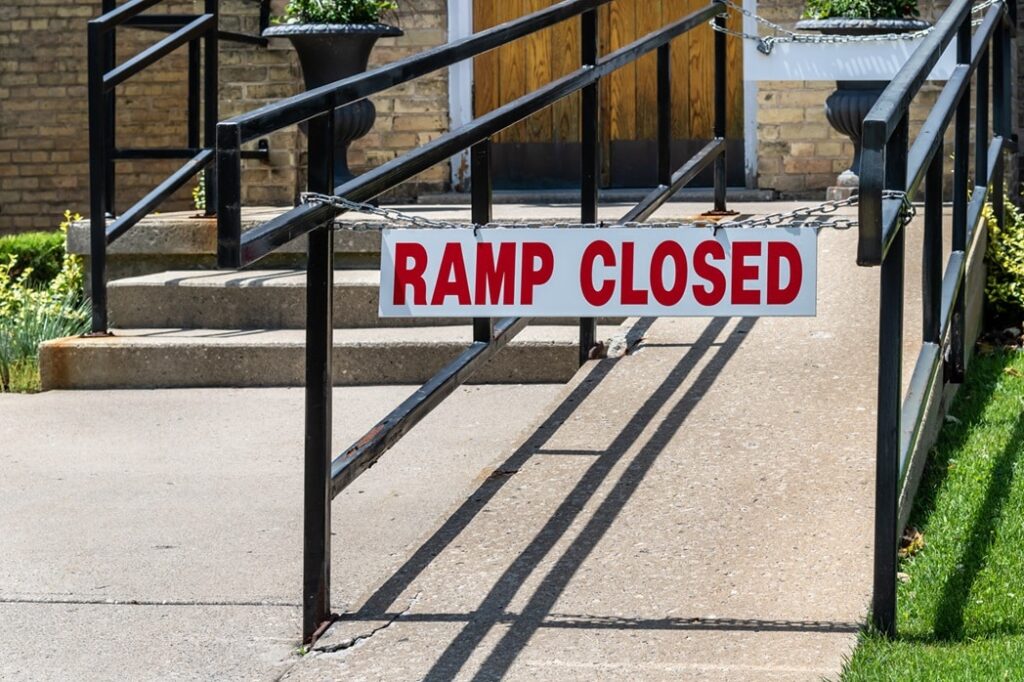
For those that made it to a church building, participants noted that entrances to church buildings seldom had ramps and were often too narrow for wheelchairs. A young woman said, “Whenever I find stairs and narrow entrances, they are telling me, the people don’t want me here [in my wheelchair]. They have not thought about me.”
Inaccessible toilets are a source of inconvenience for wheelchair users and people with mobility impairment. An elderly person stated: “I have to use a catheter when I go to church; I can’t get into the toilets.”
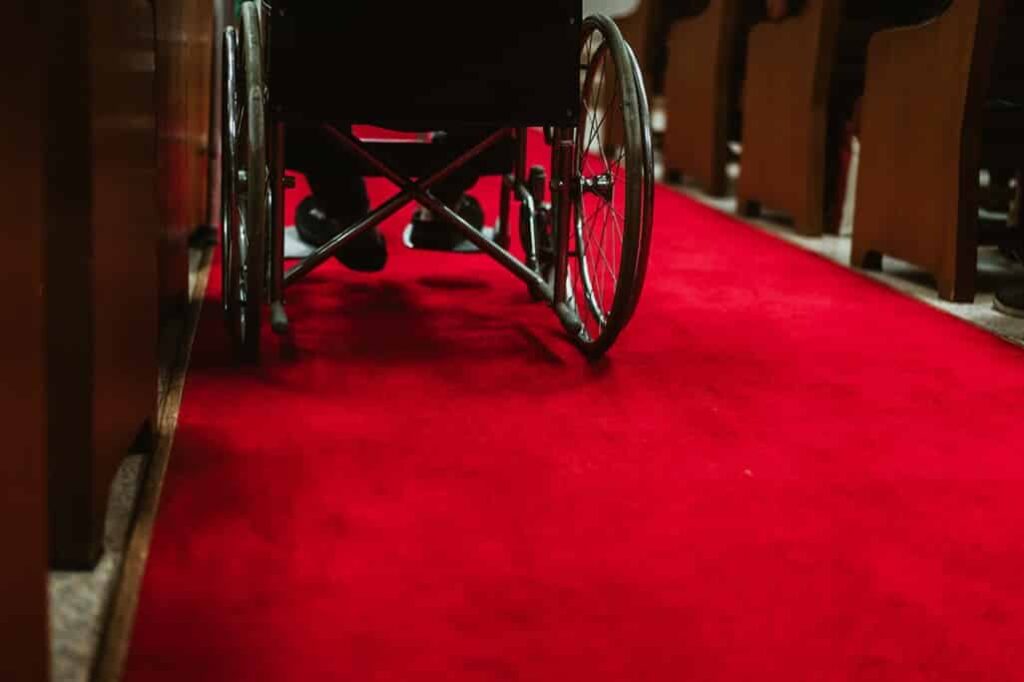
Seating arrangements in the worship service are often not conducive to participation. Wheelchair users may have no choice than to sit in the aisle where they are conspicuous and regarded as different. When other worshippers stand in front of them while singing, wheelchair users cannot see the words of songs projected in the front. Other challenges are sloping auditorium floors and insufficient space to turn wheelchairs.
People with hearing loss who are dependent on lip-reading find lighting inadequate and are unable to lip-read when preachers move around. People who use hearing aids find it hard to participate in singing, “In some churches the music is too loud, I can’t cope with it.”
Issues with accessibility are further inflamed by a general lack of awareness and low sense of urgency to address them. People with disabilities feel that decision makers in churches do not prioritise accessibility. “They are slow on the uptake; they may make plans, but by Friday they have forgotten all about it.”
When structural changes are made, persons with disabilities reported that they often feel left out of the process which can result in the wrong alterations being done. Some church leaders argue that they do not have people with disabilities amongst their members and therefore they do not see the need to make structural changes. However, the lack of accessibility keeps people with disabilities away. “What should we do when visiting there, finding that we can’t get in?” was the comment of a wheelchair user who is a keen churchgoer.
Perceptions
Church members’ perceptions of disability affect the extent to which people with disabilities feel included or not. People with disabilities report being frequently viewed as abnormal, with the implication that they should be healed. They shared that they have become “victims of prayer practices,” which they do not ask for, by church members that feel compelled to pray for their healing.
“They always want to fix you; it seems my disability is not acceptable,” one study participant said. “I like to visit different churches, but when prayer time comes, everybody is focussed on me, assuming that I want to be prayed for healing of my disability, which may not be the case,” explained another.
Still another reported, “They prayed for me, without asking my permission, took off the footrests of my wheelchair and started pushing and shouting at me, ‘WALK!’”
The confusion about prayer for healing of disability has its roots in interpretations of biblical texts about sin, divine judgement, faith, and miraculous healing. These interpretations can cause harm to people with disabilities.[i]
As one woman with a disability said, “Out of respect I say yes … when they ask to pray for me, … but nothing happens, and you begin to hate yourself.” Another explained, “They [church leaders] say people are disabled because of their sins, or their parents’ sins or God is punishing them for doing bad things.”
A mother of a disabled child brought her offering, and was told: “Why is the child disabled? Your offering will not be accepted until you confess.” When a couple had a baby with a disability, they and their friends wondered, “Who was guilty? Who was at fault?”
Excluding Practices
Various practices in faith communities hamper the inclusion of people with disabilities.[ii] For example, many people with disabilities feel not respected as persons. One woman said, “We are identified by our physical appearance. ‘Oh Sarah, the disabled lady,’ is the way people refer to me.”
Labels can hurt.[iii] People with disabilities do not like to be referred to as “the crippled,” “the handicapped,” since these terms define them by their disability and not their unique personhood. In some African languages, derogatory terms are used, which leave people with disabilities feeling worthless and unaccepted. Such practices also prevail in churches.
Others report being seen as incompetent and unable to do anything for themselves by non-disabled people. A woman who became disabled after a professional career said, “I am treated as an imbecile, as if I can’t think for myself.” Another person talked about experiencing, “…people overreact and want to do too much for you.”
A pastor involved in our interviews admitted to being too busy to have time to really listen to the experiences of people with disabilities. This leaves people with disabilities feeling alone. One person shared, “In my church, the leaders just don’t understand disability, they treat you as if you are fragile.”
It’s not only leaders, but also non-disabled members of churches that lack understanding and can be unwilling accommodate the needs of a person with disability. Their lack of awareness can be unconscious fear of their own vulnerabilities.
A woman with a hearing impairment shared her struggle to feel included in her Bible study group. She said the leader still does not speak loudly or clearly, even though she has been in the group for a long time.
Some non-disabled people seem to respond in terms of their own anxiety, and unconsciously assume that a disabled person needs help, is dependent, has poor self-esteem, or feels unattractive and or full of shame. This influences the interaction between a disabled and non-disabled person in a negative way.
A woman who is dependent on others in some ways, but confident in making her own decisions, said, “I don’t want people to think for me.” Another reported, “They pity me. They think my mind is also disabled.”
Becoming a Place of Belonging
Including people with disabilities begins with listening to their places of pain and exclusion. Mission and church leaders as well as members of churches would be wise to take note of these experiences of people with disabilities. In doing so faith communities can begin to transform into places of welcome and belonging for those that often feel excluded.
Embracing Interdependence
I (Muna) was born with arthrogryposis, a condition that affects my ligaments, joints and muscles. I was expected to have a limited life. The doctor said I was “a hopeless case.” But God proclaimed life over me. Through a combination of miracles, divine interventions, medical treatment, and family and church support, I have greatly surpassed expectations.[iv]
Yet my journey contains other unforeseen challenges. Despite the church’s efforts to be inclusive, isolation and distance seemed like my constant companions. My differences from others could feel acute, and I often sensed that I didn’t belong anywhere. My disability left me feeling like people couldn’t see me for who I really am.
At times people have expressed that they consider me an inspiration just for living with physical disabilities. I know they mean to be supportive. However, it can feel more like pressure – pressure to prove myself or to show that I can do things on my own and be independent. The resulting anxiety has overwhelmed me at times. I have worried about letting people down.
My attention deficit hyperactivity disorder (ADHD) and dealing with epilepsy for some years made it hard to focus and function normally, and I felt judged for fidgeting. I also experienced a series of traumas followed by depression. I hid it for a year. A voice in my head kept saying, “You don’t belong here. You’re different.” It was exhausting and felt like a heavy weight I could not shake off for years.
People understood my physical limitations, but they couldn’t see or accept the invisible struggles of my mind. When I finally gathered the courage to share my struggles with depression, people told me, “Just pray more,” and “True faith doesn’t allow depression.” These responses cut deep, and it hurt me even more.
Eventually, the pain became unbearable. In desperate moments, self-harm seemed the only way to feel something. The physical pain temporarily drowned out the emotional numbness. When I felt like I was losing myself, my psychiatrist sent me to the hospital.
I had to step back from life, ministry, and church for a while. But I found people who believed in me, and it felt okay to talk with them and acknowledge this as a real struggle. But even now, I feel pain deep inside when I think about this period of depression. I wish that the spiritual leaders at my church at that time could have related to my struggles before my mental breakdown.
God’s power and faithfulness kept me safe so that I could embark on a healing journey. I struggled for years with shifting back and forth in my mind between dependency and a yearning for complete independence. However, through this painful time, I came to recognize the importance of interdependence and its part in healthy relationships with others and with God.
I embraced my vulnerability and weakness as part of the human condition, not anomalies to be cured or hidden, as highlighted by the theologian Mary Fast.[v] This helped me understand that mutual support and reliance on one another are integral to experiencing God’s design for community and personal growth.
At the same time, I do believe in God’s miraculous healing power, whether physical or emotional, as I experienced several miracles that medicine could not explain. This profoundly shaped my understanding of disability theology and the power of hope and resilience in Christ. Today, I find myself advocating for change within the church and urging a move toward justice and compassion for those struggling in silence as Jesus did.
Ministry in the Middle East and North Africa Region
The Middle East and North Africa (MENA) region is marked by profound conflict, displacement, and trauma. As someone deeply engaged in this context, professionally and personally, I have come to understand the critical need for integrating disability-focused lay counselling into mission work. My personal journey and theological research underscore the necessity of adopting Bible-based, trauma-informed, disability-inclusive approaches to ministry in our region.
The challenges faced in MENA are multifaceted. Political instability and economic hardships disproportionately affect persons with disabilities. According to Amos Yong in Theology and Down Syndrome: Reimagining Disability in Late Modernity, disability intersects with cultural attitudes, religious beliefs, and systemic barriers, creating a complex reality that demands responses that are culturally sensitive and theologically grounded.[vi] In many parts of MENA, disability is often misconstrued as a form of divine punishment, highlighting the urgent need for compassionate and trauma-informed disability ministry.
Creating an accessible community where everyone feels genuinely accepted and valued is crucial. This vision stems from understanding disability through God’s perspective, grounded in a theology of diversity and inclusion. We are all created in the image of God – the imago Dei – and bear God’s image regardless of our abilities or limitations.
For missionaries and church leaders in MENA, developing a theology of disability rooted in the imago Dei and body of Christ principles is crucial. This involves recognising the inherent dignity of every person with disabilities as bearers of God’s image, with unique gifts and contributions.
Cultivating cultural competence and understanding local attitudes towards disability is essential, as is learning to address trauma with sensitivity. The goal must be to create environments where everyone feels welcome and valued, harnessing the best aspects of communal culture while challenging harmful norms.
In practical terms, this involves ensuring accessibility in physical spaces and communication methods, developing inclusive liturgies and worship practices, and providing ongoing training for church leaders and congregations. It entails creating opportunities for persons with disabilities to belong to the church where they serve and lead, and advocating for the rights and dignity of persons with disabilities in the broader community.
We must also confront the harsh realities faced by persons with disabilities in our region, including high rates of abuse, unemployment, and societal stigma. The church is called to lead in addressing these injustices and in creating safe, welcoming spaces for all.
Our objective is not to fix persons with disabilities but to recognize their inherent value and potential. By embracing the strengths of our communal culture while challenging harmful norms, we can create spaces where all persons with disabilities truly belong.
As we move forward in mission work and church leadership in the MENA region, it’s essential that we cultivate this inclusive theology. We must recognize the inherent dignity and value of every person with a disability, not as objects of pity, inspiration, or charity, but as bearers of God’s image with unique gifts to offer. Our goal should be to create spaces of true belonging for all of God’s children, where diversity is celebrated, and every individual can fully participate in the life and mission of the church.
MENA Trauma Healing Resource Center
In my role with Danny Alkhoury and the MENA Trauma Healing Resource Center (THRC) team, we are equipping church leaders as lay counsellors to facilitate trauma healing groups for persons with disabilities, their caregivers, and others affected by trauma.[vii] Our approach is rooted in a biblical understanding of the imago Dei in every person, regardless of ability status.
Our mission at the THRC is to glorify God by addressing mental health challenges, offering holistic caring solutions, and building resilience while fostering human transformation rooted in His love, irrespective of race, gender, religion, or ethnicity. We emphasise that every person is created for fellowship with God and others.
In training lay counsellors, we focus on building genuine relationships and welcoming all individuals into our communities. This effort is about recognising the unique contributions people with disabilities bring to the church and shifting from ministry to people with disabilities to ministry with people with disabilities as equal partners in God’s mission.
Our model, “belonging beyond inclusion,” integrates people with disabilities and non-disabled individuals into trauma-healing groups focusing on shared experiences of suffering and resilience.[viii] This approach embodies a theology of hospitality and the body of Christ, which views every member as having a vital role, regardless of their abilities.
THRC trains lay counsellors to create a safe place for all. We also train them how to identify culture-bound expressions of trauma and mental health issues, ensuring that our interventions are both effective and culturally relevant. Techniques are adapted to respect local cultural norms while challenging harmful stigmas against persons with disabilities. A core element of our approach is the concept of “God’s Open Table” – a metaphor for inclusive ministry that welcomes all people, regardless of their abilities.[ix] We advocate for ministry with persons with disabilities, not just for them, emphasizing their active participation and contribution to the faith community.
This training will also include disability etiquette and inclusion strategies for missionaries and church members. It fosters environments where people with disabilities can build meaningful relationships and experience Christian fellowship. Peer support models are particularly effective, allowing wounded people to become healers and leaders within their communities.
We address identity shifts that occur with acquired disabilities and use adapted Narrative Exposure Therapy (NET) and storytelling techniques to help individuals find new purpose in Christ. This approach has led to reduced post-traumatic stress disorder (PTSD) symptoms, increased social integration, and a renewed sense of purpose for many people with disabilities, some of whom have become lay counselors themselves.
Participating in God’s Healing Work
Training missionaries as lay counsellors is crucial for effective mission work especially in the MENA region. This merges theological depth with practical application. N.T. Wright’s exploration of the Body of Christ highlights the church’s role in embodying inclusive and compassionate care, aligning with the principles of disability theology that emphasize the worth and dignity of every individual.[x]
This theological framework is supported by empirical research showing that lay counselors, equipped with a blend of theological understanding and practical skills, can address trauma and disability more effectively in diverse cultural contexts. Studies on resilience and mental health in cross-cultural missions, including those by Karen F. Carr and Frauke C. Schaefer, reveal that such training enhances missionaries’ abilities to provide culturally sensitive and therapeutically sound support, thus fulfilling the church’s mandate to serve all people with empathy and efficacy.[xi]
This is also informed by recent research on disability, mental health, and disablement, recognizing the complex interplay of social and environmental factors in disability experiences.[xii] We aim to address the cyclical relationship between trauma, mental health, and disability in our interventions.
For missionaries and Christian leaders serving in MENA, becoming equipped as trauma-focused lay counsellors for people with disabilities and abled-bodied people is a gospel imperative. It creates spaces where all people, regardless of ability, can experience restoration and contribute their unique gifts to the body of Christ. This demonstrates a compelling vision of God’s kingdom – diverse, inclusive, and overflowing with transformative love.[xiii]
Erna Möller (erna@tlm.co.za) was a social worker with the Leprosy Mission in Southern Africa for 34 years, addressing the challenges of people affected by leprosy in their local context. Since 2011, she has been the project manager of the RampUp project in South Africa, promoting the inclusion and participation of persons with disabilities in faith communities. She completed an MA degree on this topic with the results being implemented in the RampUp project.

Muna AbuGhazaleh* (muna_sag@hotmail.com) is the deputy executive director at MENA Trauma Healing Resource Centre. She holds an MA in art of theology (humanitarian development path) focused on disability inclusion in the Middle East and North Africa (MENA) region from Nazarene Theological College (NTC), affiliated with the University of Manchester, United Kingdom. Muna has led nonprofits in the Middle East and North Africa specialising in organizational governance, disability, and trauma care. * Photo is representative
[i] Linda L. Treolar, “Spiritual Beliefs, Response to Disability, and the Church – Part 2,” Journal of Religion, Disability and Health 4, no. 1 (2000): 5–31.
[ii] Erik Carter, Including People with Disabilities in Faith Communities (Baltimore: Paul H. Brookes Publishing, 2007).
[iii] Brian Watermeyer, Leslie Swartz, Theresa Lorenzo, Marguerite Schneider, and Mark Priestly, Disability and Social Change, a South African Agenda, (Cape Town: Human Science Research Council Press, 2006).
[iv] Eurasia Region, “The Child Who Shouldn’t Have Walked,” Church of the Nazarene, Eurasia, May 16, 2017, https://www.eurasiaregion.org/the-child-who-shouldnt-have-walked/.
[v] Mary Fast, Theology of Disability (Cambridge: Cambridge University Press, 2012).
[vi]Amos Yong, Theology and Down Syndrome: Reimagining Disability in Late Modernity: Studies in Religion, Theology, and Disability (Waco, TX: Baylor University Press, 2007).
[vii] MENA Trauma Healing Resource Center, https://menathrc.org.
[viii] John Swinton, “From Inclusion to Belonging: A Practical Theology of Community, Disability and Humanness,” Journal of Religion, Disability and Health 16, no. 2 (2012): 172–190, https://www.tandfonline.com/doi/abs/10.1080/15228967.2012.676243.
[ix] This was a concept developed by John Wesley discussed in this blog post by John Stephens, https://embodygrace.org/2015/02/09/the-open-table/.
[x] N. T. Wright, Paul and the Faithfulness of God (Minneapolis: Fortress Press, 2013).
[xi] Karen F. Carr and Frauke C. Schaefer, Resilience in Cross-Cultural Missions (Oxford: Oxford University Press, 2020).
[xii] Muna Suhail Abughazaleh, “Refining the Inclusion of Persons with Disabilities in the Jordanian Local Communities of Church of Nazarene: How the Church of Nazarene in Jordan Is Engaging and Could Be Engaged with Persons with Disabilities?” (MA diss., University of Manchester, 2020).
[xiii] Arukah Network Podcast, “How to Make People Feel Welcome: A Story of Disability and Inclusion in the Jordanian Church,” Tearfund, 2022, https://learn.tearfund.org/en/resources/podcasts/arukah-network-podcast/how-to-make-people-feel-welcome.
EMQ, Volume 60, Issue 4. Copyright © 2024 by Missio Nexus. All rights reserved. Not to be reproduced or copied in any form without written permission from Missio Nexus. Email: EMQ@MissioNexus.org.