EMQ » Jul – Oct 2024 » Volume 60 Issue 3
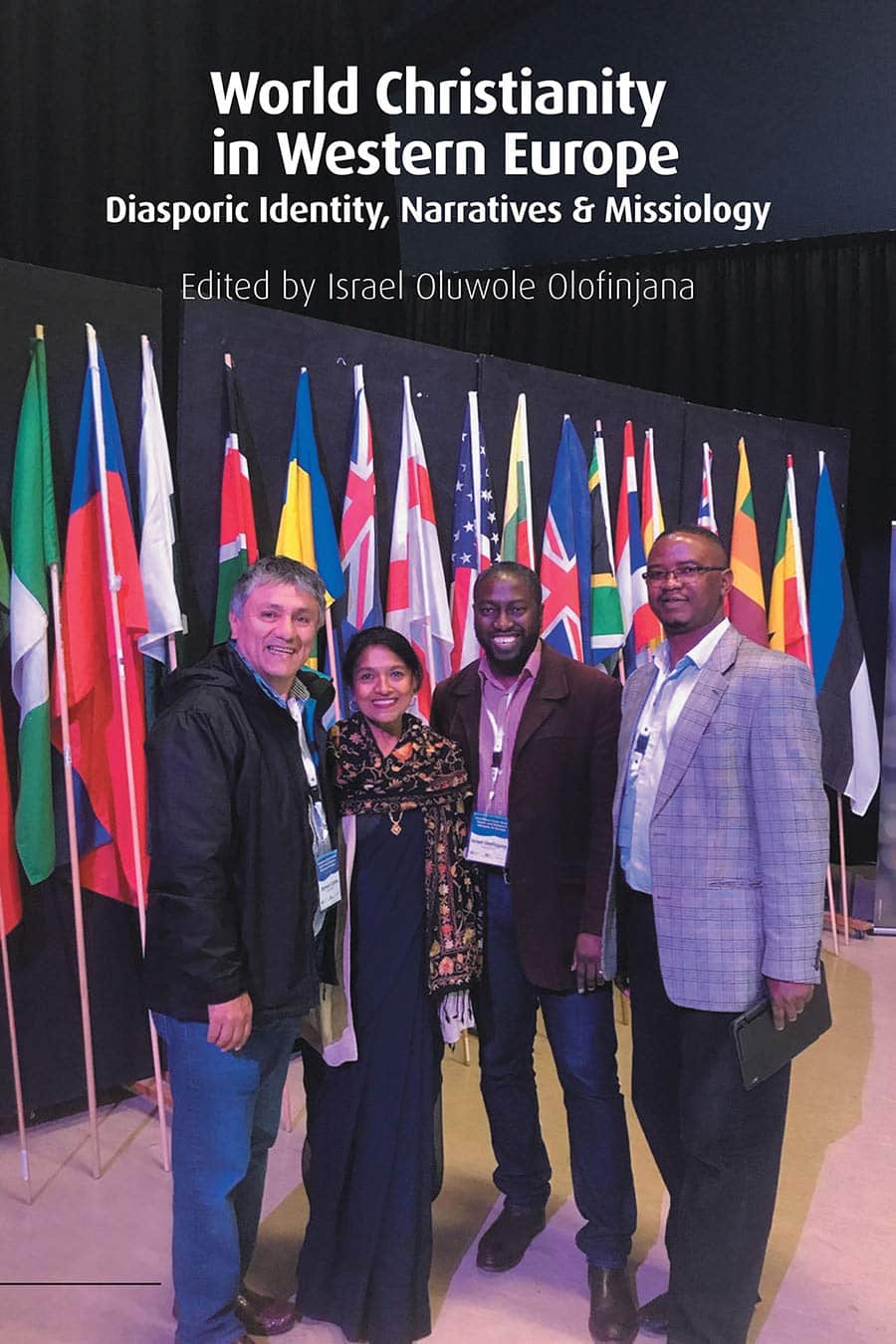
World Christianity in Western Europe: Diasporic Identity, Narratives and Missiology
Edited by Israel Oluwole Olofinjana
Studies in Mission series
Fortress Press, 2020
US$24.99
*As an Amazon Associate Missio Nexus earns from qualifying purchases.
Reviewed by Hayford John Addokwei, PhD ICS Candidate, Fuller Theological Seminary, and founder and pastor of Hayford Addokwei Ministries International (HAMINS Int.), Germany, and a reverse missionary to Germany since 1989.
This excellent volume adopts a multidisciplinary approach to multicultural, diverse, missional, and missiologically relevant contemporary themes. Various contributors with both academic backgrounds and diaspora and refugee ministry experience in the Euro-Western context contribute chapters to this book.
While affirming Christianity’s global status, Israel Oluwole Olofinjana zooms in on Christianity’s development on the Euro-Western continent, looking at how the Holy Spirit orchestrates the work of diasporan non-western Christians in Europe.
The book contains three sections. After the introductory perspectives, chapters 2–5 addresses the multicultural missionary identities that migrants take on in foreign lands, identities such as “transcultural mediators” (32) and “intercultural bridges” (32). Looking at the impact that migrant missionaries have on their new cultures in Europe, the study notes the personal struggles they encounter.
The second section contains stories of the migrant Christians in chapters 6–9. It describes the spiritual and cultural connections they cultivate with people sharing their same cultural origins and the numerical growth they see in their European churches, a growth that has attracted “academic attention” (133) in countries such as Sweden.
These personal narratives contribute to raising awareness about God’s ongoing missionary activities in the world through human migration. Chapters 1–12 of the last section provide theological and missiological insight into the global diaspora phenomena. Finally, acknowledging the shift in international missional activities to “from everywhere to everyone,” Olofinjana calls for these diaspora Christians to be aware of their new identity (166–167).
The missionary shift to “from everywhere to everyone” (166) has impacted the entire Christian missionary enterprise, in general, and the diaspora missionary conversation, in particular. It places the responsibility for missionary work, which had previously been the responsibility of mission organizations, on the individual Christian. Any person in any place at any time defines the contemporary mission field and the missionary.
This book is relevant and timely. Being a reverse missionary to Germany since 1989 and pastoring a predominantly German Pentecostal and Charismatic church I planted in 1997, I resonate with the content of this book. However, the missing conclusive note on the study’s overarching outcome about the nature of World Christianity in Europe leaves the reader with the question, What next?
This volume is a good resource for all Christians, clergy and laypersons, for exploring the breadth of God’s activities in the contemporary world. To interdisciplinary scholars from all traditions and all proponents of World Christianity who engage in global missional discourses, this study provides diverse perspectives on the ongoing missiological conversation. This must-have book is especially a good resource for those who wish to explore their Christian identities as immigrants.
For Further Reading
Beyond Christendom: Globalization, African Migration, and the Transformation of the West by Jehu Hanciles (Orbis Books, 2008)
The Cross-Cultural Process in Christian History: Studies in the Transmission and Appropriation of Faith by Andrew F. Walls (Orbis Books, 2002)
EMQ, Volume 60, Issue 3. Copyright © 2024 by Missio Nexus. All rights reserved. Not to be reproduced or copied in any form without written permission from Missio Nexus. Email: EMQ@MissioNexus.org.