
EMQ » July – Oct 2024 » Volume 60 Issue 3
[mepr-show rules=”100329″ unauth=”message”] This content is shown only to authorized members. It is hidden from everyone else.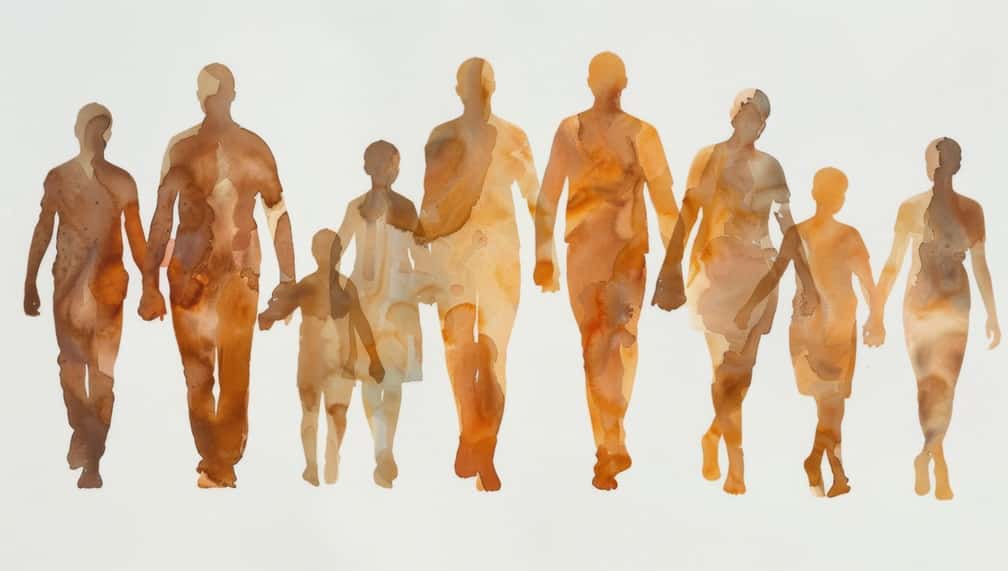
Illustration by SKIMP Art, Adobe Stock.
Unity
Summary: Many North Americans are terrified to talk about diversity and mutuality. But we must be willing to talk about this, sit in our discomfort, and put hindering beliefs to death in order to become more of the one body of Christ that we are.
By Carlos Negrón
In Matthew 19:14 Jesus said, “Let the little children come to me, and do not hinder them, for the kingdom of heaven belongs to such as these.” This verse reminds me that children have a way of clearly articulating issues adults can make overly complicated.
So I asked COPILOT, Microsoft’s AI Engine, to generate quotes children might come up with in response to the question “What are diversity and mutuality?” Here’s what it generated (names and ages are fictitious):
- Sofia, Age 6: “Diversity is like a crayon box. Imagine if all the crayons were the same color – boooriiiing! But when you have red, blue, and glittery unicorn, that’s when the magic happens.”
- Oscar, Age 8: “Mutuality? Well, it’s like sharing your cookies. You give me half, and I give you half. And suddenly, we both have a full tummy and a new best friend!”
- Ashlyn, Age 7: “Diversity is when you play with different-shaped blocks. Some are squares, some are triangles, and some are wiggly like worms. But together, they build the coolest castles!”
- Aiden, Age 9: “Mutuality? It’s like a seesaw. You go up, and I go down. We take turns, and everyone gets a chance to fly!”[i]
Many North Americans are terrified to talk about diversity and mutuality.[ii] Walking barefoot over Lego pieces for the rest of your life can feel better than just a 10-minute discussion on these hot topics! Sadly, in the Church, it’s the same. Many fear that discussions about diversity and mutuality could lead to disagreements or divisions. We encounter these issues on the missions field, too. And as we follow Jesus’s command to spread the gospel to all nations, we often enter even more complex landscapes.
People from various cultures, languages, and backgrounds approach everyday challenges differently. When these distinct perspectives collide, it creates conflicts but also opportunities for growth. This is difficult to avoid in the Church, and impossible to ignore on the mission field. We must be willing to talk about this, sit in our discomfort, put hindering beliefs to death, and seize these chances to become more of the one body of Christ that we are.
Seeing Diversity in My Own Background
I come from a family that is a beautiful canvas of colors, traditions, languages, and cultures. If you saw a picture of my children and their cousins, you would behold an image of diversity masterfully created by God. Different skin colors in a single family is not unusual or uncommon on our island – Puerto Rico. My wife’s mother was a woman with gorgeous bronze skin. She was a descendant of enslaved people from sub-Saharan Africa and German immigrants who came to the island of Cuba. Her father was of Jewish descent, and his grandfather fled the rise of Hitler in Europe.
My mother is a descendant of Spanish conquistadores, and my father is the product of French settlers and Taínos, the native people of Puerto Rico. I have dark hair and dark eyes, but my brother is blonde with blue eyes. No one would ever know that we have the same father and mother! All these different languages, backgrounds, and cultures (European, Native – Taíno, African, etc.) emerged as one in the Puerto Rican people. And throughout the Caribbean, family heritage like this is common.
When my family and I lived in Southeast Asia, local people would sometimes ask if what I did reflected my “budaya” (my culture). For example, a young woman that my wife, Marisol, was mentoring, saw me washing dishes one day. She asked, “Is it part of Puerto Rican culture for the men to wash dishes?”
Marisol smiled and said, “Actually, it’s not. In Puerto Rican culture (traditionally – things have changed some), the men are out of the kitchen, and the women are the ones doing the dishes. What Carlos is doing is part of the kingdom of Christ’s culture. He saw that I needed help, so he stepped up and helped.”
This moment marked that young woman’s life. In her culture, men don’t step into the kitchen at all. Marisol’s comment helped the young woman see how being a citizen of the kingdom of Christ took precedence over being a citizen of her country/culture. Marisol’s spiritual insight allowed this moment to be about how we are citizens of Christ’s kingdom for eternity and not only citizens of our Puerto Rican culture (which is temporal). This helped the young woman understand a fundamental Christian truth.
Now, don’t get me wrong – I love the fact that God planned for me to be born on the island of Puerto Rico. Every time I hear “La Borinqueña,” our national anthem, my eyes water. I am proud to be Puerto Rican. But, with all the pride that my heart feels at the mention of Puerto Rico, it doesn’t hold a candle to the way my beloved Jesus fills my heart.
Yet, I must ask myself, “Which citizenship do I feed and really give most importance to in my life?”To have a life reflecting God’s kingdom and his values, principles, and standards, we must learn where our identity and citizenship is truly found – Jesus Christ and his kingdom (Galatians 2:20, Ephesians 2:19).
What Does Scripture Say?
If we want to move toward greater diversity and develop cultures of mutuality where differences bring people together, then understanding that our citizenship is not of this world must be the priority. As citizens of God’s kingdom, we live under his rules, authority, and laws. And according to Scripture, this means we must live in diversity and mutuality(1 Corinthians 12:12–27 and Galatians 6:2). However, this looks different from the world’s definitions of these terms.
God the Master Artist and Creator put variety into all his creation (Genesis 1:11–12, 21, 25): plants, animals, and human beings. Since our first ancestors, all people (men and women, and all races and ethnicities) were created in God’s image (Genesis 1:27). Yet it is not until we find our identity in Christ that we can become truly united (Galatians 3:28). Scripture shows us an integrated Church that was a multi-ethnic, multi-cultural (Acts 2:5–10), multi-class (James 2:1–4), and multi-lingual (Acts 2:11) body joined together in Christ.
Jesus also taught, practiced, and demonstrated diversity and mutuality. He showed how God’s grace extends beyond ethnic boundaries when he acknowledges the faith of the Roman centurion and heals his servant (Matthew 8). He does this again with the Syrophoenician woman (a Gentile) when he heals her daughter (Matthew 15).
Jesus demonstrates his willingness to reach across ethnic lines again when he engages in a profound conversation with a Samaritan woman at a well (John 4). Jesus treats her with love and respect as an equal human, and he offers her the living water of salvation. Then in Matthew 15, we see Jesus going to the Decapolis – a region where Gentiles were the majority – to preach the good news to a great multitude that included Gentiles.
Over and over, Jesus illustrated God’s profound love not just for the Jews, but also to the Gentiles. After Jesus’s ascension, the disciples went out in obedience to Jesus’s command to “… go and make disciples of all nations,” (i.e., global missions). They were constantly confronted with chances to embrace biblical diversity in a way that reflected the values of mutuality. These are a few examples:
- Peter’s Vision (Acts 10): Peter’s vision of a great sheet descending from heaven containing various “clean” and “unclean” animals together with the command, “Rise, Peter. Kill and eat.” This vision was not about changing dietary laws, but about God’s acceptance of Gentile believers. It broke down barriers and revealed God’s inclusive plan for all people.
- The Church at Antioch (Acts 11:19–26): Antioch was at the center of early Christian activity. Believers from various backgrounds, cultures, and traditions came together and shared their faith with a very diverse society. Because of their diversity their effectiveness was enhanced, and they were able to reach even more people from different walks of life.
- Council of Jerusalem (Acts 15): An issue arose when Gentile believers joined the early Christian community. The apostles and elders met in Jerusalem to address the issue of whether Gentile converts needed to follow Jewish customs and through prayer and dialogue, they reached a decision that showed grace, unity, and mutual understanding.
The Bible not only teaches about issues of diversity and mutuality (for example, “Love your neighbor as yourself …” Matthew 22:39), it also promotes and encourages embracing them (Romans 12:10).
A Historical Perspective
The Early Church
The Roman Empire of New Testament times, with its vast territories and regions, was a melting pot of cultures, languages, traditions, etc. This was due to many factors including the dispersion of Jews, integration of slaves, trade, and Roman roads. Amid all these differences the early Christians came together and formed a diverse community that was united by their faith in Jesus Christ.
The early church was multi-racial and mutuality went beyond ethnic divisions. A perfect example is the way that the leadership of the church in Antioch is described (Acts 13). Individuals from various ethnic and social backgrounds took on roles of authority. This was radical for Roman society at that time.
During this time, diversity and mutuality were essential for the spread of the gospel throughout the Mediterranean world. Men and women both actively participated in mission work.
Early Christian Monasticism
As the gospel was preached among the nations, monastic communities emerged across various regions. St. Anthony of Egypt founded one of the earliest Christian monastic communities in the third century. These communities were quite diverse and the men or women who lived in them where from noticeably different backgrounds.
The monastic movement contributed to the preservation of knowledge and learning. Monasteries and convents provided shelter, food, and medical care to travelers, pilgrims, and the needy regardless of their culture, race, or background. Monks and nuns created manuscripts, paintings, sculptures, and music. They also fostered education and literacy for both men and women.The Reformation
This period saw the rise of theological movements including Lutheranism, Calvinism, and Anabaptism. Each had distinct beliefs and practices showing the diversity of thought within the Christian community. Within these congregations there was a sense of mutual accountability among members.
Some Reformation leaders, such as Katharina von Bora (Martin Luther’s wife), recognized the importance of women’s contributions. Katharina managed the household, supported her husband’s work, and engaged in theological discussions.
The Augsburg Confession (1530) attempted to articulate shared beliefs, emphasizing unity despite diverse interpretations.
Abolitionist Movement
This movement in the United States during the nineteenth century was a powerful effort to end slavery. It involved diverse individuals who worked together toward a common goal. Christian activists who felt called by God to fight the injustice of slavery organized and initiated the abolitionist movement.
Abolitionists were from different backgrounds and races, and they knew the power of diversity and mutuality. They recognized that race, background, and culture did not equate to human value. They collaborated combining their skills, knowledge, and resources to achieve what God had called them to do.
Black Abolitionists Sojourner Truth said, “The Lord has made me a sign unto this nation, an’ I go round a’ testifyin’ an’ showin’ on ’em their sins agin my people.” White abolitionist William Lloyd Garrison said, “Wherever there is a human being, I see God-given rights inherent in that being, whatever may be the sex or complexion.”
While the Underground Railroad is often associated with escaping to the north, some enslaved people in Texas chose to run south to Mexico. Hispanic abolitionists played a significant role in assisting enslaved Black people who fled in this direction.
Civil Rights Movement
Christianity played a significant role in the Civil Rights Movement. Multiracial coalitions brought together individuals from various racial and ethnic backgrounds. Groups such as the Congress of Racial Equality (CORE) and Student Nonviolent Coordinating Committee (SNCC) both started by Christian individuals promoting interracial cooperation and solidarity.
Dr. Martin Luther King Jr. was a Baptist minister who credited his Christian faith as a driving force behind his commitment to the movement. Jonathan Myrick Daniels was an Episcopal seminarian who during an Easter service felt a calling from God to help and serve in the Civil Rights Movement. He was killed while shielding a 17-year-old African American young lady from a racist attack, saving her life.
These examples point to the truth that diversity and mutuality have been an integral part of our collective experience all along.[iii]
The Future of the Church and Global Missions
The Church in North America is changing. Recent studies show a steady rise in the number of multi-racial churches in the US over the past two decades.[iv] And within the existing population of Christians in the US, a greater percentage come from ethnic and racial minorities than ever before. In 2015, the Pew Research Center reported that 24% of evangelical Protestants were from ethnic and racial minorities, up 5% from seven years prior.[v]
For mission agencies, these shifts mean that many of our brothers and sisters who may be ready to be sent now or in the future will have different life experiences, backgrounds, languages, and cultures than those sent in previous decades. Mobilization strategies and preparation approaches that have worked in the past need to change to be more inclusive to more demographics.
More multicultural churches and more diversity among evangelical Protestants also means perspectives on the mission field are also different. More local churches want to help their local communities. Immigrant communities near to them present local “global mission” opportunities. How can mission agencies leverage their collective experience to help churches identify opportunities with immigrant neighbors who need Jesus? How can they help churches overcome religious, cultural, and language barriers to do local cross-cultural ministry?
Furthermore, the global mission workforce has also become more diverse as people from more nations participate. North Americans entering missions, today, are more likely than ever to work alongside colleagues from a variety of nations. What are mission agencies/organizations doing to prepare the workers headed overseas to thrive within multi-national and multi-ethnic teams?
Leaving Independence for Interdependence
The United States is often characterized as having an individualistic culture. The concept of individualism in the US is deeply rooted in the country’s history and is reflected in its social norms, laws, and values. When I read the Bible, however, I do not see independence but interdependence.
We are called to carry each other’s burdens (Galatians 6:2). Independently, a person can only see their own point of view – one perspective to a situation. In interdependent living, we rely on others to provide diverse perspectives on the world and to help us understand Scripture from different viewpoints. This is key to becoming like Christ.
As members of the body of Christ (Ephesians 5:30) and as children of God (1 John 3:1), we must break away from the fear of talking about diversity and mutuality, for there is no fear in love (1 John 4:18). We must live in freedom and speak truth to one another (Zechariah 8:16) in kindness and compassion (Ephesians 4:32).
We are not of this world (John 17:14). We have been transferred from the kingdom of darkness to the kingdom of God’s beloved Son (Colossians 1:13). We cannot walk, act, and see things from the world’s perspective, including diversity and mutuality. Yet we cannot ignore that diversity and mutuality are also key parts of the kingdom of God.
God created men and women of all races, ethnicities, languages, and nationalities to come together in unity in his kingdom. We must engage in a healthy dialogue to enter into this reality. Let’s actively ask and answer questions. Even if we encounter responses we don’t like or agree with, let’s maintain humility. We must continue these difficult conversations because we stand secure in who we are and who Jesus is(Psalm 16:8). Together we can proclaim that Jesus Christ is our Lord, our Rock (Deuteronomy 32:4), and our Redeemer (Hebrews 9:12).
Carlos Negrón (cnegron@missionexus.org) grew up in Puerto Rico and has a BA in history education from the University of Puerto Rico. He has served as a missions leader in churches across the US, Latin America, and the Caribbean. Most recently, he worked as a teacher and missionary with Pioneers and Mustard Seed International. Carlos currently works as the director of church engagement for Missio Nexus. He lives in Florida with his wife, Marisol Kavetsky-Cora, and their three teenage children.
[i] Kids quotes created by COPILOT, Microsoft’s AI Engine.
[ii] Daisy Auger-Dominguez, “Getting Over Your Fear of Talking About Diversity,” Harvard Business Review, November 8, 2019, https://hbr.org/2019/11/getting-over-your-fear-of-talking-about-diversity.
[iii] For further study: “Reading List for a Church Missions Leader,” Missio Nexus, February 20, 2017, https://missionexus.org/reading-list-church-missions-leader/.
[iv] Kevin D. Dougherty, Mark Chaves, and Michael O. Emerson, “Racial Diversity in U.S. Congregations, 1998–2019,” Journal for the Scientific Study of Religion, October 16, 2020, https://doi.org/10.1111/jssr.12681.
[v] “America’s Changing Religious Landscape,” Pew Research Center, May 12, 2015, https://www.pewresearch.org/religion/2015/05/12/americas-changing-religious-landscape/.
EMQ, Volume 60, Issue 3. Copyright © 2024 by Missio Nexus. All rights reserved. Not to be reproduced or copied in any form without written permission from Missio Nexus. Email: EMQ@MissioNexus.org.





0 Responses
Good thoughts. Thank you
Blessings brother! Thank YOU! We can talk any time 🙂