EMQ » April – June 2024 » Volume 60 Issue 2
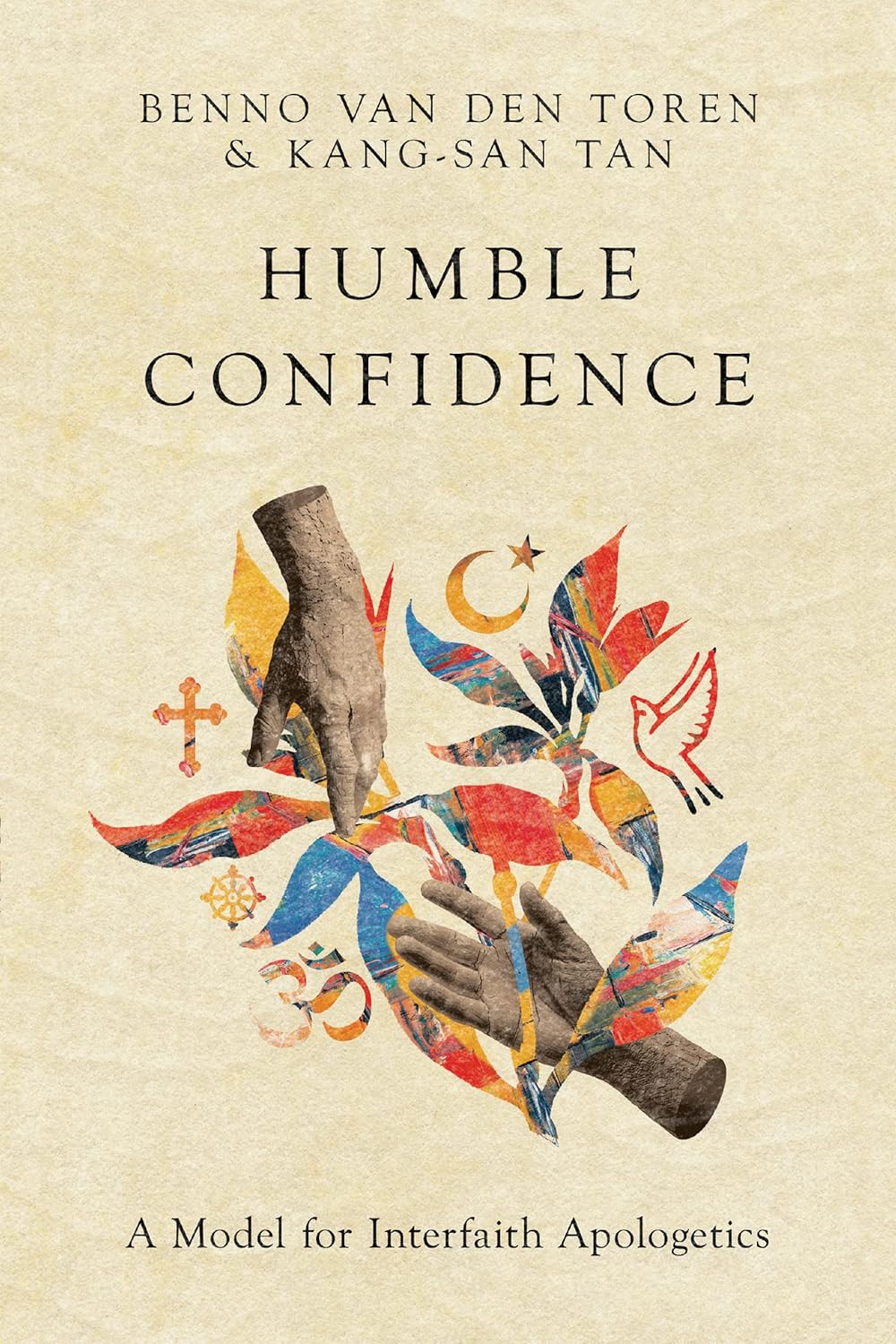
Humble Confidence: A Model for Interfaith Apologetics
By Benno van den Toren and Kang-san Tan
Intervarsity Press, 2022
296 pages
US$32.00
*As an Amazon Associate Missio Nexus earns from qualifying purchases.
Reviewed by Mark A. Strand, professor, North Dakota State University, Fargo, North Dakota.
As a young Christian, I was introduced to Christian apologetics through the book Evidence that Demands a Verdict, by the venerable Josh McDowell. At the time, I was taken with the approach, and I mastered many of the arguments, such as the historical veracity of the Bible. However, to my great disappointment, when I tried to use what I had learned in sharing the gospel with others, I found people to have no interest in the evidence I brought forth. Furthermore, the book failed to provide any evidence to address the questions they did ask. My hope for what I could do with apologetics was dashed.
A couple of years later I moved to China to begin cross-cultural ministry to people with a Confucist-Taoist-Buddhist spirituality, overlaid by 35 years of communist secularism. Little of the so-called “evidence” I had mastered for use in defending the gospel applied, and it certainly did not demand anything from my Chinese interlocutors. Fortunately, I had been trained by a Chinese man who set me on a path toward a dialogical approach to apologetics, which proved to be both culturally sensitive and spiritually fruitful. Humble Confidence: A Model for Interfaith Apologetics develops in detail just such an approach to cross-cultural witness.
Humble Confidence is written by a Dutch theologian, Benno van den Toren and a Chinese Malaysian working in the UK, Kang-San Tan. They bring a wealth of international ministry experience to the conversation of interfaith dialogue. Their model takes seriously the beliefs of those with whom they are interacting.
They introduce the “triangular nature of inter-religious dialogue,” with oneself and the other person at two of the vertices of the triangle, and “reality as revealed in Christ” at the third (96–98). The assumption is that both persons are genuine in their pursuit of this reality, or what might also be called “truth.” This joint pursuit of the truth by both parties is a new contribution to apologetics by the authors, in contrast to approaches to apologetics where the speaker dispenses the truth to a listener or even debates the listener. Their method begins with listening and includes a level of openness that allows for an honest look at oneself as a Christian witness (107).
The authors consider apologetic witness to be multidimensional and holistic. It prioritizes contextualization, the importance of the integrity of the Christian faith, and the Christian faith as the fulfillment of all human quests – as mentioned above, “reality as revealed in Christ.”
The first half of the book develops their model, and then the latter half applies the principles to six audiences: primal religions (which used to be called animistic), Hinduism, Buddhism, Islam, secular ideologies, and modern spiritualities (New Age religions). Interested readers intimidated by a 296-page academic book could read the first half of the book, and then pick and choose from the latter half according to interests and needs.
Humble Confidence was published by IVP Academic, and it certainly would serve as an excellent textbook in college or seminary classes. It would be a challenge for cross-cultural workers without training in world religions or rhetoric to read and fully appreciate Humble Confidence on their own.
However, it would be an excellent book for a missionary team to study together, as the book includes footnote citations on every page, study questions for each chapter, a bibliography, a general index, and a scripture index. Humble Confidence is a welcomed contribution to the mission and apologetics literature, and I highly recommend it for those wanting to engage in cross-cultural witness in a dialogical way.
EMQ, Volume 60, Issue 2. Copyright © 2024 by Missio Nexus. All rights reserved. Not to be reproduced or copied in any form without written permission from Missio Nexus. Email: EMQ@MissioNexus.org.