
EMQ » April–July 2024 » Volume 60 Issue 2
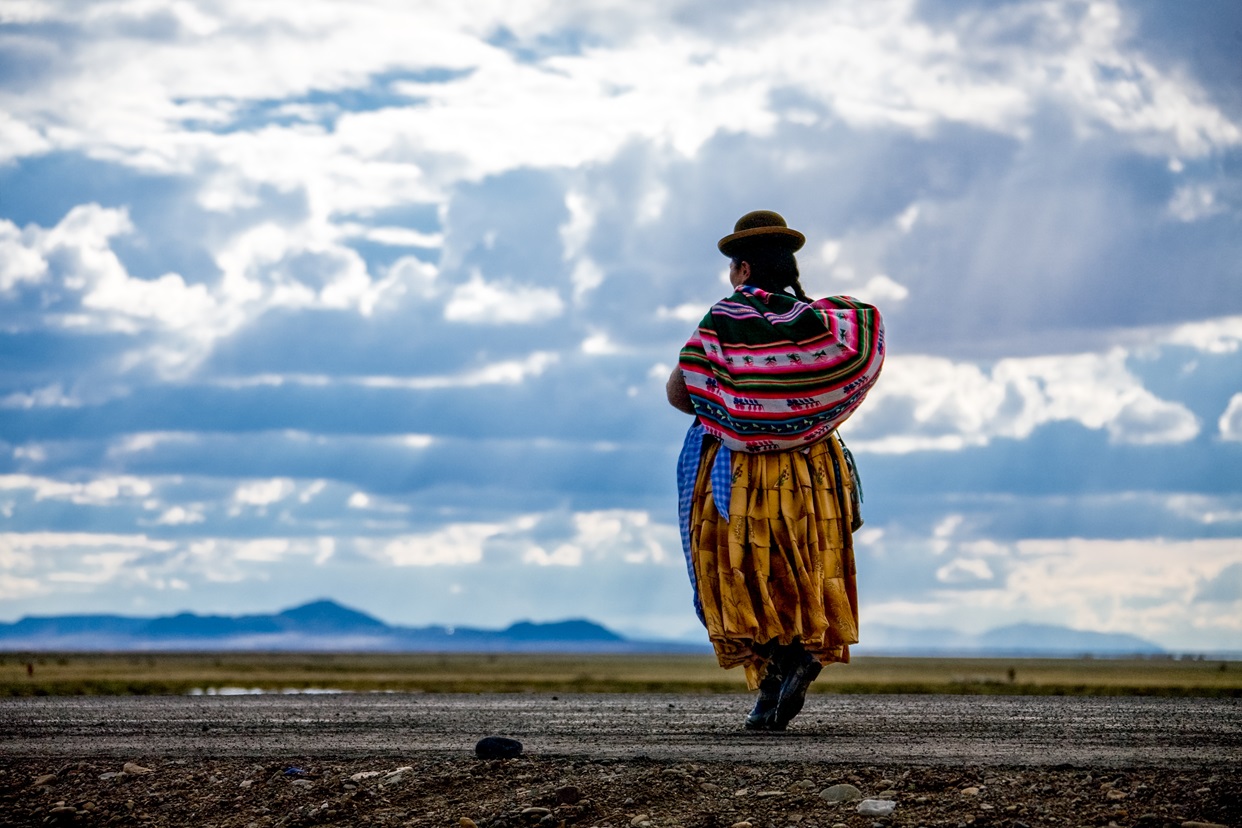
Summary: Nearly half of Bolivia’s population come from its Indigenous communities of which the Quechua are the largest. Yet gospel resources in Quechua remain limited. While many Quechua people enthusiastically participate in church, few have experienced the transformation of the gospel because they don’t understand it.
By Pío Víctor Campos Barco
Across the mountains of central Bolivia, Christians amongst the Quechua people gather to worship together during special weekend conferences. Starting on a Friday night, they come on foot, others on motorcycles, trucks, or any other means of transportation available to them, wearing colorful clothes. No one is empty-handed; they all bring their bulky Bibles or their hymnal. But few know how to read.
After everyone finds a place to sit, the music begins. A group of women sing loudly, and a group of men play instruments – mostly strings but sometimes a keyboard or drums. As the sun goes down, dim lights barely illuminate hymnals and Bibles. The music continues for more than 30 minutes until it is time to share the message of the Word of the Lord.
Then the person in charge approaches the front of the tent, with or without a microphone, to address the audience for about 30 minutes. At first, everyone is attentive, but after 15–20 minutes, most fall asleep. The meeting formally concludes with a word of prayer.
Those with transportation return home for the night. Some go to rest at a place nearby. Others stay and eagerly play and sing up to four more hours. Then they also go to rest. The next two days, most return to repeat the routine they started on Friday night.
Of Bolivia’s more than 12 million people, nearly 50% are Indigenous. Those include 36 native peoples. The Quechua comprise 49.5% of the Indigenous population followed by the Aymara with 40.6%, the Chiquitanos (3.6%), the Guarani (2.6%), and the Moxeños (1.4%). The remaining 31 groups are a combined 2.4% of the Indigenous population.
The nearly 3 million Quechua people scattered across the country are a quarter of Bolivia’s entire population. And while many consider themselves Christian, religious practice is more cultural than transformative. Understanding of the message of Jesus Christ that changes lives through his death on the cross is limited for most.
Gospel Seeds Sown in the Soil of Hardship
The Spanish conquest of what is now Bolvia began in the sixteenth century. For hundreds of years after that, they subjected the Quechua and other Indigenous peoples to harsh treatment and suffering. Although the existence of indigenous peoples was recognized, their rights were not. They were used as objects for the personal and national interests of Spain.
“From the first discovery of these Americas, malice began to persecute men who had no other crime than to have been born in lands that nature enriched with opulence and who preferred to leave their villages rather than submit to the oppressions and services of their masters, judges and priests.”[i]
Bolivia became an independent country in 1825. At the end of 1890, God in his mercy allowed the gospel to enter through some missionaries from New Zealand who had already been sharing the gospel in Argentina for some time. They came in through one of the main entry points into Bolivia from Argentina. But their arrival was fraught with potential challenges and risks. Bolivia’s road and transportation systems were poor, making journeys deeper into the country complex. And even if travel was successful, they still faced the possibility of violent rejection from local communities.
“We have the account of this history thanks to the diligence of Mrs. Payne, who recorded many details in her diary. Thus we know that on July 5 or 6, 1895, Don Guillermo entered Bolivia for the first time, crossing the border at La Quiaca, accompanied by his wife Elizabeth, his little girl, two believers, one named Allan, another, Pedro Guerrero, and six pack animals.”[ii]
Through their sacrifice, the gospel was sown in the hearts of Quechua people both in the countryside and the cities.
An Incomplete Mission
Evangelical missionaries played a critical role in sowing the seeds of the gospel. Over about half a century, they defined doctrinal guidelines, facilitated ecclesial organization, and guided liturgical development. At times, they encouraged or initiated breaking the cultural and traditional norms of different regions of the country. Throughout Bolivia’s geographic regions, the evangelical church experienced organic growth, and many churches were built.
At the same time, Bible Institutes formed to provide biblical training to new followers of Jesus. Quechua people urgently wanted to share the Word of God to their own Quechua-speaking people from their own worldview and language. Yet few teaching materials and no Bible were available in the Quechua language.
Two centers intended primarily for Quechua people, began with only Spanish curriculum and instruction. The first, Quillacollo Bible Institute in the city of Cochabamba, began instruction in 1925. The second, San Juanillo Bible Institute in the city of Sucre, was founded by Donald and Kathie Gale, missionaries from the Andes Evangelical Mission in 1961. Today, it is known as SETESUR, the Theological Seminary of the South (Seminario Teológico del Sur).
Many missionaries there as teachers with the best intentions could not teach effectively in the Quechua language. Attempts to teach some subjects in Quechua largely failed. Without source materials in the language, doing it only orally proved too difficult. Other teachers and administrators demonstrated distain for the Quechua language, hoping it would die out. Even the teachers who were of Quechua origin did not see teaching in this language as something important. However, this kept these institutions from fully achieving their mission. One unintentional result was that many Quechua students from rural areas who remained in the city for their studies never returned to their home areas.
Over time, the social, political, economic, and cultural situation in Bolivia began to change. The evangelical and broader Protestant church also changed as new generations of church leaders emerged. A few were of Quechua origin, but their ethnicity hampered their advancement. They continued to be overshadowed by Spanish-speaking leadership and relegated to the background. Those from cities also experienced more opportunities for advancement than those from the countryside.
In the meantime, missionaries remained faithful in continuing to evangelize, in helping emerging Bolivian church leaders, and in facilitating new strategies to reach the neediest – most often rural Quechua people. Roads and transportation still created barriers to accessing these communities. So missionaries traveled in trucks, on horseback, and on foot because it was not possible to reach these communities in any other way. This took a significant amount of time.
This sacrificial work was almost always undertaken by foreign missionaries in partnership with Bolivians. While the missionaries carried the message of salvation from God’s Word, they brought it in Spanish. The Bolivians who traveled with them knew the terrain and the Quechua language and made efforts to translate that message so the Quechua people hearing could better understand it.
A Quechua Bible is Translated
The first efforts to translate the Bible into Quechua happened before the 1950s, but it wasn’t until the 1970s that Scripture portions started becoming available. After almost 30 years of work, the translation of the New Testament into the Quechua language was finally available. In 1983 a bilingual Quechua-Spanish New Testament was published, and in 1986 the complete Bible[iii] was made available to the Quechua people, which at that time numbered around 2 million.
The Quechua received their translated Bible with great excitement. At that time, most Quechua people could not read, but demand for the book remained high. Because the Quechua culture has an oral tradition, those who could read found the translated Scripture difficult to understand. They did not read often and had no experience reading in their own language. So they had to spent time learning to read in their own language.
Churches in urban areas with large groups of Quechua-speaking people in their congregations began offering services or worship exclusively in the Quechua language. But few people were prepared to teach in the Quechua language. In rural areas, the same thing happened. Quechua Scriptures made worship in the Quechua language more possible, but churches lacked people prepared to teach the Word of God in Quechua.
Mosoj Chaski – Teaching God’s Word by Radio
At the end of the 1990s, a small group of missionaries from 3 different mission agencies – SIM, New Tribes, and Pioneers – came together to consider how they could more easily and effectively reach the Quechua people of the Bolivian Andes. Week after week for four years they prayed to understand what God wanted them to do through them, how he would do it, and what the right timing would be. They wondered how they could economically sustain what God would send them to do, and who would do the work on the ground since Quechua people would most effectively participate in evangelization.
God was faithful. He showed them that a shortwave radio station would cover places that were the most remote and difficult to access. God also impressed upon them that the message should be in the language that the rural Quechua in the Andes used. As they began to work, God provided them with the economic, technical, and human resources they needed.
For the next two years, one of the missionaries facilitated a team that produced Quechua language radio programs that clearly presented the gospel. Programming included devotionals, Bible studies, and even hymns of praise to God.
On April 11, 1999 the first radio signal was broadcast from the Mosoj Chaski shortwave radio station. It spread the transforming message of Jesus Christ to Quechua people all over Bolivia, but especially those living in the most remote places. The programming on Radio Mosoj Chaski proclaimed the gospel of Jesus Christ exclusively in the Quechua language – proclaiming God’s love to those who had not yet heard and encouraging existing Christians in all those places. Radio Mosoj Chaski has now been broadcasting for a quarter of a century, and God willing it will continue!
Radio Mosoj Chaski became a seedbed for other ministries including discipleship and literacy. It became a connecting point for the distribution of literature to further help with Christian growth and maturity. It gave birth to the Itinerant Quechua Bible Training team which provided mobile Bible teaching to Quechua people for several years. The team had as many as four trainers.
They instructed Quechua church leaders in inductive Bible study and expository teaching. They also taught participants how to use four basic materials to help in the process: a Quechua Bible Dictionary, a Quechua Bible concordance, a Quechua Bible encyclopedia, and a Bible atlas.
Unfortunately, the program was paused for a while due to lack of financial support. Yet it returned under a new name: Yachay Pujyu. Yachay in Quechua means knowledge, and Pujyu is Quechua for a spring of water. Together they can be translated as “source of knowledge.” Due to continued financial limitations, the program currently only has one full-time trainer.
Collaborating for Kingdom Advancement
Many Quechua still lack a full understanding of the gospel. More needs to be done to share the gospel with the Quechua in their language and in a contextualized way. Additional resources can help Quechua people know God more each day, obey his teachings in their daily lives, move away from syncretism which harms and confuses the Quechua church.
With more contextualized resources in their language, the Quechua people will be able to fully understand that Jesus died on the cross for our sins and that by believing in him and accepting him as our Lord and Savior, we recognize that he is our Lord. They will come to know that Jesus governs our lives and remains in us so we can live in obedience to each of his precepts expressed in his Word.
The mission that the Lord Jesus called us to is not a thing of the past. It is also a present-day task for each one of us. Until the Lord comes for us, we must continue to proclaim the gospel to every person we encounter. We must continue to pray for God to guide us as we share the love of God and work towards the expansion of the kingdom of God.
The most vulnerable and forgotten people need to be prioritized. We must not be guilty of forgetting them. As I explained, indigenous peoples in Bolivia have been seen by the wider society as less – even worthless. That pattern seems to have crept into how we share the gospel in Quechua communities. Perhaps we like to have them in our midst. Maybe we like their unique music or exotic clothing. But do we really care if they understand the gospel or not?
Someone once said to me, “Many of us will miss not seeing many of our fellow church goers in the presence of the Lord, but we will also be surprised by the many who never set foot in a church and will be in the presence of the Lord.”
There are Quechua churches full of people who have not understood the gospel but who attend and participate in church activities with great enthusiasm. Surely there are also people who silently recognized and believe in the sacrifice of Christ on the cross who do not attend any church.
We have so many resources for the Spanish speaking people. Yet the Quechua and Aymara comprise approximately half of the entire Bolivian population. It is time to reflect and invest time and money to develop the work of the Lord in these areas that need our participation. We need to work for the common good stripping ourselves of competition and an overemphasis on our denominations. Sitting down together, we can analyze what needs to be done, how we should do it, and when we can do it. As God provides, we can share technology, strategies, and innovative approaches to do something together that we could not achieve alone. This is the way of the kingdom of God.
Pío Víctor Campos Barco Victor (phayolin1223@gmail.com) has degrees in law and communications. He was the director of Mosoj Chaski for around 15 years. He continues to support Bible training for Quechua people now as a part-time volunteer with Yachay Pujyu and as a youth teacher at Iglesia Dios es Amor de Sucre. He also provides legal advice to low-income people, produces Spanish-Quechua radio programs, and teaches radio production. He is married, and he and his wife reside in Sucre, Bolivia.
[i] Gonzalo Viscarra Pando, El Indio (La Paz: Editorial Gente Común, 2013), 34.
[ii] Eliseo Zuñiga Murillo, La Gran Conquista (Cochabamba: Ediciones Casa Campesina, 2012), 25.
[iii] South Bolivian Quechua Bible, https://www.ethnologue.com/language/quh/.
EMQ, Volume 60, Issue 2. Copyright © 2024 by Missio Nexus. All rights reserved. Not to be reproduced or copied in any form without written permission from Missio Nexus. Email: EMQ@MissioNexus.org.




