EMQ » April–July 2024 » Volume 60 Issue 2

Summary: The mission to Native America is not complete. We need more Native pastors to plant new churches and to revitalize existing churches. Those pastors would benefit from seminary training and encouragement to persevere in their communities. And we need the non-Native body of Christ to come alongside and support Native brothers and sisters in their efforts to fulfill the Great Commission in North America.
By Patrick Lennox
For the last four years, I have participated with a small group of Native American and First Nations pastors in the Native Pastors Gathering in Florence, Mississippi. This annual event brings in pastors, leaders, and aspiring pastors for three days to receive rest, refreshment, encouragement, and opportunities to be equipped to better shepherd the sheep entrusted to their care.
During one of the sessions, called “Reports from the Field,” attendees gave updates from their ministry locations and shared prayer requests. One pastor, Jim Bird (Cherokee), ministering among the Dakota Sioux near Sisseton, South Dakota, offered his perspective. After serving for decades in that region and meeting with representatives from “all the denominations” during his tenure, Pastor Bird’s message to his parishioners and fellow Native Christian laborers simply and soberly was, “the cavalry is not coming.”
In centuries past, in another context, those words would have been great news to most Native people’s ears, but in the context of present-day missions, there is something woefully sad about the realization represented in that metaphor. Pastor Bird’s message was a call to stand and trust in the Lord, rather than in man, yet the Church is also still called to come alongside Native people in their efforts to fulfill the Great Commission.
Native America – Mission Accomplished?
Are the days of missions to Native America behind us? In his Forward to Crow Jesus: Personal Stories of Native Religious Belonging, Jace Weaver concludes with this: “In Crow Jesus, Clatterbuck demonstrates clearly that, whatever the ethnocentric disagreements of non-Native church administrators, among the Crows of Montana, the job is done.”[i]
This conclusion is partly based on an exchange between Presbyterian church leaders (PCUSA) and Vine Deloria Jr. recorded in Weaver’s book, Custer Died for Your Sins: An Indian Manifesto.[ii] The argument goes something like this: Since Native Americans have been Christians for three and a half centuries, there is no longer a need for churches to continue mission endeavors to Native America.
However, my friends in Crow Agency, right now, will testify that the job is not done. From a biblical perspective, there is much to do. But the belief that the job is done in Crow Agency and/or anywhere else in Indian country depends on one’s definition of missions.
On one end of the spectrum, some argue that missions is strictly church planting in places where Christ is not known. The other end of the spectrum broadens missions efforts to include various efforts such as mercy ministries (e.g., medical, disaster relief, homeless shelters, human trafficking rescue missions, ESL, vocational training, etc.).
Between those two poles are ministries like children’s evangelism and college campus outreaches, prison ministries, and a plethora of parachurch teaching ministries. However, at its heart, missions remains nothing less than the fulfillment of the Great Commission found in Matthew 28:19–20. Jesus says:
Go therefore and make disciples of all nations, baptizing them in the name of the Father and of the Son and of the Holy Spirit, teaching them to observe all that I have commanded you. And behold, I am with you always, to the end of the age. (ESV)
Jesus gave us this mission, and it continues until the end of the age.
The Native American Mission Field
It is important to know that the term “Native America” paints Indigenous communities in North America with a broad brush. Native America is a group of groups, or better for our purposes, a field of fields. Native communities are not a monolith, but they do have some common traits. Moving forward, I will use the term Native to refer to all Indigenous people in North America.
There are 574 federally recognized Native tribes in the US.[iii] While many tribes are not federally recognized, others still are in the application process. The US Census Bureau uses the term American Indian (AI) generically when not specifying tribal names. Included in that total are Alaska Natives (AN), which account for 227 of the federally recognized tribes/villages, according to the Federal Register.[iv] In Canada, there are 634 recognized First Nations communities.[v]
At the end of the nineteenth century, the total population of Native Americans in the US was down to less than 250,000. How many are there today? The answer is complicated. If you were to ask the US Census Bureau, you may get an answer something like 9.7 million[vi] who identify as AIAN alone or mixed.[vii] Of that number, there are 2.7 million who identify as AIAN alone, or as many of my Native friends would say, “full bloods.” In Canada, the government reports the total population of “registered Indians” is 901,053, and their 2011 National Household Survey accounted for nearly 2 million with “Aboriginal” (or Native) ancestry.[viii]
Less than a third of those who identify as AIAN live on a reservation. Many live near one, while others live far from their tribal communities, yet have strong connections back home. They are enrolled members of their tribe retaining full recognition. Then there are many others who are not enrolled members of any tribe, but who know their ancestry and identify as AIAN on the US census.
No matter how the pie graph is sliced, the harvest is indeed plentiful.
Barriers to the Gospel
Native pastors and ministry leaders with whom I serve consistently report confronting persistent resistance to the gospel. While some level of resistance is to be expected, historical factors have created formidable barriers between the church and her Native neighbors.
Those can be traced back to the conquest and colonization of North America by a dominant culture in the US and Canada that espoused Christianity. But another dispossession followed the dispossession of land that occurred centuries ago. This time it was not the land, but the children. This had deep and far-reaching effects on Native communities for generations up to this very day.
In the latter part of the nineteenth century through most of the twentieth century, both the US and Canadian governments, with participation from many Christian denominations, initiated and sustained the Indian boarding school movement.[ix] Native children, as young as four years old, were separated from their parents and tribe and sent to government schools far from home.
The driving doctrine was “Kill the Indian, save the man.”[x] At the schools, children endured abuse of all kinds. Many died. The entire program was designed to strip Native children of all cultural influence, beginning with changing each child’s Indian name to his or her new “Christian” name.
Numerous Native children grew to reject the “white man’s religion,” deeming it as antithetical to Native culture. Yet by God’s grace, many others did embrace the Savior. In both cases, Native communities, today, live with the fallout of this destructive government program in which a misguided church participated.
Per capita, Native people in the US suffer with the highest rates of poverty, alcoholism, suicide, drug abuse, domestic violence, gang violence, mental illness, PTSD, human trafficking, high school dropout rates, teen pregnancy, and historical trauma.[xi] The statistics are nearly identical in Canada.
Yet, these are not just statistics. They are people. Native people are also not historical curiosities trapped in the past or relics discovered through DNA kits. They are communities of families and individuals created in the image of God with a shared history, and a present reality. They are an integral part of God’s continuing story of redemption.
Struggling Churches
Despite this historical trauma, Native America has many strong churches. However, others struggle to exist and remain in perpetual mission-church status. I once preached at a Native church in northern Minnesota called Wah-Bun that is over 100 years old. Located in an Ojibwe community outside the Red Lake Reservation, it was 50 miles from the closest city. They often worshipped in a garage with no central heating in the middle of Minnesota winter.
When I visited, only six or seven people came to services, and they had no pastor. The congregation was too small and poor to support a pastor. Church members also experienced many of the same struggles as their community.
For example, on the cold winter morning when I visited the church, one man shared that his wife had taken their car the previous night. Her meth addiction and all its accompanying vices kept her out all night. He asked for prayer for his wife to be found and delivered from her life of addiction. He also asked the congregation to pray that he would find his car and keys so he could get to work in the city the next morning. As a supervisor, he had the keys to his workplace and was responsible to open it. By God’s grace, they found his wife, car, and keys later that day. Stories like this are not uncommon.
Sometime after my visit, a non-Native became the pastor at Wah-Bun. In late 2023, they reported that a Native pastor would arrive in the summer of 2024. But many churches, like Wah-Bun, still do not have a dedicated pastor or elders to shepherd them and feed them the Word of God.
Serving in Partnership
Missions among Native communities in North America is not complete, but how it is done is critical. Non-Native churches are not the calvary who need to rescue Native churches. Rather we want to recognize and celebrate mutual interdependency.
We all need each other in the church. The Apostle Paul beautifully illustrates using the metaphor of the church as a human body – one body, many parts (1 Corinthians 12:12–15, Romans 12:5). We need to have real, enduring relationships with our Native brothers and sisters. There is much we can learn from them.
Evangelism and ministries of mercy done in partnership with Native communities continue to be helpful. However, more needs to be done to build up and raise up leaders from within Native America. This needs to start with those already serving in Native communities, but younger candidates who can serve in leadership also need to be found.
While there are Native pastors and teachers with graduate and post-graduate degrees, Native pastors are often bi-vocational and without seminary training. More Native leaders need formal training in the Scriptures and to be equipped to disciple those under their care.
Spiritually and numerically strong churches in Native America will be more equipped to reach the lost in their communities, and beyond! And this is already happening. Remember Pastor Bird? He is Cherokee from Oklahoma serving the Dakota Sioux in South Dakota. He is just one example amongst many Native pastors who cross geographical and cultural boundaries essentially as church planting missionaries.
Occom Ministries – Training and Equipping
Occom Ministries (occom.org) is a ministry of Mission to the World (MTW) focused on equipping and training Native pastors and discipling Native Christians. It is named after Rev. Samuel Occom – the first Native to be ordained as a Presbyterian minister.
One of Occom’s programs is the Native Pastors Gathering. This event is for Native American and First Nations pastors who serve on frontlines of Native communities.[xii] The event is small by design and focused on growing a core group of Native pastors. Because nearly all who come are bi-vocational with either no extra funds or limited time to be away, the event is free of change and only three days. Wives are also encouraged to attend.
Participants are encouraged and equipped to better serve their communities. The event also fosters long-term relationships, trust that facilitates unity, and connections to other Native ministries such as CHIEF (chief.org). One of my deep friendships with Occom founding board member Billy Tallas (Navajo) grew out of this event.
Occom is also in the beginning stages of creating Occom Institute, to provide certificate programs and master’s level seminary training. Native pastors serving in poor and remote locations, especially bi-vocational pastors with family, face daunting challenges if they want to pursue seminary education.
We live in a time when distance education is readily available. But as ubiquitous as the internet may be, it is not everywhere, especially in remote Native communities. Yet there are ways to overcome that. Another hurdle is the cost of tuition making higher education out of reach for many pastors. That can be overcome, too.
Occom plans to use online courses from Thirdmill (thirdmill.org) as the core curriculum. Ministries such as Thirdmill provide free, seminary-level education, including certificate programs. They also have developed a Master of Arts degree program for a fraction of the cost compared to the older established brick-and-mortar schools that offer distance education.
But Occom Institute will not be merely an online school. Week-long intensive courses in Native communities will be integral to the training. Much like CIM’s BUILD (Biblical Unity Indigenous Leadership Development) program,[xiii] Occom Institute will organize teaching events on location where pastors serve, available to be audited by anyone who would like to attend, especially teachers, elders, and potential pastors.
Native America – Mission Field to Mission Force Pastor Daron Butler (Navajo) often says, “I dream of the day when Native America is no longer a mission field, but a mission force.” My wife and I share that sentiment and are dreaming with him. For this to become a more pervasive reality, more faithful, gospel-proclaiming, and Christ-centered churches need to be planted. And those churches need shepherds trained in the Scriptures, in preaching the whole counsel of God, and in equipping the saints for every good work. No, the job is not done, and the calvary is not coming. But the Lord of the harvest calls us to join him alongside the Indigenous peoples of North America as we participate with him in his mission until the end of the age.
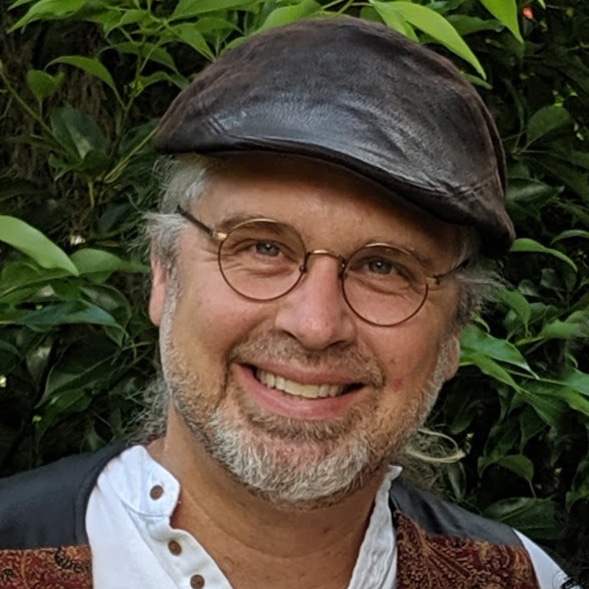
Patrick Lennox (patrick.lennox@occom.org) and his wife, Regina, have been serving together in Native America since 2006. Since 2014 they have been serving full-time with Mission to the World (MTW), the missions agency of the Presbyterian Church of America (PCA), where Patrick is ordained. He is also the founder and president of Occom Ministries (Occom.org), a teaching ministry that seeks to grow disciples and train leaders throughout Native America.
[i] Jace Weaver, forward to Crow Jesus: Personal Stories of Native Religious Belonging, by Mark Clatterbuck(Norman, OK: University Oklahoma Press, 2017), xiv.
[ii] Weaver, Crow Jesus, xiv. Vine Deloria Jr., Custer Died for Your Sins: An Indian Manifesto (New York: Macmillan, 1969), 112.
[iii] Mainon A. Schwartz, The 574 Federally Recognized Indian Tribes in the United States, Summary R47414, CRS Report Prepared for Members and Committees of Congress (Congressional Research Service, February 8, 2023), accessed December 13, 2023, https://crsreports.congress.gov/product/pdf/R/R47414 .
[iv] “Notices,” Federal Register 87, no. 19 (January 28, 2022): 4640, accessed December 13, 2023, https://www.govinfo.gov/content/pkg/FR-2022-01-28/pdf/2022-01789.pdf.
[v] Canadian government sources distinguish between a First Nations community and a government.
[vi] Figures do not account for Indigenous people on the Hawaiian Islands.
[vii] “American Indian and Alaska Native Heritage Month: November 2023,” United States Census Bureau, accessed December 13, 2023, https://www.census.gov/newsroom/facts-for-features/2023/aian-month.html.
[viii] “First Nations People in Canada,” Indigenous and Northern Affairs Canada, accessed December 13, 2023, https://www.rcaanc-cirnac.gc.ca/eng/1303134042666/1534961203322.
[ix] In Canada, they are known as residential schools.
[x] Richard Henry Pratt, “Kill the Indian, and Save the Man”: Capt. Richard H. Pratt on the Education of Native Americans, speech, National Conference of Charities and Correction, Denver (1892), accessed December 12, 2023, https://carlisleindian.dickinson.edu/teach/kill-indian-him-and-save-man-r-h-pratt-education-native-americans.
[xi] “Substance and Behavioral Addictions among American Indian and Alaska Native Populations,” National Library of Medicine, International Journal of Environmental Research and Public Health 19, no. 5 (March 2022): 2974, accessed December 13, 2023, https://www.ncbi.nlm.nih.gov/pmc/articles/PMC8910676/.
[xii] While this gathering is for Native leaders, other gatherings such as CIM’s (Center for Indian Ministries) bi-annual United in Christ conference (centerforindianministries.org) are for both Native and non-Native Christians and ministry leaders.
[xiii] BUILD (centerforindianministries.org/build-program) is a ministry that brings biblical and leadership training to Native leaders – sending teams of instructors to different reservations and communities in partnership with local churches.
EMQ, Volume 60, Issue 2. Copyright © 2024 by Missio Nexus. All rights reserved. Not to be reproduced or copied in any form without written permission from Missio Nexus. Email: EMQ@MissioNexus.org.