EMQ » January–April 2024 » Volume 60 Issue 1

Summary: Church leaders and organizations are grappling with the changing dynamics of the American church. However, the fields remain – calling for tilling, sowing, and harvesting. And the nations are here at our doorstep. Global workers who have already lived and served cross-culturally are uniquely equipped to help churches engage these nations and serve cross-culturally here in the US.
By Sara Miller*
I prepared many years to serve overseas, expecting to serve for decades if not for life. Instead, I served for two years in Asia working with a refugee population and learning language and culture. There is a bigger story there, but the short version is one that is remarkably common – the Lord’s plan for my life looked different than my plan for my life.
The journey that the Lord brought me on continued when I returned to the US and moved into an immigrant neighborhood outside of Washington, DC. I met with families who had not been allowed to ask questions about Jesus or to access Scripture in their homelands.
They had significant practical and relational needs. Almost invariably I heard that they had not met any American friends, wanted to learn English, and had never been in an American home. The spiritual, emotional, and physical needs of these neighbors are great.
Church leaders and organizations are grappling with the changing dynamics of the American church including leaner times and smaller churches post-COVID. However, the fields remain – calling for tilling, sowing, and harvesting. And the nations are not only across oceans. They are literally at our doorstep.
Many people think our newly arrived neighbors have access to the gospel because they now live in the US. But major barriers exist mainly due to lack of relationships and language skills. A tremendous opportunity exists, but those who want to see their churches engage cross-culturally with these communities are often not sure how to begin.
Global workers who have already lived and served cross-culturally are uniquely equipped to help churches engage these nations and serve cross-culturally here in the US. They have skills that can help effectively bridge the tangible needs of immigrant communities with the resources of local churches.
Pray: Persistently, Consistently, and with Anticipation
A few months after moving into an apartment complex with immigrant families, I realized something important. For my ministry engagement to be fruitful, I understood that I needed the Spirit to pave the way and open doors ahead of me. I had dreams, but I could not make them happen. I had one-time interactions but not ongoing relationships.
Six months in, a woman I had seen and been praying for as she quickly dropped off her kids to a babysitter sat outside my apartment to nurse her baby. I spoke her language and was able to begin a conversation that turned into friendship. Gradually I developed new relationships within the neighborhood and through this initial friend.
I met one-on-one with women, drove them to appointments and to get groceries, went to school events, and hosted events in my apartment. I taught a health class with a resettlement agency and helped with English.
A few years into cross-cultural ministry in the US, I was feeling alone. So I reached out to two older women living in New England to ask them to pray with me twice a month by phone. They prayed as I met with individual women. They celebrated the joys and grieved disappointments with me. I saw the Lord answering prayer, often in exciting ways, and was tremendously strengthened and encouraged. I have been praying with each of these women by phone for about four years!
The Lord knows what he wants to do in your neighborhood and in your church. Prayer is an important means to walking in step with the Spirit and serving not in your own strength but in his.
Pray for your neighbors and those you serve, and then invite your church to pray specifically with you for individuals and circumstances. The work of intercession is crucial, but it is often overlooked and undervalued. That may be because we do not realize how dependent we are on the Lord. We are called to faithfulness and obedience, but we are not competent in ourselves to accomplish the great things we desire.
Offer a Warm Welcome
Many refugees moving to the US are coming from cultures with a high value on hospitality. For example, if you have ever been served a meal by a Middle Eastern family, you have experienced the sense of deep care that goes with the meal. The US can be bewildering for these immigrant families. Genuine friendship (despite language and cultural barriers) goes a long way.
In my apartment complex, kids and teens would knock and ask to come in and play, bake, do crafts, or play games. We planned and threw birthday parties and invited other neighbors. Holidays are a great opportunity to invite neighbors over and introduce them to American holidays.
Serve Practical Needs
For families who are newly arrived in the US, the needs are numerous. You will not be able to meet all those needs, but you can walk alongside as they navigate their new environment. Training or demonstrating how to navigate the system will go much further (and take more time!) than simply providing or doing it yourself.
Of all the practical needs, learning English is one of the most life-changing skills. It helps with medical visits, conversations with school administrators, ability to work, and helps immigrant families become independent. You can help as a patient, consistent language partner or volunteer with an ESL program.
For the Nations (DC: ftndc.org; Dallas: ftnro.org) is an excellent example of a Christian organization that provides good quality English teaching but also comes alongside students in meaningful non-academic ways. ESL programs are one of the most effective bridges for churches. The commitment is more defined than other types of neighborhood ministry, the program can adjust depending on resources and volunteers, and it meets an ongoing significant need by offering life-changing language help.
If a full ESL program requires more time and energy investment than is possible, a conversational English class is a good starting point and still offers a huge help to students. And having that clear bridge means that relationships can develop and deepen naturally for those who are interested.
Other practical ways to help could be any of the following:
- Medical appointments and rides
- Applications, resumes, and phone calls
- School registration
- Accessing public resources – food assistance, health insurance, learning to ride the bus.
- Driving practice (I nervously took one woman out for driving practice in our crowded neighborhoods. A few months later when her husband died suddenly, she began to support her family by driving for Amazon and Uber-eats!)
- Friendships and mentoring
Invite and Equip Your Church
When I served cross-culturally overseas, there was a couple who mentored me, prayed with me, and helped me process what I was experiencing and learning. They equipped me so that when I returned to the US and served cross-culturally, I could do this for others. Crossing culture is not comfortable or easy for many Americans, despite what many expect! People are caught off guard when they encounter different values and cultural expectations.
I remember inviting my small group from church to help a family move. My American friends showed up ready to knock it out in 2 hours. My refugee friends had no boxes, had not begun organizing, and were expecting a full day together.
American visits are often 1–2 hours. Many of my immigrant friends expect a 4–5 hour visit. Americans tend to think “to each their own” when it comes to clothing, food choices, etc. Meanwhile, many of my immigrant friends would be shocked or offended by what we call choice. Americans prize efficiency and skill while many other cultures prioritize relationship and honor.
Mentor Others
Take friends from church along with you on visits, ask them to pray with you, invite them to cross-cultural gatherings, and ask them to help with English conversation. By inviting others into the cross-cultural ministry you are doing, you help them learn to make adjustments, process surprises and differences, gain flexibility, prioritize people over efficiency, and serve generously.
Demonstrate Giving Up Preferences and Freedoms
Engage in discussing significant cultural and religious differences with your American friends, showing them how to love new neighbors by setting aside personal preferences and freedoms. An example would be serving halal meat or not offering alcohol at a gathering. Or consider dressing modestly for the comfort of your guests. This will go a long way in removing unnecessary barriers to the gospel.
If you have called yourself a missionary at any point, recognize that this term may not work with certain immigrant populations in the US and explain this to your American friends. Those who serve cross-culturally with these groups may want to describe what they do and why as they love God and love others, without using a word with unintended nuances. This will go a long way in removing unnecessary barriers to the gospel.
Prioritize Relationships
Introduce your American friends to the joy of face-to-face, cross-cultural, relational serving (which can be rich, complicated, and surprising). Raising money or donating items are valuable and necessary ways to serve; however, cross-cultural relationships present exceptional potential for spiritual impact and mutual transformation. Relationships engage the heart in ways that some projects may not. Christlike care for others leads to a desire to meet practical needs as well.
Consider Further Training
Options abound for additional training, but one area stands out. Many immigrants and refugees live with a history of trauma and emotional pain with few opportunities to process or understand what has happened. In the context of a friendship, you may be able to come alongside your neighbors with underlying trauma.
The Christian Counseling and Education Foundation (ccef.org/school) offers biblical counseling certificates and equips lay persons and those in ministry to come alongside friends in need. American Bible Society (ministry.americanbible.org/trauma-healing) offers training for establishing trauma healing groups. If you speak a second language, you may be able to bridge the gap for immigrants who need space and someone to process with. These do not take the place of trained counselors and medical professionals, but it may help you care better.
Partner with Local Organizations
I taught a women’s health class for a resettlement agency for a few years. Resettlement organizations can be leery of Christians evangelizing or inviting their clients to church. However, the benefit of working with an organization is a clear structure (a bridge) for you to connect and serve. I often ran into students in the grocery store or in my neighborhood, and they recognized me as a teacher with a familiar organization who also spoke their language.
Enter into Spiritual Conversations
Many cultures assume that God is central, and religion impacts everything. These new neighbors may be curious to know what you believe and are often open to deeper discussion. This stands in contrast to what many of us experience in the US cultural context. We can share our hearts and our experience with gentleness, humility, and love.
Occasionally, a friend may be interested in reading Scripture with you. Often, even if they are strongly opposed to the gospel, they will appreciate prayer in hard times. We do not serve needs just to get to the gospel, and we do not gain credit for ourselves in getting someone to pray a prayer. We serve to love as Christ loves and out of the overflow of his lavish love towards us.
And we share the gospel because it is the one thing that offers our friends hope in their deepest need and the only thing that offers them eternity. Years of serving and loving others may be a quiet tilling of the soil. Meanwhile we pray for opportunities to plant spiritual seeds and to invite our friends to a deeper exploration of who Christ is.
Use Wisdom and Look for Open Doors
We need wisdom in how best to serve and reach out. We need open doors and the Spirit to move in hearts and lives. The Lord is at work, and he will accomplish what he desires as we build bridges between the Church and the nations represented in our neighborhood.
For me, bridging the gap between my church’s resources and the needs of the refugee and immigrant population in my city happened in small events and with small needs. A few women from church joined me for some neighborhood gatherings, such as the year I hosted an Easter meal for 10 women and 15 kids in my 750 square foot apartment!
My small group prayed with me through various needs and helped with a few small one-time events and needs. A friend from church helped me start an ESL class in my home for a few women that ended soon after when the pandemic hit.
Then a chance to meet an almost overwhelming need happened during the Afghan crisis of August 2021. Our church of about 100 adults walked alongside four newly arrived Afghan families (and the three babies born within a few months of arrival). We delivered furniture, laptops, and emergency food/clothing. We provided transportation to appointments, assisted with paperwork, helped with school enrollment, health insurance, and food assistance.
We installed water filters that did not work and drove to job interviews that did not pan out. We visited. We taught them how to ride the bus and helped with English lessons. A few men from church played soccer with some of the teen boys and the women threw a beautiful, warm baby shower. One friend from church donated and taught a new mom the use of a breast pump.
Everything did not go as we expected! But our church grew in understanding and maturity, and I believe that individuals were changed to respond more quickly, confidently, and compassionately to enormous needs and to navigate cross-cultural situations with less discomfort.
The gospel is the power of God for salvation (Romans 1:16) and the success of the gospel depends on the power inherent in the message of the cross, not on its messengers or their strategies. Christ loves his bride, and he continues to lead us as we joyfully and imperfectly hold out the treasure we have found in him to a world that is searching.
His work is gloriously redemptive and good. It will culminate in a day when we join “a great multitude that no one could number, from every nation, from all tribes and peoples and languages, standing before the throne and before the Lamb, clothed in white robes, with palm branches in their hands, and crying out with a loud voice, ‘Salvation belongs to our God whose sits on the throne, and to the Lamb!’” (Revelation 7:9–10, ESV). We pray for that day and eagerly await it.

Sara Miller* is a medical professional living near D.C. After a number of years serving cross-culturally in Asia and then back in the US, she is now primarily serving her local church, working in a hospital part-time, and enrolled in seminary.
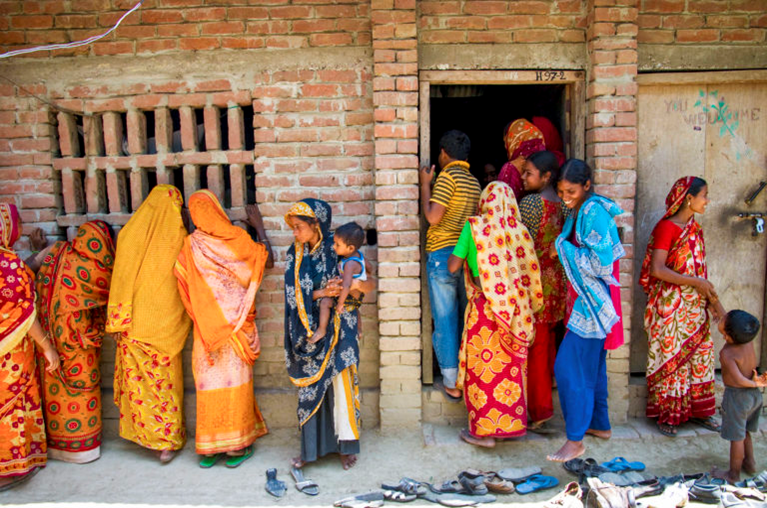
* Pseudonym, portrait is representative.
EMQ, Volume 60, Issue 1. Copyright © 2024 by Missio Nexus. All rights reserved. Not to be reproduced or copied in any form without written permission from Missio Nexus. Email: EMQ@MissioNexus.org.