
EMQ » July–September 2023 » Volume 59 Issue 4
[mepr-show rules=”100329″] [/mepr-show]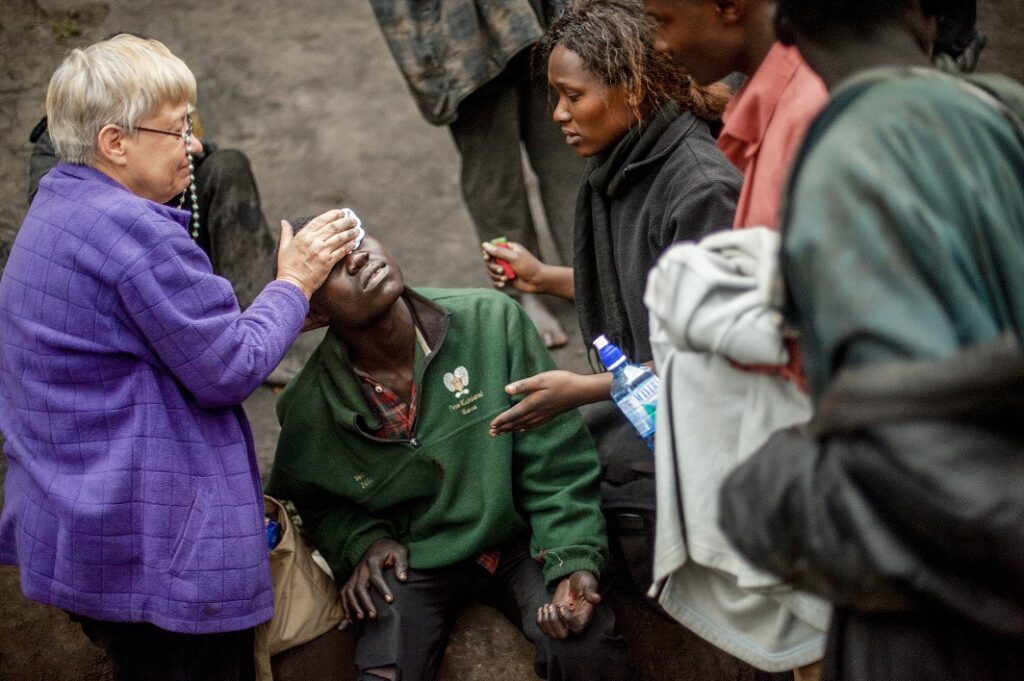
Summary: The church has tremendous potential to help communities reach new levels of wholeness. This often-unexplored context for healing provides an incredible opportunity for a body of believers to address issues such as relationships, work, illness, disability, birth, parenting, divorce, substance abuse, aging, and dying.
By Karen Bomilcar
Everyone wants to be healthy and whole. Actively pursuing ways to preserve and prolong our lives is an intrinsic part of being human. When the church is a place where people find belonging and community, it can become an important part of sustaining each person’s spiritual, mental, and physical health.
Communities have potential to both heal and harm. Our brokenness can wound those around us. Yet when the image of God is most clearly manifested, communities offer every person potential to reach a new level of wholeness and health side-by-side with others. This often-unexplored context for healing provides an incredible opportunity for a body of believers to address issues such as relationships, work, illness, disability, birth, parenting, divorce, substance abuse, aging, and dying.
Caring for one another in community is a comprehensive, collaborative, and interdisciplinary health paradigm. A whole community can engage in their different areas of knowledge and experience towards the shared goal of enhancing the well-being of everyone, together. In order to holistically grasp the full picture of health, we have to expand our understanding of the significance of the human body in all of its dimensions and expressions.
Bodies as Instruments, Not Ornaments
Our bodies play an essential part in mediating how we exist the world. We encounter and relate to each other as embodied human beings with emotions. Our health can impact how well we are able to do this.
Jesus, as the incarnate God, demonstrates embodiment. However, many of us have misconceptions about the role of the body in Christian faith because of dualism – a perspective dating back to Greek philosophy which sees spirit and body as distinct essences with the spirit seen as superior to the body. This is a non-theological attempt to explain human nature that remains embedded in Western cultures. A great number of people, including Christians, continue to see issues of identity and existence through this lens.
This ever-present dichotomy between what is heavenly and what is earthly impacts the way Christians see embodiment and integration. They often don’t recognize that the material world, including their bodies, are as spiritual and God-given as what they call their spirit and soul. Teaching and practices that promote integration can shift perspectives to help people see their bodies as instruments and not ornaments. In this framework, bodies serve a special purpose, are made holy in relationship with God and each other, and are an active part in engaging in God’s work in the world. This can help integrate health with God’s purposes.
When we neglect to steward our bodies, we neglect the mission of God to his people. Embracing the promotion of health and well-being, positions the Christian community to care for those who are unwell, or experiencing illness or disease. The human body can serve as God’s means to offer connection, grace, and support to our fellow human beings. Voice and touch can be a very physical way to offer encouragement. Through our bodies we can also build community and promote healthy relationships.
Modeling Interdependence
People with mental challenges, emotional imbalances, or cognitive decline often face stigmas. In the church, psychological challenges can be wrongly judged as a lack of faith. Facing this judgement, a person with an anguished heart may find the church an unwelcoming place that makes them feel even worse. However, the biblical narrative includes many stories of men and women who doubted, regretted, and were disappointed. These stories don’t always have clear resolutions forcing readers to embrace the mystery of God’s ways. These provide examples from which the church can learn.
Psychological challenges are complex and multifaceted. Addressing them requires an interdisciplinary approach, and the social dynamic of a healthy community is one highly beneficial part. A healthy community can provide meaningful relationships that encourage people towards maturity. Communities gathered around the resurrected Christ can encourage spiritual growth that, in turn, improves health and promotes shalom – peace in our whole beings.
Believers can walk alongside people with mental health struggles to seek God’s promises of renewed life and wisdom. We can release our desire to have answers and give control to God. We can also ask for God’s intervention but recognize that God does not always answer in ways we understand. This can be the kind of support that sustains the person, their friends, and family. And it can directly complement psychological and medical assistance.
This model for interdependence is demonstrated in the Trinity. Furthermore, in his earthly ministry, Jesus tangibly demonstrated what this can look like. For example, his relationships with others included giving and receiving. Because he is God, he has the power to provide for himself. But his willingness to both give and receive shows the grace present in interdependence.
As we grow in our relationship with the risen Christ, we become more aware that we are dependent beings that need God. This helps us learn to let go of our isolation and hyper-independence. A life lived in friendship with God is a life of humility that recognizes our vulnerabilities and need for interdependence. Spiritual friendships with God cultivate a joyful commitment to a shared life that shapes us into the image of Christ.
Dependence does not make us less human or lessen our dignity. Scripture teaches that there is a tension between dependence and independence. Jesus demonstrates it for us in his life. Even he came into this world as a completely dependent being. In a healthy community, we can learn to embrace this. This becomes even more important as we age and return to more dependency at the end of our lives.
Serving Society with All the Gifts of the Body
Authentic, transparent, and meaningful relationships are difficult to cultivate. Fear can reduce our capacity to experience love and undermine our ability to open our hearts to God and to others. When we live in a state of protection, we close ourselves from wider perspectives others can bring to our lives. But quality relationships are so important to improved health.
Church congregations can cultivate environments that promote healthy relationships that improve well-being. Intentional gatherings provide social interaction that can contribute to mutual encouragement. Being together and participating in communal worship can create a sense of shared purpose. And these communities can also offer an inclusive and caring sense of belonging that extends beyond periodic gatherings. These tremendously benefit those with mental health struggles.
However, both cognitive and emotional challenges continue to be stigmatized because the church still lacks adequate teaching on the important part it can play. Our theology must address this so that our churches can take their complementary place in interdisciplinary integration with psychology and medicine. Christian leaders and health professionals can partner together to fill this theological gap while also providing practical help.
In the financially poorest areas in Latin-American countries, such as Brazil, research has shown that the relational bonds within Christian communities are fundamental to whole person care. Many of these communities have opened their doors to welcome people who are struggling, creating groups during the week to welcome people and gather them to share their challenges. They’ve welcomed groups of family members have come together to learn better ways to care for hurting relatives and integrate them in community life.
In these challenging social contexts, people often go to churches for help before they will seek out government assistance. Churches that facilitate mental health conversations, host lectures about mental health, give group and individual counseling, and resource referrals to mental health practitioners play an important part in humanizing mental health struggles. They can diminish stigma and create a healthy network of care for those facing these challenges.
This intentional work also serves to develop an atmosphere of safety, mutual encouragement, and care that helps people move away from isolation. This positions the church to be a catalyst toward helping people grow in all aspects of their life towards shalom.
This is not about replacing the role of institutions focused on mental health or distracting the church from its part in worship and communion. Rather, it is about the church enabling greater spiritual maturity by taking interest in issues in many people’s everyday lives that may hinder their growth. This broader understanding of the role of the church makes it possible for Christians to increase their active participation in improving community health.
God has bestowed a variety of gifts and knowledge on the body of Christ. As the apostle Paul reminds us, every part of the body has an important part. When we put this into practice in the area of health and well-being, we can see a church that not only better cares for its members, but also intentionally participates in serving society at large.

Karen Bomilcar (karenbomilcar@gmail.com) has degrees in clinical and health psychology from Mackenzie University and USP (São Paulo), and a master’s degree in theology and interdisciplinary studies from Regent College (Vancouver, Canada). She currently lives in São Paulo, Brazil, where she works as a health psychologist and a seasonal seminary lecturer. She is a published author and the co-catalyst for the Lausanne’s Health for All Nations issue network (lausanne.org/networks/health-for-all-nations).
EMQ, Volume 59, Issue 4. Copyright © 2023 by Missio Nexus. All rights reserved. Not to be reproduced or copied in any form without written permission from Missio Nexus. Email: EMQ@MissioNexus.org.




