EMQ » July–September 2023 » Volume 59 Issue 4
Summary: Healthcare missions has a long history in Christianity, which continues to grow and develop. But how did it begin, how has it changed, and where is it going?
By Neil Thompson
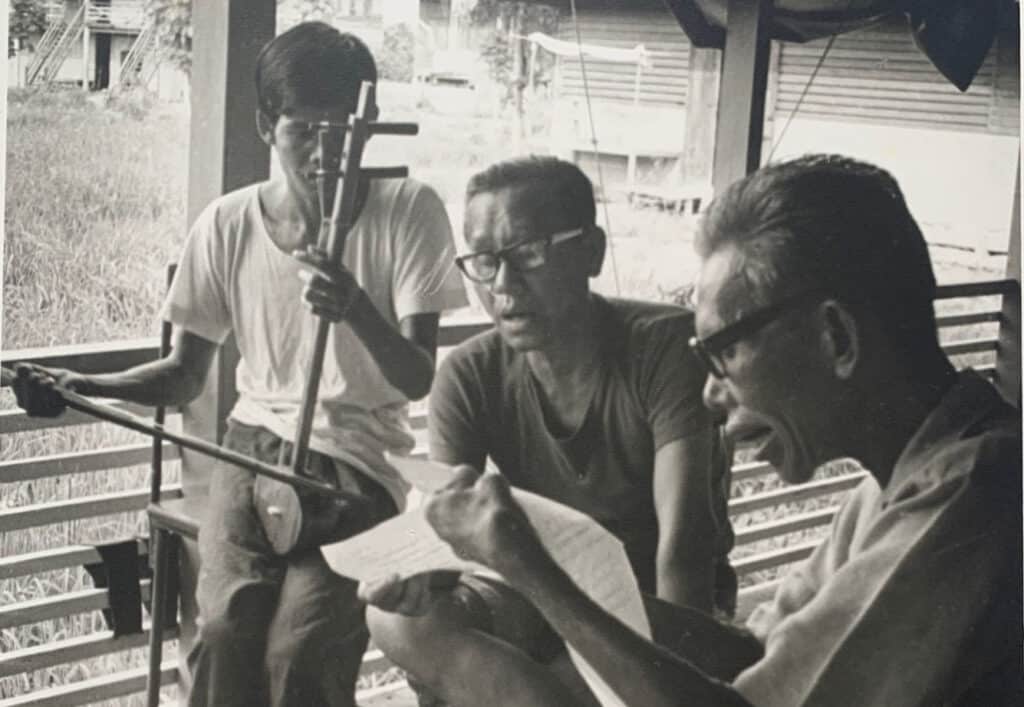
Mr. Riap Sukgasem (เรียบสุขเกสม), affectionately known as “Uncle Riap,” grew up in the fertile rice plains of Central Thailand early last century. He was a respected skipper of a river freighter that plied the river back and forth to Bangkok. But as he neared mid-life, he noticed some numb spots on his arm, then he had trouble picking up the water glass and other objects, due to the clawing of his fingers.
Next, his feet became numb and developed huge ulcers. To get out of the public eye, he became a teacher in a local Buddhist temple. The monks were sympathetic, but could not help his disease, which they called “angel’s droppings” (Thai slang for leprosy). Uncle Riap felt hopeless. There were no hospitals or clinics in the area. How could he find help?
Through the development of medical mission – medical professionals serve people like Uncle Riap in cross-cultural settings around the world. This ministry has a long history in Christianity, which continues to grow and develop.
How Medical Mission Began
From Jesus to the Middle Ages
“Jesus went through all the towns and villages, teaching in their synagogues, proclaiming the good news of the kingdom and healing every disease and sickness. When he saw the crowds, he had compassion on them, because they were harassed and helpless, like sheep without a shepherd …” (Matthew 9:35–36 ESV).
Jesus’s miracles confirmed that he was the Messiah and was ushering the kingdom of God into the world. Matthew draws attention to his compassion. Jesus’ work reminds us of the beginning: the shalom in the Garden, and the harmony, joy, peace, and tranquility of the first couple and their relationship with God. This was lost at the Fall, through human sin and rebellion. Medical mission has its roots here, as part of God’s restoration of humanity, bringing reconciliation to the God who created us “in his image.”[i]
The apostles continued what Jesus taught and modeled. Like him, they were completely counter-cultural: they rescued abandoned babies and refused to abort their own. These early Christians attended to needs wherever they found them: prisoners, orphans, widows, deformed, insane, and those with leprosy. Following Jesus’s example, they showed a respect for women and children that was unheard of in that day! These were the main factors that caused the early church to grow, slowly but steadily, over the first four centuries – until it became the majority religion of the Roman Empire.[ii]
Over the centuries, Christians set up houses of charity and hostels to at first house travelers, but then the poor, sick, and dying. In AD 360, Basil of Caesarea founded the first hospital in Cappadocia. Hospitals were established for those with leprosy. Monastic orders of men and women formed to serve in hospitals.
By the eleventh century, many cathedrals and parish churches included hospitals.[iii] Throughout the thirteenth through sixteenth centuries, more than 150 hospitals were founded in Germany. Reflecting on these events and hundreds of missionaries who went around the world during these centuries, Latourette writes, “Never before had so many professional missionaries gone out over so wide an area for Christianity or for any other religion.”[iv]
The Beginnings of Modern Medical Missions
The eighteenth and nineteenth centuries welcomed the Great Awakenings – spiritual revivals in Great Britain and the US. As a result, William Carey (1761–1834), often called the father of modern missions, went to India to as a missionary, not only preaching the gospel but aiming to transform its culture.[v]
Robert Morrison (1782–1834) was the first modern missionary to China. He and Karl Gützlaff (1803–1851) taught themselves medicine to help both the missionary community and local people. Their request for physicians set the stage for the pivotal events that birthed modern medical missions. Dr. Peter Parker[vi] (1804–1888) went to Yale at a time when revival was sweeping that region. Attaining degrees in both theology and medicine, he felt God calling him to become a missionary.
Arriving in 1834, he settled down in Canton (now Guangzhou, near Hong Kong). With the help of fellow missionaries, as well as foreign and local businessmen (Christian and non-Christian), he started the Ophthalmic Hospital, the first modern mission hospital. It was an immediate success, despite regional hostility to Christianity and foreigners.
Parker went on to treat 50,000 patients, but it was surgeries that attracted the most attention especially eye surgeries, tumor removals, and kidneys, bladder, and urinary tract stone removals. It’s been said that he “opened China at the point of a scalpel.”[vii]
Even though forbidden to do so, local civic leaders took ailing family members to the hospital for treatment. Parker and his colleagues established the China Medical Missionary Society (1838) to encourage the practice of scientific medicine, advance the cause of mission, and to propagate in Europe and North America what had become a new profession: medical mission.[viii]
Parker left China due to the Opium Wars (1840–1842). However, he found himself in high demand in the US and UK, even addressing Congress and other dignitaries. The message he proclaimed to his audiences had several aims.
It underscored the urgency of evangelization, outlined the responsibilities of missionaries, and revealed the great medical needs in China. It explored the appropriateness of medical mission as a way of overcoming suspicion and prejudice, and gaining the confidence of Chinese people. It also provided the specifics of dramatic surgical treatments. In a number of ways, his message embraced advanced thinking for the early 1840s in the fields of theology, church history, medicine, and international relations.[ix]
His visit to Scotland so inspired physicians that they founded the Edinburgh Medical Mission Society (1842), which mobilized many medical missionaries over the next century. Whether intentionally or not, Dr. Peter Parker was mobilizing for the infant profession of medical missions. This, together with the growth of the science of medicine in mid-nineteenth century, solidified the role of medical missions. Indeed, it was called the “heavy artillery of the missionary army” of the greatest century of mission advance.[x]
While early growth was very slow (only 19 doctors in China by 1880), the next few decades saw tremendous growth. By 1915, there were 446 doctors and 244 mission hospitals in 192 cities.[xi] Some of that growth came through China Inland Mission (CIM, now OMF International), founded by James Hudson Taylor[xii] in 1865. He considered medical work and education as key partners of evangelization and discipleship leading to new hospitals and churches in the remote inland provinces of China.
Contributions of Medical Missions Pioneers
Looking beyond the origins of medical missions, here are a few of many contributions of the “heralds of health”[xiii] over the years:
- Medical education: Both Drs. Edith Brown[xiv] (1864–1956) and Ida Scudder[xv] (1870–1960) went to India to educate young women (unheard of at the time). They left legacies of founding university medical schools – in the north, the Christian Medical College of Ludhiana,[xvi] and in the south, the Christian Medical College of Vellore.[xvii] These are now the premier medical universities in all India!
- Bringing Christianity into closed countries: For example, Korea completely excluded Christian missionaries until Dr. Horace Allen (1858–1932) was able to save the life of a prince who was injured in an attempted coup in 1884. The king and queen were so moved that they donated a building that became the first mission hospital in Korea![xviii]
- Elevating the role of girls and women: This is noted above under medical education. However, before Dr. Brown and Dr. Scudder, Dr. Clara Swain (1834–1910)[xix] was the first female missionary physician. She went to India to establish the first women’s hospital there.
- Pioneering preventative medicine and public health services: The China Medical Missionary Association, formed in 1886, “was the first to attempt to bring to bear on all China Western medical science, and was probably the first group of any kind or of any school of medicine, either voluntary or state-initiated, to begin to plan for the health of the entire Empire.”[xx] These efforts saved countless lives as adequate treatments were made available for diseases such as leprosy, tuberculosis, malaria, and HIV/AIDS.
- Medical research: For example, Dr. Paul Brand,[xxi] who served at Vellore Christian Medical College, delineated the nature and etiology of leprosy deformities.
- Documenting and shifting local traditional practices: Medical missionaries helped communities end practices that caused debilitation, deformity, and death. These customs include sati[xxii] (India), foot-binding (China), drug addiction, child marriages, female circumcision, and female infanticide. Drs. Thomas (b. 1937) and Cynthia (b. 1937) Hale, who were medical missionaries in rural Nepal, were some who helped to shed light on the intersection of cultural practices and medical missions. When they returned home, they wrote compelling, educational, inspiring insights into the religious, cultural, and medical aspects of missions.
Despite wars and political turmoil throughout the world, the contributions and impact of medical mission on cultures and nations continued into and throughout the twentieth century. Medical missionaries remained committed to improving healthcare of the people – body, soul, and spirit – and their communities wherever they went.
Where they found the absence of a medical system, they established it themselves. Where colonial governments established it, medical missionaries cooperated (for example, in many African countries) or complemented it (for example, in India).[xxiii]
Changes in Medical Mission
Global Expansion
When communists took over China and confiscated all 250 of the mission hospitals, several missionary doctors and nurses relocated to central Thailand, where no known Christians or medical service existed. Nurses started clinics, some specifically for leprosy patients. Manorom Christian Hospital (MCH) was built (1956). With the adding of the leprosy wing, physiotherapists, occupational therapists, social workers, and others responded to the need.
By the time Uncle Riap learned of these clinics, he had only short stumps where fingers and thumbs had been. He had no eyebrows and large ulcers on the undersurface of his feet. When he arrived at the hospital, he was amazed to find a sizable leprosy community.
Each patient had a story to tell. Some thought their deformities were due to sins from their former lives. Others believed it was fate and nothing could be done about it. Many were shunned by their families and marginalized by society. The missionaries at the hospital told each patient that the God of the universe created them, and he created every person in his own image. Several of the earliest churches in central Thailand grew out of leprosy clinics.[xxiv]
As the nurses and others got to know their patients, they asked them what they had done before leprosy. As Uncle Riap pondered this, he remembered his love for music. When he began to follow Jesus, he joined a group of leprosy and “well” Christians with musical talent. They worked together to pioneer indigenous Thai Christian worship music. Uncle Riap composed nearly 40 songs for the Thai hymnal Melodious Thai Songs (เพลงไทยไพเราะ) and inspired many more.[xxv]
The development of medical missions in Africa was slower than in Asia, initially. Yet today, it is the epicenter of healthcare mission. A recent study documented 8,000 Christian health facilities in 15 African countries. These include 1,167 mission hospitals; 6,497 health centers or clinics; and the rest are community programs, health training institutions and drug supply organizations. Not all countries with healthcare mission facilities are represented, so the total number is likely much higher![xxvi]
Shift from Hospitals to Primary Care
However medical missions is more than hospitals. After World War II, the World Health Organization (1947) mandated that all countries set up their own medical and public health services. Mission hospitals in many places became too expensive or redundant, especially in India where 800 mission hospitals shrank to a mere 200 today.
In medical missions, hospitals were deemphasized and providing basic healthcare became the new goal – focusing on communities and stressing healthy lifestyles, sanitation, and good hygiene. At the same time, medical missions shifted to healthcare missions to emphasize the prevention of disease, community development, and to encourage people to take responsibility for their own health.
Healthcare missions is also more than caring for physical needs and more than just a compliment to the proclamation of the gospel. Since the inception of healthcare missions, healthcare missionaries have been demonstrating the whole gospel. They have been attracting unreached people groups (UPGs) by relieving suffering, and serving remote unreached villages as well as urban centers.
Here’s a look at a few things that both men and women who are healthcare missionaries are doing right now:
- Serving urban poor in Manila through a medical clinic.
- Discipling young pastors of new churches in rural northwest Cambodia.
- Introducing HIV/AIDS ministry in rural areas among UPGs in East Asia.
- Treating children with disabilities from a small rural clinic.
- Offering hope to those with deformities while teaching at a prosthetics and orthotics university.
- Teaching medical English in a creative access nation, while also carefully evangelizing and discipling.
- Introducing midwifery to a UPG.[xxvii]
The Future of Healthcare Mission
Continued Role of Healthcare Missions
While mission hospitals have experienced major shifts, they remain important, especially those that provide strategic services in remote rural areas or specialty care. For example, satellite clinics – either on-site or by telemedicine – and other mission hospital-based outreach can be a lifeline in places without any other healthcare options. In terms of specialty care, hospitals like Bethany Kids Hospital in Kijabe, Kenya[xxviii] remain important to providing practical and compassionate care. Bethany reaches thousands of children in East Africa with disabilities.
These healthcare mission ministries are also likely to continue into the future:
- Medical education: Medical Education International sends academic professors to government universities and hospitals to teach and build relationships “modelling the compassion, care and love of Jesus.”[xxix] Partnerships in International Medical Education, a ministry of ICMDA[xxx] provides family medicine training at local, village levels.[xxxi]
- Indigenization: More medical professionals from the Global South are being mobilized for mission in their own countries and in other low resource countries. One group doing this is the Pan-African Academy of Christian Surgeons (PAACS, paacs.net). PAACS “trains African physicians as surgeons to care for the poor and the sick” and to share their faith in Christ. Some become cross-cultural healthcare missionaries to other African nations.[xxxii]
- Palliative care: Caring for the terminally ill and the elderly has introduced a new kind of compassionate care in many countries. This provides access to otherwise unreachable people and opportunities to share the gospel.[xxxiii]
- Telemedicine: this has been increasingly employed by many mission agencies. It utilizes both medical professional and non-professional personnel in urban and rural settings.
- Community Health Evangelism: CHE (chenetwork.org) “integrates evangelism, discipleship, and church planting with community health and development.” It is an effective model for integral mission, that trains local community health workers to serve in local villages.[xxxiv]
- Reaching the unreached: When medical professionals are incorporated into evangelistic, church planting teams, it demonstrates compassionate care. This is likely to be well-received, even by people resistant to the gospel.[xxxv]
- Creative service: Serving creatively within secular and other majority faith healthcare systems provides a witness to the distinctives of the Christian faith.[xxxvi]
- Participating in global public health work: Working alongside national governments in public health is a new paradigm for mission in pluralistic contexts.[xxxvii]
Increased Global Collaboration
Two mission agencies (SIM – simusa.org, and AIM – us.aimint.org) cooperated in a conference in Nairobi in 2022. They shared in worship, devotions, and reports of what they are doing across the African continent and beyond, asking, “How can we better partner together? As we see the changing landscape of healthcare missions, how can we prepare for more non-mission hospital opportunities?” They are partnering, dreaming, and planning for a more connected future.
The Perspectives on the World Christian Movement course has been highly influential in educating and inspiring the church about its worldwide mission, but it says little about the role of Christian healthcare missions. With the blessing of Perspectives leadership, Dr. Mike Soderling and his colleagues pioneered the new course: Christian Global Health in Perspective (cghiperspective.com).
Patterned after the original Perspectives, it includes the biblical, historical, cultural, and strategic issues in healthcare mission. In the fall of 2021 the first cohort, a global group from ICMDA,[xxxviii] began and was highly successful. It has now been taught to individuals from more than 40 countries, covering 12 time zones.
In a follow up session after the third cohort, eight participants from four Asian countries told us how much the course meant to them and how they planned to use it to fit their cultural and language contexts. This is a glimpse of the future of healthcare mission with Christian healthcare professionals from the North, East, South and West partnering together to plan the extension of the gospel to the unreached and hurting areas of the world.
Whole Person Healing
I am confident that – until Jesus returns – compassionate, integrated, whole person care taken to the peoples of the earth in Christ’s name will endure. Healthcare missionaries will continue to engage in creatively finding ways to serve individuals and populations by demonstrating and proclaiming the whole gospel wherever they go.
People around the world, like Uncle Riap, are told lies about their life, worth, and destiny. Healthcare missionaries tell patients, like him, the truth about God, sin, why the creation groans (Romans 8:22),[xxxix] and God’s plan to restore his kingdom on earth as it is in heaven. Uncle Riap’s story personifies the legacy of healthcare mission around the world. Marginalized people are introduced to the God who made them in his image, their dignity is restored, and healing is given to the whole person. Each is then empowered to creatively serve their Creator God who made them.
Neil Thompson (neiloth62@gmail.com) serves as consultant for healthcare missions with OMF International. He served as surgeon at Manorom Christian Hospital in Central Thailand, then as national director for OMF-US. In retirement, he has been advocating, mentoring, and promoting healthcare missions through writing and speaking. For three years he’s been a facilitator for Christian Global Health in Perspective, highlighting the biblical foundations, history, cultural issues, and contemporary strategies of healthcare.
[i] The Image of God (Imago Dei) as found in Genesis 1:26, 27 and Genesis 5:1 is the foundation for the Christian worldview of humanity.
[ii] Rodney Stark, The Rise of Christianity: How the Obscure, Marginal Jesus Movement Became the Dominant Religious Force in the Western World in a Few Centuries (Harper One, 1996), 73ff.
[iii] Timothy S. Miller, “From Poorhouse to Hospital,” in Healthcare and Hospitals in the Mission of the Church, Christian History, no. 101 (2011): 16, accessed May 23, 2023, https://christianhistoryinstitute.org/magazine/issue/healthcare-and-hospitals-in-the-mission-of-the-church.
[iv] Kenneth Scott Latourette, History of the Expansion of the Christian Church (Zondervan, 1971), 3:424.
[v] Vishal and Ruth Mangalwadi, The Legacy of William Carey: A Model for the Transformation of a Culture (Crossway Books, 1999).
[vi] Not to be confused with the contemporary comic hero, “Spiderman.”
[vii] A. J. Broomhall, Hudson Taylor and China’s Open Century: Barbarians at the Gates, (Hodder and Stoughton, 1989), 1:234.
[viii] Christoffer Grundmann, Sent to Heal: Emergence and Development of Medical Missions (Lanham, MD, University of America, 2005), 4–5.
[ix] Edward V. Gulick, Peter Parker and the Opening of China (Harvard Press, 1973), 97.
[x] A. F. Walls, “The Heavy Artillery of the Missionary Army: The Domestic Importance of the Nineteenth Century Medical Missionary,” in The Church and Healing, ed. W. J. Sheils (Oxford: Basil Blackwell, 1982), 290; attributed to Herbert Lankester, address delivered at the international Student Missionary Conference, January 2–6, 1900.
[xi] Patrick Fung, “Medical Work and the China Inland Mission,” Mission Round Table: The Occasional Bulletin of OMF Missionary Research 3, no. 2 (December 2007): 2, 5.
[xii] He was also a physician and was inspired by the writings of Karl Gützlaff.
[xiii] S. G. Browne et al., Heralds of Health: The Saga of Christian Medical Initiatives (London, Christian Fellowship, 1985).
[xiv] Charles Reynolds, Punjab Pioneer (Word Books, 1968); the life of Edith Brown.
[xv] Scott Sunquist, ed., Dictionary of Asian Christianity (Eerdmans, 2001), 740. Dorothy Clark Wilson, Dr. Ida (Hodder & Stoughton, 1959).
[xvi] Christian Medical College & Hospital Ludhiana, accessed May 23, 2023, https://www.cmcludhiana.in/.
[xvii] Christian Medical College Vellore, accessed May 23, 2023, https://www.cmch-vellore.edu.
[xviii] Sherwood Hall, With Stethoscope in Asia: Korea (MCL Associates, 2010), 80–83; the story of two generations of medical missionaries in Korea. That hospital is now the Yonsei University College of Medicine, in Seoul, S Korea: https://medicine.yonsei.ac.kr/medicine-en/index.do.
[xix] Sunquist, Dictionary of Asian Christianity, 809. Dorothy Clark Wilson, Palace of Healing: Dr. Claire Swain, First Woman Medical Missionary (In India) and the Hospital She Founded (McGraw Hill, 1968).
[xx] Kenneth Scott Latourette, History of Christian Missions in China (SPCK, 1929), 460.
[xxi] Dorothy Clark Wilson, Ten Fingers for God (Paul Brand Publishing, 1989).
[xxii] Sati is the custom of burning to death all the wives of the deceased man on his funeral pyre.
[xxiii] Christoffer Grundmann, “The Contribution of Medical Missions: The Intercultural Transfer of Standards and Values,” Academic Medicine 66, no. 12 (1991): 733.
[xxiv] Starting as separate churches in the 1950s, the “well” and leprosy churches merged within a generation!
[xxv] Uncle Riap’s story is similar to other leprosy patients, as portrayed in Margaret Armitage’s book, More Than Skin Deep (OMF Books, 1988). Her book tells the story of two leprosy patients and pioneer medical missions in Central Thailand.
[xxvi] Christian Health Asset Mapping Consortium, accessed May 23, 2023, https://www.ccih.org/christian-health-asset-mapping-consortium/
[xxvii] Carrie Blake, “Midwife Missionary or Missionary Midwife? Creating Sustainable Change for Mothers and Babies,” Mission Frontiers 44, no. 5 (Sept/Oct 2022): 14.
[xxviii] BethanyKids, accessed May 23, 2023, https://bethanykids.org/.
[xxix] Medical Education International – Christian Medical & Dental Associations (CMDA), accessed May 23, 2023, https://cmda.org/medical-education-international/.
[xxx] International Christian Medical Dental Associations, accessed May 23, 2023, https://icmda.net.
[xxxi] H. Morgan, “PRIME Partnerships in International Medical Education – Restoring a Christian Ethos to Medical Education Worldwide,” Christian Journal for Global Health 3, no.2 (2016), last accessed May 30, 2023: 134–139, https://doi.org/10.15566/cjgh.v3i2.127.
[xxxii] Pan-African Academy of Christian Surgeons (PAACS), accessed May 23, 2023, https://paacs.net.
[xxxiii] D. Munday and R. Powys, “Reflections on the Challenges and Opportunities for Palliative Care in Nepal,” Christian Journal for Global Health 4, no.3 (2017), last accessed May 30, 2023: 12–20, https://doi.org/10.15566/cjgh.v4i3.194.
[xxxiv] J. Paltzer, K. Taylor, and J. Patel, “A Descriptive Study of Community Health Evangelism as a Model for Integral Mission,” Christian Journal for Global Health 9, no.1 (2022), last accessed May 30, 2023: 53–67, https://doi.org/10.15566/cjgh.v9i1.643.
[xxxv] Charles Fielding, Preach and Heal: A Biblical Model for Missions (International Mission Board, 2008).
[xxxvi] N. Nungarai et al., “Considering Medical Missions in all its Different Forms: A Viewpoint from the Asia-Pacific Region,” Christian Journal for Global Health 8, no. 1 (2021), last accessed May 31, 2023: 42–52, https://doi.org/10.15566/cjgh.v8i1.523. See other examples in Kari Torjesen Malcolm, We Signed Away Our Lives: How One Family Gave Everything for the Gospel (IVP, 1990); The story of Evergreen, Taiyuan, Shansi, China. See also Editorial Team, They Came in the Spirit of Christ: MSI’s First 20 Years in China (MSI Professional Services Ltd, 2013).
[xxxvii] G. N. Cattermole, “Global health: A new paradigm for medical mission?” Missiology 49, no. 2 (2020), last accessed May 30, 2023: 189–206, https://doi.org/10.1177/0091829620972381.
[xxxviii] International Christian Medical Dental Associations, https://icmda.net.
[xxxix] D. W. O’Neill and E. Snodderly, eds., All Creation Groans: Toward a Theology of Disease and Global Health (Eugene, OR: Pickwick, 2021).
EMQ, Volume 59, Issue 4. Copyright © 2023 by Missio Nexus. All rights reserved. Not to be reproduced or copied in any form without written permission from Missio Nexus. Email: EMQ@MissioNexus.org.