by Sharon Mumper
Important news stories from the world of missions.
Wanted Theological Education
When the echo of artillery fire began to rattle windows as fighting between Croatian Serbian forces neared Osijek last fall, leaders of the Evangelical Theological Faculty there decided it was time to pull out. Determined to keep the school’s doors open, but unable to find a facility large enough to accommodate the seminary, administrators moved the school into temporary quarters in two towns in Slovenia near the Hungarian border. The term began late, with a reduced course offering, and with only half of the students of the year before.
But, most important, it began. Despite sardine-tin conditions, with students housed six or seven to a in what he terms "barracks-type" housing, students were glad to be there, says director, Damir Spoljaric.
The resolve of the school’s president, Peter Kuzmic, and other administrators not to let even civil war the seminary is an indication of the desperate need for theological education in Eastern Europe.
Once (and possibly still) the largest evangelical seminary in Europe, the Evangelical Theological Faculty has played an important in theological education throughout the region. In the last three years, scores of students from Eastern European countries have studied at the school; over half the seminary’s current 50 students are from Bulgaria and the former Soviet states.
During four decades of communist rule in Eastern Europe, theological education was severely restricted, and in some countries, altogether denied evangelicals. As a result, few evangelical pastors in Eastern Europe have had formal theological training. In some countries where churches have grown rapidly, uneducated pastors struggle to meet the needs of as many as 10 to 20 separate congregations. Clearly, more pastors are needed.
Those who would begin new training programs face formidable obstacles. Because church leaders have been denied theological training, Eastern Europe lacks theological educators. This means at first come from the West.
Wrenching social and economic changes make it difficult to establish new programs. Church leaders with the temerity to launch new projects climb into economic roller coasters for white-knuckle rides on the heights of double- and triple-digit inflation. Schools must work for years to untangle convoluted property laws.
It is not surprising that in this atmosphere, theological education by extension is flourishing. Practiced in secrecy during the years of communist rule, TEE programs are gaining a new lease on life, with hundreds enrolled in one- and two-year programs. Correspondence programs, long a mainstay of theological education in Eastern Europe, are expanding in most countries, often in combination with occasional weekend classes.
But this is not enough. Formal, full-time training is still seen as most desirable, especially for younger, new church leaders. Because Eastern European seminaries are new and small, it will be a long time before their impact is felt on the church at large. At least some promising leaders must attend schools in other countries, many church leaders believe.
"We’ve done it before and the students did not return," says Cristian Roske, a teacher at the new Pentecostal Theological Seminary of Romania. However, there is no real alternative. The educated leaders who must infuse life into the school and lend it credibility must themselves first be trained. "We will try again this year," says Roske. "We have hope now that they will return."
—–
New Hope for Thailand
"I see a great harvest coming." The pastor of Bangkok’s largest and fastest-growing church has every reason to be optimistic. "In our main church, we are seeing at least 100 people converted every Sunday," says Kriengsak Chareonwongsak, pastor of Hope of Bangkok church and leader of a church-planting movement that has shaken Thailand.
In one decade, Hope of Bangkok church went from five members to 6,000, spawning over 100 daughter churches in the process. The church established a seminary that has graduated some 1,500 from short- and long-term programs, and planted churches in the United States, Australia, Singapore, and Malaysia.
It is not a development many would have anticipated. Traditionally considered an unresponsive field, Thailand has resisted the efforts of generations of missionaries and church leaders. In 1978, after 162 years of Protestant missionary labor, the country boasted fewer than 60,000 Protestants-some .1 percent of the general population.
The reasons are not hard to find. Most Thai-some 94 percent-are Buddhist, and the religion is tied into a sense of national identity. Christianity is seen as Western and alien. Traditionally, most converts have been among the outcasts. It has not been a religion for the upwardly mobile. Closely interwoven family structures it difficult for individuals to from socially accepted values. Moreover, prolonged outside financial support fostered dependency on the West, and contributed to the "foreign-ness" of the church.
From the beginning, Chareonwongsak has broken the patterns. An indigenous church, Hope of Bangkok determined to be context-ualized, biblically and culturally relevant. A strong lay-training program equips members for personal evangelism and active participation in church programs; homogeneous cell groups build relationships; consistent, weekly Bible exposition and teaching grounds new believers; follow-up programs ensure inquirers are not lost; frequent, lively mass evangelism events and celebrations substitute for traditional Buddhist festivals. Also significant is the joyful expression of praise in the services and the operation of spiritual gifts, including healing-especially important in a country where even non-Christians believe in supernatural miracles.
Despite the unprecedented growth of recent years, Thailand’s Christians still represent a tiny minority of the country’s population. Chareonwongsak would like to change that. "My vision is to plant churches in every district in Thailand by the year 2000," he says. There are 685 districts in Thailand; already the movement has planted churches in over 100.
But the Thai pastor is not ready to stop there. "We need to cooperate to win the world," he says. He believes church planting is "the most effective and natural way to evangelize." If every local church would become what God really wants it to be, asserts Chareonwongsak, "we could win the world."
—–
Catholic Renewal
Wherever you find Roman Catholics reading the Bible and talking about faith in Jesus you don’t have to look far to find the impetus fueling the phenomenon. Invariably, say Catholic leaders, you find evidence of a charismatic renewal which first appeared some 25 years ago and continues to move seemingly arbitrarily through Catholic communities around the world.
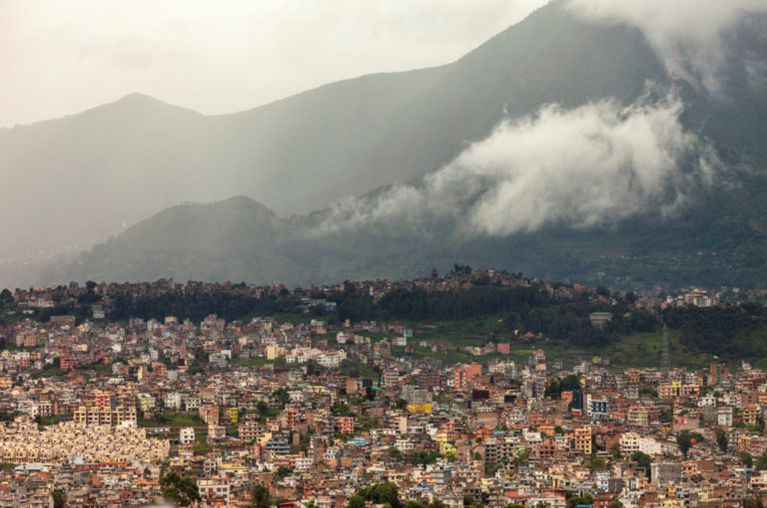
From the huge, influential Catholic church in North America to Nepal’s tiny Catholic community, the movement church leaders call a "current of grace" has swept nations, influencing Catholics in at least 130 countries. Perhaps seven percent of Catholics worldwide have been part of the movement at one time or another.
The charismatic renewal is not an organization or a program. "There are no membership lists," says Ken Metz, priest and director of the International Catholic Charismatic Renewal Office (ICCRO), based at the Vatican. It is a grassroots move of God that just "happens." Wherever the charismatic renewal appears, say church leaders, lives are changed; often entire parishes are revitalized.
"The charismatic renewal sets people’s faith on fire," says Charles Whitehead, president of the International Catholic Charismatic Renewal Council. Recharged people became involved in a plethora of new ministries. "This gives the renewal broader impact," he says. "When outsiders look at the phenomenon, they often focus on the praise and worship, but don’t see the block of people out there working in a lot of different ways, involved in the nitty-gritty."
Some charismatics have formed "covenant communities," new kinds of Catholic (and sometimes mixed) communities. Such groups have become "powerhouses" for the church, says Metz. Some are focused around special ministries, including outreach to the poor, work among prostitutes, drug rehabilitation, education, and evangelization.
Some Catholic charismatics refer to themselves as "evangelical" Catholics. It is not a term every Catholic charismatic would normally choose to describe himself, but it can be useful.
"If I were talking with someone from another tradition who was having a hard time understanding where I was coming from, I might say, ‘I think in your terminology I would be considered an evangelical Catholic,"’ says White-head. By that he would mean, he says, that he has a lively faith in the Scriptures and has experienced being born again.
Whitehead and other Catholic charismatic leaders have had occasion to explain their faith to evangelicals. As no other group within the Roman Catholic Church, the charismatic movement generates grassroots ecumenism, says Metz. The experience of Catholic charismatics has sometimes provided a bridge to relationship with evangelicals and has even made it possible, on occasion, to work together.
—–
Megagrowth in Argentina
"Several years ago, if you mentioned the Bible or talked about Jesus, there was an immediate adverse reaction," says Maria Cabrera, vice-president of the Vision de Future church of Argentina. "Now, it is not unusual to see someone standing at a bus stop reading a Bible, to find Christian books displayed in stores, or to see people preaching in the parks. There is an open atmosphere."
The last decade has brought revolutionary change in the evangelical church in Argentina, with the explosion of megachurches and gigantic crusades onto the scene. The largest of several such churches, Vision de Futuro boasts more than 90,000 members meeting at satellite churches in 120 locations.
Some statisticians claim evangelicals may comprise as much as 12 percent of the population; researcher Patrick Johnstone estimates the number may be nearer 7 percent, a figure he notes represents enormous growth over the last decade.
Over 80 percent of Argentines are members of the Roman Catholic church, although only some 7 to 13 percent of Catholics actually attend church, according to Omar Cabrera, founder and president of Vision de Futuro.
Despite this, the Roman Catholic Church exerts tremendous influence. Agrentina’s charter limits the presidency to Roman Catholics and requires the government to support the church with tax monies.
Even more alarming, as far as evangelicals are concerned, is legislation introduced last year providing prison sentences for "crimes against religious sentiment…. abuse of faith or religious beliefs- and the illegal exercise of worship." Also introduced was another more Protestant-friendly bill which would liberalize laws restricting Protestants, but still not provide for she complete religious freedom they seek.
Some evangelicals are not waiting for things to get better. Concerned about religious freedom and disgusted by perverse political corruption, evangelicals have founded a political party, the Christian Independent Movement (MCI). According to a News Network International report, even before the group had defined a political platform or introduced candidates, opinion polls indicated 5 percent of the populace would vote for MCI candidates.
Evangelicals have gained considerable stature in the country in the last decade, at least partly as a result of their exponential growth. Unfortunately, they are not the only group experiencing revival. The occult is growing as well, says Maria Cabrera, and has gained substantial credibility with bestselling books and television features.
Despite this, Omar Cabrerabelieves "the best is yet to come" for the church in Argentina. The church has experienced awakening, he says, but only now is it learning how to really minister in society. "The church is finding out what is her inheritance," he says. "I believe the real revival is coming."
Copyright © 1992 Evangelism and Missions Information Service (EMIS). All rights reserved. Not to be reproduced or copied in any form without written permission from EMIS.