
EMQ » April–June 2023 » Volume 59 Issue 2

Summary: Have we acknowledged that hunger is the single biggest concern for most unreached and under-discipled peoples? Inadequate food impacts people physically, emotionally, and spiritually. Until we address this problem, our other efforts to help communities will not bear abundant fruit.
By Craig Sorley
The world changed dramatically in 2021 and 2022. The war in Ukraine compromised gains in reducing global poverty. The dark cloud of hunger hanging over many parts of the 10/40 window and across the African continent, grew darker. Global environmental degradation continues unabated, undermining the health of our landscapes, our ecosystems, and the beauty of the creation that Christ made (Colossians 1:16). Creation’s pains (Romans 8:22) are becoming more intense.
This cancer grows rapidly, and it is inextricably linked to human suffering. In 2021, the Food and Agricultural Organization of the UN (FAO) developed a useful interactive website to highlight global hunger.[1]
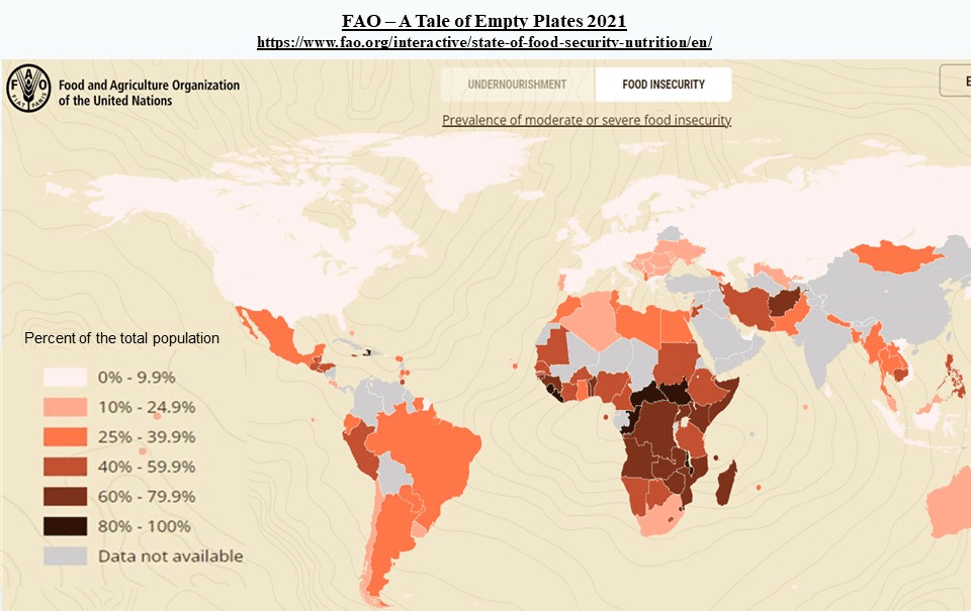
Here are a few important conclusions:
- In North America 0%–10% of our population suffers from moderate to severe food insecurity. Precise figures from the site show that less than 2.5% of our population is undernourished, and less than 1% face severe food shortages. Most of us in the West experience hunger simply as an inconvenience. We have difficulty appreciating the scope of the global hunger problem because it is out-of-sight and out-of-mind.
- In many parts of Africa, 40%–80% of people suffer from moderate to severe food insecurity. Millions also suffer in India and China, even though data is not available to show that. Sixteen times more people in Kenya struggle with hunger than in the US. This figure jumps to 32 times when we look at South Sudan.
- 22 million of Kenya’s total population of 56 million are chronically hungry. Similar conditions in the US would calculate to 132 million chronically hungry Americans – a situation we would deem as blatantly unacceptable.
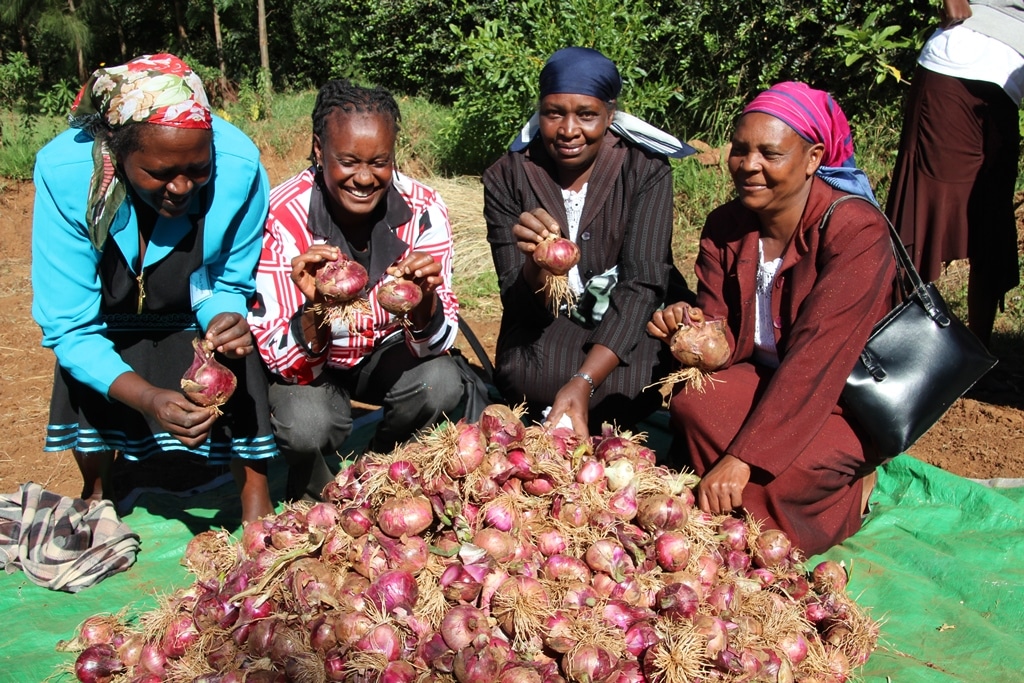
As we seek to advance the cause of Christ, how well do we understand these unfortunate facts about global hunger? Do we recognize that hunger is the predominant struggle for unreached peoples in the 10/40 window? Have we understood that millions of under-discipled believers across Sub-Saharan Africa also live in the hungriest parts of our world? And finally, are we aware that the largest proportion of these people are small-scale subsistence farmers or pastoralists who nurture plants and animals as food for their families?
The Centrality of Food
With so many pressing environmental issues that cause human suffering, it begs an important question. Where’s the best place to start? In the opening pages of his 2013 book, entitled 40 Chances: Finding Hope in a Hungry World, Howard Buffet gives a clear answer: “No one will starve to save a tree.”[2]
Buffett is a farmer who spent considerable time in Africa, and with this experience he speaks authoritatively about the complexities of food, agriculture, and hunger issues on the continent. During his early years in Africa, Howard focused on wildlife conservation. But the prevalence of chronic hunger began to haunt him. He realized, “I was never going to make a significant difference in wildlife conservation if I wasn’t willing to make a difference in the lives of people who were starving.”[3]
In his book, he argued that we need to solve the global food problem sooner rather than later. He believed that we had only 40 years to develop lasting solutions. In 2023, as I watch how quickly things are deteriorating where I serve in Africa, I think his forecast is credible.
We need to acknowledge that the quest for food is usually the foremost priority for the poor and hungry. It trumps all other issues of life. Failure to address this issue can dramatically limit our ability to engage in other problems.
Millions of small-scale farmers across the globe have great difficulty being good stewards of their landscapes. They often live hand to mouth and have no choice but to cut trees and damage other parts of creation in their struggle to survive. This explains why land degradation issues have become so acute in many parts of Africa.
A consistent supply of food brings stability to a community, and without food, all other issues of life start to unravel. Hungry children have trouble learning, people get sick, and the level of insecurity, theft, and violence increases. Community development efforts begin to stagnate. Pastors and church goers who worry about feeding their families have less energy to do ministry or to study Scripture.
Physical scarcity also has deep consequences upon the inner person. Farmers who fail to produce enough food feel insecure. They suffer from a deep sense of discouragement, shame, and hopelessness.
During a meeting I had with a group of farmers in Kenya’s Rift Valley at a local school, I drew a ladder on the chalkboard. I asked them to show me where they would place themselves on Kenya’s social ladder.
One of the farmers instructed me to draw a coffin under the ladder. Then he explained, “We place ourselves between the lowest step on the ladder and the coffin in the ground.” Another farmer quickly stood up and said, “The spirit of agriculture is dead.”
Well-Watered Gardens and the Bread of Life
As we consider the groanings of creation and people, and the centrality of food to human well-being, how can we effectively minister to those in need? More than ever, I am convinced there is an overwhelming need to combine creation stewardship with a clear connection to the gospel.
If we truly love our neighbors, we should be keenly interested in their food problems. The sheer number of undernourished people is staggering, estimated as more than 800 million by the FAO,[4] and most of these people are the poorest of the poor. The potential to show mercy and bring lasting solutions by combining creation stewardship, food, and the gospel is enormous.
Isaiah 58:9–11 paints a compelling picture that encourages us to reach out to those who are poor in spirit and poor physically:
“If you do away with the yoke of oppression… and if you spend yourselves in behalf of the hungry and satisfy the needs of the oppressed, then your light will rise in the darkness… The Lord will guide you always; he will satisfy your needs in a sun scorched land and will strengthen your frame. You will be like a well-watered garden, like a spring whose waters never fail.”
What a masterful combination of words from our Lord. Other parts of Scripture paint a similar picture. When God planted a garden “in the east, in Eden” (Genesis 2:8), we know it was meant to be a place of beauty and abundant provision for Adam and Eve. And when God rescued the Israelites from bondage in Egypt, he brought them to a place of abundance, a land flowing with milk and honey.
The story is repeated once more in the last chapter of Revelations. The picture painted there of our eternal home is breathtaking. We read about “the river of the water of life, clear as crystal, flowing from the throne of God,” and the tree of life bearing not just one crop a year, but a crop of fruit every month, twelve crops a year (Revelation 22).
If God calls us to be like a well-watered garden in a world of hunger, and if his creation was meant to be a place of abundant provision, how does Jesus also fit into this picture? How does he show concern for hunger?
In John chapter 6, when a crowd of 5,000 was following him, Jesus knew the people were hungry, and he fed them. He recognized that hunger pangs would be a distraction to his teaching. After lunch was over, he gave an interesting commanded to his disciples: “Gather the pieces that are left over. Let nothing be wasted” (John 6:12).
Most importantly, we must remember that everything we see above is just a shadow of a grand and much bigger and picture. Yes, Jesus is concerned about the food we need each day, but he has a deeper and longer-lasting passion.
He wants us to be citizens of his kingdom, so we can enjoy the superior food of eternal life. In John 6:35, Jesus declares: “I am the bread of life. Whoever comes to me will never go hungry, and whoever believes in me will never be thirsty.”Then in John 10:10, he declares:“I have come that they might have life and have it to the full.”
Our mandate is unmistakable. As we work to heal creation and relieve the sufferings of the poor, so that people have a full and abundant life, we must also work just as hard to bring these people into his kingdom. In following Christ’s command to love our neighbor, let us bring people bread they can hold in their hands, and the bread of eternal life they can hold in their hearts.
I’m not talking about giving out relief food. While providing food for starving people is sometimes necessary, extended periods of relief can demoralize people, and lead them into dependency. I’m thinking of a bigger vision that eliminates dependency on food relief. We serve the hungry best not by giving handouts, but by equipping them to feed their own families.
We need to walk alongside the poor and help them restore their small piece of creation, particularly their farms. This requires that we spend time with people, and in doing so, they will see the tangible love of Christ. As we make a real difference in their physical suffering, the natural overflow will be the development of meaningful relationships. And the best way to share the gospel (or do discipleship) is in the context of trusted relationships.
Farming God’s Way: A Gospel-Centered Starting Point for the Hungry
Farming God’s Way (FGW) is a vision and training effort that puts God back into the center of how we practice agriculture. It is relational in its approach, and it teaches that agriculture should be an act of worship that reflects our devotion to the Creator.
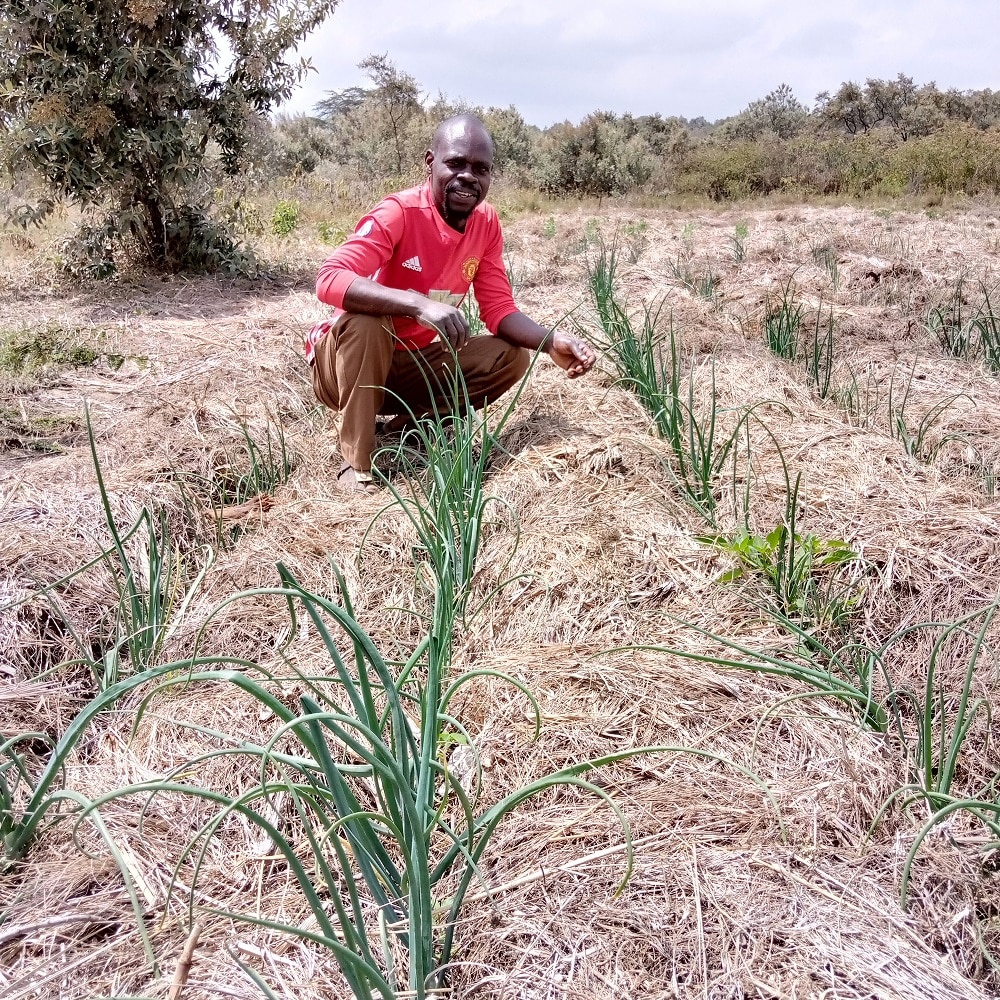
FGW is now a movement gaining traction across Africa. In essence, it is a biblically-based version of Conservation Agriculture (CA), and it has a proven track record. I have witnessed hundreds of small-scale famers doubled or tripled their crop yields, as well as strengthen their walk with Christ.
FGW begins with God’s magnificent garden (Genesis 2:8–9), and recognizes God as the First Farmer. Man’s first job description was to work and take care of that garden (Genesis 2:15). This story brings tremendous dignity into the realm of agriculture. Farming is not merely a means of growing food. But it was meant to be a noble vocation – a job of significant responsibility given to us by the Creator. As Christian farmers we need to look to the example of the First Farmer.
Deuteronomy 11:12 also provides a powerful lesson. As the Israelites enter the Promised Land, we read: “It is a land the Lord your God cares for; the eyes of the Lord your God are continually on it from the beginning of the year to its end.” The implication is clear. If the First Farmer cares for the land, each and every day throughout the year, we should follow his example.
FGW is much more than a new system of growing crops. It is a deliberate training and discipleship program that stimulates farmers to capture a vision for restoring their soils. Lives are transformed both physically and spiritually, and the impact is long term.
Millions of Christian farmers across Africa have no connection between their faith and their vocation. They receive no teaching in their churches about what it means to be a godly farmer. FGW contextualizes the gospel making it alive and relevant to the everyday life of farmers.
FGW also acts like a springboard into other topics of creation stewardship and biblical discipleship. When farmers see crop yields improving, their hope is restored. They understand why it’s so important to honor God as a good steward of their land.
As Pastor Samuel Mbugua, who attended an FGW training, explains, “If Africa is going to eradicate the dependency syndrome, then Farming God’s Way is the best way. So many technologies have been tried but the sin of man continues to weaken these efforts. Science has failed. FGW is the only way to deal with the root cause of sin in our farms.”
Farming is an important starting point, but it’s just a starting point. God wants farmers to be good stewards of the forests and other resources of creation. And as godly farmers, they are also called to become godly spouses and parents, etc.
Ibrahim Chemunay, of the Nairobi Great Commission School, agrees: “This training on farming is a refreshing aspect of the gospel that can truly transform our future both spiritually and physically. It should be taught everywhere.”
A Winning Recipe for Holistic Ministry in a Hungry World
Dr. Paul Brand is a missionary doctor who grew up in India. He wrote a short essay entitled, “A Handful of Mud: A Personal History of My Love for the Soil.” In it he describes his concern for deforestation, soil erosion, and its impact on food supplies.
He writes, “I would gladly give up medicine and surgery tomorrow if by so doing I could have some influence on policy with regard to mud and soil. The world will die from lack of soil and pure water long before it will die from lack of antibiotics or surgical skill and knowledge.”[5]
As Christians we should lead by example in responding to a creation that groans and the millions struggling to find enough food. Biblical stewardship that starts by focusing on the food problem, and integrates a robust effort to share the gospel, is a winning recipe for holistic ministry in a hungry world.
People win spiritually as they are transformed to walk closer with God. They win physically, emotionally, and economically as hope and dignity are restored, and their farms grow more food. Creation wins because it is restored. The gospel is preached, people get discipled, and God is glorified. We become a well-watered garden to the hungry, and our light rises in the darkness.
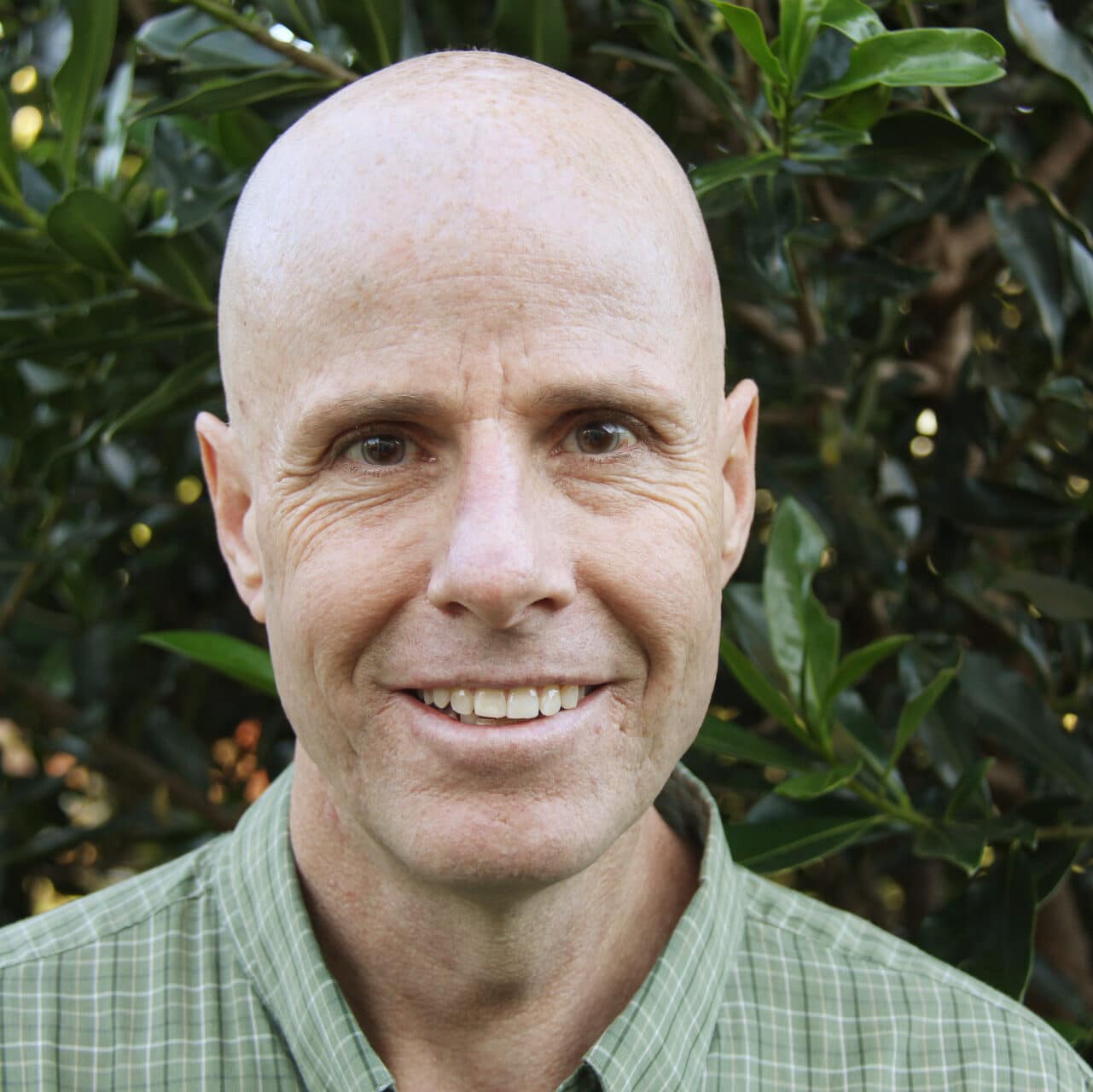
Craig Sorley (craig@creationstewardsint.org) is the Kenya director for Creation Stewards International (CSI). He grew up in Ethiopia, Uganda, and Kenya. He has a degree in environmental science, and a master’s in forestry. Craig is the author of two books: Honoring Christ in Caring for His Creation and Farming that Brings Glory to God and Hope to the Hungry. He and his wife, Tracy, live in Kenya. They have two sons.
[1] Food and Agricultural Organization of the United Nations, “A Tale of Empty Plates,” (2021). Retrieved from https://www.fao.org/interactive/state-of-food-security-nutrition/en/.
[2] Howard W. Buffet, 40 Chances: Finding Hope in a Hungry World (New York: Simon & Schuster, 2013), 12.
[3] Buffet, 40 Chances, 67.
[4] Food and Agricultural Organization, “A Tale of Empty Plates.”
[5] Paul Brand, “A Handful of Mud: A Personal History of My Love for the Soil,” in Tending the Garden: Essays on the Gospel and the Earth, ed. Wesley Granberg-Michaelson (Grand Rapids, MI: William B. Eerdmans Publishing Co., 1987), 147.
EMQ, Volume 59, Issue 2. Copyright © 2023 by Missio Nexus. All rights reserved. Not to be reproduced or copied in any form without written permission from Missio Nexus. Email: EMQ@MissioNexus.org.




