EMQ » January–March 2023 » Volume 59 Issue 1
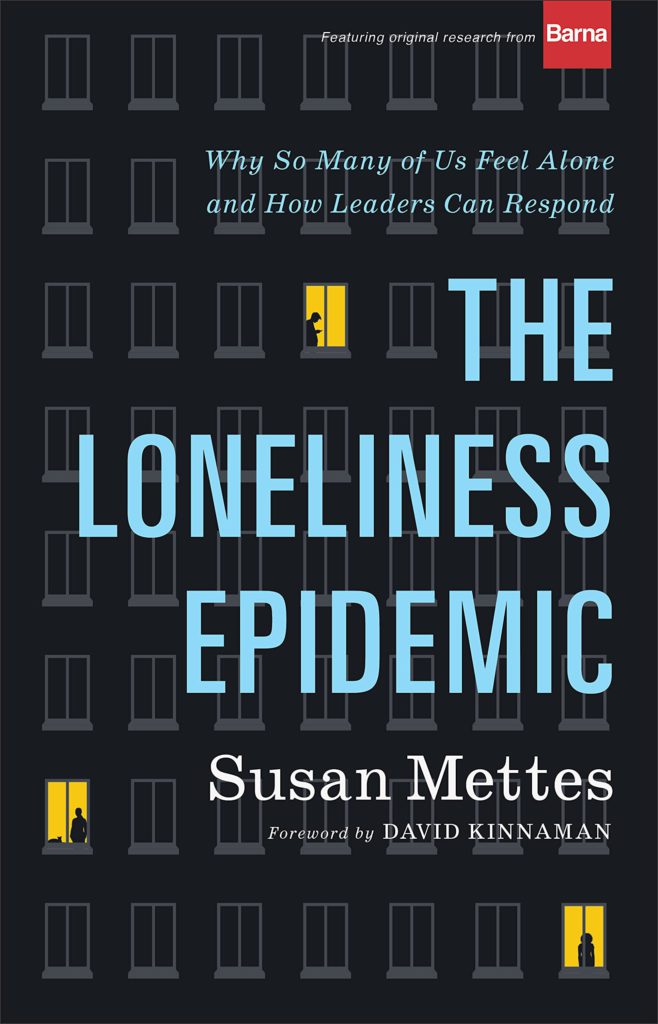
The Loneliness Epidemic: Why So Many of Us Feel Alone and How Leaders Can Respond
By Susan Mettes
Brazos Press, 2021
224 pages
US$22.99
*As an Amazon Associate Missio Nexus earns from qualifying purchases.
Reviewed by Paul Borthwick, senior consultant with Development Associates International (daintl.org) since 1998, and author of Western Christians in Global Mission (IVP, 2012) and a variety of other books designed to motivate and mobilize the people of God to global involvement.
There’s a difference between a belief and a conviction. A belief can be a simple intellectual assertion, but a conviction goes deeper into the realm of proven experience and commitment.
When my journey of faith began now more than 50 years ago, people told me that “it’s lonely at the top.” I believed them. But now – after 22 years on the staff of what would become a mega-church (at least by New England standards) and almost 25 years with a leadership development ministry, I have a conviction. Leadership can be a very lonely experience.
Working with the research efforts of the Barna Group, Susan Mettes offers a thoroughly researched, stereotype-defying, sometimes depressing, but solution-pointing analysis of the myriad of complexities related to loneliness.
Section one defines the problem and relates our current issues of loneliness as related to “fewer trusted relationships” and our “crisis of friendship.” She writes that chronic loneliness “pushes people toward death, senility, heart trouble, and poor responses to diseases” (11). She addresses loneliness within the context of church, showing that 16% of regular attenders said that they were lonely all the time (14).
Section two refutes six stereotypes about loneliness. Each chapter begins with a myth and concludes with suggestions about how to address them.
- Age: young people are lonelier than older adults! (55)
- Romance: true love is not the cure for loneliness; quality of relationship and belonging in community are the greater issues (69).
- Insecurity: poor social skills don’t cause loneliness; the greater cause is insecurity and/or lower social status (80).
- Social Media: too much time on social media is not the problem. Social media can actually complement healthy in-person relationships (87).
- Faith and Churchgoing: churchgoing alone doesn’t cure loneliness, but Christians do seem to be more resilient in combating loneliness (106).
- Privacy: we need both privacy and company to balance our battle against loneliness (112).
Section three – entitled “Protecting Against Loneliness” – features the three elements that Mettes offers to help combat loneliness: belonging, closeness, and expectations. Building again on statistical research, she adds in real-life stories which illustrate:
- How close friendships can ward off loneliness and give us a sense of belonging.
- How intimacy (through hospitality, touch, and living in community) can help cultivate relationally fulfilling closeness.
- How revising our expectations to be more realistic can help assuage FOMO (fear of missing out), the belief that everyone else’s life is as good as they paint it on social media, and the thought that everyone else’s life is conflict-free.
The concluding chapter, “Breaking the Cycle” offers a host of ideas on how to help the lonely, but the book might have closed stronger if these solution ideas were as detailed and illustrated as well as the problem statements from sections one and two.
Appendix A, “What the Bible Says About Loneliness,” is an excellent tool for group study. Appendix B, “Should We Look for a Cure to Loneliness,” offers an introduction to some deep thinking on where loneliness fits in understanding spiritual formation.
For Further Reading
Bowling Alone: The Collapse and Revival of American Community, by Robert D. Putnam (Simon and Shuster, 2000)
Margin: Restoring Emotional, Physical, Financial, and Time Reserves to Overloaded Lives, by Richard A. Swenson (NavPress, 2004)
EMQ, Volume 59, Issue 1. Copyright © 2023 by Missio Nexus. All rights reserved. Not to be reproduced or copied in any form without written permission from Missio Nexus. Email: EMQ@MissioNexus.org.