EMQ » Jan – March 2025 » Volume 61 Issue 1
[mepr-show rules=”100329″]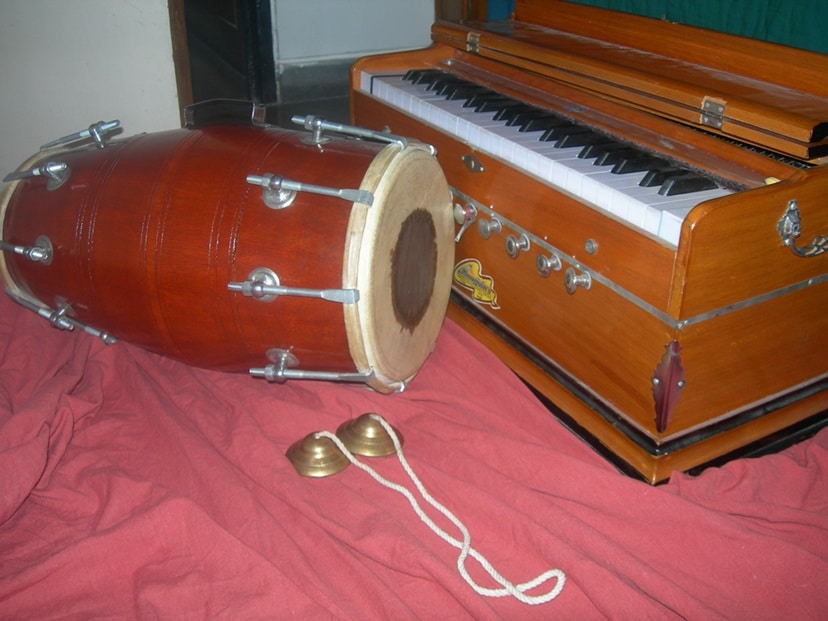
Local Arts Engagement
Summary: Engaging with local arts opens doors to encourage cultures to use their own resources in the world of the church and mission. The Creating Local Arts Together (CLAT) approach offers a practical method for anyone to engage with the arts in their own culture or across cultures.
By Laura Roberts
The richness of the arts draws people together, communicates important values and truths, allows for vibrant expression, and displays cultural identity. When the church integrates arts into its global mission, they connect the power of the arts to God’s kingdom at work on earth. Anyone can be involved in advocating for artists and encouraging the creation of local music, dance, storytelling, drama, visual arts and more. This role is not only reserved for artists or experts.
The ethnodoxology movement desires to see all people in every culture use their own local artistic expressions for the worship of God and the life and mission of the church.[i] Local arts engagement opens doors to learning deeply about culture as arts advocates encourage cultures to use their own resources in the work of church and mission.
How does a cross-cultural worker, church planter, Bible translator, artist, pastor, church, or community member become an arts advocate and spark new arts for mission? They can begin by learning through a series of conversations which culminate in encouraging new artistic creations. Brian Schrag’s Creating Local Arts Together (CLAT) provides a practical method for anyone to engage with local arts either within their own culture or across cultures.[ii]
The CLAT method is a seven-step process of conversations involving tools and methods for learning about a community, documenting, and analyzing their artistic forms. The process helps arts advocates walk alongside a community as they determine how to use their local artistic resources to reach physical, spiritual, or emotional goals.
Out of these conversations, communities create new arts for discipleship, witness, church planting, trauma healing, justice, Bible translation, and many other applications. CLAT conversations provide a practical and adaptable approach for intercultural engagement with the arts in diverse postcolonial global contexts.
CLAT Conversations Summary
Creating Local Arts Together and the condensed manual, Community Arts for God’s Purposes, provide activities and resources for each of the seven conversations.[iii] These include ethnographic research methods, artistic analysis tools, and participatory methods for community engagement. Schrag defines a community as a group of people who “share a story, an identity, and a way of interacting.”[iv]
Arts advocates apply CLAT conversations to a variety of communities, such as: extended family, church worship team, neighborhood, church small group, people group in Indonesia, organization fighting human trafficking, refugee community, Deaf evangelical group in Europe, church choir in Kenya, or an international school in Ecuador.
Conversation 1: Meet a Community and Its Arts
Meeting a community involves spending time with people, building relationships, learning what they value, how they identify themselves, and how they communicate, especially through the arts. In this initial stage of the CLAT process, you can begin by observing and participating in gatherings and events, have conversations with a variety of community members, and begin a list of artistic forms.
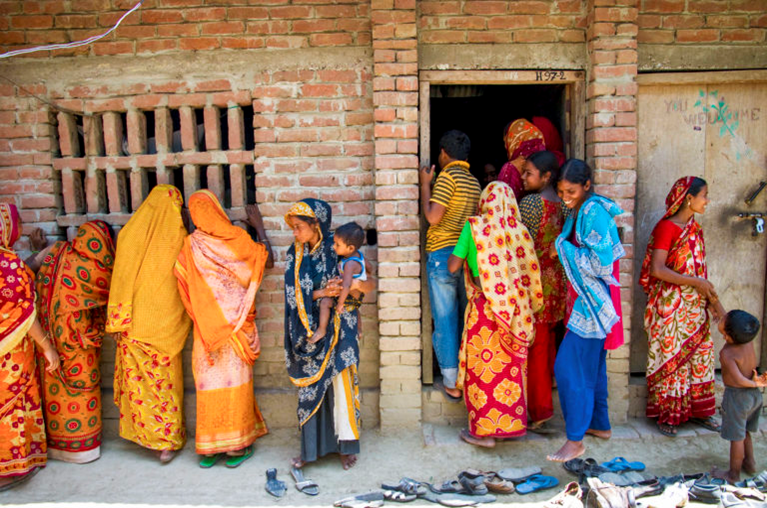
While living in India, I met a community of people who come from a Hindu background known as Yeshu bhaktas (devotees of Jesus). They gather in house churches, called satsangs, and sing Yeshu bhajans (devotional call-and-response song), accompanied by local instruments.[v]
Their services sometimes include visual elements such as incense, lamps, orange flowers, coconuts, and rangoli designs. Along with learning language and building relationships, I joined satsangs, learned bhajans, and attended Indian music lessons. I also met with local songwriters composing Yeshubhajansfor house churches.
Conversation 2: Specify Kingdom Goals
After meeting a community and building relationships, an arts advocate goes deeper by discussing strengths, challenges, and hopes for the future. During this conversation about kingdom goals or goals for a better life, you can guide a group to consider things going well and areas of difficulty in their community. Then you encourage the community to decide which strength or challenge they would like to address by choosing a goal. Broad categories of goals include identity and sustainability, healing, justice, Scripture, church life, and personal spiritual life.
Yeshu bhakta house church members and leaders came together and looked at passages in Scripture about God’s purposes for worship and song. They discussed the power of song to attract people into worship to hear about Jesus, especially when they used local devotional song styles. Many agreed they needed to learn more of these Yeshu bhajans and introduce them into their churches. Through these conversations and observations, I recognized their desire to pursue a goal of worship and witness through church gatherings.
Conversation 3: Connect Genres to Goals
After specifying a goal to work toward, a community must decide the most appropriate local art form to help meet that goal. During this third conversation, communities discuss their local artistic resources, connotations of each art form, and effects they want the new art to have on people. Then they decide what type of content could be communicated with artistic expression for pursuing their goal. At this step, a community chooses which art form they have resources to create within, and an event or opportunity where the new artistic creation could be presented.
Several house church leaders and Yeshu bhaktas desired worship in local forms that would welcome family and friends into their gathering. The community needed to learn more of these Yeshu bhajans, but there were not many available in the local Christian hymn books. Yeshu bhakta churches desired a song book comprised of Yeshu bhajans and chanted prayers, incorporating content from Scripture. This bhajan song book would help draw Hindus into worship to hear truth from Scripture about Lord Jesus.
Conversation 4: Analyze Genres and Events
A community must consider the important features of the local genre they chose before creating within that genre. Conversation four provides the opportunity to analyze and understand important characteristics of an art form. This involves asking questions about artistic features related to space, materials, participants, time, and content. The arts advocate and community members should also discuss the cultural context surrounding the local art form in areas such as artists, creativity, transmission, and emotions.
As an arts advocate, I walked alongside the Yeshu bhaktacommunity during this process. I learned the key features and characteristics of bhajansandIndian classical music by observing worship services, asking questions, listening to recordings, and taking lessons from recognized professionals in Indian classical and devotional music. When groups of Yeshu bhaktasgathered to write new songs together, they invited experienced bhajansong writers, musicians, and poets to explain important details of the form and composition of new bhajans.
Conversation 5: Spark Creativity
The next stage of sparking creativity generates excitement among community members. This conversation must build on all the previous conversations to be most effective. In this step, an arts advocate encourages a community in the process of creating something new together.
This new artistic creativity may be a showcase event, a publication, an arts workshop, apprenticeship in an art form, artwork commissioned from a professional, or another activity. Whichever activity the community chooses will lead to artistic creativity in the chosen genre from conversation three, accomplishing their goal from conversation two.
Yeshu bhakta believers gathered to write and record new Yeshu bhajans. Sometimes new Yeshu bhajans were written during a collective workshop, other times recorded from solo song writers. I worked with the song writers and churches as they decided which songs would be included in the song book. As we developed the song book together, they chose colors and images representative of local devotional song books. We also produced a CD of basic recordings of new Yeshu bhajans gathered from song writers and workshops.
Conversation 6: Improve Results
After creating new art forms, communities discuss how they may improve the new works. Each culture and community will have different local ways of evaluating and assessing their artistic creations. This conversation guides a community to consider whether their new art accomplishes the intended effects and goals chosen earlier.
For the Yeshu bhakta community, recording songs helped them listen to and improve the songs after writing them. Also, during the collective songwriting workshops, participants would play their songs for each other, then encourage, constructively criticize, and help each other polish the songs. Several of the songs were also tested in worship gatherings to ensure they were singable and well received by Yeshu bhaktas and friends.
Conversation 7: Celebrate and Integrate for Continuity
Communities following the CLAT process should make plans for integrating new artistic creations into the life of the community in sustainable ways. This includes celebrating and sharing it with others and continuing the process of creating together. A community may decide to start the CLAT process again, to make creating together a regular and intentional habit.
After creating new songs together, Yeshu bhakta groups gathered to praise and thank God for the new songs he gave them. The song writers took the new Yeshu bhajans back to worship gatherings and taught them to others. The Yeshu bhajansongbook and CD was shared with house churches and spread quickly across North India. Other Yeshu bhakta churches became inspired and created more songbooks, CDs, and even a mobile phone application for Yeshu bhajans, adding to the collection of more Yeshu bhajans for house churches to use.
CLAT Conversations for Diverse Contexts
Artists, cross-cultural workers, pastors, church members, and many others apply these conversations to advocate for local arts in diverse global contexts, because they are practical and accessible for a variety of settings and communities. Many of the methodologies and tools incorporated into the CLAT process contribute to its adaptability and effectiveness. Some of those methodologies include participatory methods, and best practices for cross-cultural engagement.
The CLAT process utilizes several participatory techniques and tools as an arts advocate works through each conversation with a community. Participatory methods engage and involve everyone in interaction. People perform activities for themselves rather than being taught or told what to do, and everyone’s voice contributes. The facilitator of a participatory approach guides times of discussion and comes alongside people as they make plans and decisions.[vi]
CLAT as a participatory approach allows an arts advocate to learn about a community’s goals and art forms, while they invite participation from a variety of community members, including artists and gatekeepers. As the arts advocate works through CLAT conversations they facilitate community-led decisions based on local resources.
Arts advocates effectively applying CLAT use this participatory approach to guide conversations ensuring each person is actively involved and heard. Because the CLAT process focuses on local agency, local voices, and use of community resources and art forms, the application may be adapted for any context and culture.
The global spread of the CLAT process testifies to its diverse, cross-cultural appeal. The Arts for a Better Future (ABF) workshop serves as the main training context for teaching the CLAT process to arts advocates.[vii] Over the past thirteen years, ABF facilitators trained over 1,200 participants from over 60 countries in the CLAT method. ABF meets a key need by providing theologically grounded training for arts in mission based on the tested methodology of CLAT, teaching participants skills for cross-cultural arts engagement with a community.[viii]
The content of ABF provides participants with a theological foundation for vibrant local arts in church and community, along with knowledge and tools for applying the CLAT method. ABF guides participants to understand, appreciate, and encourage diverse artistic expressions of all communities around the world. The content of the Arts for a Better Future workshop and the CLAT process represents best practices for intercultural engagement within current postcolonial global contexts.
CLAT Conversations for Postcolonial Arts and Mission
The CLAT process focuses on local agency, local voices, and use of local art forms. The ethnodoxology movement arose out of and in response to colonial mission practices which discouraged the use of local artistic forms in indigenous cultures. Ethnodoxology methodologies, seen in the CLAT process and ABF workshop, are an attempt to encourage local agency and artistic expression.[ix]
Colonial attitudes led to a method of “bring it – teach it,” where outsiders came into a culture with their own motives and foreign art forms to teach a community what they wanted them to know. In contrast, the CLAT process encourages participants to enter into cultural engagement from a posture of “find it – encourage it,” by working through the conversations for discovering local art forms to meet local needs, decided by insiders in the community.[x]
The long-term effects of colonialism and the missionary movement from the past 200 years still exist in current postcolonial contexts, leading to suspicion of Christian mission and methods.[xi] Anyone involved in global and cross-cultural service must carefully consider the mistakes of the past, and evaluate their current methods to avoid the colonial or neocolonial mindset and approach.
The CLAT process centers around creating local arts together. It encourages arts advocates to learn from local cultures and communities and to encourage local agency in decision making. The CLAT process emphasizes collective decision making, creativity, and use of local resources. It also provides opportunity for theologizing through local forms, drawing on content and themes most relevant and understandable to that particular community.[xii]
Christian engagement with the postcolonial world should include respect and humility with a willingness to learn; humanity; greater faithfulness; and mutual transformation. Several of these ideas are reflected in the core tenants of ethnodoxology and the seven conversations of the CLAT process. The CLAT focus on building relationships, learning from communities, and working together involves emptying yourself, being the guest, receiving hospitality, seeking reconciliation and justice, submitting to the other, and giving of yourself.[xiii]
Laboring Together
This new age of polycentric mission refers to the many centers of influence in Christian faith and mission. The polycentrism framework values mutual ministry with people from Africa, Asia, Europe, North America, and South America, all laboring together.[xiv] Postcolonial, polycentric Christian mission must involve committed partnerships and reciprocal relationships that cross cultures to learn from each other, dialogue together with humility, listen with grace to new voices, and make room for people from every nation and tribe to labor together for the kingdom.
CLAT conversations represent provide an example of how to do this through integrating the arts into mission. The creating local arts together process endeavors to help global leaders, teachers, ministers, and artists engage in learning about cultures and their artistic forms of communication to encourage new expressions of creativity for the thriving of a community.
The CLAT process serves as a model for developing respectful, humble partnership in a postcolonial world of polycentric mission. It provides a framework for intercultural dialogue, theological exchange, and a relational commitment to learn from each other.

Laura Roberts (laura_roberts@diu.edu) is a PhD student and adjunct faculty at the Center for Excellence in World Arts at Dallas International University. She also serves as the Arts for a Better Future global coordinator for the Global Ethnodoxology Network. She previously worked in community development and church planting in South Asia, facilitating workshops in South Asian art forms. She lives with her husband and two daughters in Dallas, Texas.
[i] James R. Krabill, “Why Arts and Mission Belong Together,” Mission Frontiers 45, no. 5 (October 2023): 8–10; James R. Krabill et al., eds., Worship and Mission for the Global Church: An Ethnodoxology Handbook (Pasadena, CA: William Carey Library, 2013).
[ii] Brian Schrag, Creating Local Arts Together (Revised and Updated): A Manual to Help Communities Reach Their Kingdom Goals, revised and updated (Pasadena, CA: William Carey Publishing, 2025); Brian Schrag and Julisa Rowe, Community Arts for God’s Purposes: How to Create Local Artistry Together (Littleton, CO: William Carey Publishing, 2020).
[iii] Schrag, Creating Local Arts Together; Schrag and Rowe, Community Arts for God’s Purposes.
[iv] Schrag and Rowe, Community Arts for God’s Purposes, 1.
[v] Darren Todd Duerksen, Ecclesial Identities in a Multi-Faith Context: Jesus Truth-Gatherings (Yeshu Satsangs) Among Hindus and Sikhs in Northwest India, American Society of Missiology Monograph Series, vol. 22 (Eugene, Oregon: Pickwick Publications, 2015).
[vi] Susan Keller, “Deciding and Planning Together: Engaging Oral-Preference Communicators Using a Participatory Approach,” Orality Journal: The Word Became Flesh 4, no. 2 (2015): 9–40.
[vii] For more information on Arts for a Better Future workshops, see https://artsforabetterfuture.org.
[viii] Robin Harris and Brian Schrag, “A Practical Approach to Arts and Mission Courses: Reflections on ‘Arts for a Better Future,’” in Arts Across Cultures: Reimagining the Christian Faith in Asia, ed. Warren R. Beattie and Anne M. Y. Soh (S.l.: Fortress Press, 2023), 165–82.
[ix] Brian Schrag and Muriel Swijghuisen Reigersberg, “Ethnodoxology,” in The Oxford Handbook of Music and Christian Theology, ed. Steve Guthrie and Bennett Zon (Oxford: Oxford University Press, forthcoming).
[x] Schrag, Creating Local Arts Together.
[xi] Michael Rynkiewich, “Colonialism, Neocolonialism, and Postcolonialism,” in Soul, Self, and Society: A Postmodern Anthropology for Mission in a Postcolonial World (Eugene, Oregon: Cascade Books, 2012), 169–97.
[xii] John Cheong, “Polycentrism in Majority World Theologizing: An Engagement with Power and Essentialism,” in Majority World Theologies: Theologizing from Africa, Asia, Latin America, and the Ends of the Earth, Evangelical Missiological Society Series 26 (Littleton, CO: William Carey Publishing, 2018).
[xiii] Shin Ji Kang, “Postcolonial Reflection on the Christian Mission: The Case of North Korean Refugees in China and South Korea,” Social Sciences 5, no. 67 (2016): 1–11; Rynkiewich, “Colonialism, Neocolonialism, and Postcolonialism”; Schrag, Creating Local Arts Together.
[xiv] Allen Yeh, “What Is Polycentric Mission?,” Evangelical Missions Quarterly 60, no. 1 (January 2024), https://missionexus.org/what-is-polycentric-mission/; Mitri Raheb and Mark A. Lamport, eds., “The Interpretative Challenge for Grace and Peace in the Global South,” in Emerging Theologies from the Global South (Eugene, OR: Cascade Books, 2023); Cheong, “Polycentrism in Majority World Theologizing: An Engagement with Power and Essentialism.”
EMQ, Volume 61, Issue 1. Copyright © 2025 by Missio Nexus. All rights reserved. Not to be reproduced or copied in any form without written permission from Missio Nexus. Email: EMQ@MissioNexus.org.