EMQ » Oct – Dec 2024 » Volume 60 Issue 4
Training the Deaf
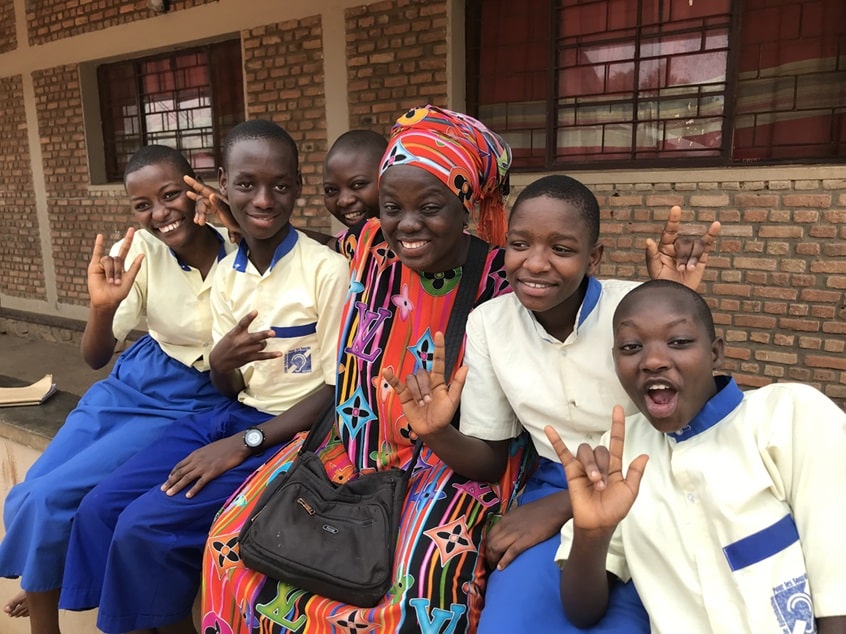
Summary: Deaf people in developing nations around the world face formidable challenges. Deaf Ministries International (DMI) has found that education, training, and the love of Christ can help Deaf people overcome barriers, live productive and meaningful lives, and give back to their communities.
By Matthijs Terpstra (Deaf) and Andrew Miller (hearing) with In Yeong Heo (Deaf), Fabien Hamissi (Deaf) and Papy Kwabo (Deaf)
The challenges faced by the Deaf in developing countries are formidable, but they also highlight the need for the gospel. In developing countries, those born deaf or who become deaf through illness are afforded few, if any, of the support structures that the Deaf in developed countries now take for granted.
For many, government schools, family support, and community programs simply don’t exist. While some Deaf fortunate enough to be born into loving families can gain a basic education and find menial work, many others are ostracised from their communities, hidden away in shame by their families, beheld as a curse and disposed of as infants into pit latrines, or end up on the streets begging, stealing or in prostitution. Many don’t even know their own name.
Against this background, Deaf Ministries International’s (DMI) outreach to the Deaf over the last 40 years has seen 10 schools for the Deaf start, dozens of employment projects for the Deaf flourish, and 180 churches for the Deaf planted and grown. These developments were not the fruit of large missional backing or denominational planning. They had humble beginnings.
DMI’s Beginnings
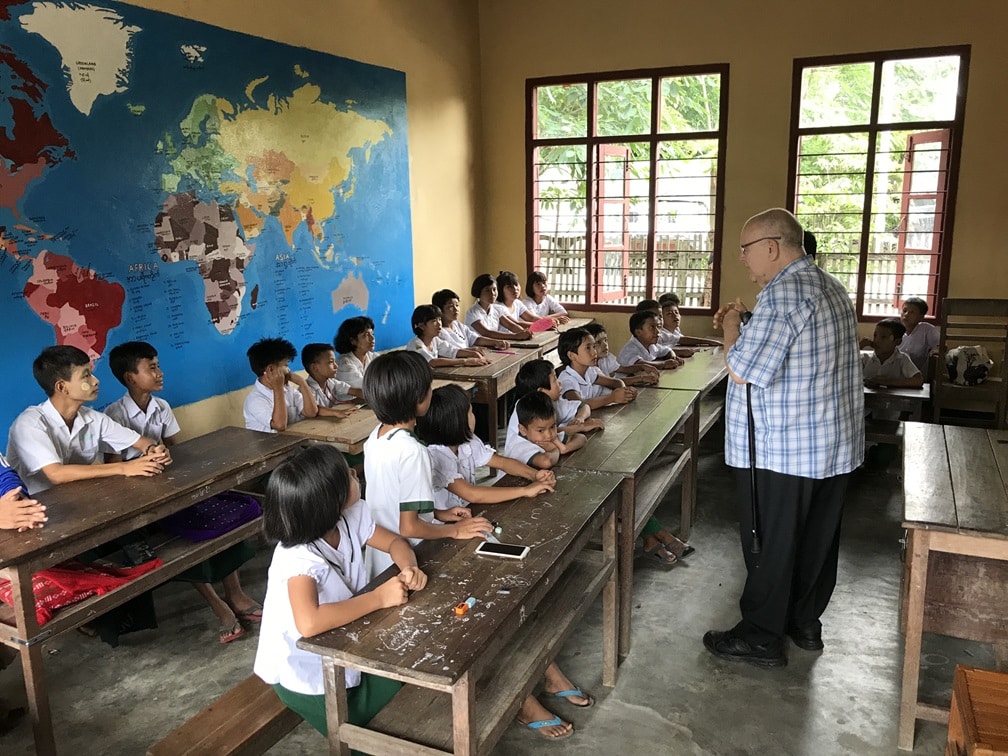
Australian Neville Muir and his Norwegian wife, Lill, had a simple mission: take the gospel, education, and employment to the Deaf, and God would do the rest. They began ministry to the Deaf in South Korea with in 1979. In the first three years, they planted 13 churches for the Deaf. Right from the start, Neville trained the Deaf to minister to and share the gospel with the Deaf.
Neville embodied the love of 1 Corinthians 13 in his ministry to the Deaf. He showed them that they were valuable, capable of living dignified lives, and a blessing. Many of the Deaf who were ministered to by Neville went into ministry to the Deaf themselves because “they wanted to love like Neville loved.”
Heo In Yeong was one of the first Deaf children that Neville supported in South Korea. When he was five, his father and brother died, and his mother was in a coma for a month after inhaling smoke from a coal fire. His mother survived, but it was Neville who paid for In Yeong’s education and visited frequently to care for him and share with him about the love of Jesus. In Yeong was moved by Neville’s example, and when he became an adult, he followed him into ministry.
“It was by example,” he explains, “not by anything he said. I saw Neville travelling to many places and listened to the many stories about how he helped so many people. As I grew up, I felt that that is what I wanted to do, too.”Today, In Yeong is a pastor to the Deaf in Korea, DMI’s national representative, and a member of the International Board.
It’s not enough to put a Bible in the hands of the suffering and to wish them well. In 1983, DMI’s first school for the Deaf was established in the Philippines. Last year, the school and its associated church and employment center celebrated 40 years of Christian education and service.
Word spread and in the following years, more schools were started. Ministry to the Kenyan Deaf began in 1986, followed by the Deaf in Uganda in 1992. Other countries in Africa, Asia, and the Middle East followed soon after. More and more Deaf and hearing friends of the Deaf got involved. In 1998, Deaf Ministries International registered as its own entity.
Today, DMI is a global organization of Deaf and hearing people who serve together on DMI’s boards, staff, and among its teams of financial and prayer supporters. When Neville passed away in 2020, the International Board decided to replace Neville with two co-leaders. Matthijs Terpstra, a young Deaf Dutchman serves from Norway. And Andrew Miller,[i] a not-so-young hearing man with poor signing skills, leads the Melbourne, Australia office from Sydney. It’s an unconventional approach to leadership, but it works. We are a platypus in the ministry world!
DMI has also grown into an international Christian ministry network of Deaf organisations, each growing and at various stages of autonomy, yet serving under the guidance and overarching regulations and support of DMI’s international boards. Fields adhere to a partnership agreement with DMI yet are encouraged to vision-cast and manage their own staff and funding as they prayerfully see fit. Coordinating with other mission groups to the Deaf has also been pivotal for the wise use of resources and effective outreach.
Increasing Opportunities for Education
DMI’s approach to ministry to the Deaf has always taken a practical approach, and one of the key needs of the Deaf worldwide is increased opportunities for education. We desire to see Deaf use their education to become leaders and pioneers in education, business, politics and society. Since starting our first school 40 years ago, we have established three types of schools for the Deaf. The first are the K–12 schools which provide a general Christian education. Graduates typically go on to meaningful employment or further education.
Sylvia is one person who has benefited from one of our schools. She was born deaf and orphaned at the age of three. She was taken in by her grandmother who was an alcoholic and who regularly beat her, forcing Sylvia to live out on the streets of Lira, in northern Uganda, a dangerous place for a young Deaf girl to spend her time. At the age of nine she ran away to stay with relatives in Kampala. They took her in but had no time for a Deaf girl and treated her harshly.
The following year she met another Deaf girl who encouraged her to apply for sponsorship to study at DMI’s Deaf school. Sylvia received sponsorship, studied well at the school and graduated in her early 20s. She was given an internship in a cafe where she excelled and today works as manager.
Sylvia’s education and employment were major steppingstones in her life. But the greatest change came about when she began to attend the Deaf church in Kampala. At 13, Sylvia gave her life to Christ and was baptised. She has never looked back. Today Sylvia is the worship leader at the church and leads worship with an unmistakable, unspeakable joy.
Our schools not only address the needs of the Deaf, many also serve those with additional disabilities. Kyaw Nyein Htew (Hugh) is a young man at our Deaf school in Myanmar. His large frame and movements bely the physical and intellectual disabilities he carries. Teachers had said he could never learn. While his intellectual abilities remain limited, he has learned to love. He participates enthusiastically in all activities at our school, and his love and joy have been returned with love from his classmates. Learning to love is more than some very intellectually capable people have learned to do.
The second type of schools for the Deaf established by DMI are vocational schools. These train young Deaf adults in trades (carpentry, hair design, brick laying, etc.) to ensure that all Deaf can find or create meaningful employment opportunities. Some schools also focus on entrepreneurship. Days of begging or hiding away in shame disappear as Deaf people obtain the skills they need to fully participate in society.
The third are the seminaries for the Deaf. These spring from the heart of DMI’s ministry and are central to our grand vision: training the Deaf to take the gospel to the Deaf. Our seminary for the Deaf in Uganda has produced dozens of dynamic pastors and evangelists including Ben Muyinza.
Ben lost his hearing at the age of 15. Ostracised by his friends, community, and even many of his family members, he withdrew from society and lived hidden away at home. A DMI pastor invited him to join DMI’s seminary in Uganda. The pastor began to send Ben on mission trips even before he graduated from the college. Hundreds of Deaf responded to Ben’s preaching. Ben and his wife, Veronica, are now DMI missionaries to the Deaf in Tanzania. They’ve planted two churches, five fellowships, and baptised hundreds more into the faith.
A new bigger seminary is now being built in Rwanda. It will provide Christian ministry training for the Deaf from all over the African continent in Christian ministry who can then return to their homelands to reach the Deaf in their own local sign language. Our goal is to have seminaries for the Deaf in Europe/the Middle East and Asia as well.
Securing Meaningful Work
Another key aspect of DMI’s practical ministry approach is its employment programs that help secure meaningful work for the Deaf. The first is a micro loan program. Instead of individual loans to workers (as we did in the earlier days of this program), we give small group loans made available to anyone who is connected to the partner organisation (church members, employers, family members, etc.).
Instead of DMI directly managing each individual loan, group loans are managed by our partner organisations. This approach produces high returns. Those who successfully repay their loan can apply for a second. It’s encouraging to see not only how many businesses are repaying their loans on time, but the creative approach to entrepreneurialism this approach produces. This program has helped business as varied as farms, stores, billiard parlours, and small real estate ventures begin.
DMI’s other employment program involves community grants. Unlike the small group micro loans which need to be repaid and from which individuals receive all proceeds, the community grants need to be paid forward into the community, not back. These aim to achieve goals such as education, employment, and revenue making.
One example is a farming project we began to provide lunches at our school in the Democratic Republic of the Congo. We started the program in September 2020, providing US$1,820 per month (about $1 a day per student). We continued to provide this support for nine months while crops grew. Upon the first harvest in month 10, we were able to reduce our support to 75%. In the 12th month, it was 50%. In January 2022, the program became fully self-sustainable, achieving all its aims.[ii]
Another example is our five sewing workshops that operate across Burundi’s provinces. The workshops empower dozens of Deaf women and strengthen their communities. These dedicated artisans support their families and contribute significantly to Deaf society. Three times a year, they generously donate a substantial portion of their workshop profits – a remarkable sum in Burundi – back to the Deaf community. Our Bujumbura workshop alone has equipped over 135 Deaf individuals with valuable sewing skills.
More Remains to be Done
As more Deaf are trained to serve and are in turn, teaching more Deaf, dozens of Deaf become followers of Jesus, are baptized, and get connected to Deaf church communities every year. It is a joy to see these fruits of practical Christian ministry. But we’re only scratching the surface.
Fewer than two percent of the world’s 70 million Deaf people have access to the gospel.[iii] Numerous organisations are working tirelessly to rectify this through signed Bible translations and discipleship programs. Working together, in shared or parallel missions, we look forward to reaching the Deaf in ever growing numbers in the years ahead. Until then, we invite you to join us in prayer that God will continue to grow the community of Deaf believers worldwide.
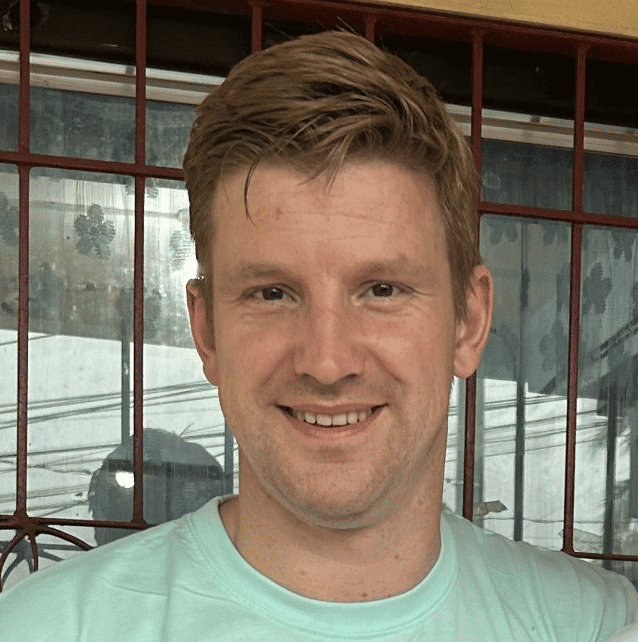
Matthijs Terpstra (matthijs.terpstra@dminorge.no) is the international development coordinator of Deaf Ministries International (DMI). He has been serving with DMI since 2015. He is Deaf and based in Norway.
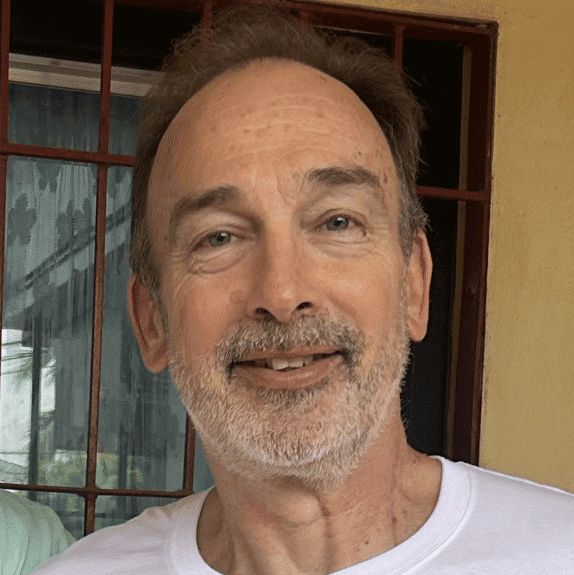
Andrew Miller (andrew.miller@deafmin.org) is the international operations coordinator of Deaf Ministries International (DMI). He was a supporter and volunteer with DMI for 25 years before joining as staff in 2020. He is hearing and based in Australia.
[i] Most of DMI’s global team are Deaf. Neville, Lill, and Andrew are some of the few hearing people who have served with DMI.
[ii] Sadly, because of warfare in the area, we had to suspend the program earlier this year.
[iii] Katey Hearth, “Deaf Church Planting Begins in Angola and South Africa,” Mission Network News, April 21, 2022, https://www.mnnonline.org/news/deaf-church-planting-begins-in-angola-and-south-africa/.
EMQ, Volume 60, Issue 4. Copyright © 2024 by Missio Nexus. All rights reserved. Not to be reproduced or copied in any form without written permission from Missio Nexus. Email: EMQ@MissioNexus.org.