EMQ » Oct – Dec 2024 » Volume 60 Issue 4
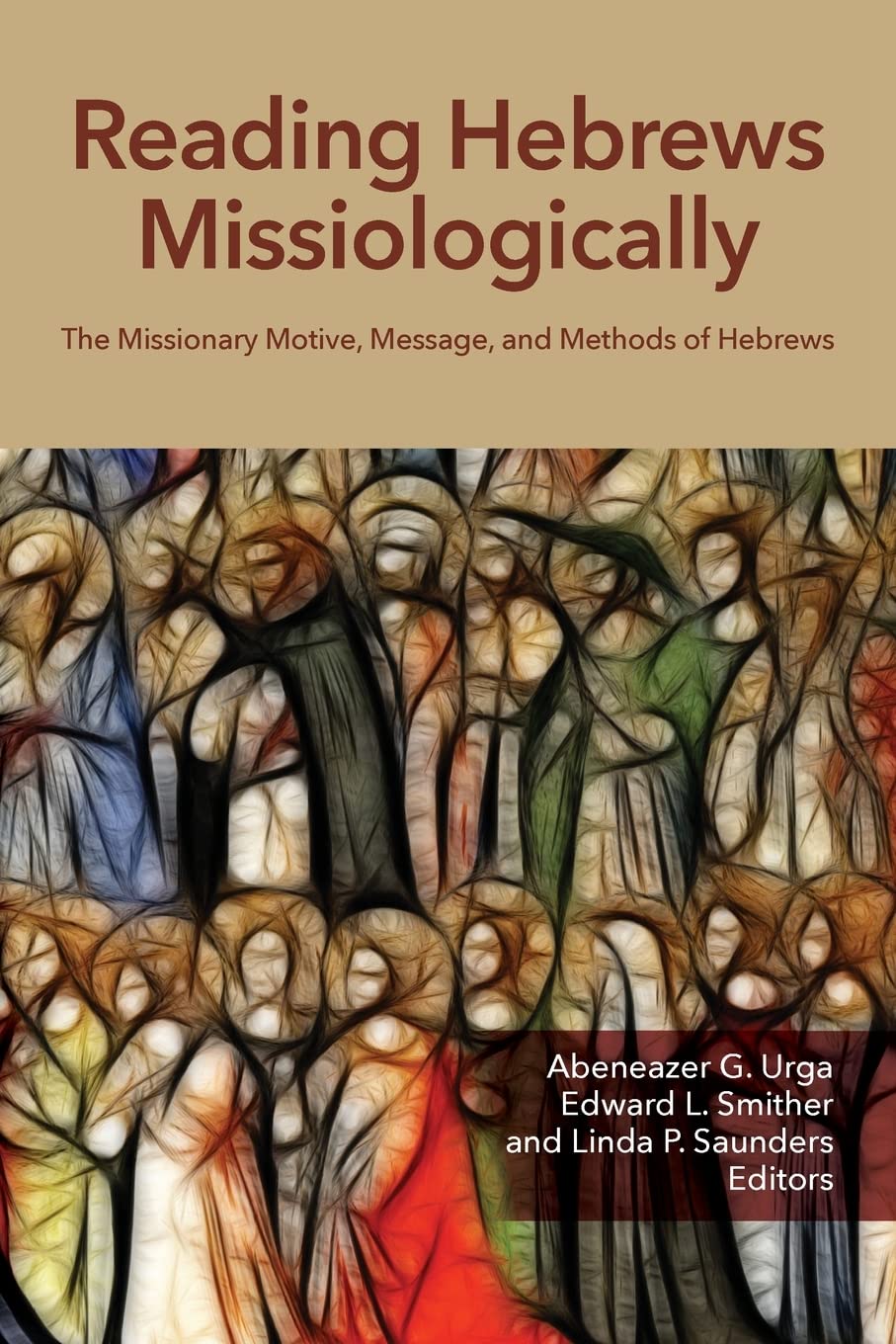
Reading Hebrews Missiologically: The Missionary Motive, Message and Methods of Hebrews
Edited by Abeneazer G. Urga, Edward L. Smither, and Linda P. Saunders
William Carey Publishing, 2023
216 pages
US$17.99
*As an Amazon Associate Missio Nexus earns from qualifying purchases.
Reviewed by David H. F. Ng who has lived and served in cross-cultural ministry and training in Europe, Asia, Africa, USA, and Australia. He is the program director for the master of missional leadership at Melbourne School of Theology, Australia.
What does the book of Hebrews have to do with mission? “Reading Hebrews Missiologically” aims “to tease out the theology of mission in the book of Hebrews” (10). It rightly states that much discussion on the theology of mission has focused on Jesus and Paul and this book aims to “fill this gap” (10).
Eleven contributors with lived cross-cultural experience in Africa, Asia, Latin America, Europe, and the Middle East, together offer chapters within the three main sections of the book: the missionary motive (part 1); missionary message (part 2), and missionary methods of Hebrews (part 3). In each part, several theological issues are selected for this theology of mission according to Hebrews. The book ends with a review of the book in a final chapter by Robert L. Gallagher (part 4).
I found the reflections on theological themes often stimulating, especially those that integrated their cross-cultural experiences. The diversity in the lived experience of the contributors offers valuable theological reflection in different global contexts. I also appreciate that we have another resource to interact with on Hebrews and mission. Resources on books of the Bible that are seldom dealt with (such as Hebrews) are important if we are to develop a more biblically and theologically robust foundation for mission in the New Testament. In our globalized world, the more these contributions reflect on the significance of theology in non-Western contexts, the better.
Readers who were hoping for a unified missional hermeneutical approach that considers the theme of mission in the unfolding of Hebrews will not find it here. The lack of such a unified approach is, in part, due to, as noted by Robert Gallagher, the lack of a clear definition of the word mission and that each author seemed to have “his or her own perspective of the term” (371). Similarly, I would also add that the terms missiologically (in the title) and missionary (in the three main parts) needed to be explained as these terms (and others such as missional) have been used to describe hermeneutical approaches that may overlap in some ways with a theology of mission but are also distinctive at the same time.
Reading Hebrews Missiologically would be of interest and stimulating to readers who are interested in developing a theology of mission for the book of Hebrews in western and non-Western contexts.
For Further Reading
Reading the Bible Missionally edited by Goheen (Eerdmans, 2016)
Why Mission? by D. Flemming (Abingdon Press, 2015)
EMQ, Volume 60, Issue 4. Copyright © 2024 by Missio Nexus. All rights reserved. Not to be reproduced or copied in any form without written permission from Missio Nexus. Email: EMQ@MissioNexus.org.