
EMQ » Oct – Dec 2024 » Volume 60 Issue 4
United in Love
Summary: People with disabilities comprise the largest unreached people group in the world, today. We are also often missed as participants in God’s global mission. As a 22-year-old with Cerebral Palsy, I want people to see me for who I truly am: a daughter of God, who is loved, forgiven, important, and useful in the kingdom of God.
By Jenna Sanderson with Chantelle Sanderson
I am a 22-year-old extrovert with Cerebral Palsy and a pastor’s kid who enjoys the limited independence I get from my power wheelchair. I am always happy to drive over to meet new people. I am not afraid to start a conversation, but I know it is not easy for people to understand me. My speech is soft and can be difficult for people to hear clearly, but I have so many thoughts I love to share.
People ask me all the time if I have a device I can use to make communication easier, but I really like using my voice. It is still faster for me to speak than to organize my arm muscles to use a device for every word in a face-to-face conversation. Disability may be my reality, but I don’t want it to be my identity. I am more than a list of impairments. I want people to see me for who I truly am: a daughter of God Most High who is loved, forgiven, important, and useful in God’s kingdom.
I feel fortunate to have had positive experiences participating in church, but I am very aware that many people with disabilities and their families have not. My experience as a person with disabilities is only one story in a vast spectrum of disabled people. There are individuals of all ages and people groups whose disabilities span from physical and intellectual ones to mental health issues and combinations. Disabilities can be hidden or visible. They can be long or short-term. Individuals can be verbal or non-verbal. Some will need total care, some intermittent care while others function completely independently.
The World Health Organization currently estimates that 1.3 billion people globally – 16% of the world’s population – live with one or more significant disabilities.[i] Sadly, people with disabilities are one of the largest unreached people groups in the world today. For many, church is not easily physically accessible. For others, there is a lack of grace and openness to accommodating individual and family needs. Sometimes hidden disabilities are the most difficult to navigate.
Stephen Grcevich, MD, analyzed the data from a 2018 study by Dr. Andrew Whitehead at Clemson University and hypothesizes “that not only is it less likely that families of kids with autism, mental health concerns and other hidden disabilities will ever attend church, but those who do attend church are able to attend less frequently than families unaffected by those disabilities.”[ii]
Using the same Clemson University study, Ryan Faulk with Joni and Friends, an organization that works with churches in the US to evangelize and disciple people with disabilities, extrapolates that “For every person with a disability who is unable to attend church, there are parents, siblings, and spouses who suddenly find themselves unable to attend, as well…. the real number of unreached people rapidly balloons.”[iii]
It can be a challenge for churches and Christian organizations to be a place where everyone in the spectrum of disability feels like they belong. It seems too daunting a role to play until we remind ourselves of God’s basic message: love.
God is love.[iv] Out of that great love, he created us all in his image, blessed us, and called us to be fruitful and multiply his image.[v] I Corinthians 13 tells us what that image should be: “Love is patient, love is kind. It does not envy, it does not boast, it is not proud. It does not dishonor others, it is not self-seeking, it is not easily angered, it keeps no record of wrongs. Love does not delight in evil but rejoices with the truth. It always protects, always trusts, always hopes, always perseveres. Love never fails.”[vi]
Jesus lived that way here on earth, loving us so much that he sacrificed his own life to redeem us. After he rose from the dead, he told his followers that “All authority in heaven and on earth has been given to me. Therefore, go and make disciples of all nations, baptizing them in the name of the Father and of the Son and of the Holy Spirit, and teaching them to obey everything I have commanded you. And surely, I am with you always, to the very end of the age.”[vii]
Jesus is calling the global church back to the life-giving foundation of what it means to be an image bearer and a Jesus follower.
“Love Your Neighbor as Yourself”
Jesus does not want the church to be overwhelmed by the diverse needs of people with disabilities. He wants us to see them like we see ourselves. Jesus gives us valuable relationship advice: We are to love God, and then we will be able to love others.[viii]
Martin Luther King expanded on what it is to love others with his famous saying: “I have a dream that my four little children will one day live in a nation where they will not be judged by the color of their skin but by the content of their character.” I feel similarly about people with disabilities. Am I someone that you see first and foremost as a person with disabilities, or do you see me as a person who carries the image of God who is very similar to you?
Our identity and purpose in Christ doesn’t change because we have a disability. God has called us all, able-bodied and disabled, to be fruitful and multiply. We are to multiply God’s character, his love, joy, peace, patience, goodness, kindness, faithfulness, gentleness and self-control[ix] in order to fulfill the Great Commission of making disciples. Regardless of our abilities, we all need Jesus’s spiritual healing even more than we need physical healing. We are all valuable co-workers in the body of Christ.
Listen to Our Life Stories
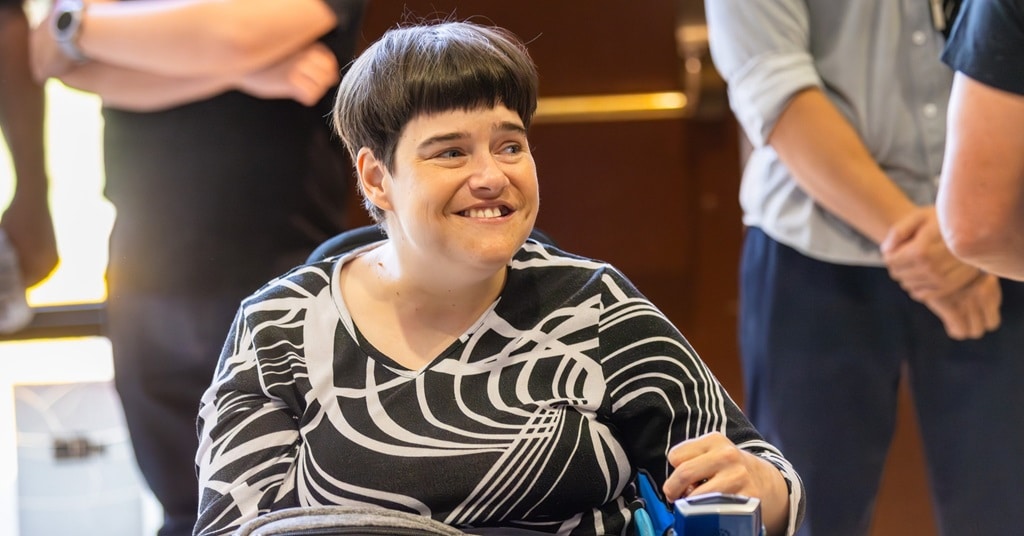
We begin to see others who are different from ourselves as a valuable, beautiful and essential part of our communities when we hear their stories. My friend, Sarah Evans, shared her church experience with me.
She said, “The church is called to be a community, but as an adult with Cerebral Palsy, I have not always felt the community I long for in the church. I am a single, middle-aged adult and most people my age (or even a little younger) are married and have children. I have found little support for singles within the church, which is surprisingly sad considering that both Paul and Jesus elevated the call of singleness.”
Sarah lives independently without family close by, so without a community where she feels like she belongs and contributes, loneliness and depression are real. She strongly identifies with the account in Mark 5:25–33 of Jesus healing the woman who bled for twelve years.
The woman was determined to quietly touch the edge of his clothing because she had faith that Jesus would heal her. She was probably very used to being extra careful of whom and what she touched because she was unclean and would make anyone or anything she touched unclean. She was ostracized from the community, probably living on the outskirts of town and rarely interacting with people.
What Sarah loves about this story is that Jesus made a big deal about the woman reaching out to touch him. She believes Jesus did that, in large part, to restore the woman’s standing in the community. He gives her time to tell her story. He understood the power of her testimony and the impact it would have on everyone in the crowd that day and for all future generations.
His response to her was life giving: “Daughter, your faith has made you well. Go in peace. You have been healed.” He restores her place in the community when he declares her identity as “daughter.” He speaks powerful words of healing over her calling her a woman of great faith who can walk in peace and healing. Like this woman, people with disabilities want to know they are valuable to a community. We are not just looking to be seen and accommodated, we want to be known by the people we serve alongside and be missed when we are away.
Speak Words of Life
Proverbs 18:21 says that “Death and life are in the power of the tongue, and those who love it will eat its fruits.” Everyone needs words of genuine encouragement and affirmation that declare the image of God in us and speak healing into our lives.
We should also help each other recognize hurtful words spoken without love, a medical prognosis that destroys all hope, and negative words that are contrary to who God tells us we are. Jesus demonstrates again and again that we are to speak words that encourage and transform those around us, that call us to be overcomers.
I have seen this spiritual principle at work in my own life. I was born at just 24 weeks because of pregnancy complications and infection. My twin brother, Joshua, lived for only 55 days, but I improved and came home at 110 days. Within my first year, my parents heard that I would not walk or have much use of my hands, that my hearing was severely impaired, which dramatically reduced the possibility of speaking, and that my sight was very poor.
The MRI of my brain showed I had only a small amount of gray matter which indicated severe intellectual disability. Those were words that did not feel life-giving, but my family prayed and lived believing that God was not limited by human speculation. So, my grandma never stopped reading me Bible stories in those early days despite tests that said I heard nothing.
My mom and dad did not stop expecting me to learn new things just because of an MRI result. My mom did not let medical predictions keep her from asking (well, it might have sounded more like telling) God to heal something, anything that would allow her to communicate with me. It changed their perspective of my situation from hopeless and difficult into one of expecting to see God do some transformational things, however big or small.
By 18 months, I started to respond to verbal instructions and attempt sounds. By three, I was showing strong signs of learning. When I was seven, my family moved from Ontario, Canada to St. Louis, Missouri for my dad’s job. I became a patient of an amazing neurologist who dealt with the challenges of Cerebral Palsy in her own body.
She gave words of hope to me as she told us about new treatments coming. She started me on a medication that relaxed my muscles and allowed me enough muscle control to begin to do pencil drawings. At eleven, my eye doctor told me that he could restore my eyes to full sight and give me freedom from glasses. It turns out that he was one of only two doctors in North America at the time performing that specialized eye surgery.
When I turned fourteen, my neurologist suggested Deep Brain Stimulation to help gain more control over my muscles. He ordered an MRI, my second one. The results shocked him because instead of a typical Cerebral Palsy brain image, mine looked normal and in complete contrast to my first MRI result. That was physical confirmation that God had been healing in the hidden parts of my body. So, here is what I know: Never underestimate God or the power of our words in our conversations and in our prayers.
Bring Us to Jesus with Prayer
Likewise, God’s words are powerful in our lives. They are precedents that we can take to the court of heaven.I had what I call my first “court appearance” when I was five. My mom was reading to me at bedtime from one of her favorite Bible story books. She had read this story to me many times before, but that evening it hit me in a profound, new way.
It was Luke’s account of the paralyzed man whose four friends brought him to Jesus believing Jesus would indeed give much needed healing. As I looked at the page in the story book with the four friends’ faces peering at me through the hole in the roof, something stirred in me. I felt tears gathering and deep emotion that I didn’t know how to communicate.
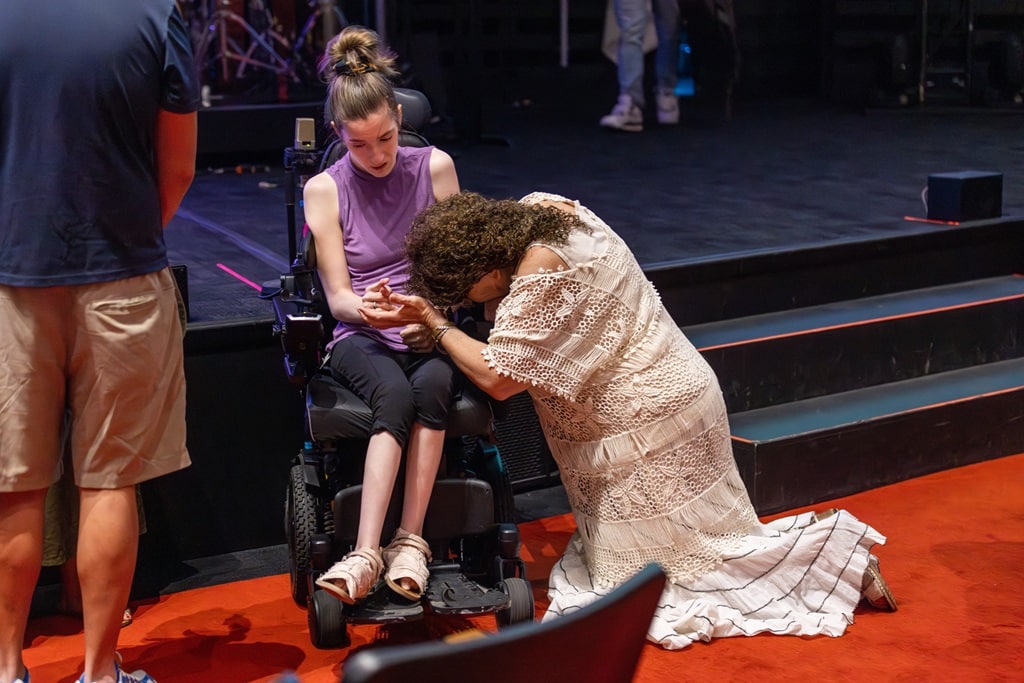
My mom could sense the change in me as I worked to turn my head towards her and struggled to produce the sounds as clearly as my body would let me: “Jesus … heal … me?” Something happened to my mom then, too. I could see it on her face. She struggled for a moment to know how to answer, then gathered me into her arms, and assured me that Jesus would heal me. My family and our friends became my own personal version of “the four friends.” They love me and aren’t afraid to bring me to God in prayer.
Give Us Freedom to Wrestle with God
That night was the first time I remember wrestling with God about my disability. I know God is good, but I still wrestled with God about my disabilities, my purpose, and my dreams. Like the paralyzed man with whom Jesus interacted, the most important healing in my life was spiritual. That is always Jesus’s priority.
Seeing the faith of the man’s friends, Jesus said to the man, “Friend, your sins are forgiven.”[x] Jesus’ words gave the man a new identity as a friend of the God Most High and spoke into him deep healing with his words of forgiveness.
It seems significant that this is the only healing recorded for us in the Gospels where Jesus prefaces the physical healing with forgiveness. Even though the words seem pointed at the Pharisees who were watching in judgment of Jesus, I can’t help but think that Jesus’ true focus was the paralyzed man’s own emotional state.
It is difficult to have medical issues, pain, loss of ability, or loss of independence without struggling with discouragement, resentment, anger, regret, or disappointment with God. Those emotions can leave us with guilt. Jesus understands that all of us, able-bodied or disabled, need the freedom to struggle with hard questions and need the love and forgiveness of God to break out of destructive emotions. I may experience more moments of wrestling with God with each season of life, but I know I can trust God to always be working for my good.
Empower Us as Co-Workers
Ultimately, my great desire is to see people with disabilities engaged in ministry in our communities. Jesus models this evangelism strategy throughout his ministry. The people who Jesus healed brought more people to him with their testimonies. Looking at one specific incident recorded in Luke, we find the account of the homeless and naked man sheltering in a cemetery.
Jesus heals the man by casting out the demons, but the local people are shocked and unsure what to make of the event. The man begged to go with Jesus and his disciples, but Jesus said, “‘No, go back to your family and tell them all the wonderful things God has done for you.’ So he went all through the city telling about the great thing Jesus had done for him.”[xi] Jesus demonstrates the importance of empowering people who have known difficulty and disability to be his workers.
Recently, I listened to Jossy Chako, the Founder and International Director of Empart, an organization that supports indigenous and local leaders among unreached people in Southeast Asia where he sees the “harvest becoming workers,” or rather the new believers becoming the evangelists.[xii] Significantly, over a hundred of Empart’s church plants are started by Jesus followers with disabilities. Jesus wants to empower us to not just be served, but to be co-workers in ways that are useful and life-giving.
I have experienced the joy of being a co-worker in ministry, and I love it! The invitation to work alongside others is life-giving! Of course, there are always going to be different levels of ability in serving together, so it is essential to listen to a person’s story to understand what is needed.
For example, I had a “buddy” in my elementary and middle school years at church who was valuable in helping me feel included, but my needs changed when I started high school. I wanted to participate more easily in group discussions, but I needed more time to think and process. Stacie Herr, the Special Needs Director at Calvary Church in St. Peter’s, Missouri where I attended, invited me to partner with her to start a small group to which I could bring my unchurched high school friends with disabilities.
We had a place to learn and discuss God’s Word at our own pace and a place to have fun together while still being included in the larger youth group. Her invitation allowed me to step into my identity in Christ in a brand-new way. At my current church, Bayview Glen in Toronto, Ontario, I have enjoyed my ministry as a door greeter. People recognize me and talk with me. I have also joined the prayer ministry team, praying in a small group for the Sunday services. I am a co-worker!
Outside of the church, I have opportunities to both receive and give. There is an organization called Village Eulogia that my family and I are involved with. It runs monthly activities for families with members who have disabilities in the Greater Toronto area. They see the value of having both able-bodied and disabled people working together. They invited me to join their executive team and fundraising committee.
Most recently, I was excited to participate in a national conference called “Our Common Calling.” Video discussion forums ahead of the conference allowed me to feel better prepared at the actual conference to have a voice and a place where I felt encouraged and empowered as a daughter of the God Most High. There are so many ways for us to partner together.
Although specialists can help the church understand the different needs of each group within the spectrum of disability, ultimately, the most important thing the global church can do is to go back to the basics of Jesus’ life and message. We are all called to love each other and multiply the image of God by serving each other in love and seeing each other as co-workers in the great commission.
It may feel like a simplification, but when we love our neighbor like we love ourselves, we tend to listen better to each other’s stories which makes us more likely to speak life-giving words of encouragement and to bring each other to God in prayer. We have more grace to give each other the freedom to wrestle with God so that we can all become valuable co-workers in the body of Christ.
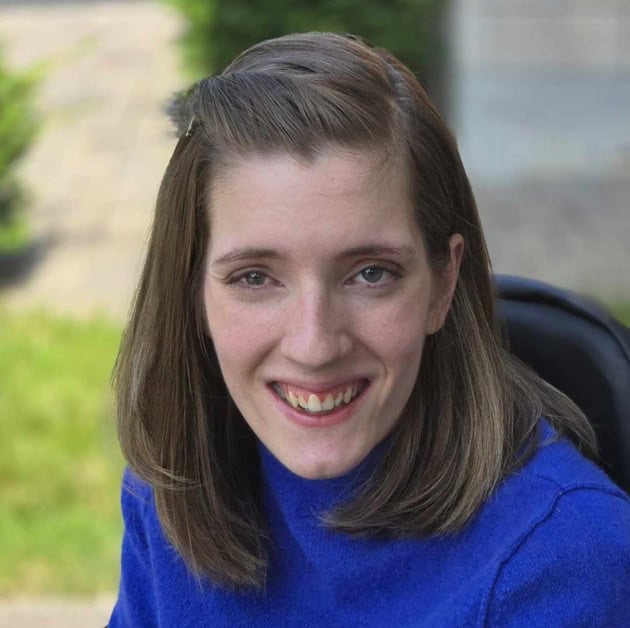
Jenna Sanderson (jendayasanderson@yahoo.com)lives in Toronto, Ontario, Canada with her family. She is the oldest of three daughters who all have a heart for ministry. Her dad, Terry, is the lead pastor at Bayview Glen Church. She and her mom, Chantelle, are avid history buffs and enjoy art.
[i] World Health Organization, “Disability,” Newsroom, March 7, 2023, https://www.who.int/news-room/fact-sheets/detail/disability-and-health.
[ii] Stephen Grcevich, MD, “It’s the Hidden Disabilities That Keep Kids Out of Church,” Key Ministry, July 22, 2018, accessed July 11, 2024, from https://www.keyministry.org/church4everychild/2018/7/22/its-the-hidden-disabilities-that-keep-kids-out-of-church.
[iii] Ryan Faulk, “The Largest Unreached People Group You’ve Never Heard Of,” Joni and Friends, February 27, 2020, accessed July 11, 2024, https://joniandfriends.org/for-the-church/the-largest-unreached-people-group-youve-never-heard-of/.
[iv] 1 John 4:8.
[v] Genesis 1:27–28.
[vi] 1 Corinthians 3:4–8.
[vii] Matthew 28:17–20.
[viii] Luke 10:27.
[ix] Galatians 5:22–23.
[x] Luke 5:20.
[xi] Luke 8:39.
[xii] Jossy Chako, “Global Church,” a conference presentation at The Alliance Canada: General Assembly, July 9, 2024.
EMQ, Volume 60, Issue 4. Copyright © 2024 by Missio Nexus. All rights reserved. Not to be reproduced or copied in any form without written permission from Missio Nexus. Email: EMQ@MissioNexus.org.




