EMQ » Jul – Oct 2024 » Volume 60 Issue 3
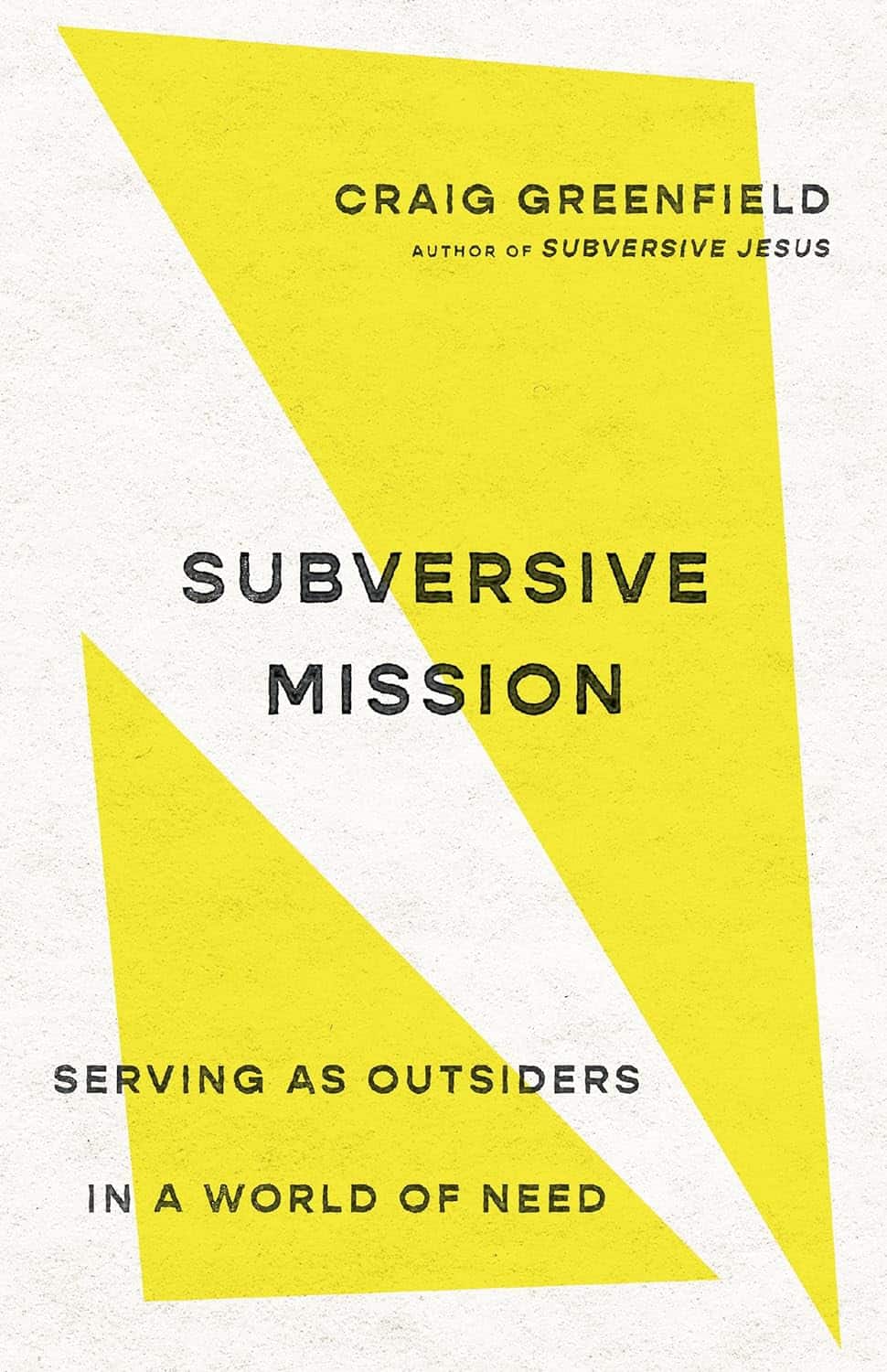
Subversive Mission: Serving as Outsiders in a World of Need
By Craig Greenfield
InterVarsity Press, 2022
220 pages
US$18.00
*As an Amazon Associate Missio Nexus earns from qualifying purchases.
Reviewed by Anish Puthusseril Joseph who has served as an assistant professor of biblical studies in India and is currently a PhD student in intercultural studies at Fuller Theological Seminary.
In Subversive Mission, Craig Greenfield, the visionary founder and director of Alongsiders International, raises a compelling question: How can Western missionaries transcend their inherent power and privilege while working on the mission field, transforming themselves from mere benefactors into true companions – alongsiders – rather than perpetuating the white savior complex?
Drawing from his own profound journey, Craig’s exploration is rooted in his experience of establishing and nurturing the grassroots movement of young Christians dedicated to reaching the world’s most underprivileged children through Alongsiders International. This book emerges as a direct result of his journey, which spans continents and cultures, especially in Asia and North America, over two decades – a journey that has also birthed other insightful books like The Urban Halo and Subversive Jesus.
Within these pages, Criag’s narrative is filtered through the lens of the fivefold missional gifts: apostle, prophet, evangelist, pastor, and teacher (Ephesians 4:11–13). Through this lens, he masterfully unveils how these gifts manifest themselves in strikingly distinctive ways within the intricate tapestry of cross-cultural contexts as different missional types. The result is a beautifully painted portrayal of how these spiritual gifts adapt and flourish amidst the challenges and opportunities posed by diverse cultural landscapes as catalyst (apostle), ally (prophet), seeker (evangelist), midwife (pastor), and guide (teacher) according to the author’s translation of Paul’s ministry roles in Ephesians.
Aligned with the fivefold missional archetypes, the book intertwines chapters that address five key perils: power, complicity, secularism, money, and individualism. Through the intricate interplay of these reflective chapters, I came to recognize the latent presence of whiteness within Hollywood movies, nonfiction literature, and fundraising narratives (44–47).
Craig’s experience of living alongside the poor in Cambodia where radical hospitality was practiced inspired his own radical ministry to street people in Canada. The opening chapters underscore understanding our inherent power and privilege and how countering these influences is crucial. Resisting these influences aids in discerning God’s calls and clarifying life’s purpose. The second chapter delineates the apostle-to-catalyst transformation journey, enriched by the author’s real-life experiences.
Chapter four commences with a poignant quote from Philip Berrigan “The poor tell us who we are, and the prophets tell us who we could be, so we hide the poor and kill the prophets” (56), encapsulating the chapter’s essence. Addressing the dangers of complacency, secularism, finance, and individualism, it traces the narrative progression from evangelist to seeker, pastor to midwife, and teacher to guide within the context of the Shalom Valley Campsite development in the following chapters.
Excessive use of we could imply the book exclusively targets white missionaries eyeing service in the majority world. However, it harbors substantial insights applicable to other ethnicities and contexts too. This book resonates with those ardently aspiring to channel God’s transformative love while eschewing the negative trappings of conventional colonial missions.
It caters to those recognizing that guilt, tears, thoughts, and prayers lack meaning for the marginalized in the majority world unless met with tangible actions. This book compelled me to reevaluate my personal mission approaches tainted by traditional colonial practices. While not primarily an academic piece, it provides real-world, hands-on examples related to missional involvement. As such, it serves as a valuable resource for grassroots practitioners worldwide.
For Further Reading:
The Urban Halo: A Story of Hope for Orphans of the Poor by Craig Greenfield (Authentic Media, 2007)
Subversive Jesus: An Adventure in Justice, Mercy, and Faithfulness in a Broken World by Craig Greenfield (Zondervan, 2016)
EMQ, Volume 60, Issue 3. Copyright © 2024 by Missio Nexus. All rights reserved. Not to be reproduced or copied in any form without written permission from Missio Nexus. Email: EMQ@MissioNexus.org.